Artwork
Madonna and Child Enthroned with Saints Peter and Paul and Angels
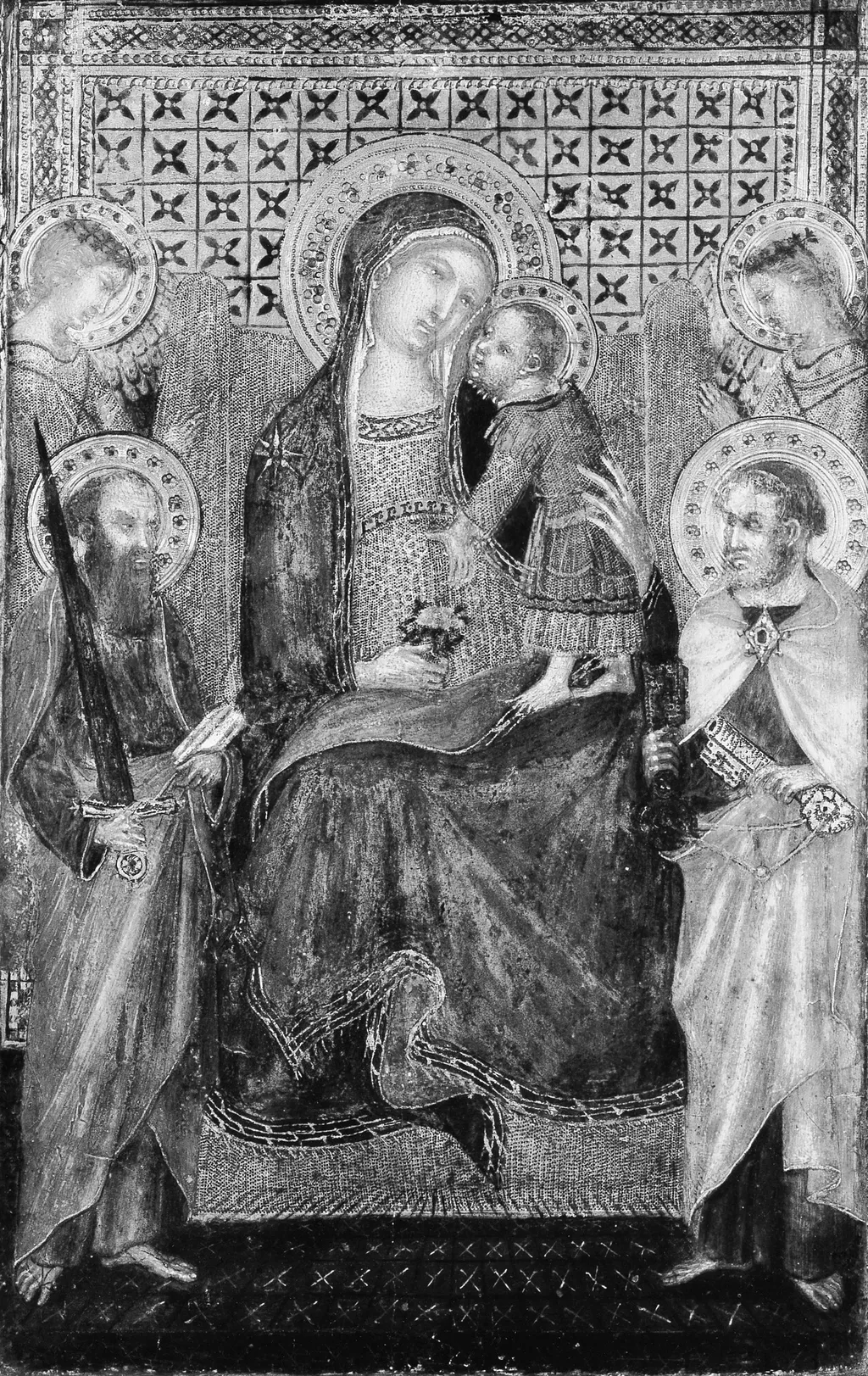
Madonna and Child Enthroned with Saints Peter and Paul and Angels is a tempera painting by the Italo Byzantine artist Lippo Vanni. It dates from 1358 and is held in the collection of the Metropolitan Museum of Art.
About this work
Subject & Meaning
The composition includes specific hagiographic figures: Saint Peter and Paul the Apostle flank the central pair, while angels surround the throne.
Created in 1358 by Lippo Vanni, this tempera panel presents a devotional scene centered on the Madonna and Child enthroned. The composition includes specific hagiographic figures: Saint Peter and Paul the Apostle flank the central pair, while angels surround the throne. As a work of religious art, the painting's primary subject is the Virgin Mary with the Christ Child, serving as a focal point for veneration.
The inclusion of Peter and Paul likely signifies the authority of the Church or specific patronal connections, grounding the celestial event in earthly ecclesiastical tradition. The arrangement emphasizes the holy hierarchy, with the divine figures elevated above the saints and angels, reinforcing theological concepts of intercession and divine presence common in fourteenth-century Italian devotional imagery.
Technique & Style
Created in 1358 by the Italian artist Lippo Vanni, this religious work is executed in tempera on a wooden panel. The painting measures approximately 29.8 cm in height and 18.7 cm in width. Stylistically, the composition features the Madonna and Child enthroned, flanked by Saints Peter and Paul, with the presence of angels.
The medium of tempera on panel was a standard technique for Italian religious paintings of the Trecento period, allowing for the precise linear definition characteristic of Vanni's approach to sacred subjects.
History & Provenance
The Madonna and Child Enthroned with Saints Peter and Paul and Angels is a tempera panel painting attributed to the Sienese artist Lippo Vanni and dated to 1358, as indicated by the work’s inscription and its catalogued inception. The panel was owned by the New York collector Michael Friedsam before entering the holdings of the Metropolitan Museum of Art, where it remains today. While the original patron or commission is not documented in the available sources, the painting’s technique and iconography are consistent with mid‑fourteenth‑century Sienese workshop practice.
The work is housed in the Metropolitan Museum of Art in New York, where it is part of the Michael Friedsam bequest; the museum's catalogue records it as belonging to that collection. The work, dating from 1358, is a tempera painting on panel. No explicit inventory or accession number is given in the sources examined, and the available documentation does not mention any prior exhibition of the piece outside the museum's own displays.
Overview
Painted in 1358 by the Sienese master Lippo Vanni, this tempera panel depicts the Virgin Mary and Child enthroned within a formal sacred assembly. The composition centers on the Madonna seated upon a Gothic throne, holding the Christ Child, who blesses the viewer. Flanking the throne are Saint Peter, identified by his keys, and Saint Paul, holding a book, both standing as intercessors.
Two angels hover in the upper register, framing the central group. The work exemplifies the late Gothic style prevalent in Siena during the mid-14th century, characterized by elongated figures, rigid postures, and a flattened spatial depth that prioritizes decorative rhythm over naturalistic perspective. Vanni, a follower of Simone Martini, employs a linear elegance and rich, jewel-toned palette typical of the Sienese school.
The background features intricate geometric patterns and gold leaf, emphasizing the divine nature of the scene. Created during a period of significant artistic production in Siena, this altarpiece reflects the city's enduring commitment to religious imagery that balances spiritual solemnity with ornamental beauty, serving as a testament to Vanni's role in sustaining the Sienese tradition following the Black Death.
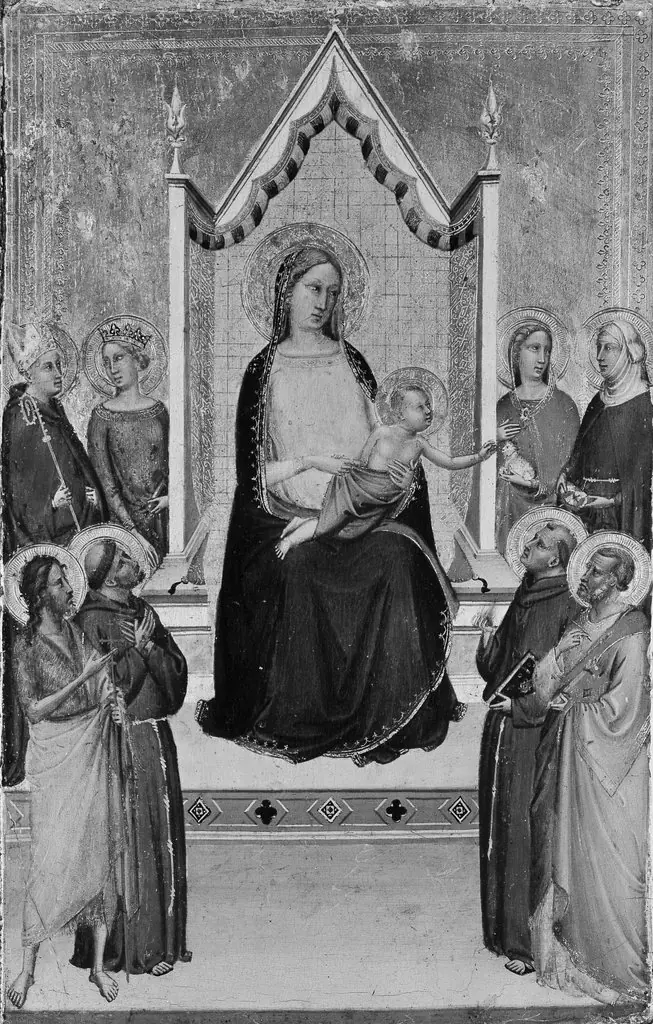
Own this work as a print
Artist & collection
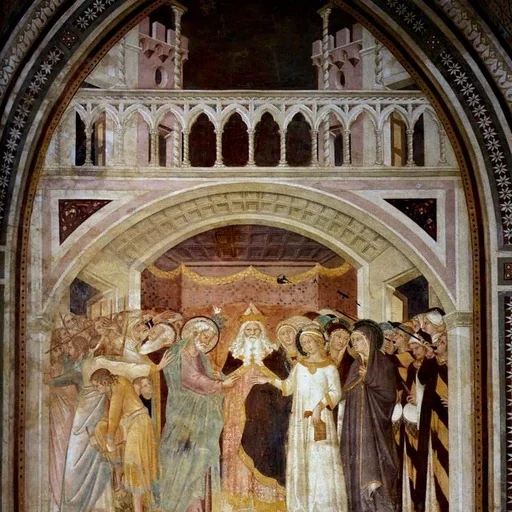
Artist
Lippo Vanni was a 14th-century Italian painter and miniaturist who was active in his native Siena.

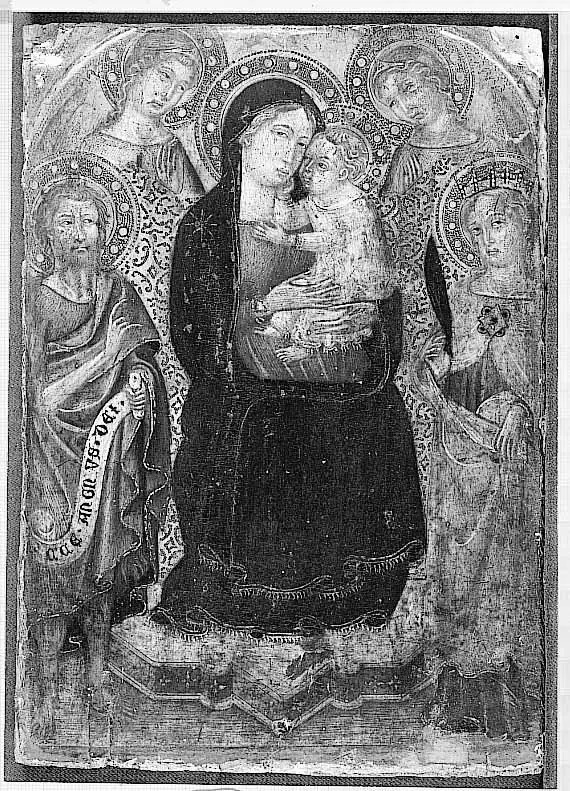 The Virgin and Child with two Saints and two Angels
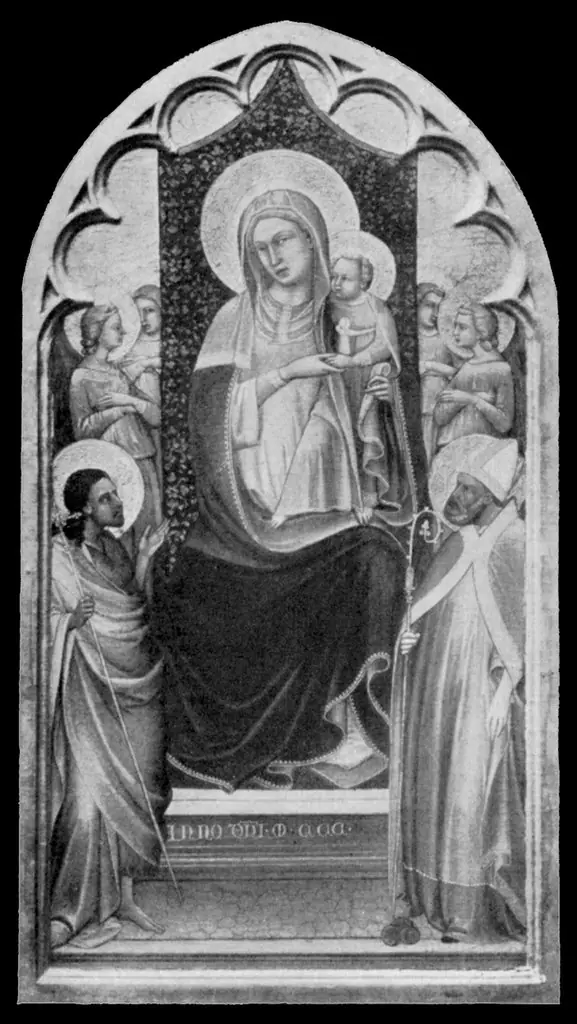 Madonna and Child with Saints John the Baptist and Nicholas
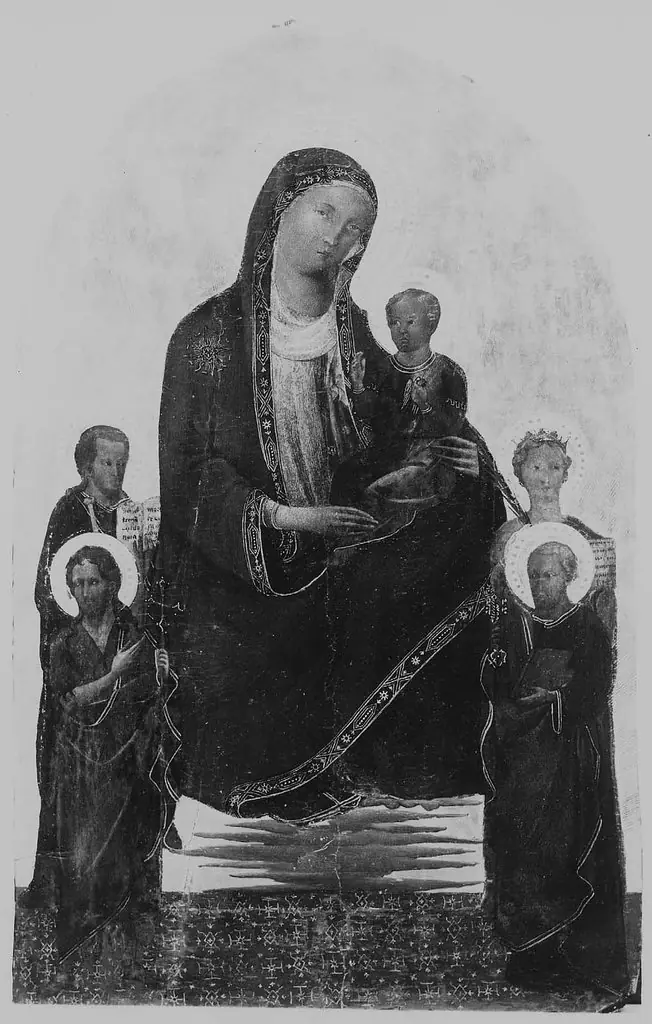 Virgin and Child with Saints John the Baptist, James, Peter, and a Virgin Martyr (Catherine?)
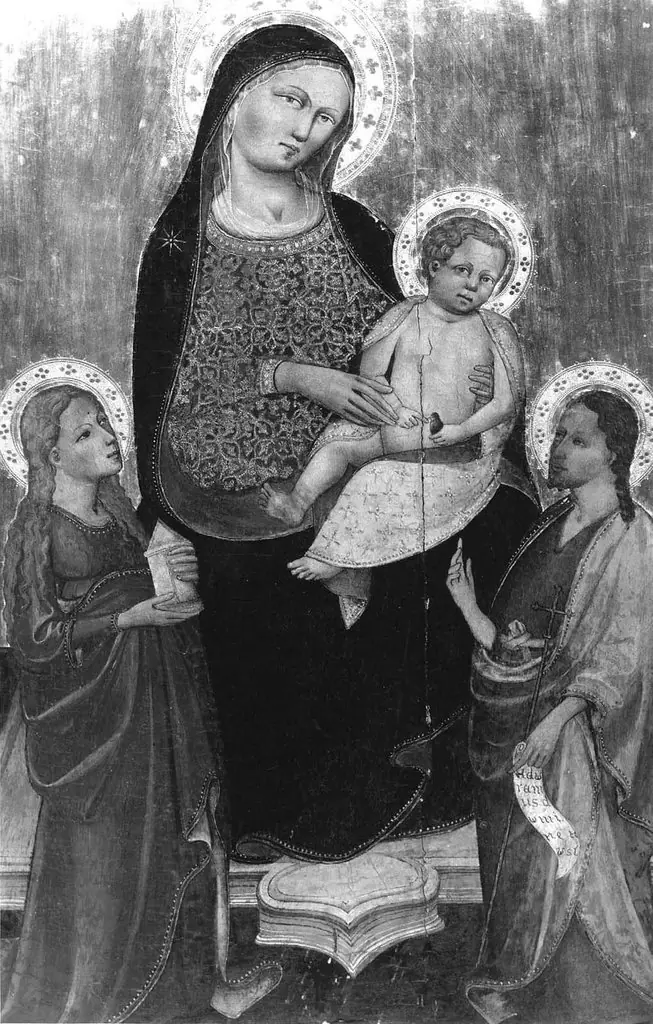 Virgin and Child with Saints Mary Magdalen and John the Baptist
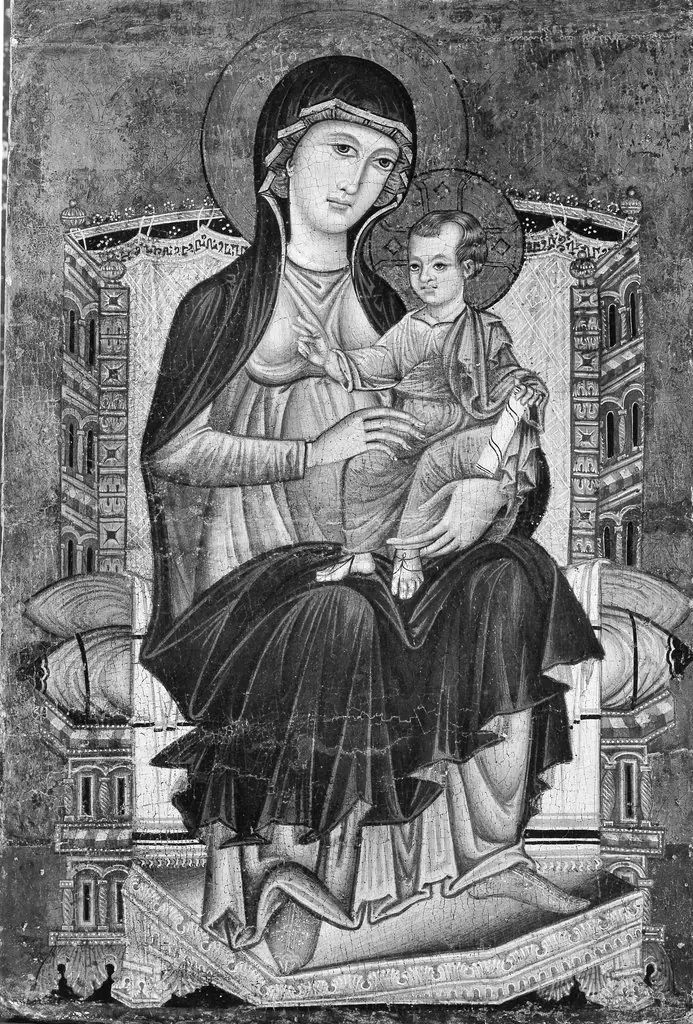 Madonna and Child Enthroned
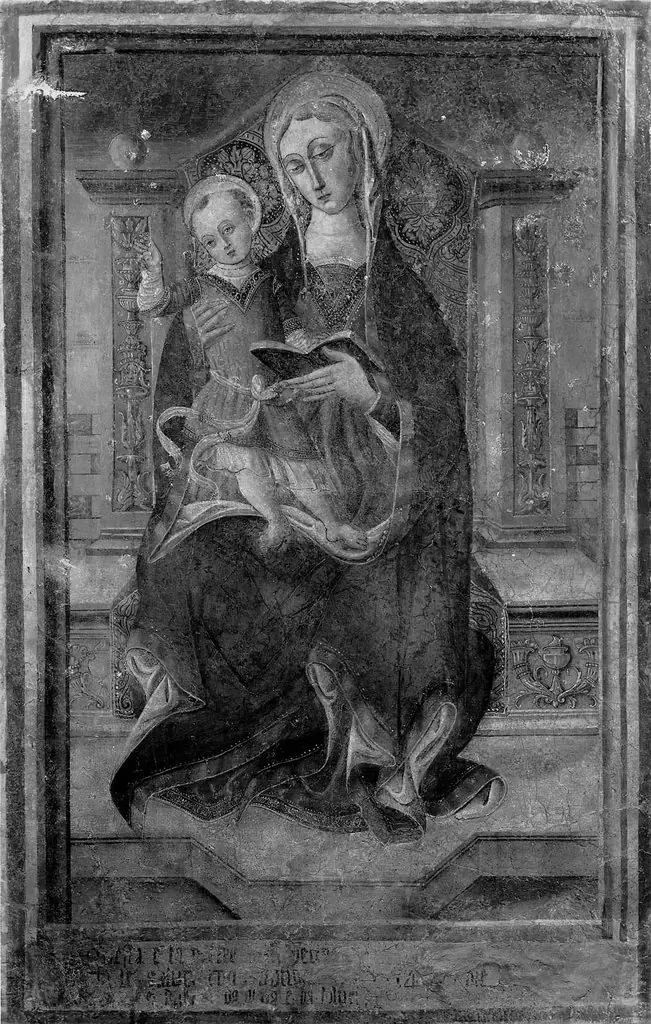 Virgin and Child Enthroned
 Madonna and Child Enthroned with Two Angels and a Donor
 The Virgin and Child with Saints and Angels
 Mary in Glory
 The Virgin and Child