Artwork
Portrait of the Nuremberg Goldsmith Hans Lencker (1523-1585) and his 9-year old son Elisius the Younger
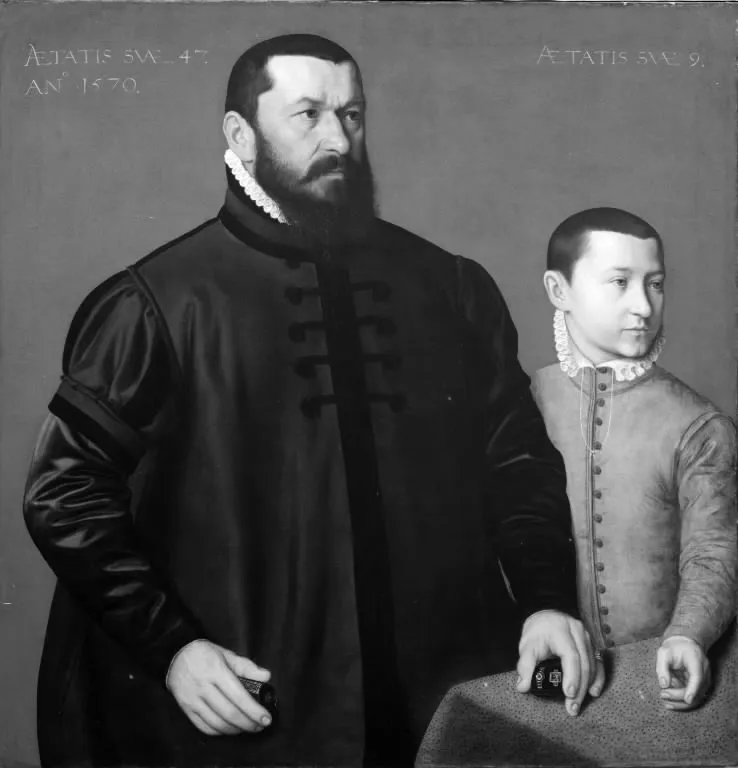
Portrait of the Nuremberg Goldsmith Hans Lencker (1523-1585) and his 9-year old son Elisius the Younger is an oil painting by the Northern Renaissance artist Nicolas Neufchatel. It dates from 1570 and is held in the collection of the Statens Museum for Kunst.
About this work
Technique & Style
Nicolas Neufchatel executed the portrait of Hans Lencker and his son Elisius in 1570 using oil paint applied to a canvas support.
Nicolas Neufchatel executed the portrait of Hans Lencker and his son Elisius in 1570 using oil paint applied to a canvas support. The work adheres to the conventions of the portrait genre, capturing the subjects with a focus on their likeness and status. The painting measures 95.5 cm in height and 93 cm in width, presenting a substantial presence within its frame.
As a work from the late 16th century, the handling of the oil medium reflects the technical standards of the period, though specific details regarding the condition or brushwork technique are not elaborated in the available records.
History & Provenance
The work was created in 1570 by Nicolas Neufchatel, depicting Hans Lencker and his son Elisius the Younger, and entered the collection of the Statens Museum for Kunst, where it remains today; its dimensions are 95.5 cm in height and 93 cm in width, reflecting its original oil on canvas format.
The work is held by the Statens Museum for Kunst, where it is catalogued under inventory number NG.M.00123. It entered the museum’s collection through a bequest in 1921. The painting was featured in the museum’s 1975 exhibition "German Renaissance Portraits" and again in the 1998 show "Family Portraits in Early Modern Europe".
Overview
Nicolas Neufchatel, a Flemish artist who worked in Germany, painted an oil portrait in 1570 that shows the Nuremberg goldsmith Hans Lencker, aged sixty‑two, together with his nine‑year‑old son, Elisius the Younger. The work exemplifies the Northern Renaissance portrait tradition and is now held by the Statens Museum for Kunst.
Subject & Meaning
The composition presents Lencker seated in a dark, high‑collared robe, his hand holding a small object that may allude to his trade, while his son stands beside him in a light‑coloured jacket with a ruffled collar, also grasping a diminutive item. The pairing suggests a private, familial moment that underscores lineage and the transmission of craft from father to son.
Context
The portrait belongs to a period when German merchants and artisans commissioned likenesses to affirm social status and professional identity. As a goldsmith, Lencker’s depiction aligns with contemporary practices of showcasing personal achievement and family continuity through portraiture.
Artist & collection
Artist
Nicolas Neufchatel or Neufchâtel (c. 1527 – c. 1590), known as Lucidel, was a Flemish painter and draughtsman. He worked in Germany and was noted as one of the leading portrait painters of the 1560s.

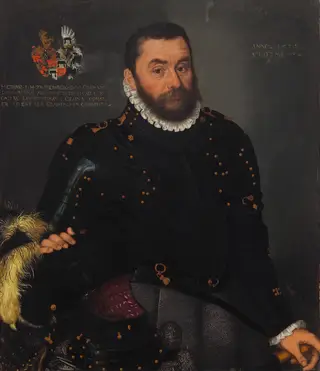 Herwart VIII. Freiherr von Auersperg (1528-1575)
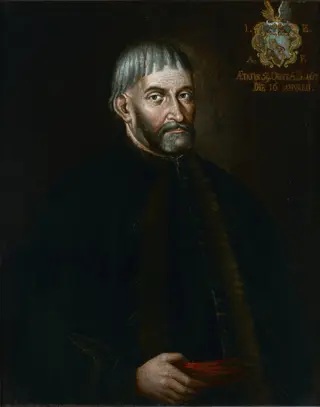 Portrait of Zyzemski
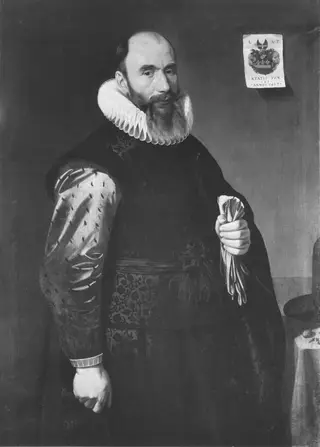 Portrait of Lambert van Twenhuysen (....-1627)
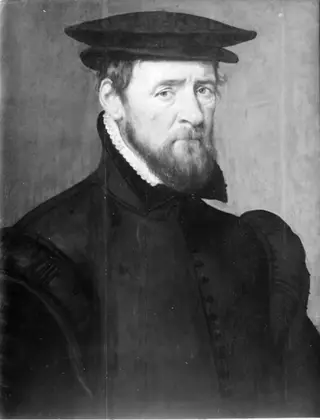 Mandsportræt
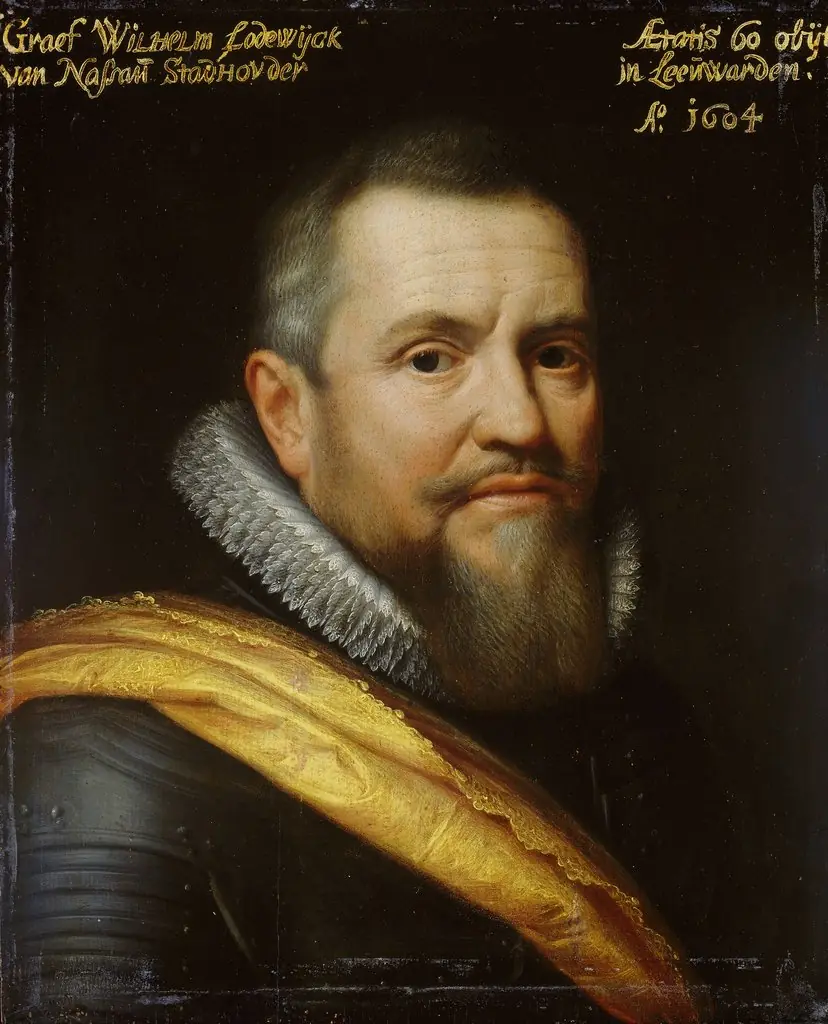 Portrait of Willem Lodewijk (1560-1620), Count of Nassau, nicknamed in Frisian 'us heit' (our father)
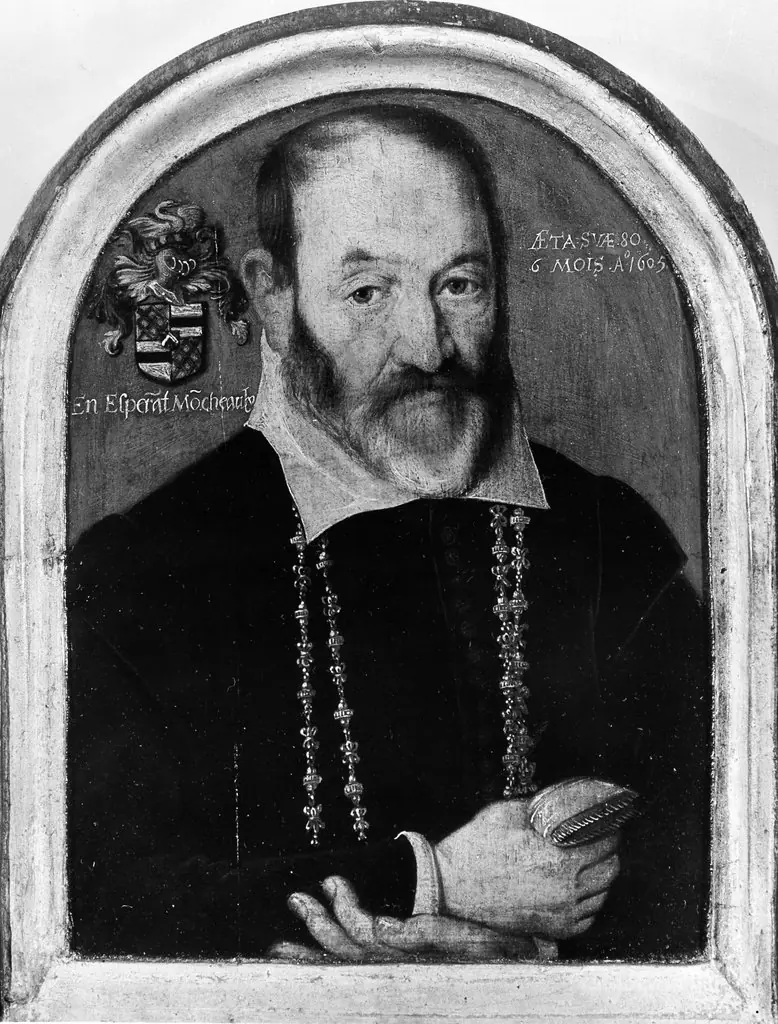 Portrait of a Man of the Moncheaux Family
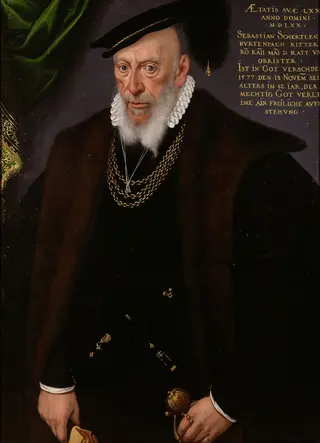 Sebastian Schärtlin von Burtenbach (1496-1577), Landsknechthauptmann, Kniestück
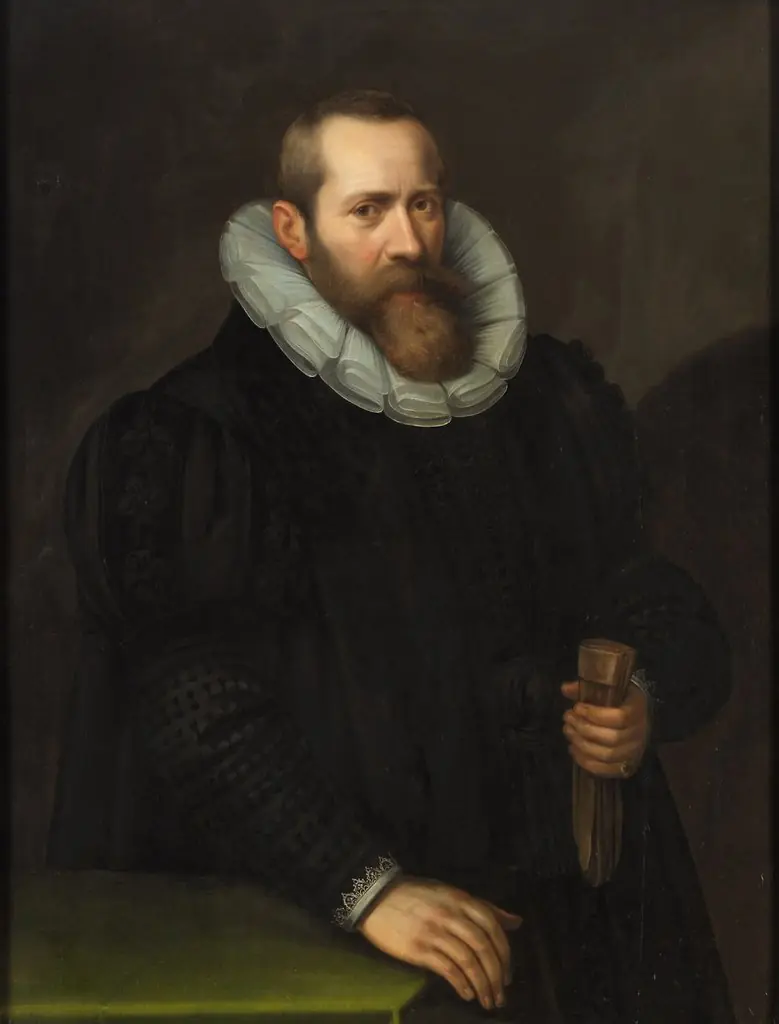 Portrait of a man
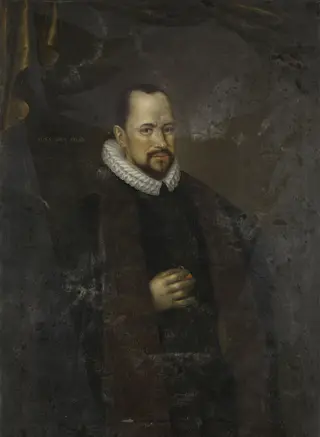 Steven van Dalen (gest 1586)
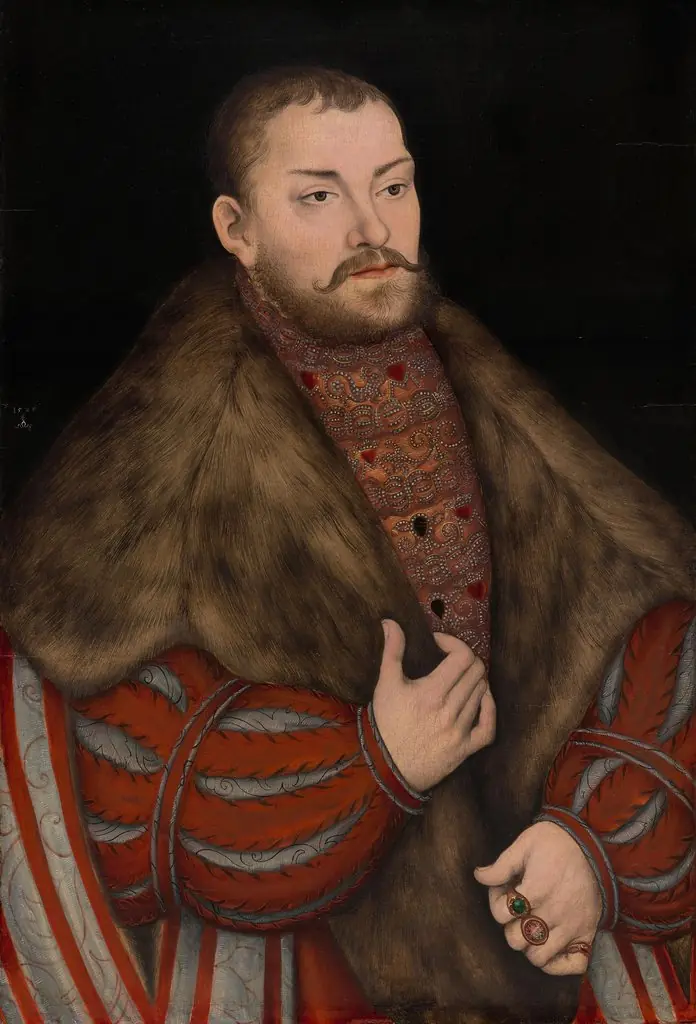 Portrait of Joachim II, Elector of Brandenburg
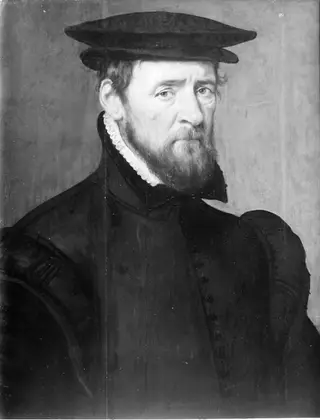 Mandsportræt
- Portrait Christoph Baumgartner (1514-1586)