Artwork
A Samoureus
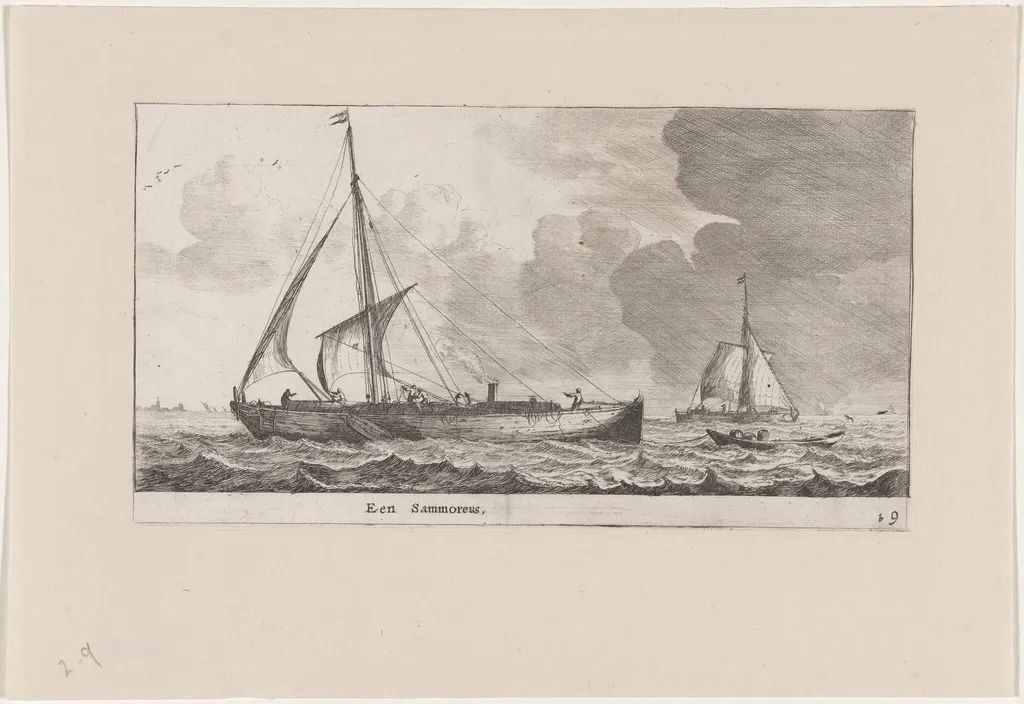
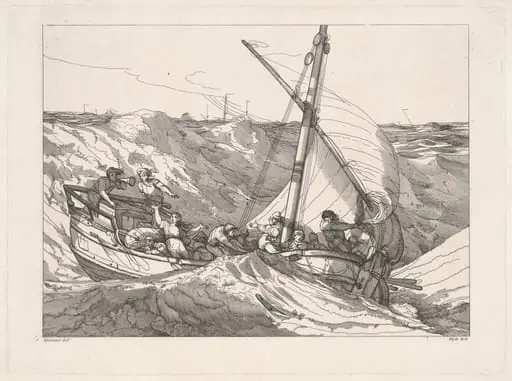
A Samoureus is an ink print by the Baroque artist Nooms, called Zeeman, Reinier. It dates from 1653 and is held in the collection of the National Gallery of Art.
- Inscription
- Inscribed:lower center in plate: Een Sammoreus, / b9
About this work
Overview
Created circa 1653, A Samoureus is an early modern print executed by Reinier Nooms, a Dutch artist known by the nickname Zeeman. The work combines etching and drypoint on laid paper, presenting a maritime scene that showcases the artist’s precise line work and interest in nautical subjects.
Subject & Meaning
The image portrays two vessels navigating choppy seas under a storm‑laden sky. The larger ship dominates the foreground, its towering masts and active crew handling rigging, while a smaller, less complex craft follows behind. The title, Een Samoureus, suggests the depicted vessel belongs to a specific class of ship used in the 17th‑century Dutch fleet.
Technique & Style
Nooms employed a hybrid printmaking process: the primary design was etched, allowing for controlled, fluid lines, while drypoint was added to render the finest details of ropes, waves, and cloud edges. The laid paper surface enhances the texture of the marks, giving the scene a crisp, tactile quality characteristic of his maritime prints.
History & Provenance
Active from the 1650s, Nooms specialized in ship and harbor views, often publishing series of prints that circulated among collectors and fellow artists. A Samoureus forms part of this output, reflecting the demand for accurate visual records of Dutch naval vessels during the Golden Age.
Context
The print emerges from a period when the Dutch Republic’s maritime power was at its height. Detailed depictions of ships served both documentary and decorative purposes, informing shipbuilders, merchants, and the public about the design and operation of contemporary vessels.
Legacy
Nooms’s prints, including A Samoureus, influenced later marine artists by demonstrating how etching and drypoint could convey the complexity of ship construction and sea conditions. His work contributed to the visual vocabulary of Dutch nautical art that persisted into the eighteenth century.
Own this work as a print
Artist & collection

Artist
Reinier Nooms (c. 1623 – 1664), also known as Zeeman or Seeman (Dutch for "sailor"), was a Dutch maritime painter known for his highly detailed paintings and etchings of ships. From the 1650s, Nooms started producing…

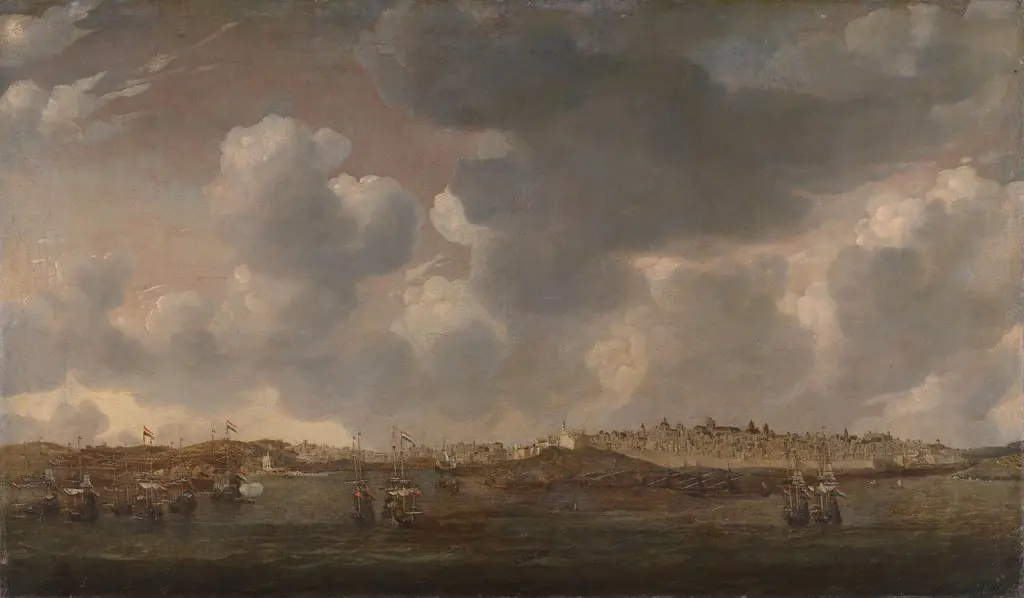
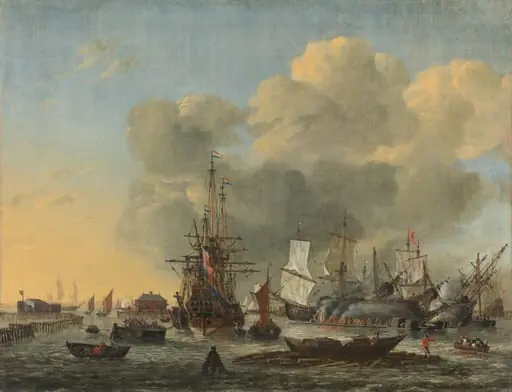
- Marine Scene with Amsterdam in the Distance
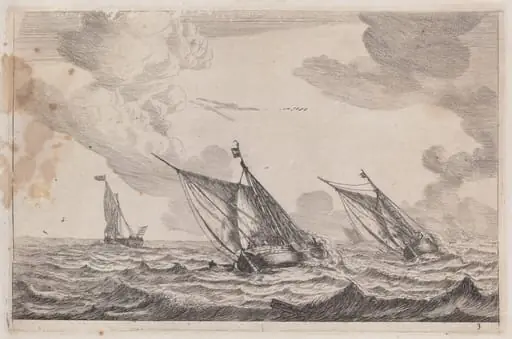 Three Sailing Vessels at Choppy Sea
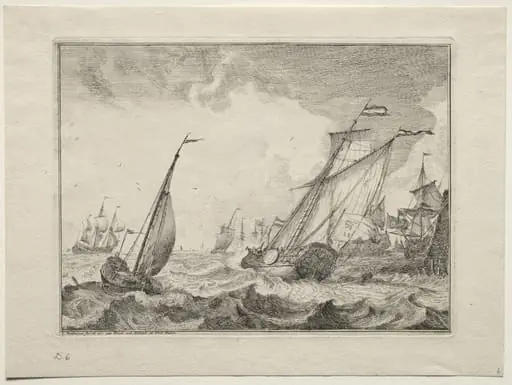 Ships in a Gale
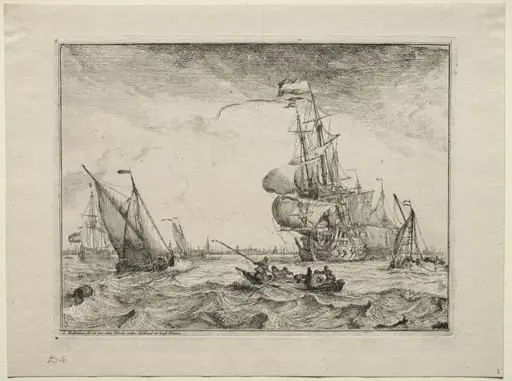 Ships Under Full Sail
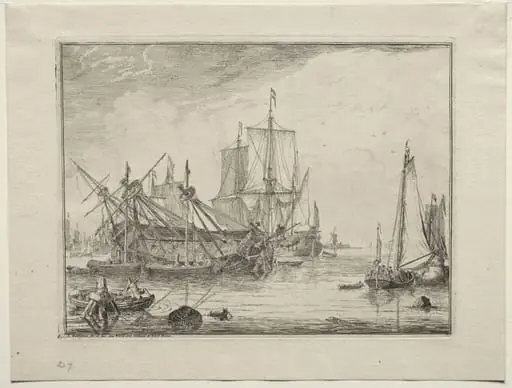 Ships Under Repair
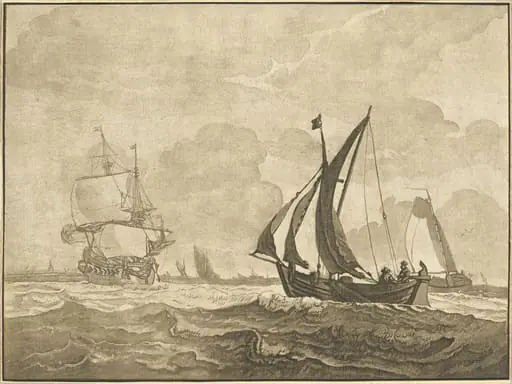 Seascape
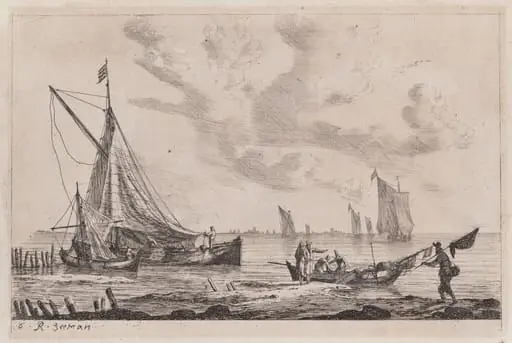 Shore of Inland Waterway with a Ketch, Two Smaller Boats, and Fisherman
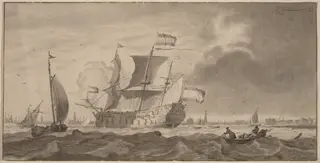 War Vessel in the Y
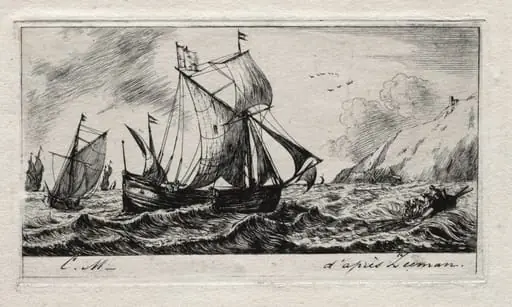 The Galliot of Jean de Vyl of Rotterdam
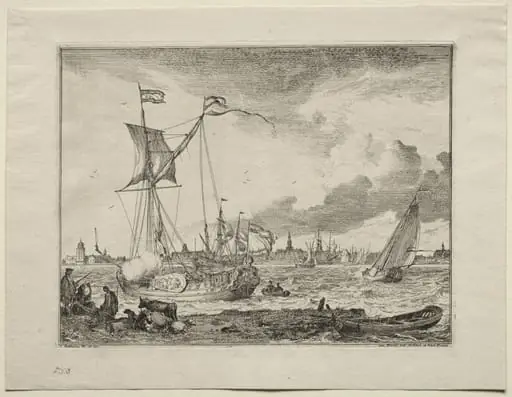 View of Amsterdam with Ships in Foreground
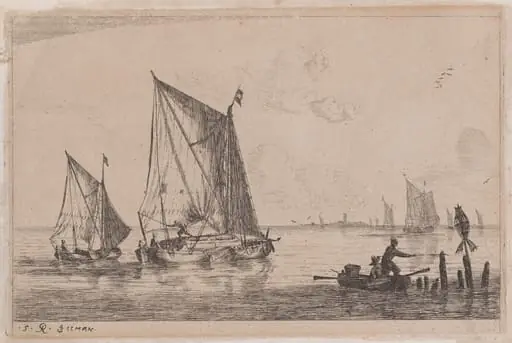 A "Duinopschuit," a Smaller Sailing Boat, and a Rowboat
 Boat in a Storm at Sea