Artwork
Verscheÿde Schepen en Gesichten van Amstelredam (Various Ships and Views of Amsterdam): Part III
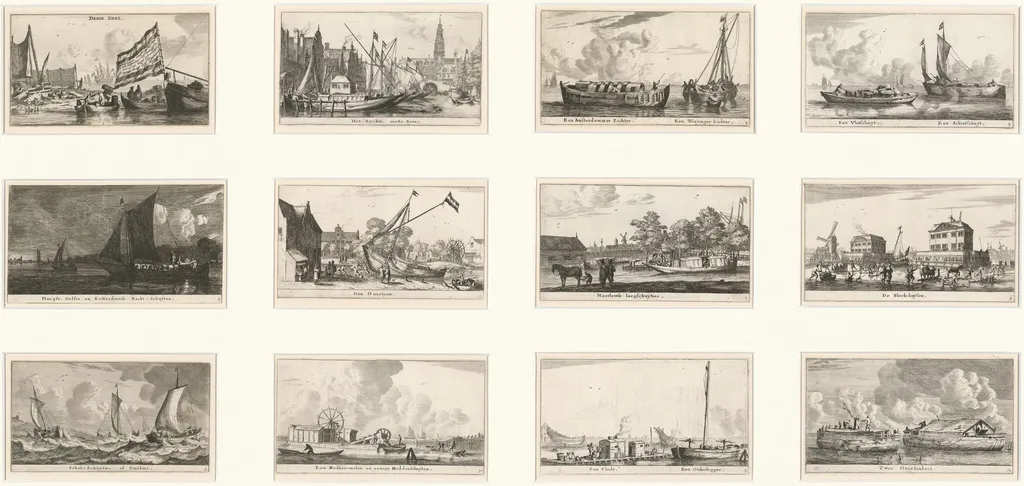
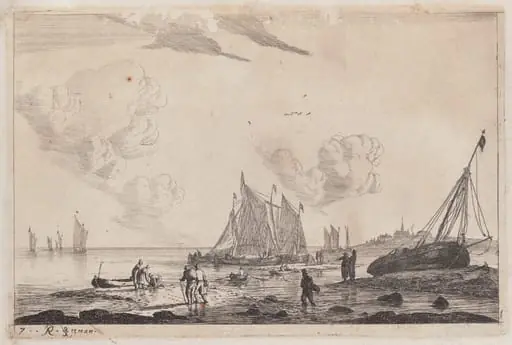
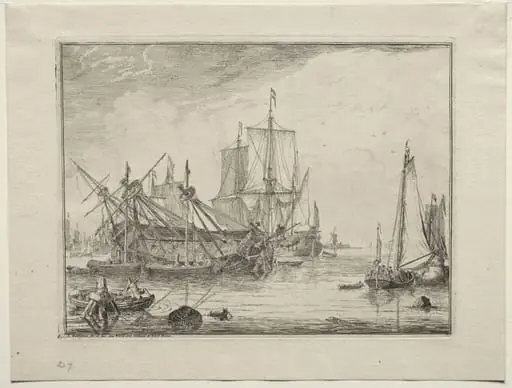
Verscheÿde Schepen en Gesichten van Amstelredam (Various Ships and Views of Amsterdam): Part III is an ink print by the Baroque artist Nooms, called Zeeman, Reinier. It dates from 1653 and is held in the collection of the National Gallery of Art.
About this work
Overview
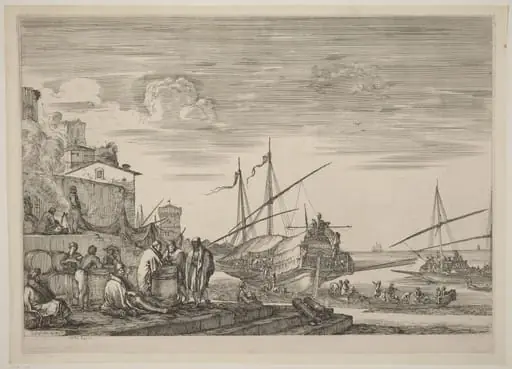
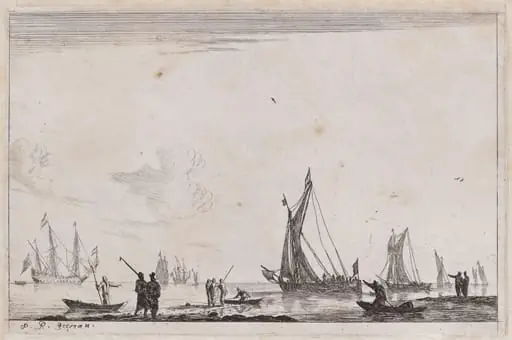
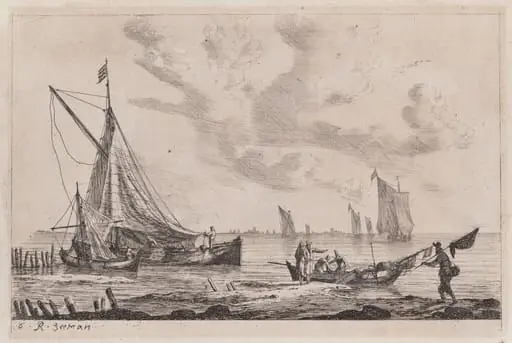
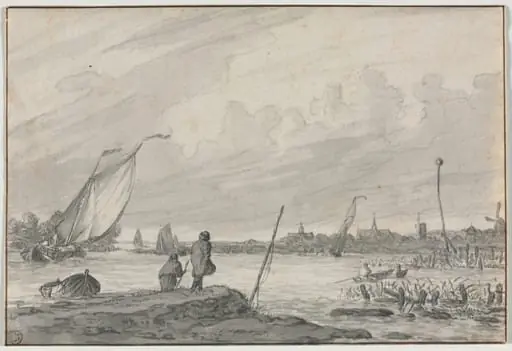
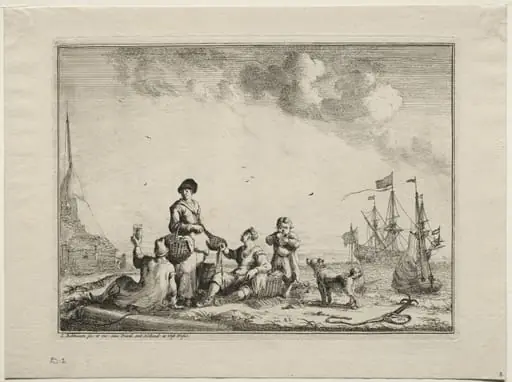
This artwork is a set of twelve etchings with drypoint on laid paper, titled 'Verscheÿde Schepen en Gesichten van Amstelredam (Various Ships and Views of Amsterdam): Part III'. Created around 1653 by Reinier Nooms, it combines maritime and topographical themes.
Subject & Meaning
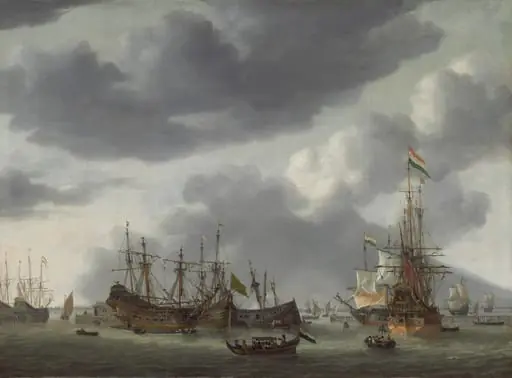
The set depicts various ships and views of Amsterdam, showcasing the city's maritime activity. The etchings feature different vessels, from large to small, with some under sail and others moored, set against a backdrop of buildings, windmills, and waterfront workers.
Technique & Style
Nooms employed etching and drypoint techniques to achieve detailed textures, such as waves and ropes. The etchings demonstrate a high level of refinement, characteristic of Nooms' work, and were likely influenced by his experience as a maritime painter.
History & Provenance
Produced in the 1650s, this series was part of Nooms' broader output of etchings that were noted for their influence on other artists. The specific date of 'Part III' is estimated to be around 1653.
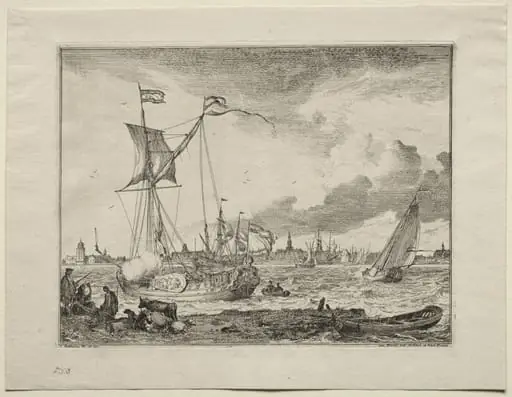
Artist & collection

Artist
Reinier Nooms (c. 1623 – 1664), also known as Zeeman or Seeman (Dutch for "sailor"), was a Dutch maritime painter known for his highly detailed paintings and etchings of ships. From the 1650s, Nooms started producing…