Artwork
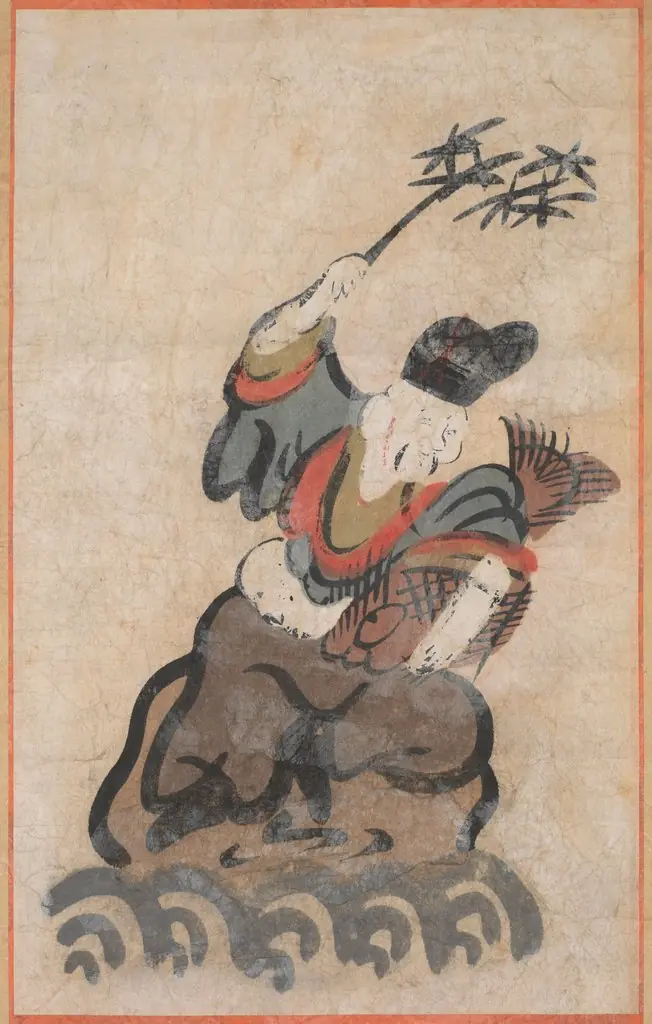
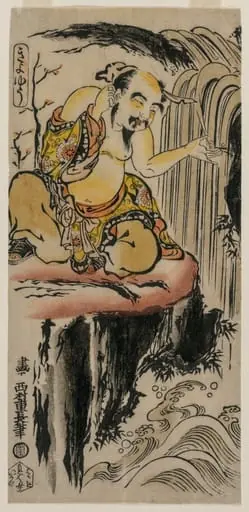
The Taoist Immortal Kung Ho (?) Riding a Crane
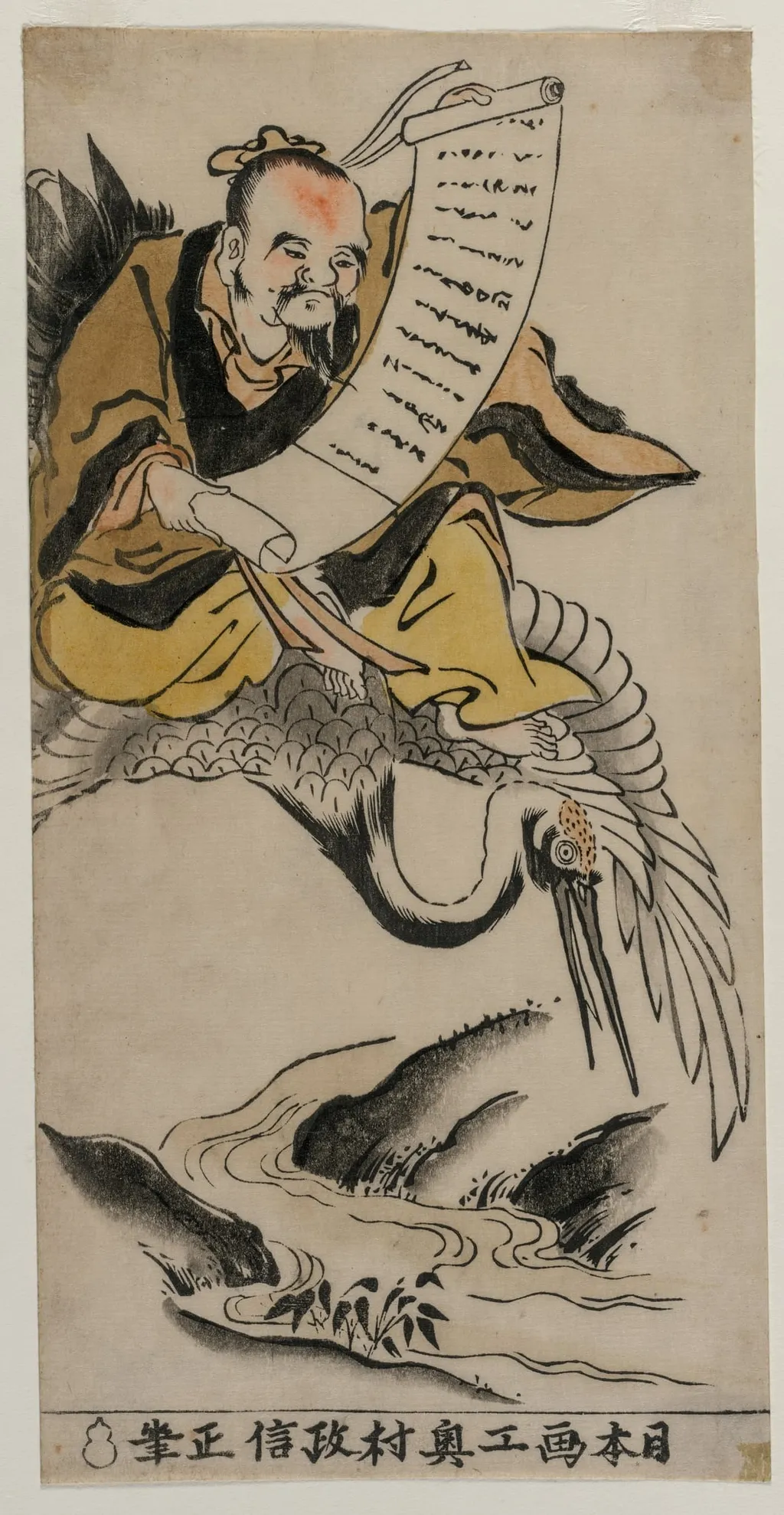
The Taoist Immortal Kung Ho (?) Riding a Crane is a print by the Baroque artist Okumura Masanobu. It dates from 1724 and is held in the collection of the Cleveland Museum of Art.
- Accession no.
- 1916.1170
- Credit line
- Gift of Mr. and Mrs. J. H. Wade
About this work
Overview
The work is part of the Cleveland Museum of Art’s collection, acquired as an example of Japanese printmaking from the early 18th century.
This woodblock print, attributed to Okumura Masanobu and dated around 1724, depicts a Taoist immortal seated atop a crane. The image is rendered in subtle monochrome tones with minimal color accents, characteristic of early Edo-period ukiyo-e. The composition emphasizes verticality and quiet motion, with the figure and bird suspended above a turbulent sea.
The work is part of the Cleveland Museum of Art’s collection, acquired as an example of Japanese printmaking from the early 18th century.
Subject & Meaning
The figure is traditionally interpreted as a Taoist immortal, possibly Kung Ho, a figure associated with transcendence and spiritual travel. Riding a crane, a symbol of longevity and otherworldly transport, the immortal holds a scroll, suggesting mastery of esoteric knowledge. His stern expression and composed posture convey inner stillness, contrasting with the dynamic waves below.
The scene reflects Daoist ideals of harmony between human and nature, and the pursuit of immortality beyond earthly bounds.
Technique & Style
Masanobu employed fine linework and restrained ink washes to define the crane’s feathers and the figure’s robes, with delicate gradations suggesting texture without heavy shading. The waves are rendered with rhythmic, angular strokes, creating a sense of movement against the flat, pale sky. The print’s composition balances asymmetry and negative space, typical of early ukiyo-e.
Color is limited, likely using only a few hand-applied hues, emphasizing the elegance of line and form over ornamentation.
History & Provenance
Created during the early 1720s, this print emerged from Osaka’s thriving print culture, where Masanobu was a leading innovator in single-sheet designs. It was likely produced for a literate urban audience interested in Daoist lore and aesthetic refinement. The work entered the Cleveland Museum of Art’s collection in the 20th century, having passed through private Japanese and Western hands. Its attribution to Masanobu is based on stylistic parallels with his known oeuvre.
Context
In early 18th-century Japan, Daoist themes were popular among artists and intellectuals influenced by Chinese philosophy. Prints like this one catered to a growing middle class seeking cultural sophistication beyond Buddhist or Shinto imagery. Masanobu’s work bridged traditional Chinese motifs with Japanese visual language, helping to establish ukiyo-e as a medium for spiritual and literary subjects, not just entertainment or courtesan scenes.
Legacy
This print exemplifies the transition in ukiyo-e from theatrical subjects to more contemplative, literary themes. Masanobu’s treatment of the immortal and crane influenced later artists who explored mythological and Daoist subjects. While not widely reproduced, the work remains a key reference for understanding how Chinese spiritual traditions were adapted into Japanese visual culture during the Edo period, contributing to the genre’s intellectual depth.
Artist & collection
Artist
Okumura Masanobu lived in Edo (now Tokyo) when the city was a flashy, fast-growing hub of theater, gossip, and new ideas.

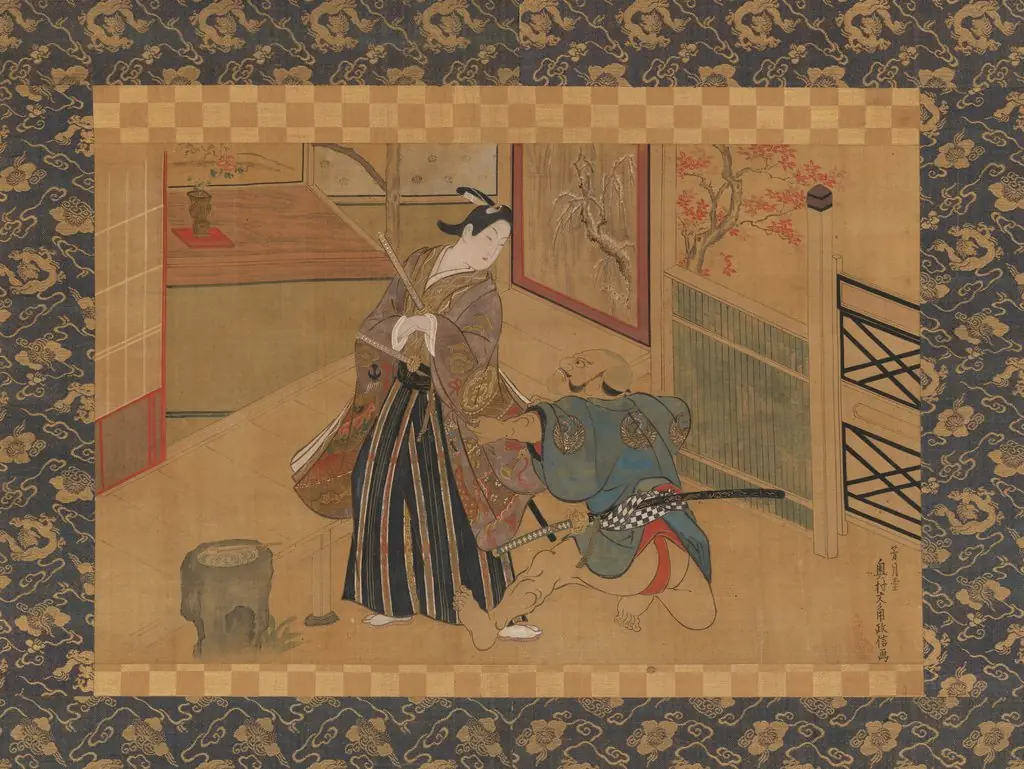 Kabuki Play Kusazuribiki from the Tales of Soga (Soga monogatari)
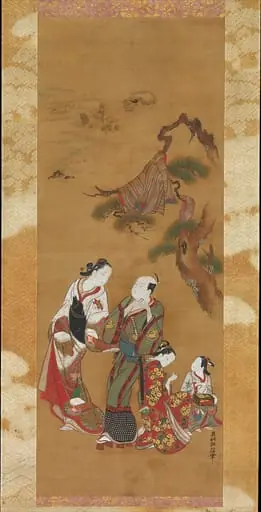 Untitled
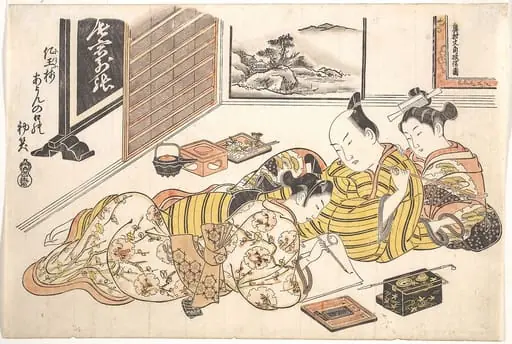 『閨の雛形』 正月|Plate from the Erotic Book Mounds of Dyed Colors: A Pattern Book for the Boudoir (Someiro no yama neya no hinagata), First Month
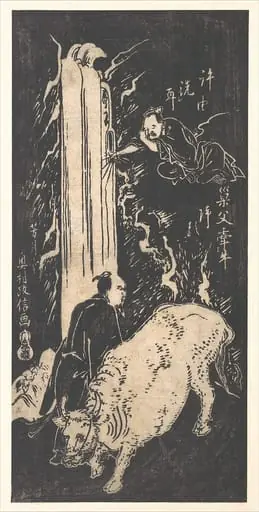 Untitled
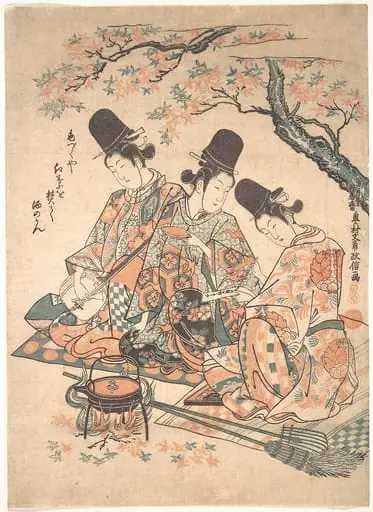 見立『平家物語』 紅葉焚図|Parody of Palace Servants Heating Sake over a Fire of Maple Leaves
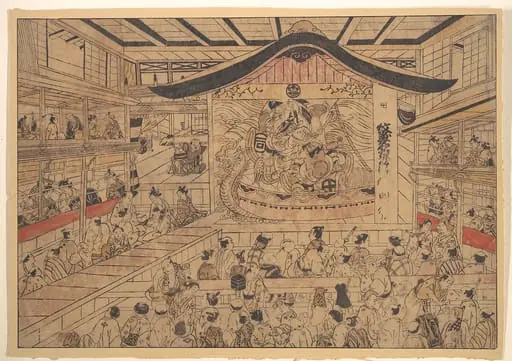 浮絵 「紋尽名古屋曽我」|Perpsective View (uki-e) of a Kabuki Theatre, with a Performance of The Crest Patterns of the Soga Brothers and Nagoya Sanza (Mon-zukushi Nagoya Soga)
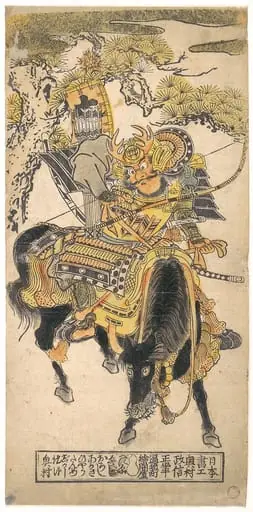 Untitled
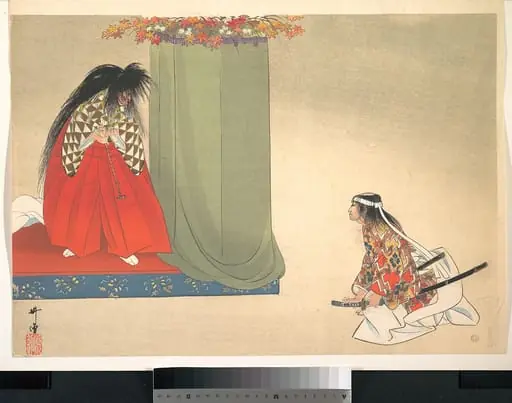 Untitled