Artwork
Triumph of David
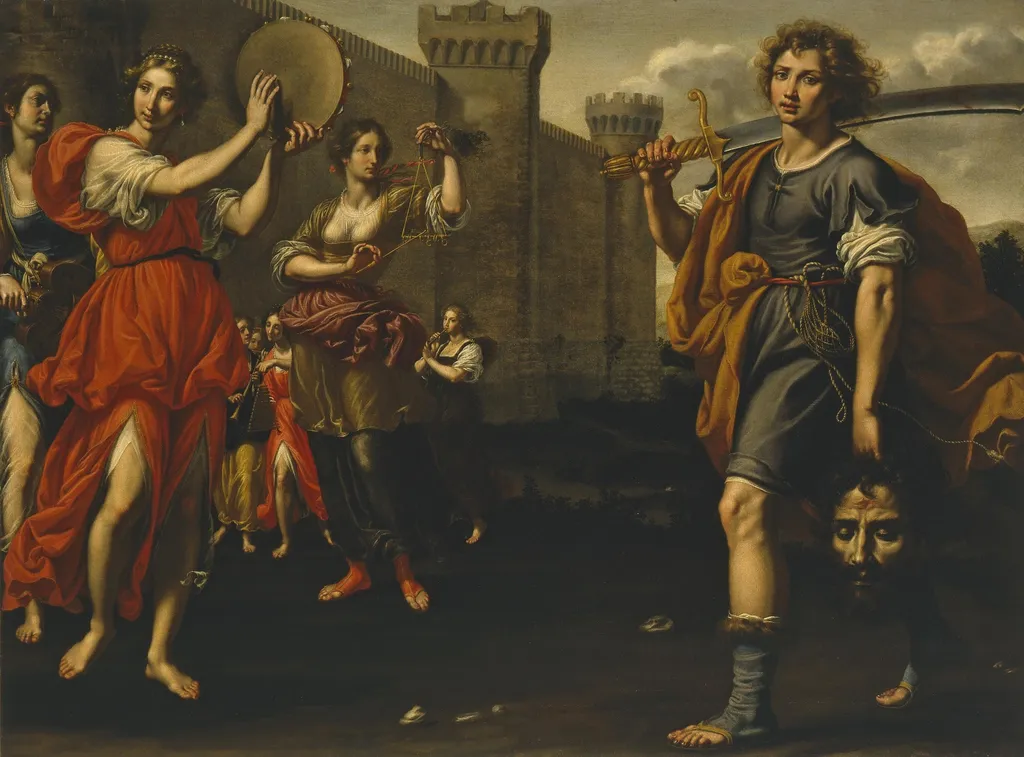
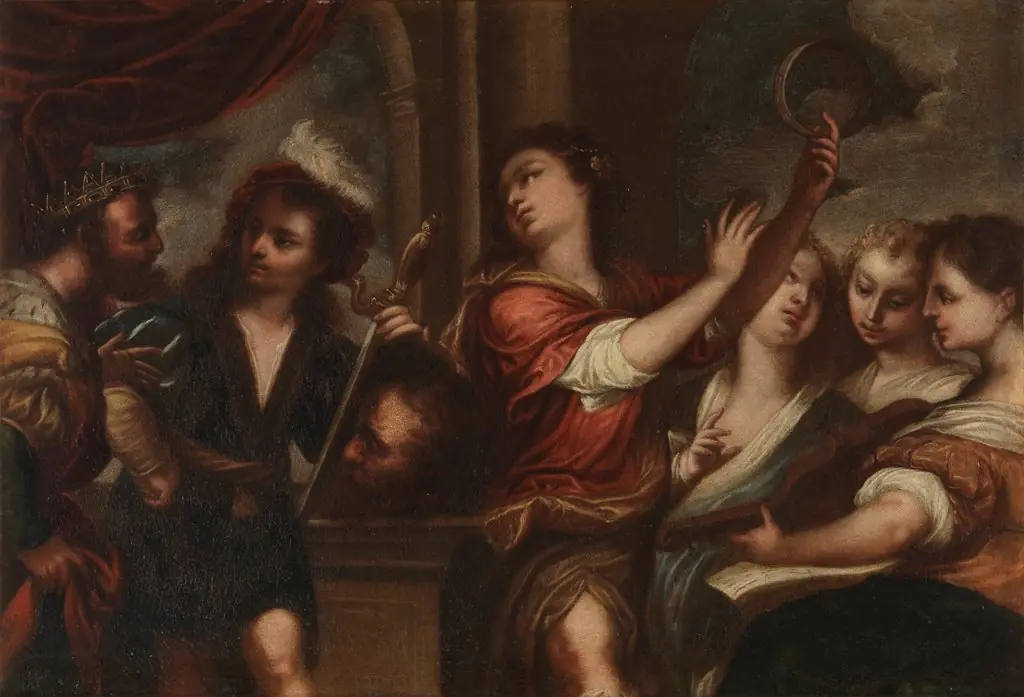
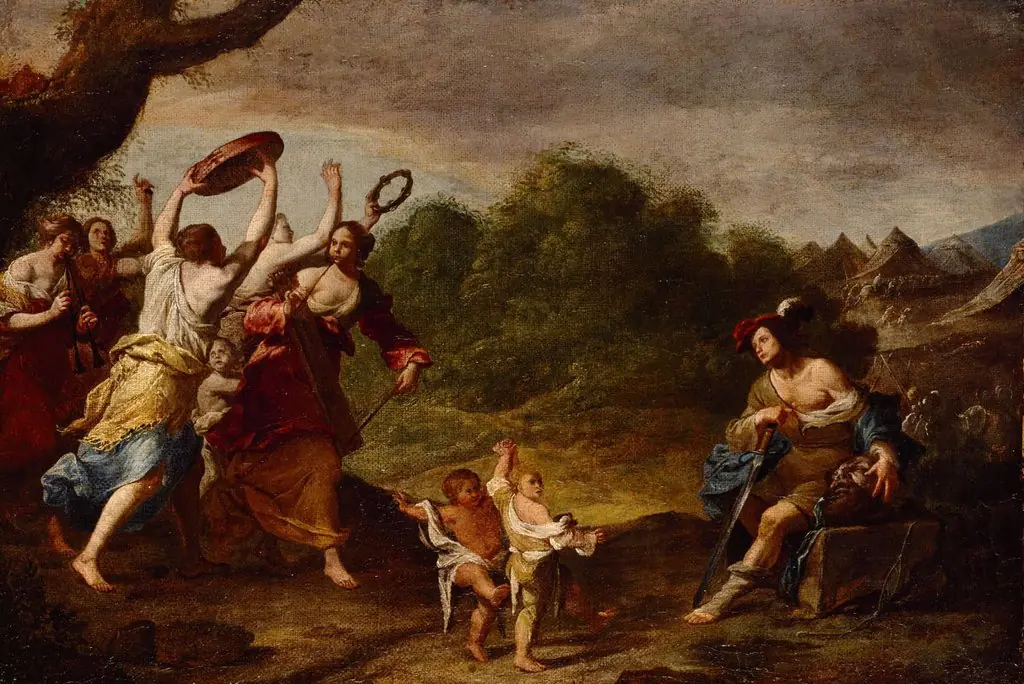
Triumph of David is an oil painting by Ottavio Vannini. It dates from 1624 and is held in the collection of the Hermitage Museum.
About this work
Overview
Ottavio Vannini's 'Triumph of David,' executed in 1624, is a Baroque oil painting depicting the biblical hero following his victory over Goliath.
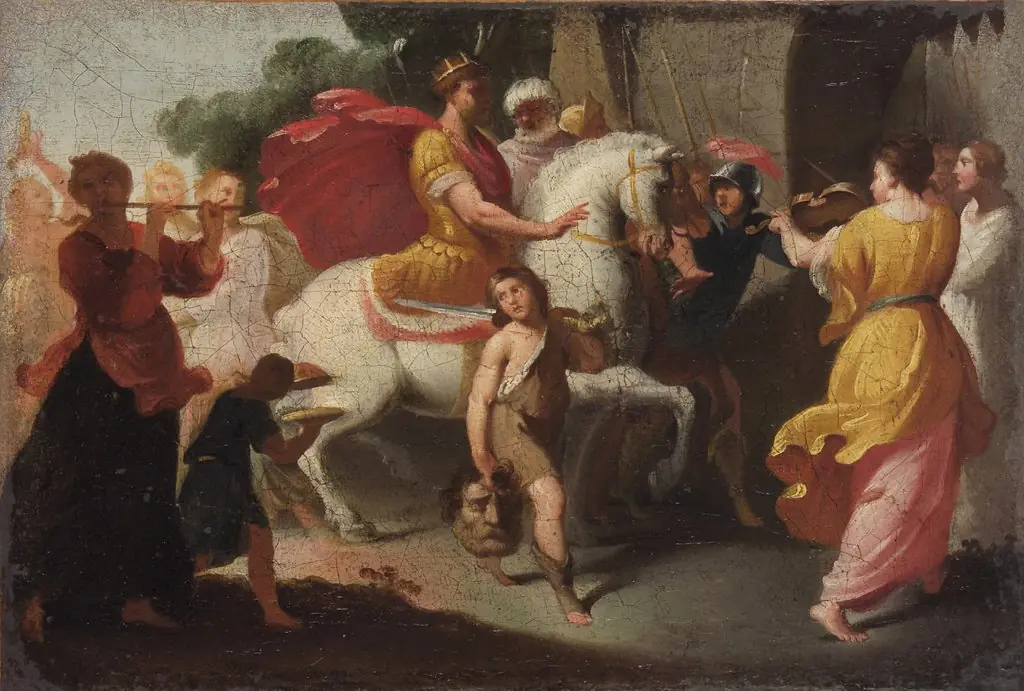
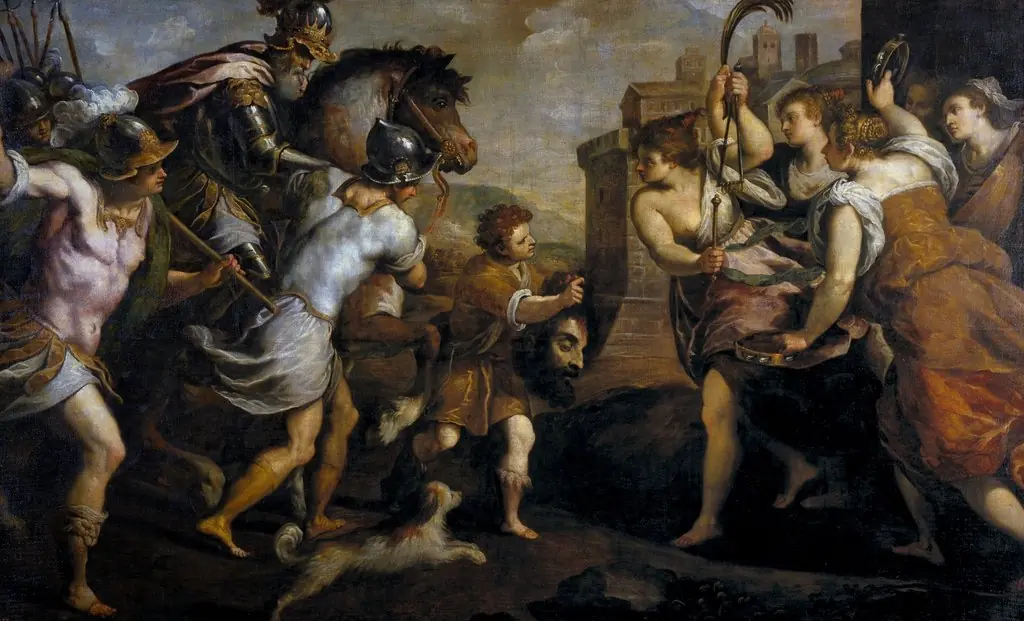
Ottavio Vannini's 'Triumph of David,' executed in 1624, is a Baroque oil painting depicting the biblical hero following his victory over Goliath. The composition centers on David in the foreground, clad in a gray tunic and an orange cape, holding the severed head of the giant in his left hand and a sword in his right. Behind him, a celebratory procession unfolds, featuring figures playing musical instruments, including a drum and a stringed instrument, which underscores the festive atmosphere of the triumph.
This work exemplifies Vannini's adherence to the late Mannerist and early Baroque styles prevalent in Florence during the early 17th century, characterized by dynamic poses and rich color contrasts. Painted during a period when Vannini was establishing himself as a significant religious and historical painter in Tuscany, the piece reflects the Counter-Reformation emphasis on dramatic narrative and clear iconography. The painting serves as a testament to Vannini's ability to blend traditional biblical storytelling with the theatricality favored by his contemporaries, contributing to the broader artistic discourse of the Florentine school in the 1620s.
Subject & Meaning
At the centre stands a man in a gray tunic and orange cape, clutching a sword in his right hand and a severed head in his left, evoking the aftermath of David’s triumph. Surrounding figures include a woman beating a drum and another playing a stringed instrument, suggesting a celebratory procession that underscores the theme of victorious conquest.
Technique & Style
Executed in oil on canvas, the composition employs strong contrasts of light and shadow characteristic of Baroque chiaroscuro, highlighting the central figure against a darker backdrop. The rendering of textures, from the fabric of the cape to the metallic gleam of the sword, demonstrates Vannini’s skillful handling of the medium.
History & Provenance
Created in the early seventeenth century, the painting entered the State Hermitage Museum’s holdings, where it remains on display. Its provenance prior to acquisition by the museum is not extensively documented, but its presence in a major Russian collection reflects its recognized artistic value.
Context
The work aligns with the Baroque period’s fascination with dramatic narrative and emotional intensity, echoing contemporary treatments of biblical subjects. Vannini’s choice to depict the victorious moment rather than the battle itself follows a tradition of emphasizing moral triumph and divine favor.
Own this work as a print
Artist & collection