Artwork
The Triumph of David
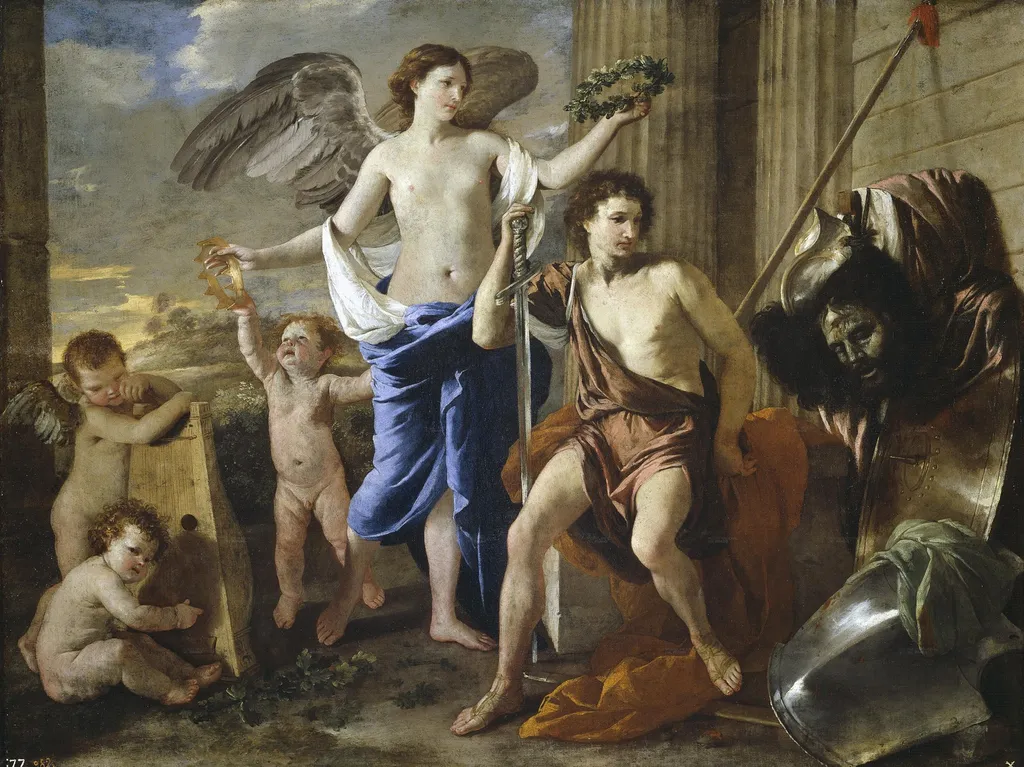
The Triumph of David is an oil painting by the Early Baroque Italian artist Nicolas Poussin. It dates from 1630 and is held in the collection of the Museo del Prado.
About this work
Subject & Meaning
Nicolas Poussin's 1630 oil painting, The Triumph of David, falls within the genre of religious art and centers on the biblical narrative of David and Goliath.
Nicolas Poussin's 1630 oil painting, The Triumph of David, falls within the genre of religious art and centers on the biblical narrative of David and Goliath. The composition explicitly depicts the hero David alongside a weapon, referencing the moment of his victory over the giant. This subject matter serves as a religious representation of triumph and divine favor, focusing on the specific episode where the young shepherd defeats a formidable enemy.
The work visualizes the core conflict and resolution of the story, highlighting the weapon as a key iconographic element associated with the protagonist's success.
Technique & Style
Executed in oil on canvas in 1630, Poussin’s composition is painted in a restrained palette with careful modeling of figures and architecture to articulate spatial recession. The handling is precise, with smooth transitions between light and shadow that emphasize volumetric form, while the brushwork remains largely invisible beneath a finely finished surface. Stylistically, the scene is organized around a central column that divides the composition into two balanced halves, creating a measured, classical rhythm.
Figures are arranged in a shallow stage-like space, their poses echoing antique prototypes to convey a sense of elevated narrative rather than dramatic immediacy.
History & Provenance
The Triumph of David by Nicolas Poussin is dated to 1630 and is executed in oil on canvas with dimensions of 100 cm in height and 130 cm in width.
The painting’s early ownership is traced to Girolamo Casanate, an Italian cardinal and bibliophile, before passing to Louis Milon de Rigny. By the mid-18th century it had entered the Spanish royal collection, first recorded under Philip V. Subsequent Spanish monarchs Charles III and Ferdinand VII are listed as owners, indicating its presence in the royal holdings. The work later entered the Museo del Prado, where it remains housed in the Royal Palace of Aranjuez.
The Triumph of David is held in the Museo del Prado, Madrid, with inventory number P02311.
Its exhibition history includes display at the Royal Palace of Aranjuez, where it was held during the reigns of Spanish monarchs Philip V, Charles III, and Ferdinand VII, reflecting its placement in the Spanish royal collection. In the early 19th century, the painting was owned by Girolamo Casanate and later by Louis Milon de Rigny before entering the Prado’s holdings.
Overview
Created in 1630, Nicolas Poussin’s oil on canvas entitled The Triumph of David belongs to the museum’s collection at the Prado. The work presents a dramatic tableau that combines biblical narrative with allegorical elements, rendered in a somber palette that emphasizes contrast between light and shadow.
Context
The work reflects Poussin’s engagement with classical and biblical subjects during the French Baroque period, integrating the dramatic lighting favored by Caravaggisti with his own measured classicism. The inclusion of allegorical figures aligns with contemporary practices of embedding moral or theological commentary within historical scenes.
Own this work as a print
Artist & collection
Artist
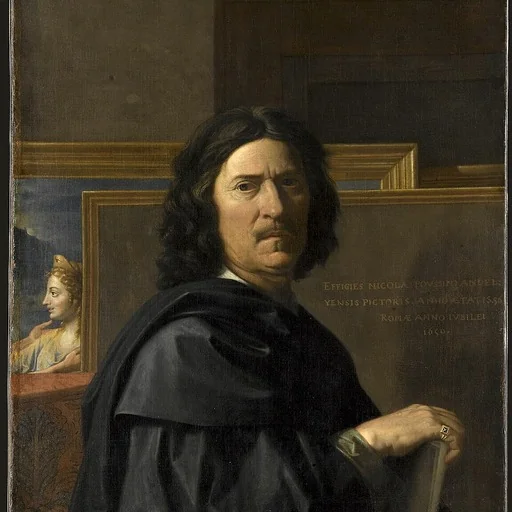
Nicolas Poussin (UK: US: French:; June 1594 – 19 November 1665) was a leading painter of the classical French Baroque style, although he spent most of his working life in Rome.

- Selene and Endymion
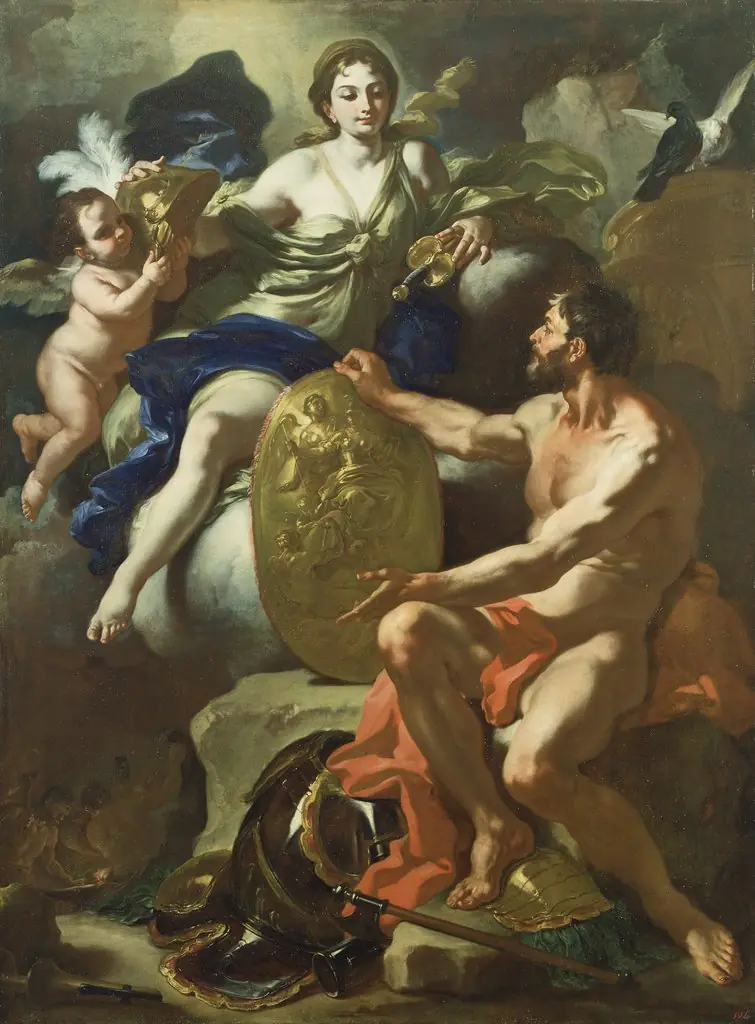 Venus at the Forge of Vulcan
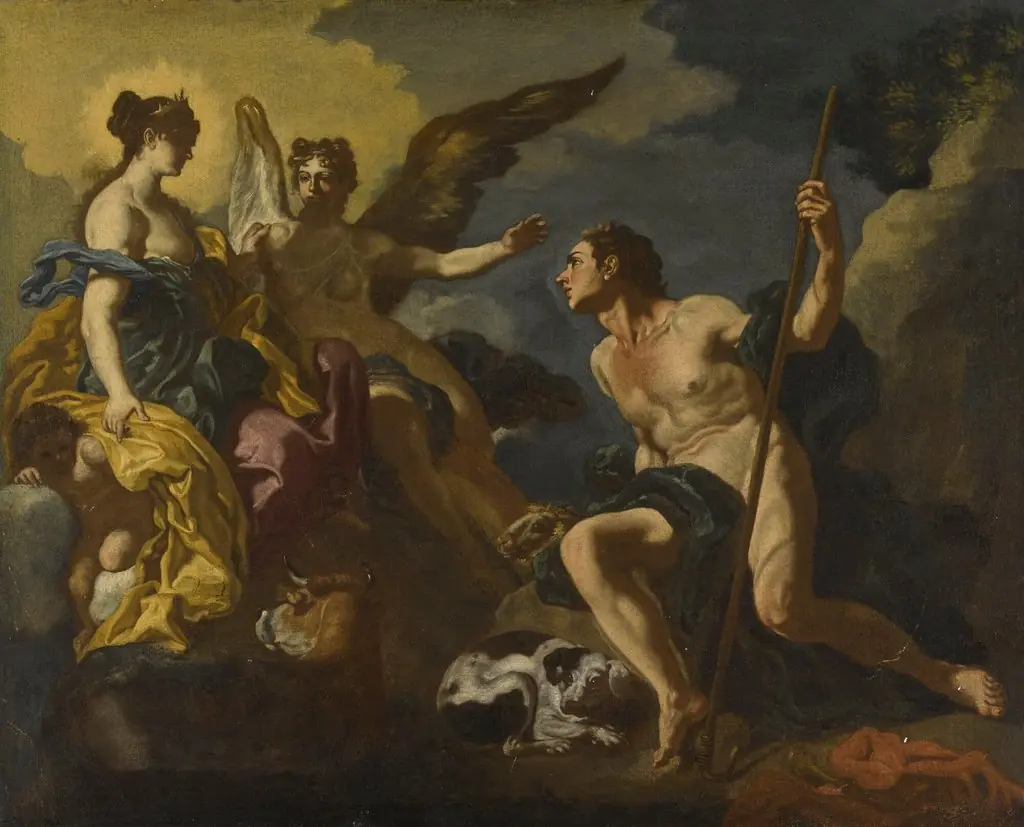 Juno, Io and Argus
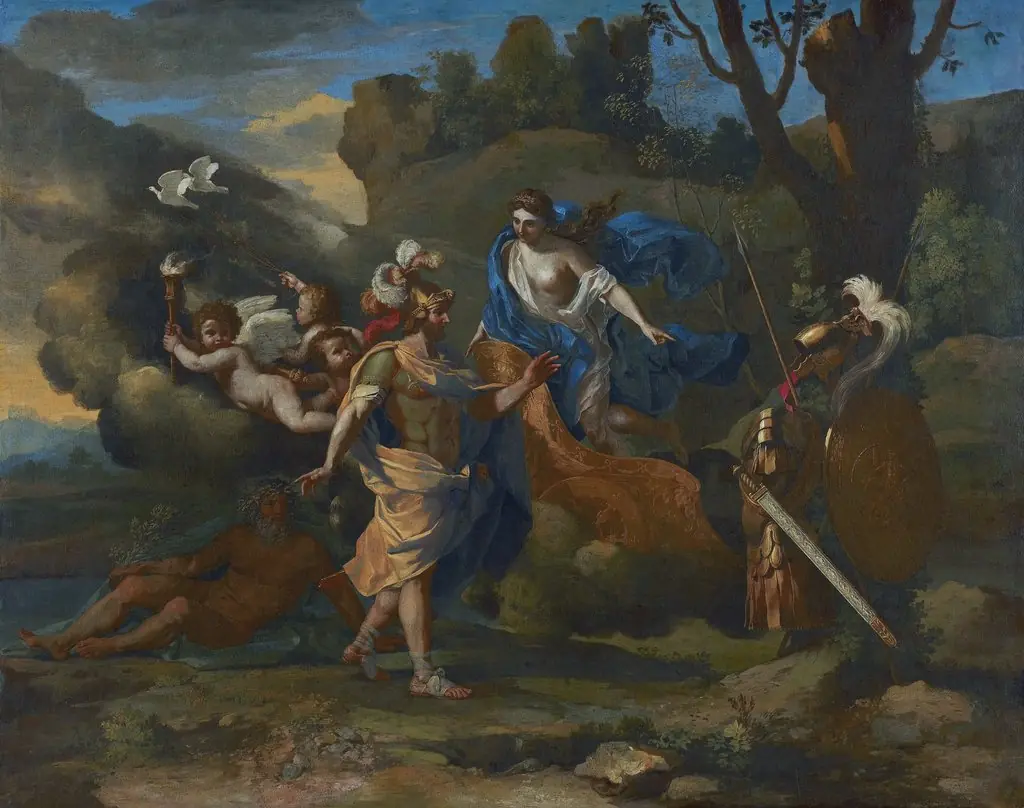 Venus, Mother of Aeneas, presenting him with Arms forged by Vulcan"
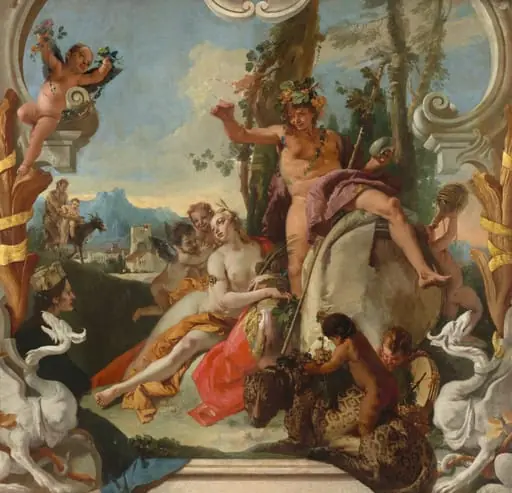 Bacchus and Ariadne
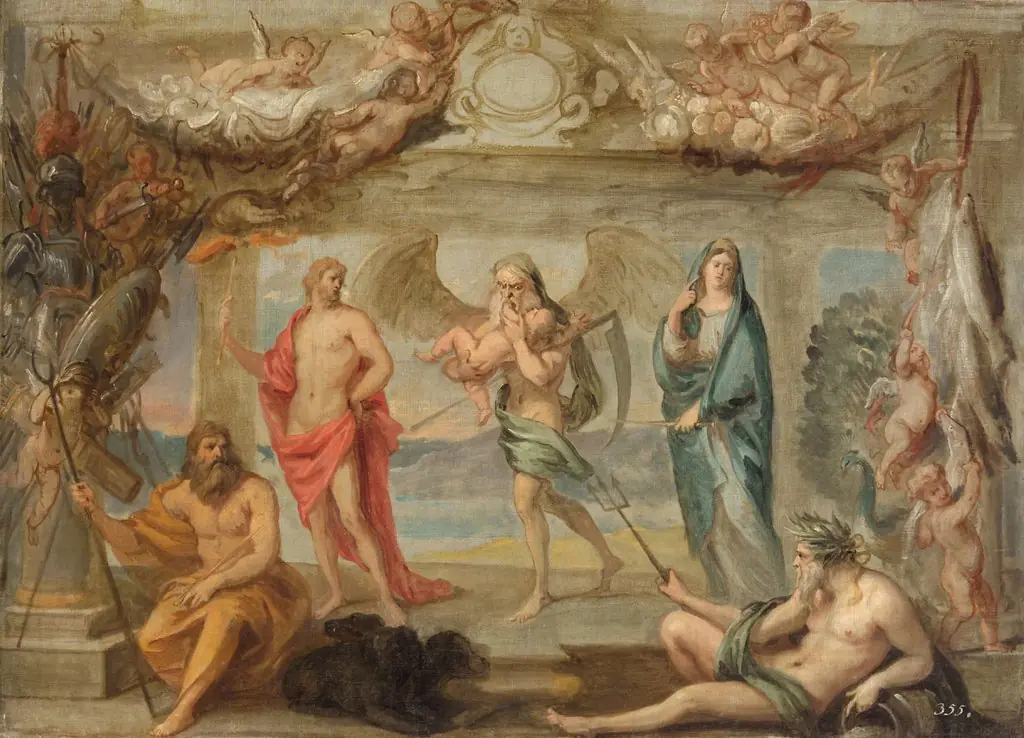 Die Elemente und die Zeit
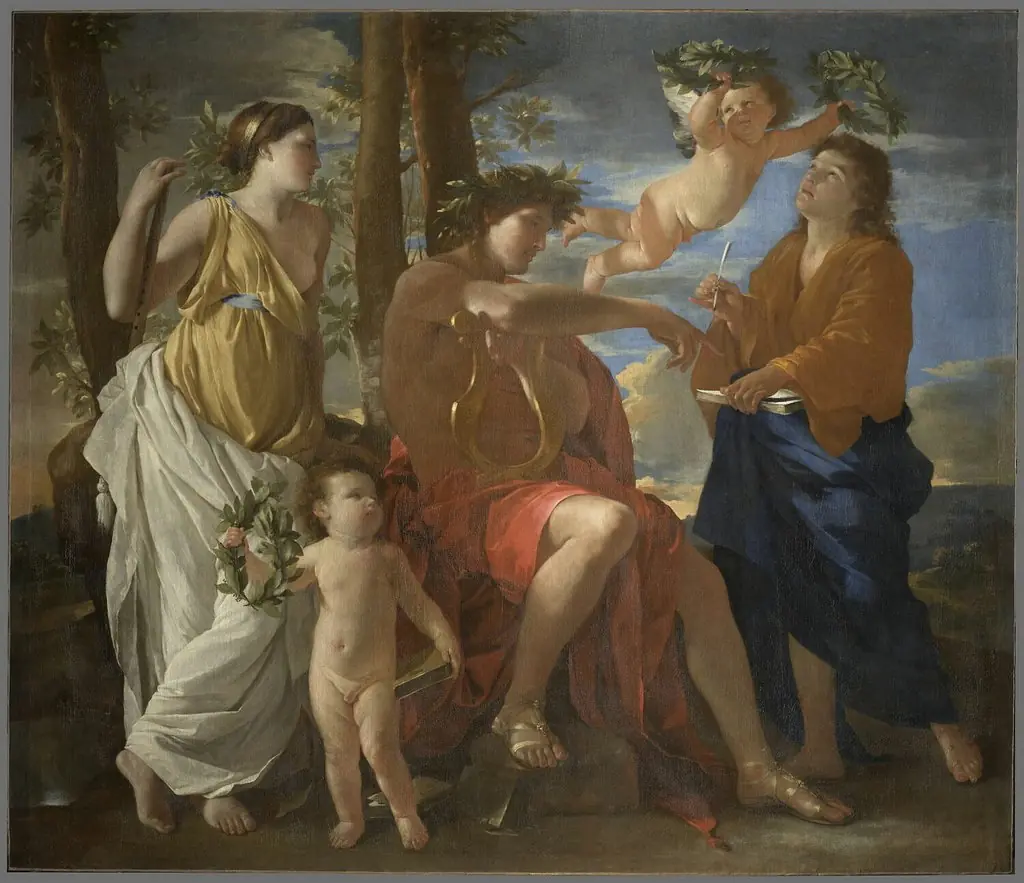 The Inspiration of the Poet
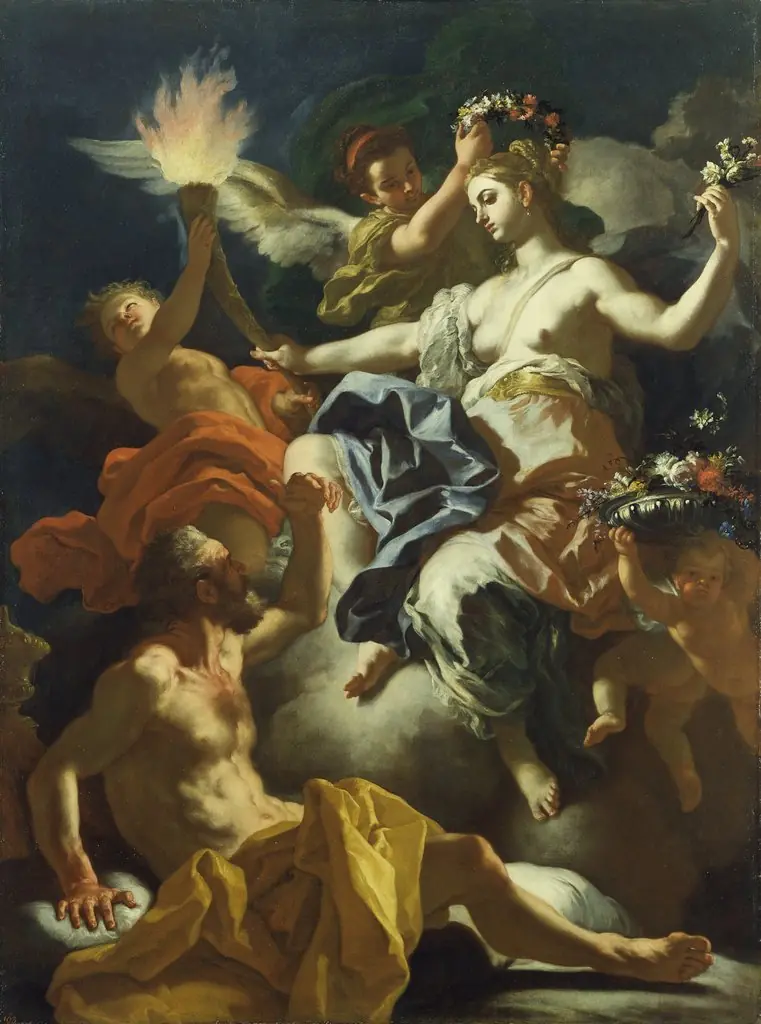 Aurora Taking Leave of Tithonus
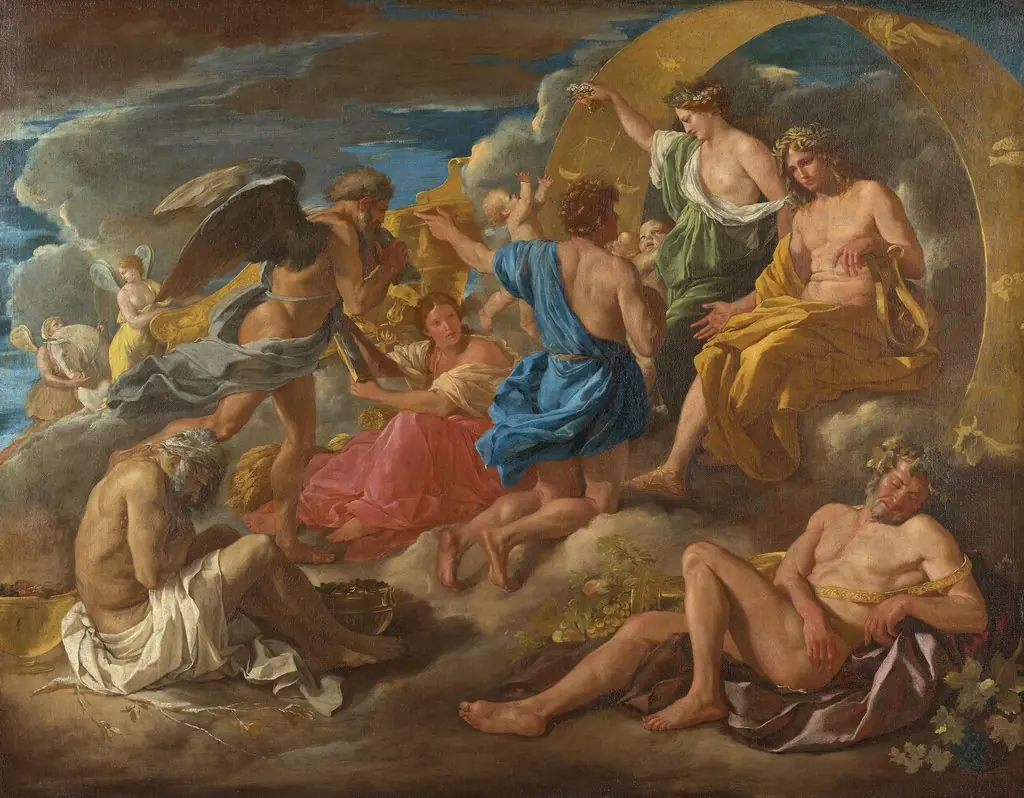 Helios and Phaeton with Saturn and the Four Seasons
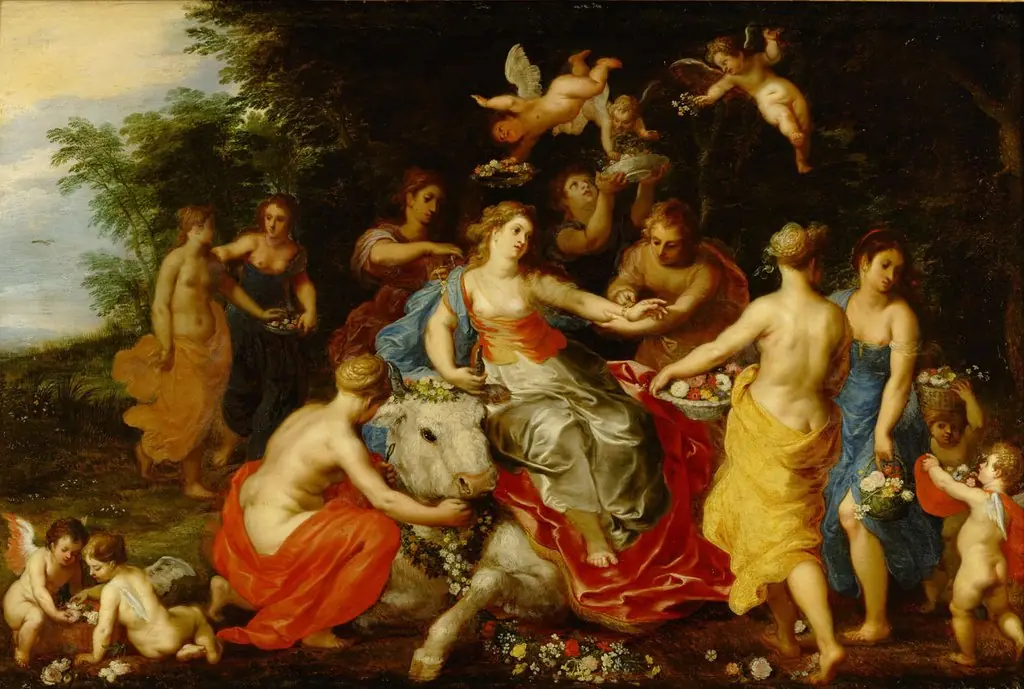 Europa riding the bull
 The Abduction of Orithyia
 Virtue Overcoming Avarice