Artwork
Saint Sebastian
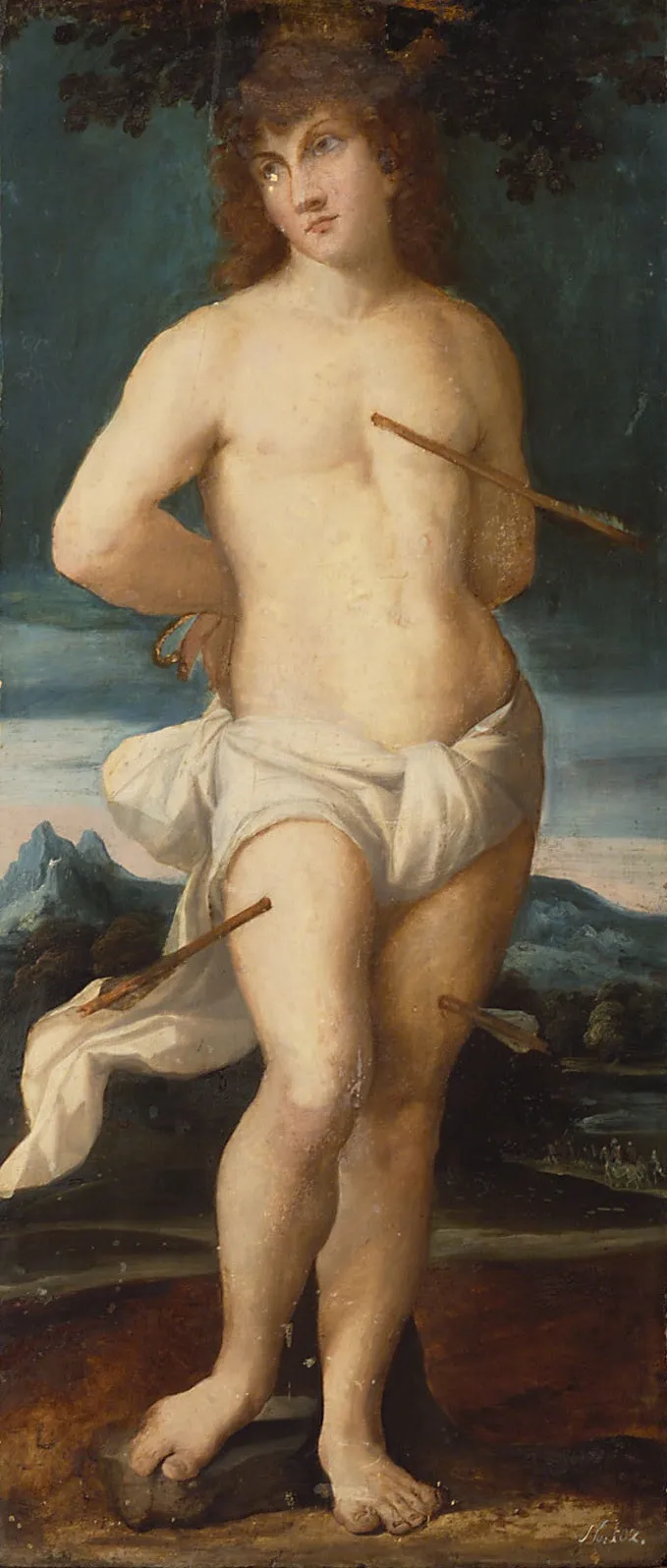
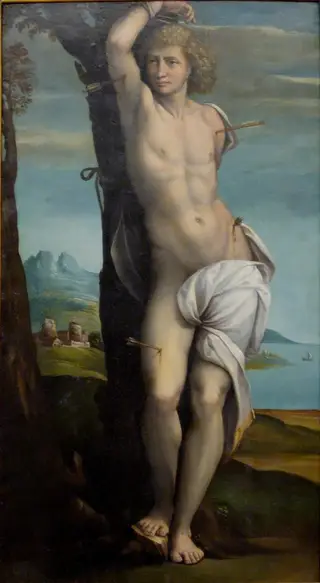
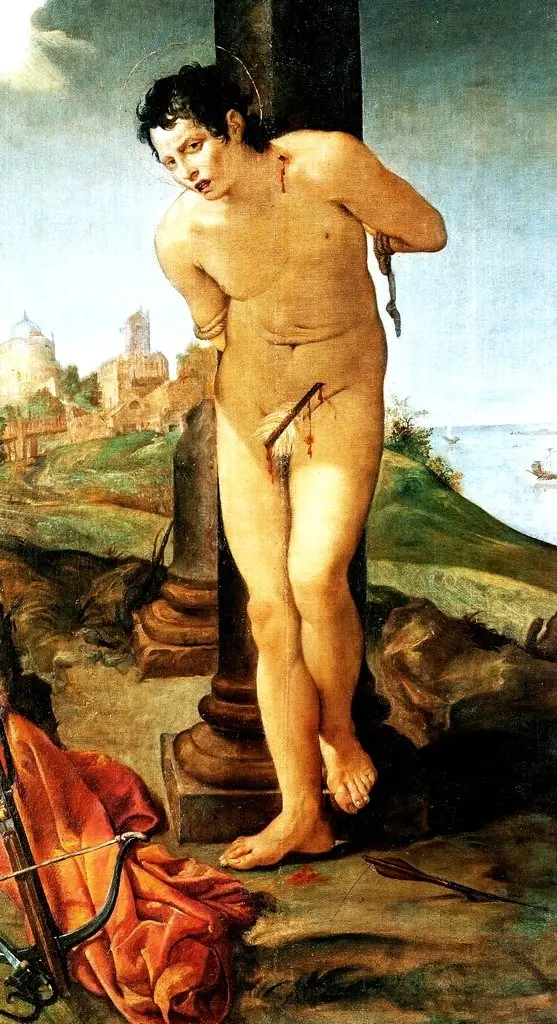
Saint Sebastian is an oil painting by the High Renaissance artist Palma Vecchio. It dates from 1527 and is held in the collection of the Kunsthistorisches Museum.
About this work
Subject & Meaning
The arrows function both as instruments of execution and as the saint's defining attribute in Christian iconography, allowing viewers to identify him instantly.
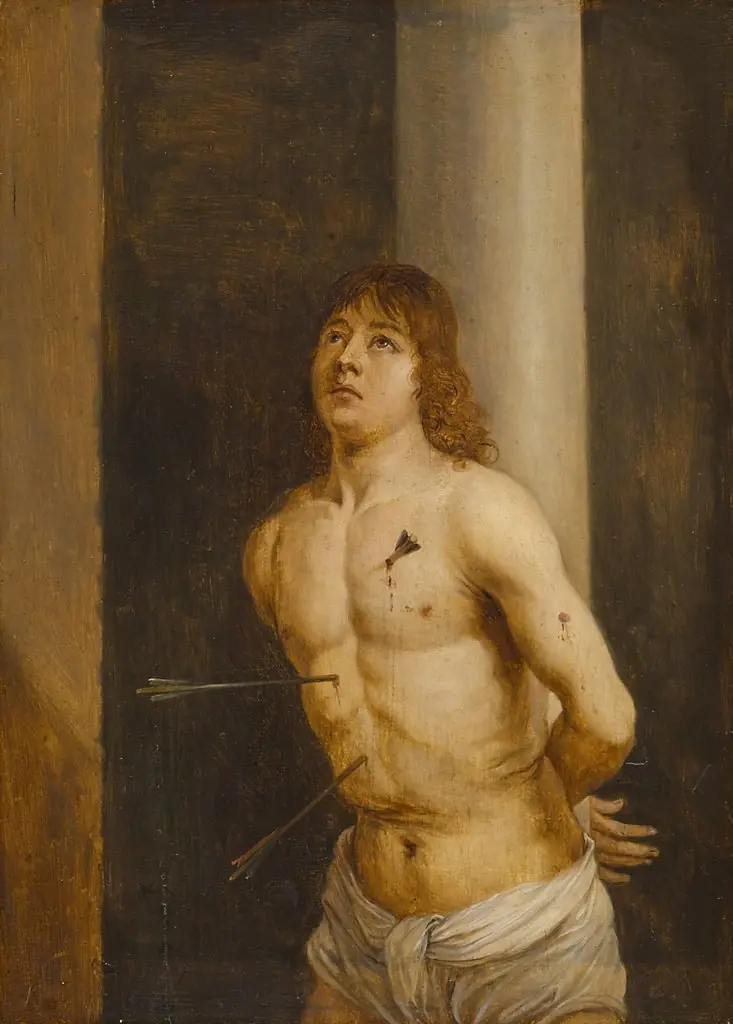
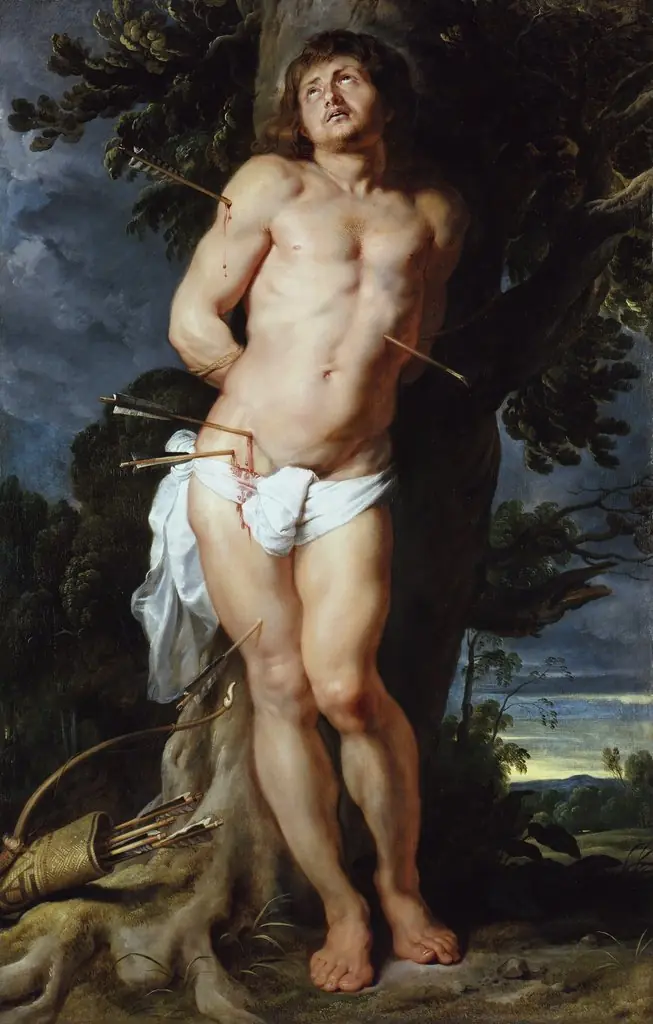
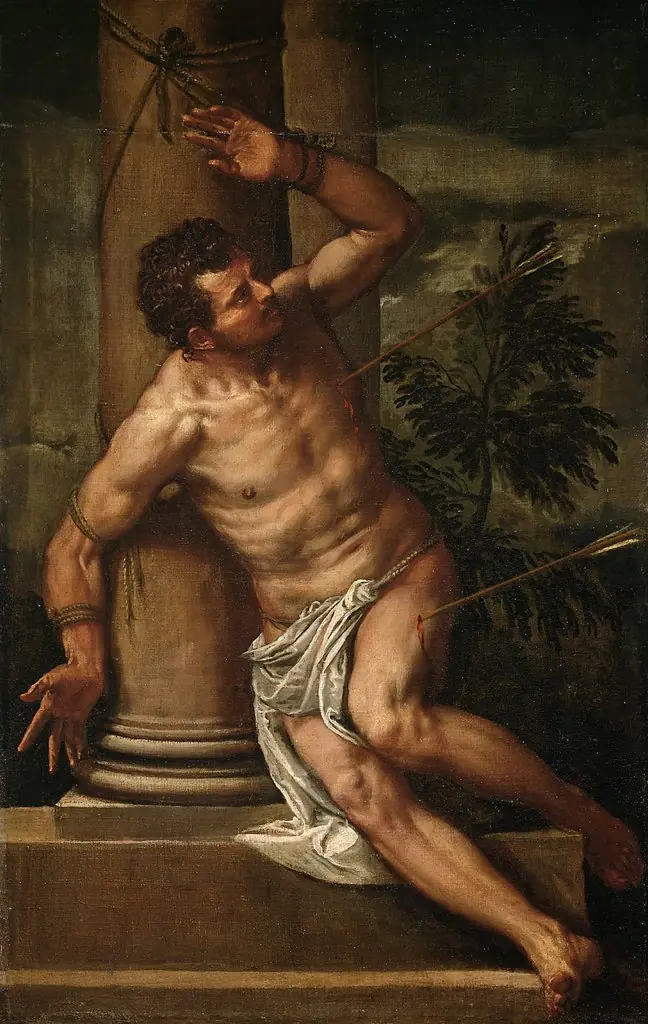
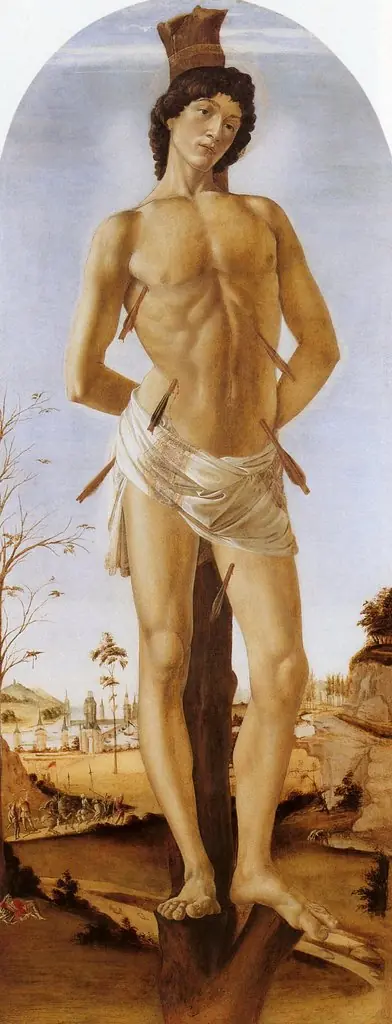
The painting depicts the martyrdom of Saint Sebastian, a male figure pierced by arrows. As a subject, Saint Sebastian is one of the most frequently represented saints in late medieval and Renaissance religious art, traditionally shown bound and shot with arrows during his persecution under the Roman emperor Diocletian.
In Palma Vecchio's composition, the saint is rendered as a standing man transfixed by arrows, isolating the moment of his torture. The arrows function both as instruments of execution and as the saint's defining attribute in Christian iconography, allowing viewers to identify him instantly. The vertical, narrow format (82 × 36 cm) suits the upright, isolated figure of the martyr.
The work belongs to the genre of religious art, and its meaning centers on Sebastian's endurance of suffering and his status as a protector saint invoked against plague, a meaning that gave such images particular resonance in sixteenth-century Europe.
Technique & Style
The work is an oil painting on panel, measuring 82 cm in height and 36 cm in width. It depicts the martyrdom of Saint Sebastian, showing the saint bound to a post with arrows piercing his body. The composition is characteristic of Palma Vecchio's mature period, featuring a naturalistic rendering of the figure against a dark landscape background and a restrained use of color that emphasizes anatomical detail.
The painting was created in 1527 and originally belonged to Archduke Leopold Wilhelm of Austria before entering the collection of the Kunsthistorisches Museum, where it remains on display.
History & Provenance
Saint Sebastian by Palma Vecchio is held in the permanent collection of the Kunsthistorisches Museum in Vienna. The painting was formerly owned by Archduke Leopold Wilhelm of Austria before entering the museum's holdings. No specific inventory or accession number is recorded in the available sources, and no exhibition history is documented.
Overview
Created in 1527 by the Venetian painter Palma Vecchio, this oil painting portrays the Christian martyr Saint Sebastian. The figure is shown seated against a rugged cliff, his torso partially covered by a loose white drape while he holds a bow and a bundle of arrows. The composition is dominated by muted tones, with only the faint red wounds on his chest providing a subtle accent.
Context
Executed during the Italian High Renaissance, the piece reflects the period’s interest in idealized human anatomy and balanced composition. Venetian artists of the time often combined rich color with subtle tonal modeling, a practice evident in this portrayal of a religious subject that merges devotional narrative with refined aesthetic principles.
Artist & collection
Artist
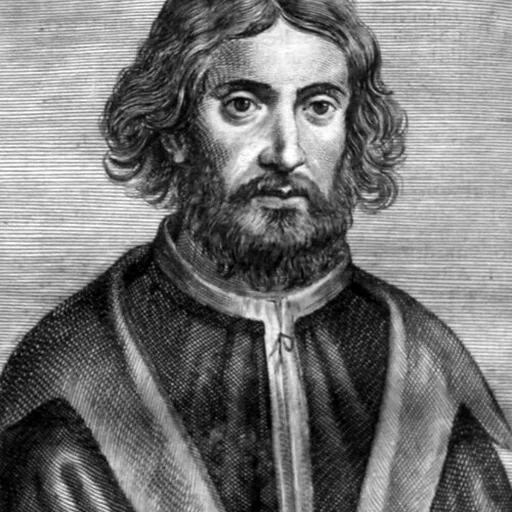
Palma Vecchio (c. 1480 – 30 July 1528), born Jacopo Palma, also known as Jacopo Negretti, was a Venetian painter of the Italian High Renaissance. He is called Palma Vecchio in English and Palma il Vecchio in Italian…