Artwork
The Hunt in the Forest
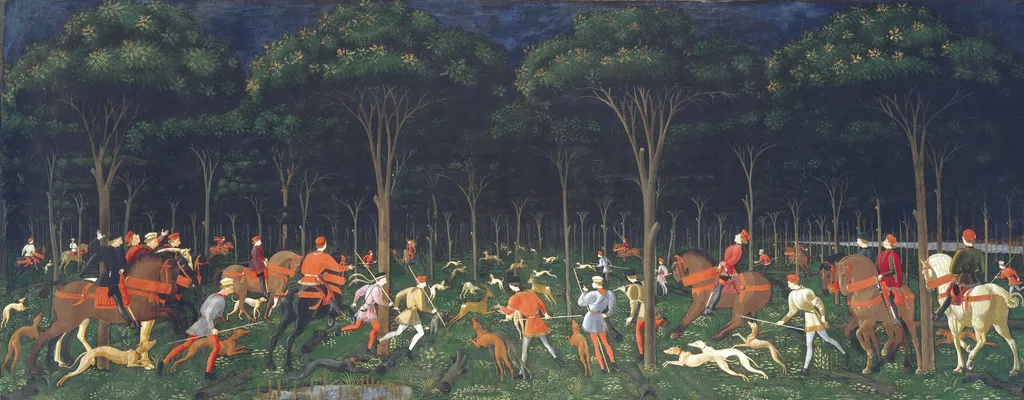
The Hunt in the Forest is an oil painting by the Early Renaissance artist Paolo Uccello. It dates from 1470 and is held in the collection of the Ashmolean Museum.
About this work
Subject & Meaning
This atmosphere stems from the schematic, ballet-like positioning of the figures and flat color tones that emphasize silhouettes over realistic volume.
The painting depicts a nocturnal hunt within a dense forest, populated by knights, servants, sighthounds, and prey, primarily deer. While the scene utilizes rigorous linear perspective to create depth through a central vanishing point occupied by the game and receding figures, the overall effect remains dreamlike and unnatural. This atmosphere stems from the schematic, ballet-like positioning of the figures and flat color tones that emphasize silhouettes over realistic volume.
The work likely functioned as a spalliera or cassone panel, objects traditionally associated with marriage in Renaissance Florence. Symbolically, the piece represents a mediation between Gothic tradition and Renaissance innovation; the meticulous botanical details and former gold leaf accents on the foliage recall late Gothic decorative styles, while the mathematical grid governing the space demonstrates Uccello's mastery of perspective. The darkening colors justify the night setting, creating a precious, mosaic-like composition.
Technique & Style
The Hunt in the Forest is an oil and tempera painting on panel, with traces of gold, measuring 73.3 cm in height and 177 cm in width (source 6). Paolo Uccello created a grid on the panel to fix a central vanishing point, using diminishing scale and perspective to render depth in a nocturnal forest scene filled with hunters, dogs, and deer (sources 2, 3). The work likely formed part of a cassone and exemplifies Early Renaissance techniques, blending linear perspective with ornamental detail such as gold-leaf foliage (sources 3, 5). Its formal treatment features receding figures and animals aligned to the vanishing point, while the surface retains a late Gothic sensibility through naturalistic plant rendering and flattened spatial staging (sources 4, 5).
History & Provenance
The Hunt in the Forest, a tempera and oil on panel painting by Paolo Uccello, was created around 1470. It measures 73.3 cm in height and 177 cm in width, and was likely produced as part of a cassone, a painted marriage chest common in Renaissance Florence. The work was acquired by the Ashmolean Museum in Oxford through the Fox-Strangways Gift in 1850 and remains in its collection. Uccello employed a central vanishing point and a grid to structure the depth of the nocturnal forest scene, arranging figures and animals in diminishing scale to enhance perspective. The painting exemplifies his mastery of linear perspective and blends early Renaissance techniques with lingering Gothic motifs, such as detailed naturalistic foliage and gold leaf accents.
The Hunt in the Forest is held in the Ashmolean Museum, Oxford, England, with accession number WA1850.31, acquired through the Fox-Strangways Gift in 1850. The work is classified as a painting from around 1470, executed in tempera and oil with traces of gold on panel, measuring 73.3 cm in height and 177 cm in width. It was likely part of a cassone and represents one of Paolo Uccello’s last known paintings before his death in 1475. The artwork has appeared in exhibitions and cultural references, including its depiction in the British TV series Lewis and mentions in literary works by John Fowles and Brian Catling.
Context
Scholars consistently frame *The Hunt in the Forest* as a culmination of Uccello’s lifelong engagement with linear perspective, executed in his final years. Its disciplined perspectival grid, anchored by a central vanishing point, transforms a nocturnal hunt into a measured, almost architectural space. While the spatial structure is rigorously constructed, the overall effect remains stylized: silhouetted figures, repeated poses, and flat color fields lend the scene a dreamlike quality rather than naturalism. This duality reflects Uccello’s position between the late Gothic tradition and the emerging Renaissance, a mediating role noted in Italian scholarship. The painting’s original function remains debated, Wikipedia and French sources propose it as a spalliera or cassone panel linked to a Florentine marriage, but its scale and decorative handling suggest a luxury object. Its later recognition is underscored by inclusion in Michel Butor’s *musée imaginaire*, signaling its canonical status in Western painting.
Legacy
The Hunt in the Forest has been recognized as a landmark in the study of linear perspective, influencing later discussions of Renaissance spatial construction. In modern popular culture, the painting appears in the British television series *Lewis*, where it functions as a key clue in a murder investigation, with the protagonist repeatedly referencing its perspectival logic to solve the case.
Literary references include John Fowles’s novels *The Ebony Tower* and *The Collector*, which laud the work’s technical precision and visual impact. The painting was also included in Michel Butor’s curated selection of 105 decisive works of Western painting, underscoring its canonical status in art-historical discourse.
Artist & collection
Artist
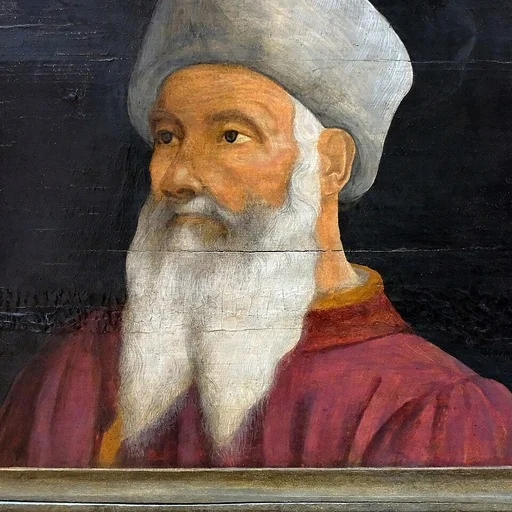
Paolo Uccello ( oo-CHEL-oh, Italian:; 1397 – 10 December 1475), born Paolo di Dono, was an Italian Renaissance painter and mathematician from Florence who was notable for his pioneering work on visual perspective in art.

 The Story of Nastagio Degli Onesti, part two
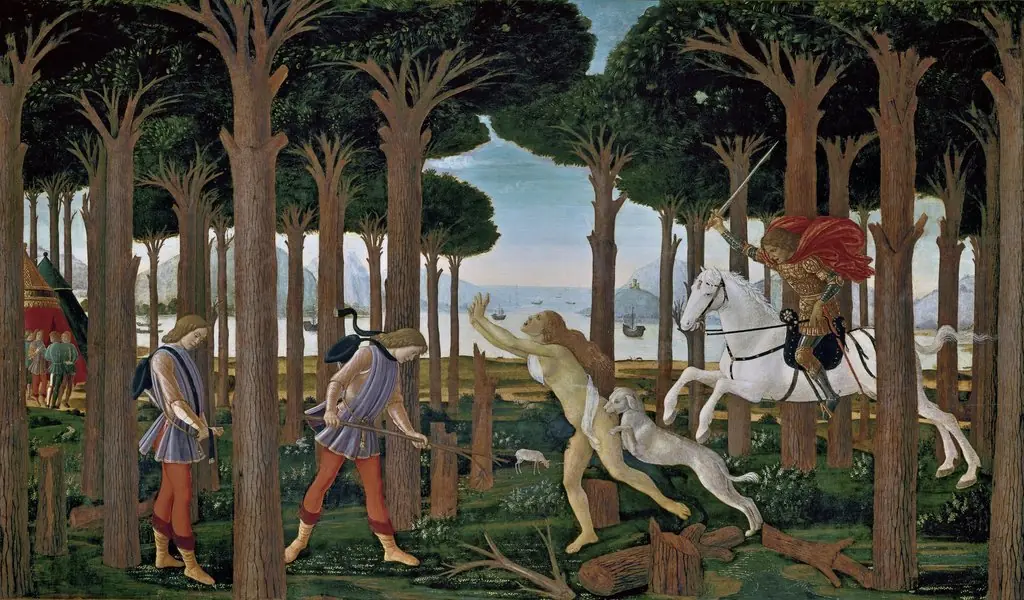 The Story of Nastagio Degli Onesti, part one
 Hunting near Hartenfels Castle
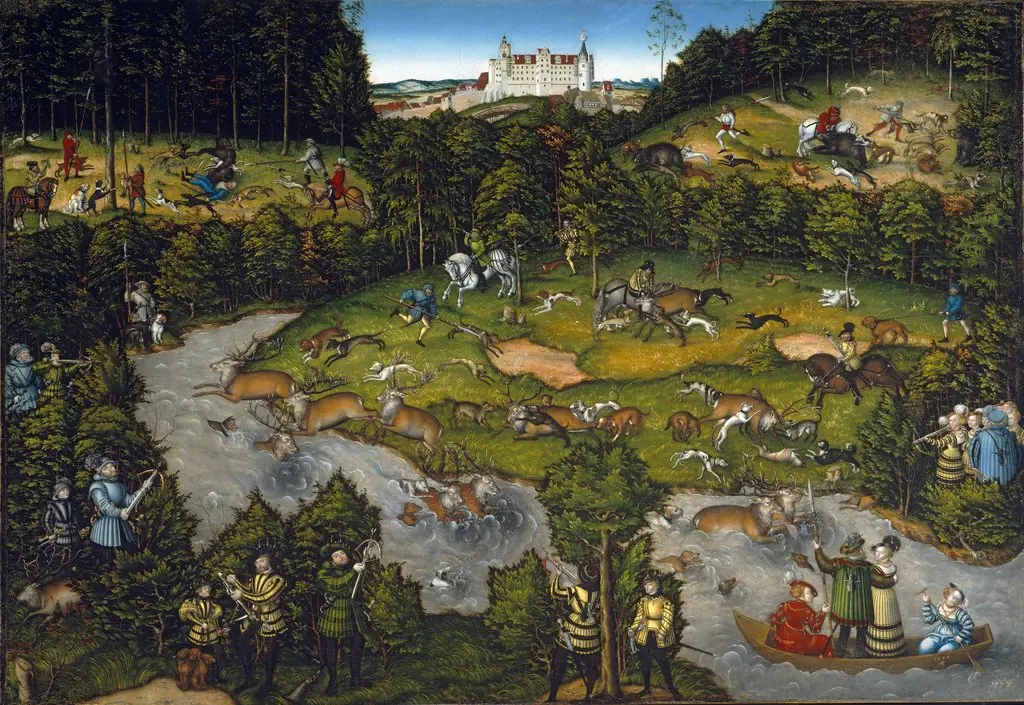 Hunting near Hartenfels Castle
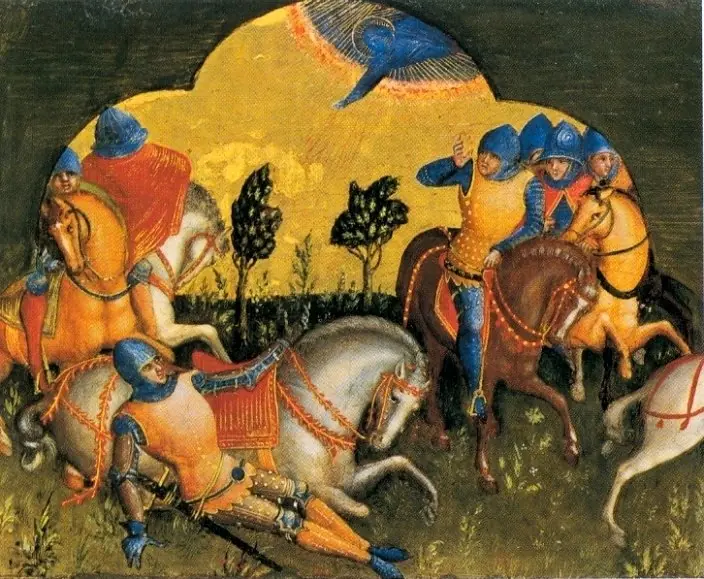 The Conversion of Paul
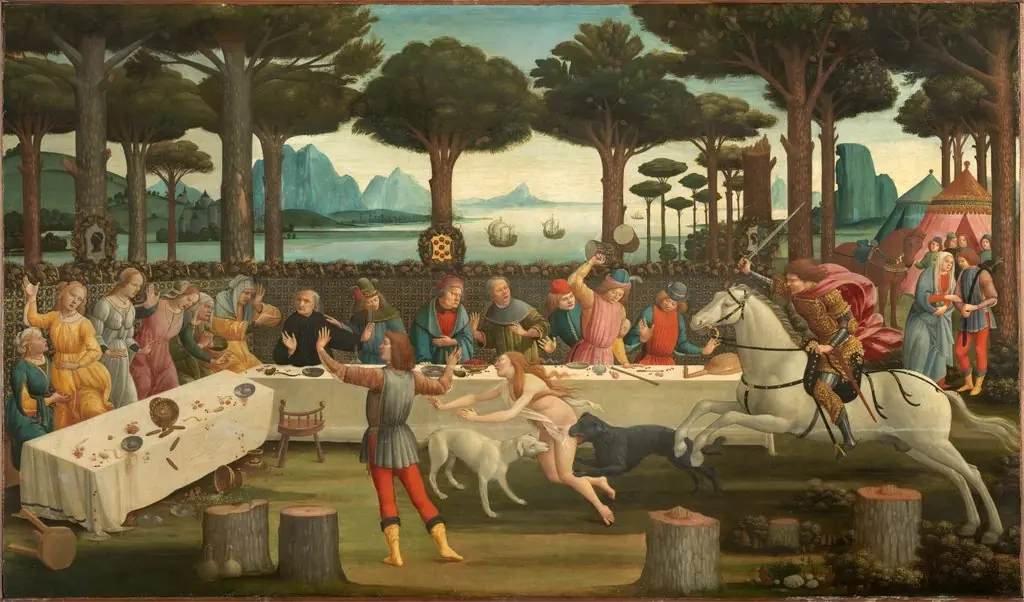 The Story of Nastagio Degli Onesti, part three
 Jagdstück
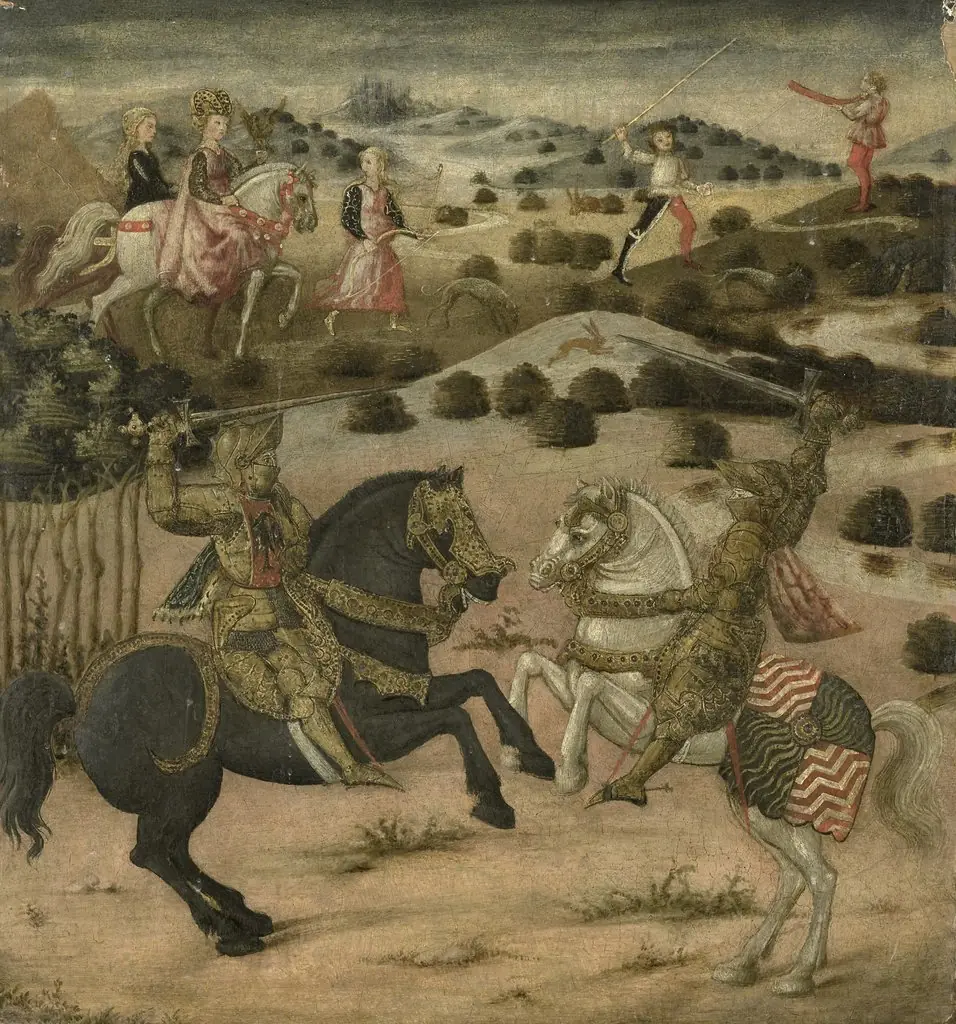 Legend of a Knight (end panel of a cassone)
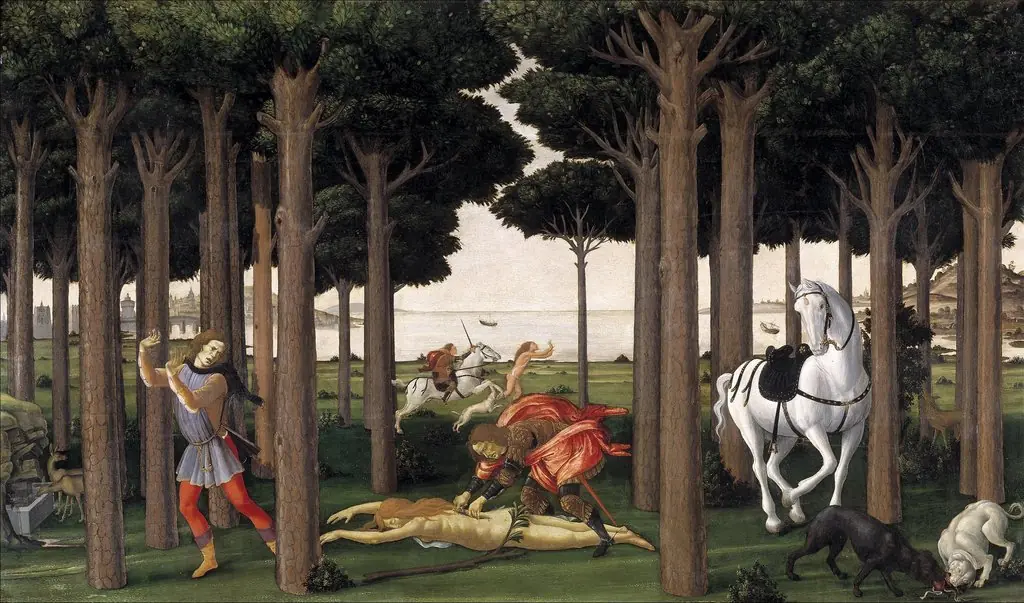
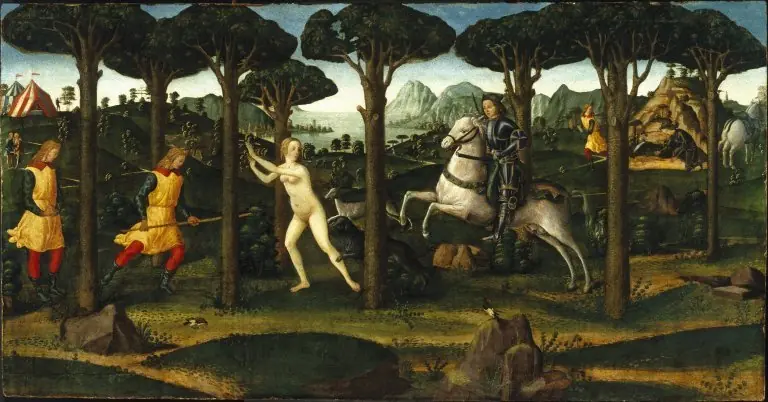 Forest Scene from the Tale of Nastagio degli Onesti, in Boccaccio's "Decameron"