Artwork
The Story of Nastagio Degli Onesti, part one
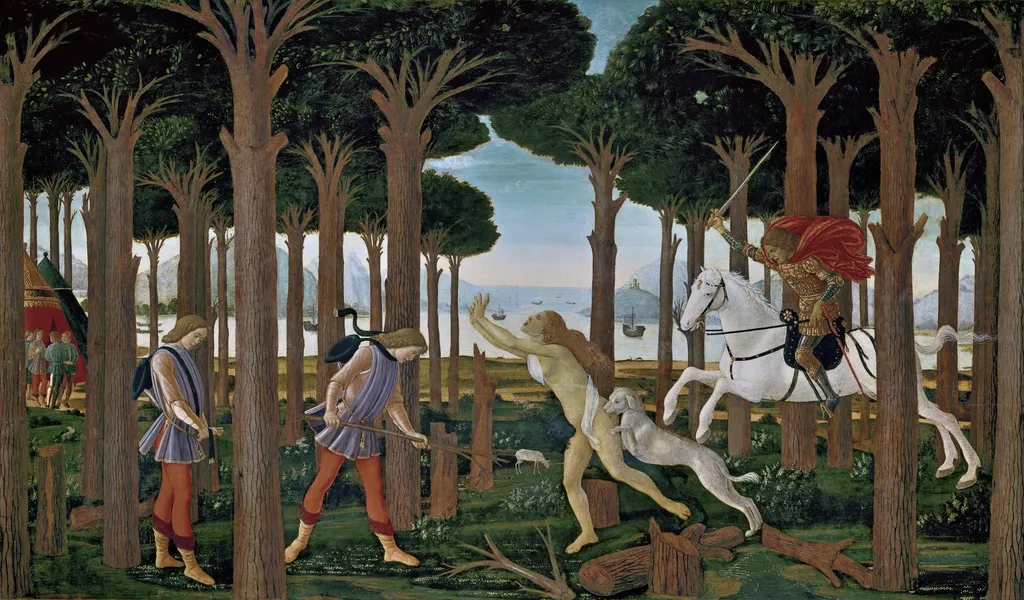
The Story of Nastagio Degli Onesti, part one is a tempera painting by the Early Renaissance artist Sandro Botticelli. It dates from 1492 and is held in the collection of the Museo del Prado.
About this work
Subject & Meaning
The woman’s torment symbolizes the infernal punishment of a woman guilty of rejecting her lover, reflecting the tale’s moral warning against cruelty in love.
The painting depicts the first episode of Giovanni Boccaccio’s *Decameron* tale (Day 5, Tale 8), illustrating Nastagio degli Onesti’s encounter in a pine forest near Ravenna. The scene unfolds sequentially within a single composition: Nastagio, identifiable by his red hose, is shown three times, receiving advice from friends to leave the city, wandering alone through the woods, and attempting to intervene as a knight and his dogs attack a naked woman. The woman’s torment symbolizes the infernal punishment of a woman guilty of rejecting her lover, reflecting the tale’s moral warning against cruelty in love. Botticelli’s depiction merges narrative clarity with symbolic resonance, where the forest’s vertical trees and horizontal seascape create a grid-like depth, enhancing the scene’s dramatic tension. The presence of rabbits and a grazing sheep contrasts with the violence, underscoring the tale’s blend of fable and reality. The work’s meaning lies in its cautionary message: the Traversari woman’s eventual change of heart, prompted by witnessing this punishment, underscores the story’s theme of love’s redemption through repentance.
Technique & Style
Executed in 1483, this work is a tempera painting on a wood panel measuring 83 by 138 cm. While the overall conception is attributed to Sandro Botticelli, art historical analysis suggests the execution was partially delegated to workshop assistants, specifically Bartolomeo di Giovanni for this panel and the subsequent two in the series.
The composition employs a continuous narrative technique typical of late medieval tradition, depicting the protagonist Nastagio three times within a single pictorial space to illustrate successive moments of the story. Visually, the vertical trunks of the pine forest create a grid-like structure against the horizontal seascape in the background, generating a strong sense of atmospheric depth. The style balances dramatic action with formal elegance, characterized by slender figures and graceful gestures that suspend the scene between fable and reality.
History & Provenance
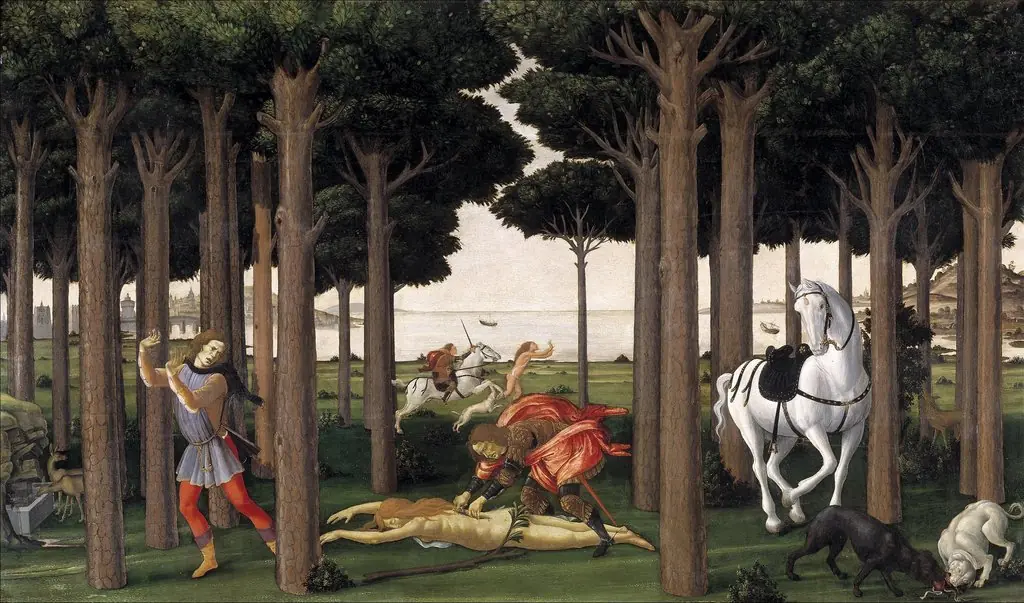
The painting is one of four panels dated to 1483, commissioned on the occasion of the marriage that year of Giannozzo Pucci and Lucrezia di Piero Bini. The French-language source attributes the commission to Lorenzo de' Medici as a nuptial gift, with the panels possibly intended for a wedding bedhead or cassone decoration displaying the two family coats of arms. The four panels remained together in the Palazzo Pucci in Florence until 1868, when they were sold and dispersed. Three of the panels, including this first episode, were subsequently acquired by Francisco de Asís Cambó from the heirs of Joseph Spiridon in 1929, and Cambó donated them to the Museo del Prado in 1941. The fourth panel, the nuptial banquet scene, resurfaced in Florence in April 2004 during a Botticelli, Filippino Lippi exhibition at the Palazzo Strozzi and is reported never to have left its original Pucci palace location, though it had earlier passed through the Watney Collection in Charlbury, Oxfordshire. The painting is held by the Museo del Prado in Madrid, where it has been accessioned following a donation in 1941. Originally part of a four-panel series commissioned for the 1483 marriage of Giannozzo Pucci and Lucrezia Bini, the work remained in the Palazzo Pucci in Florence until the collection was dispersed in 1868. Three panels, including this first episode, were acquired in 1929 by Francisco de Asís Cambó from the heirs of Joseph Spiridon before he gifted them to the museum. While the fourth panel in the series returned to its original Florentine location after passing through the Watney Collection in England, this specific work has resided in the Prado since the mid-20th century. The painting was notably featured in a 2004 exhibition at the Palazzo Strozzi in Florence alongside works by Filippino Lippi.
Context
The four panels of The Story of Nastagio Degli Onesti were commissioned for the 1483 marriage of Giannozzo Pucci and Lucrezia Bini, aligning the work with Florentine humanist traditions of celebrating nuptials through secular narratives drawn from Boccaccio’s Decameron. Scholars underscore Botticelli’s authorship of the designs while attributing workshop execution, particularly the first three scenes, to Bartolomeo di Giovanni and the fourth to Jacopo da Sellaio, reflecting the collaborative practices of Renaissance botteghe. The series is praised for merging medieval narrative devices (simultaneous scenes with repeated figures) with Early Renaissance spatial harmony, vivid color, and lyrical figural elegance, situating the work at the intersection of late Quattrocento innovation and traditional storytelling. Critical consensus treats the panels as exemplars of Medici-era Florence, where classical themes and chivalric literature were mobilized in domestic art to project cultural ideals of love and virtue.
Artist & collection
Artist
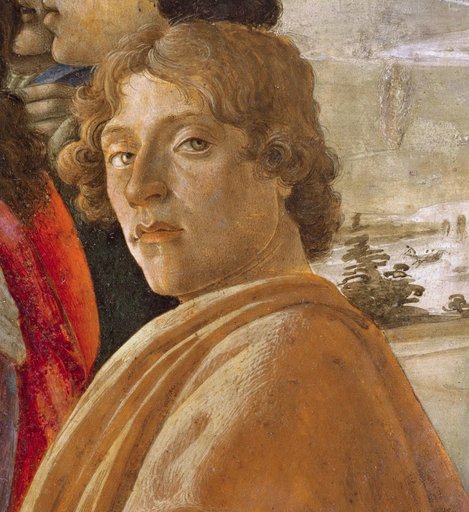
Alessandro di Mariano di Vanni Filipepi, better known as Sandro Botticelli or simply Botticelli, was an Italian painter of the Early Renaissance.

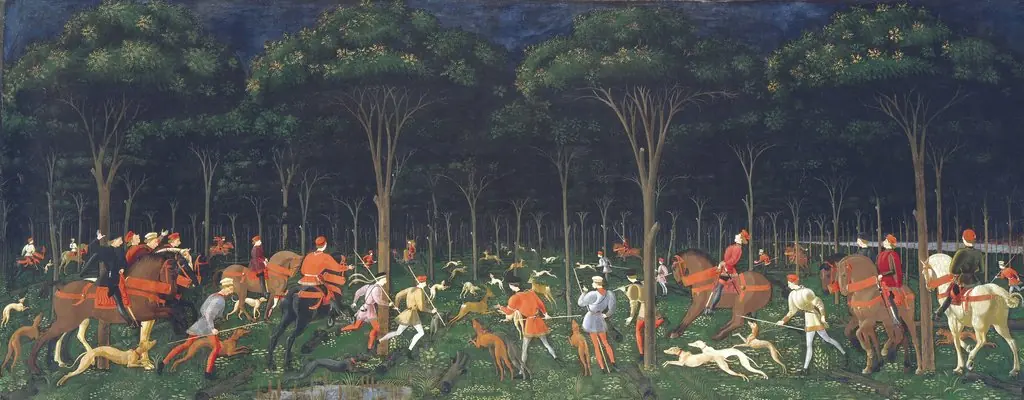 The Hunt in the Forest
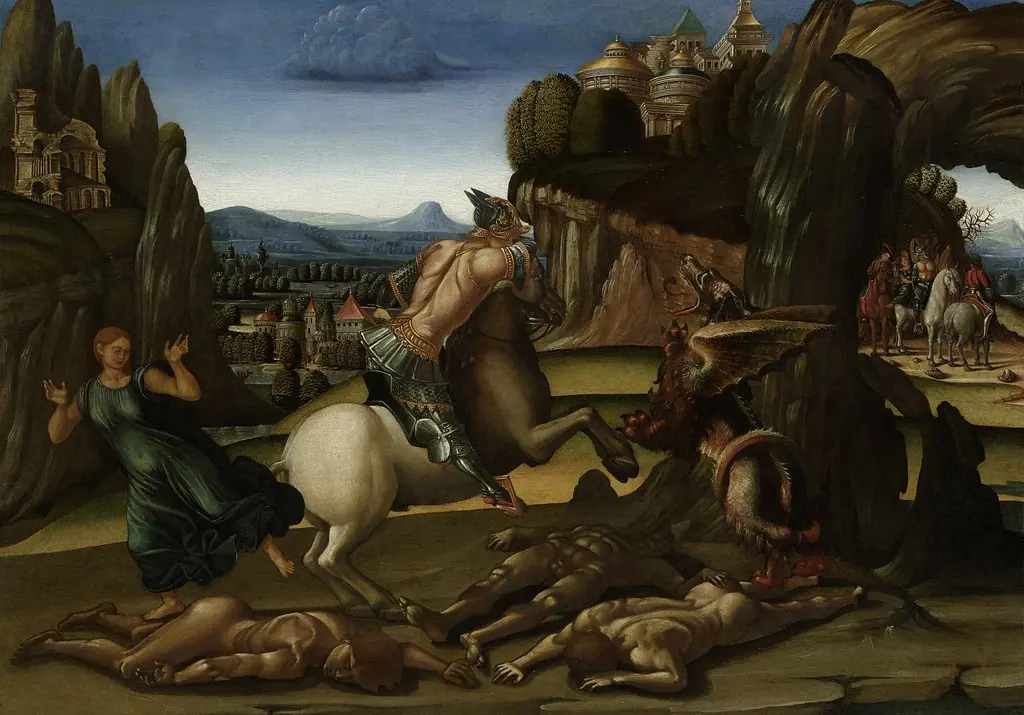 Saint George and the Dragon
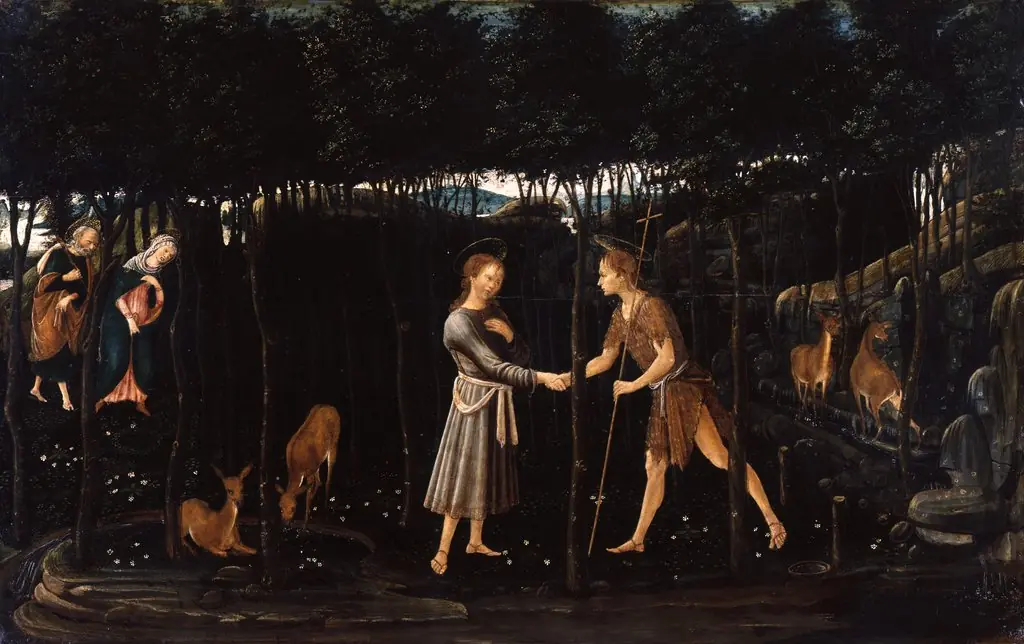 The Meeting of the Young Christ and the Young St. John
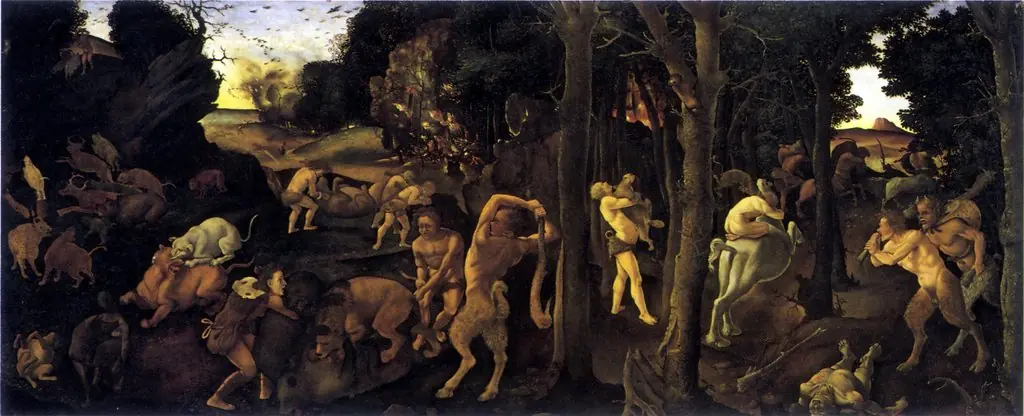 A Hunting Scene
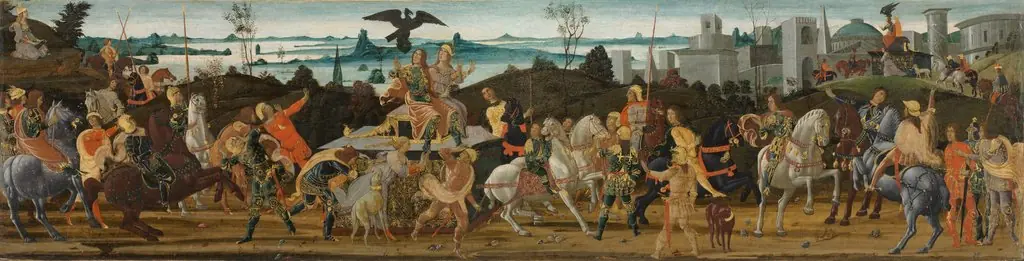 Tarquinius Priscus Entering Rome
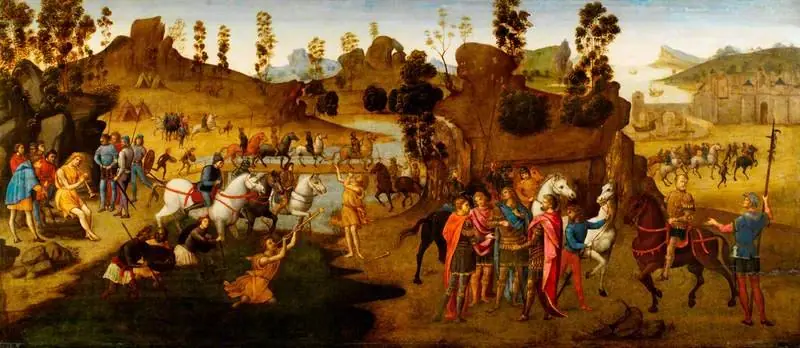 Julius Caesar and the Crossing of the Rubicon (scene from the story of Alexander the Great)
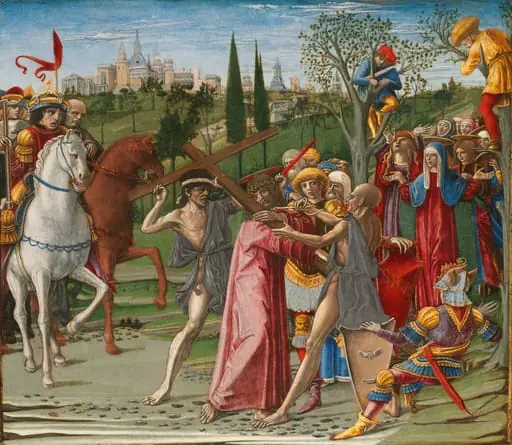 Christ Carrying the Cross
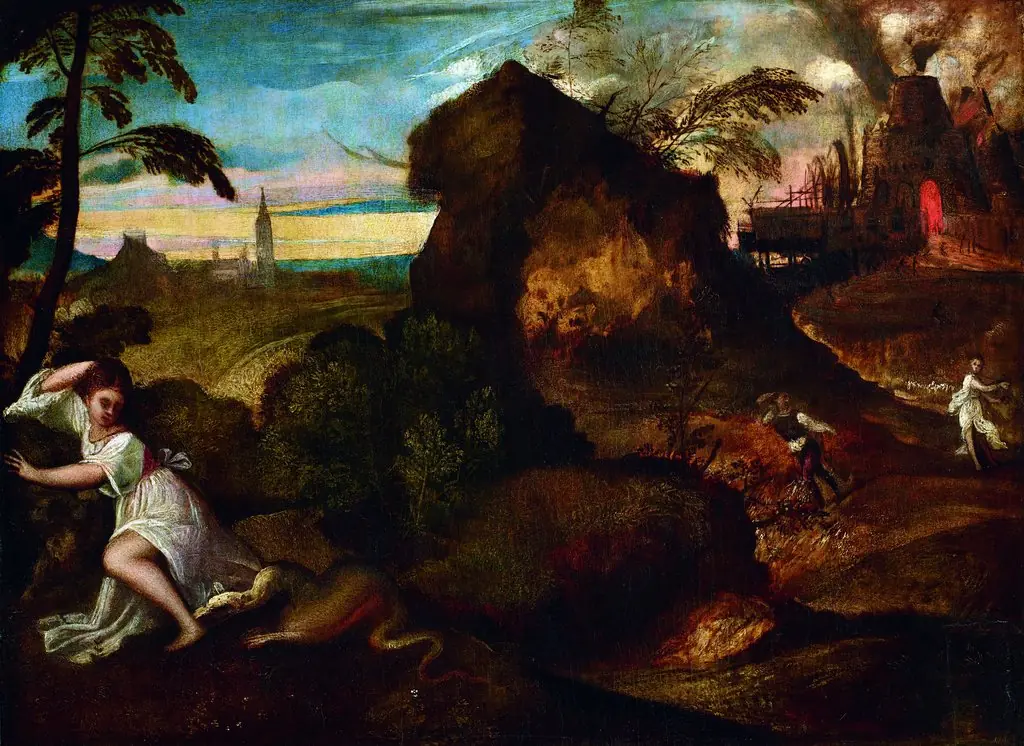 Orpheus and Eurydice
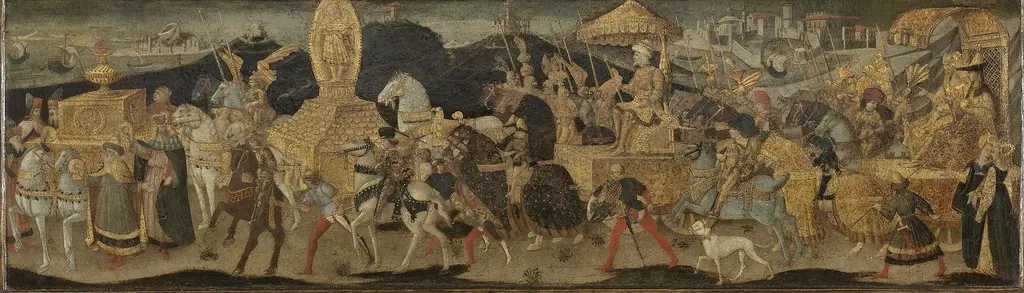 Darius Marching to the Battle of Issus