Artwork
The Virgin and Child
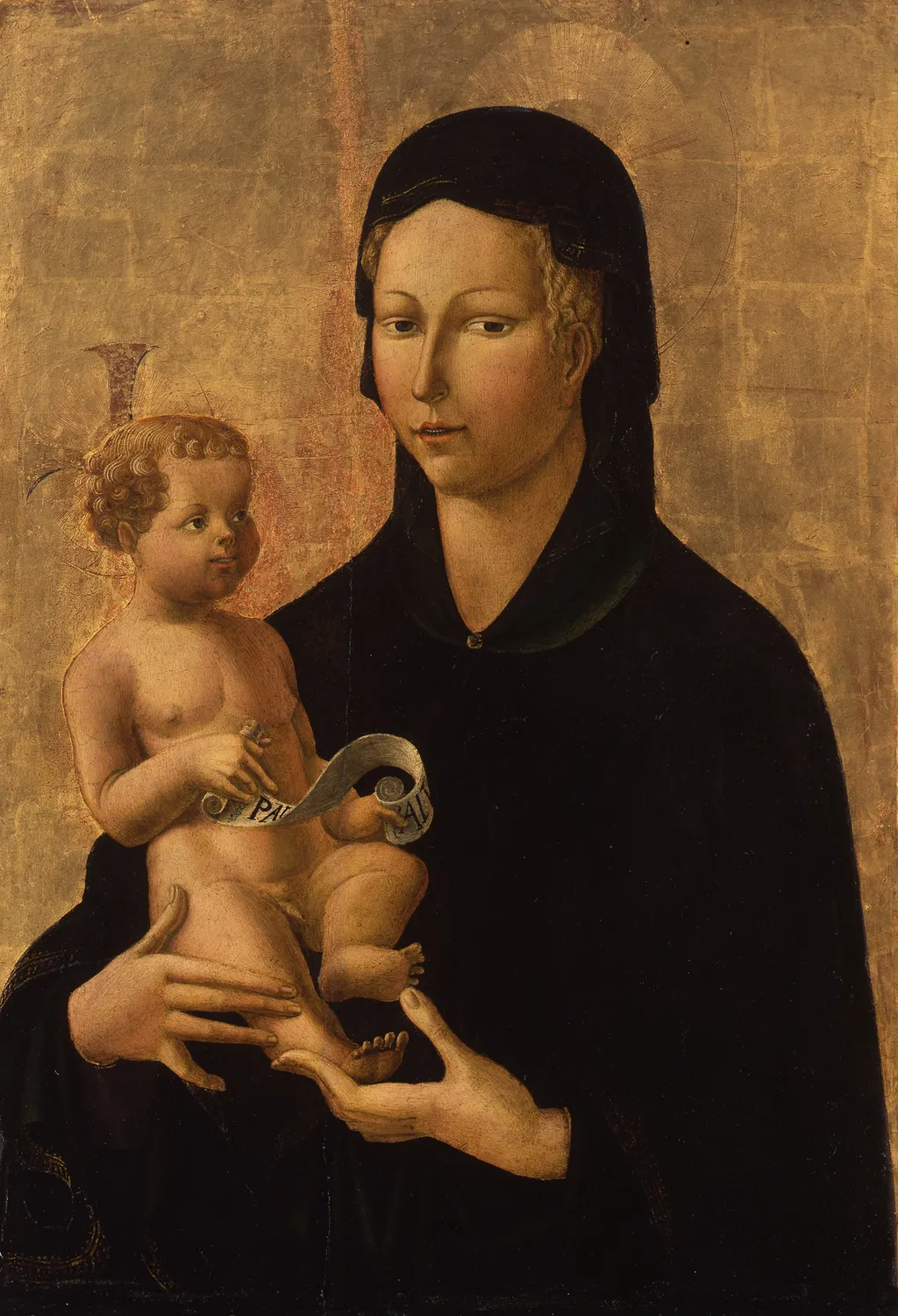
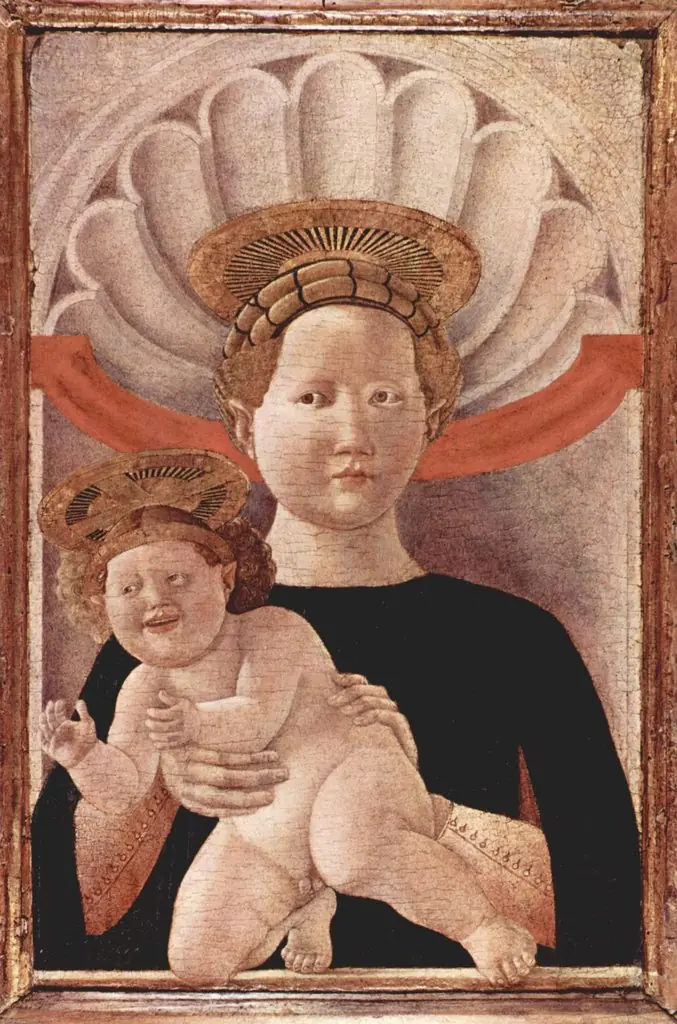
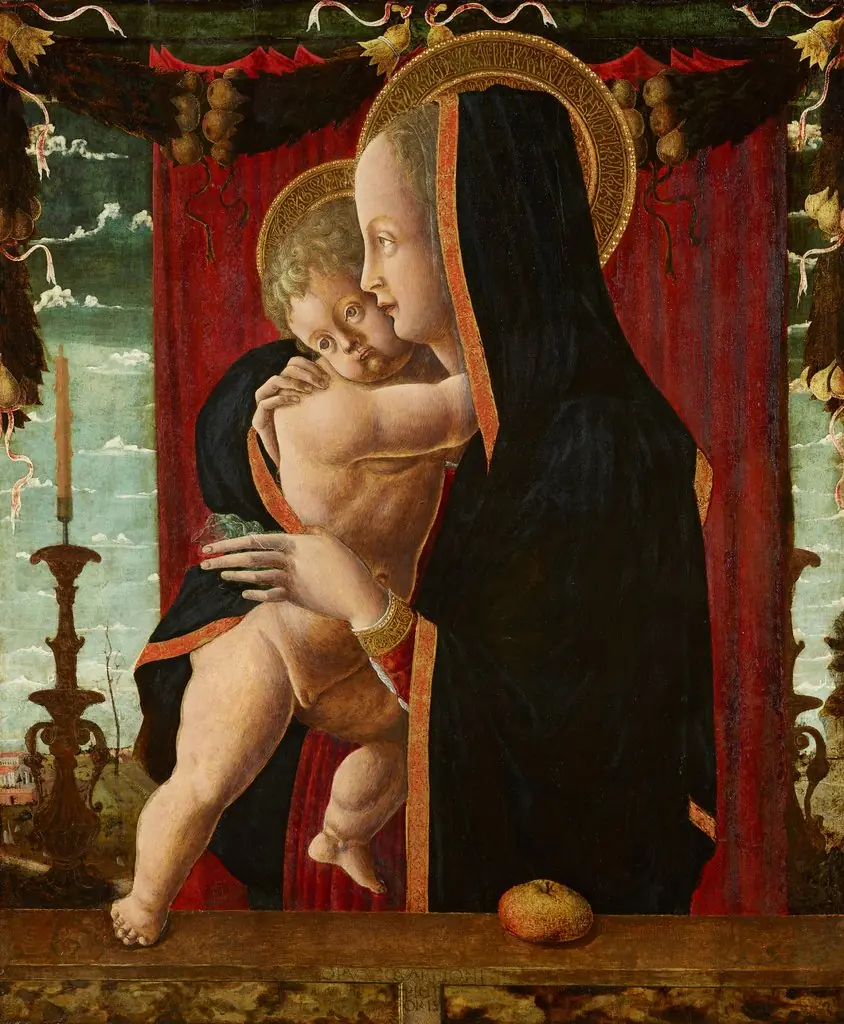
The Virgin and Child is a paint painting by the Early Renaissance artist Paolo Uccello. It is held in the collection of the Gemäldegalerie Berlin.
About this work
Overview
The work is executed in tempera on panel and is currently housed at the National Gallery of Ireland in Dublin, where it is displayed in the Beit Wing.
The Virgin and Child is a religious panel painting attributed to the Florentine Renaissance artist Paolo Uccello, dated to approximately 1435-1440. The work is executed in tempera on panel and is currently housed at the National Gallery of Ireland in Dublin, where it is displayed in the Beit Wing. This painting is significant as a rare example of Uccello's work outside Italy and as a compelling demonstration of the early Renaissance engagement with mathematical perspective and spatial illusionism. The attribution has been debated, with the painting once misidentified as by Lerentino d'Arezzo before being reclaimed for Uccello in 1936 by art historian Georg Pudelko.
Subject & Meaning
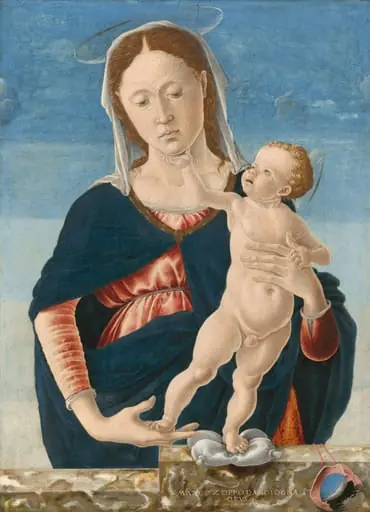
The painting depicts the Virgin Mary holding the Christ Child in a composition that departs from conventional serene Madonna and Child imagery. The infant is rendered as a large, naturalistic, and somewhat ungainly figure who appears to lunge forward toward something outside and to the left of the picture plane, while Mary supports him with both hands, one beneath his feet and one at his back. Her eyes convey slight anxiety as they follow the child's gaze. Both figures bear halos with radiating lines. The Christ Child grasps a scroll bearing visible letters, a detail that carries typological significance. The Virgin is framed in a shell-shaped niche, a classical motif that here serves as a sacred architectural setting. The work's devotional purpose is underscored by its modest format, suggesting it was intended for personal contemplation in a domestic setting rather than for a church altarpiece.
History & Provenance
The painting was purchased by the National Gallery of Ireland in 1909, at which time it was incorrectly attributed to Lerentino d'Arezzo, described by former head curator Sergio Benedetti as a mediocre follower of Piero della Francesca. This misattribution persisted until 1936, when art historian Georg Pudelko correctly identified the work as by Paolo Uccello. A second major intervention in the painting's history involved a significant alteration to its appearance. After Uccello painted it, the work suffered considerable paint loss, particularly around the Virgin's left cheek and above her forehead. Rather than retouch these damaged areas, an early restorer covered the Virgin's hair, shoulders, and right forearm with a dark-blue veil that completely altered the original composition and character. In 1968, at the request of then-director Dr James White, conservators from the Istituto Centrale del Restauro in Rome removed this false overpainting in a painstaking process, revealing the Virgin's wheat-blonde hair, headdress detail, and right sleeve. The conservators then undertook in-painting using tratteggio or rigatino to match lost areas with intact paint. Traces of the dark cloak remain visible around the Virgin today. The painting is now on permanent display in Room 30 of the Beit Wing.
Context
Paolo Uccello (1397-1475) was one of the most distinctive artists of the early Renaissance, celebrated for his systematic application of perspective study in Italian art. After training as an apprentice to the sculptor Lorenzo Ghiberti from 1407 and working on mosaics in St Mark's in Venice, he settled in Florence by 1431, where he spent the remainder of his long life. His friend Donatello reportedly warned him that he had left the certain for the uncertain in his pursuit of mathematical precision. The Virgin and Child belongs to the period when Uccello was developing the perspectival experiments that would define his career, following his monument to Sir John Hawkwood in Florence Cathedral. While once dismissed as an eccentric mathematician, Uccello is now recognized as a sophisticated genius and conscientious craftsman. The painting exemplifies his blend of scientific perspective with poetic vision, and its warm, playful quality distinguishes it from more conventional contemporary depictions of the subject. Scholarly debate persists regarding the extent of Uccello's own hand in the work, with some scholars noting that certain elements, such as the Virgin's hands, closely resemble those in other works by him, suggesting the reuse of workshop cartoons. His children Antonia and Donato, both trained in his workshop, have been proposed as possible contributors under his supervision.
Legacy
The Virgin and Child has become one of the best-known and most admired works in the National Gallery of Ireland's collection, representing a rare opportunity to study Uccello's art outside Italy. Its reputation has grown substantially since its correct attribution in 1936 and its conservation in 1968, which together restored its authentic character. The painting's cultural afterlife includes its status as a touchstone for discussions of Renaissance perspective, early restoration practices, and the challenges of attribution. Its distinctive Christ Child, with his remarkable forward lunge and unconventional appearance, has attracted particular attention, with the figure noted for his striking naturalism and even described as having elf-like characteristics in popular reception. The work continues to be celebrated for its modern, universal appeal, its masterful illusion of three-dimensional space, and its embodiment of the early Renaissance spirit of innovation. Uccello's poverty-stricken and obscure death in 1475 has made the survival and recognition of works like this all the more significant for understanding his contribution to art history.
Own this work as a print
Artist & collection
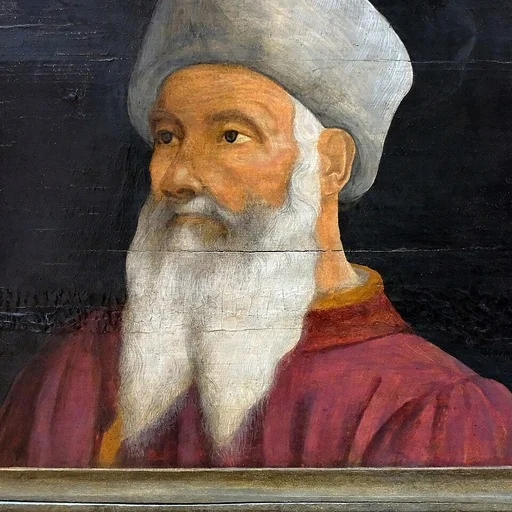
Artist
Paolo Uccello ( oo-CHEL-oh, Italian:; 1397 – 10 December 1475), born Paolo di Dono, was an Italian Renaissance painter and mathematician from Florence who was notable for his pioneering work on visual perspective in art.