Artwork
The Sacrifice of Isaac
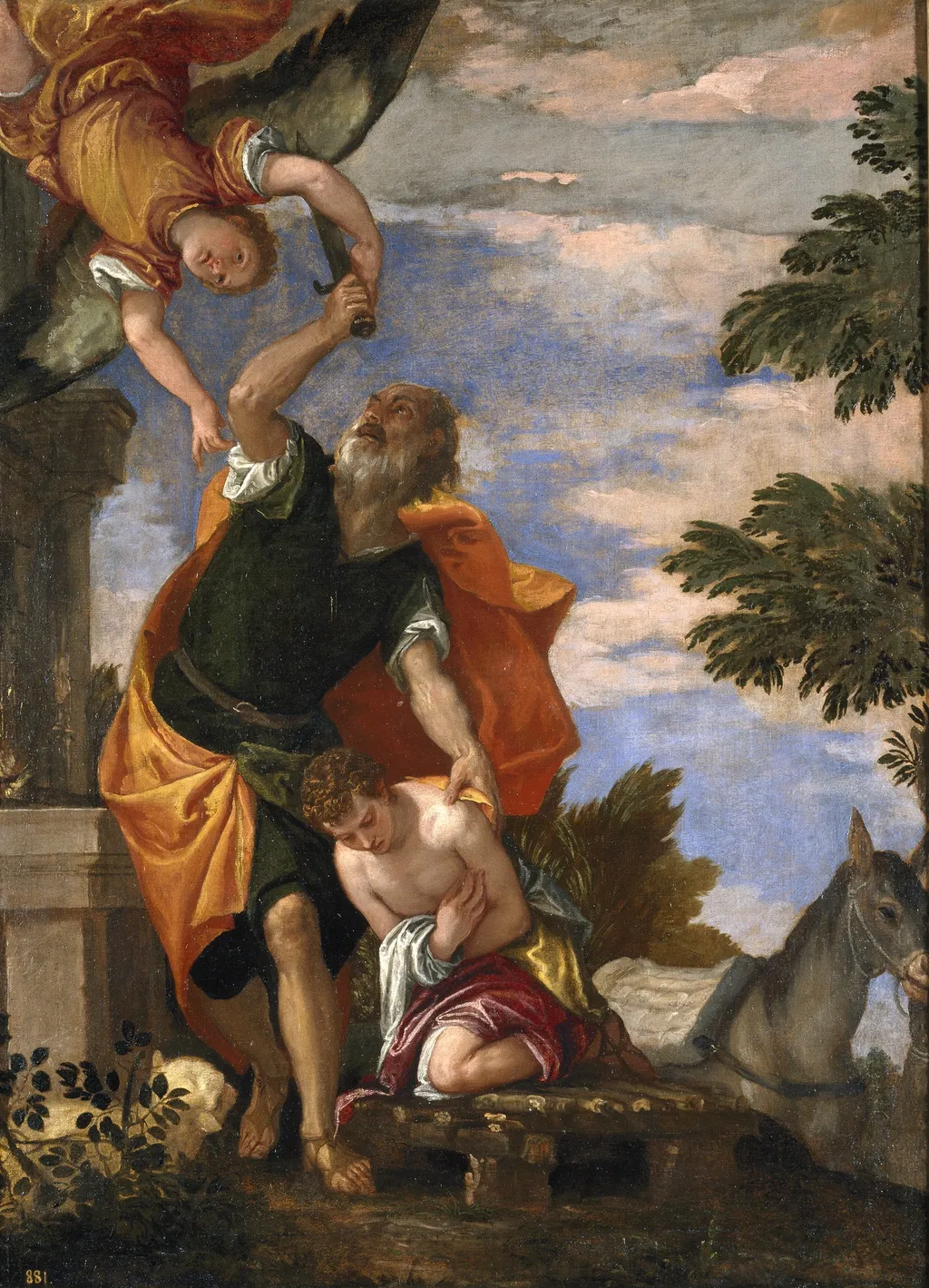
The Sacrifice of Isaac is an oil painting by the Mannerist artist Paolo Veronese. It is held in the collection of the Museo del Prado.
About this work
Subject & Meaning
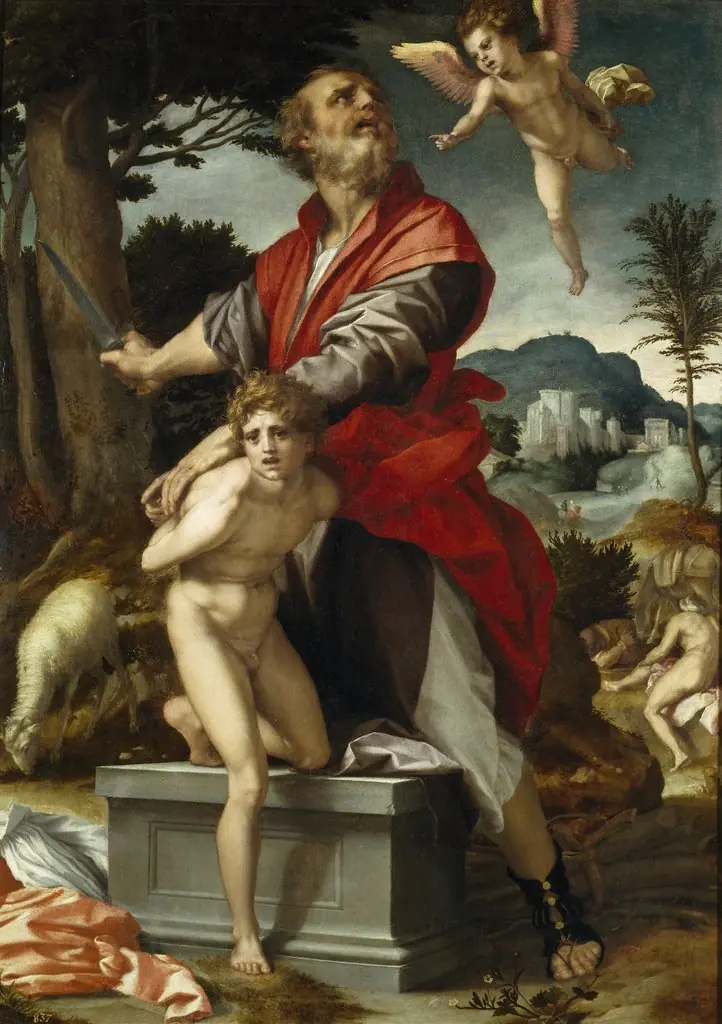
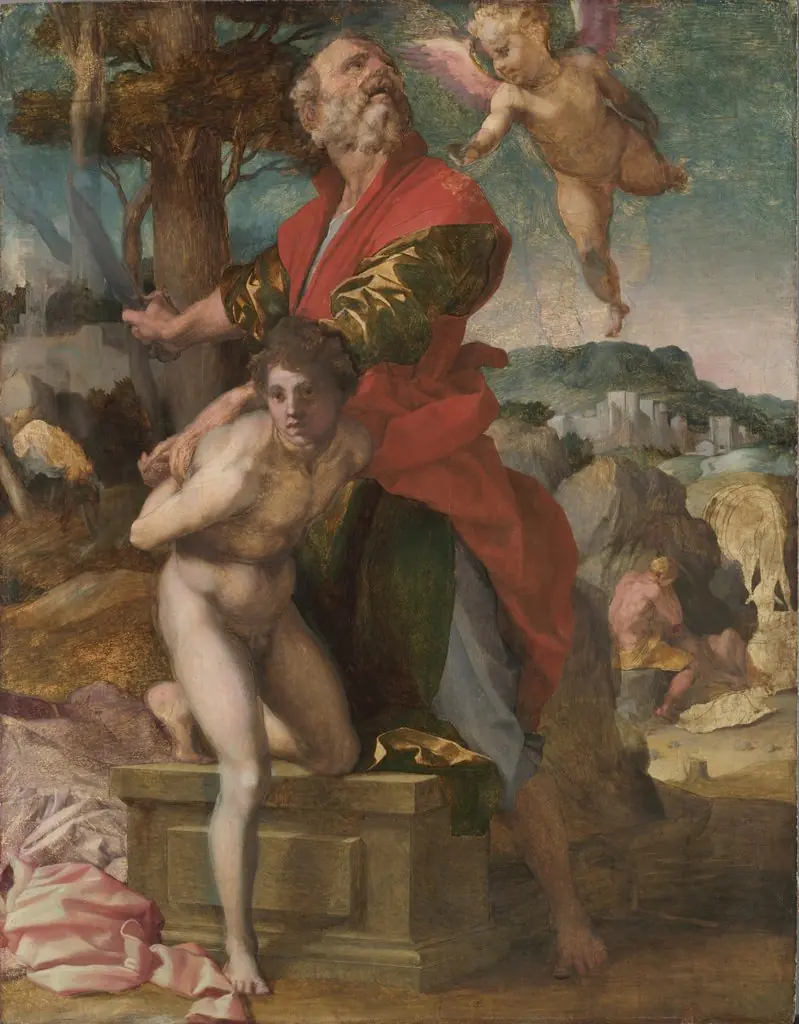
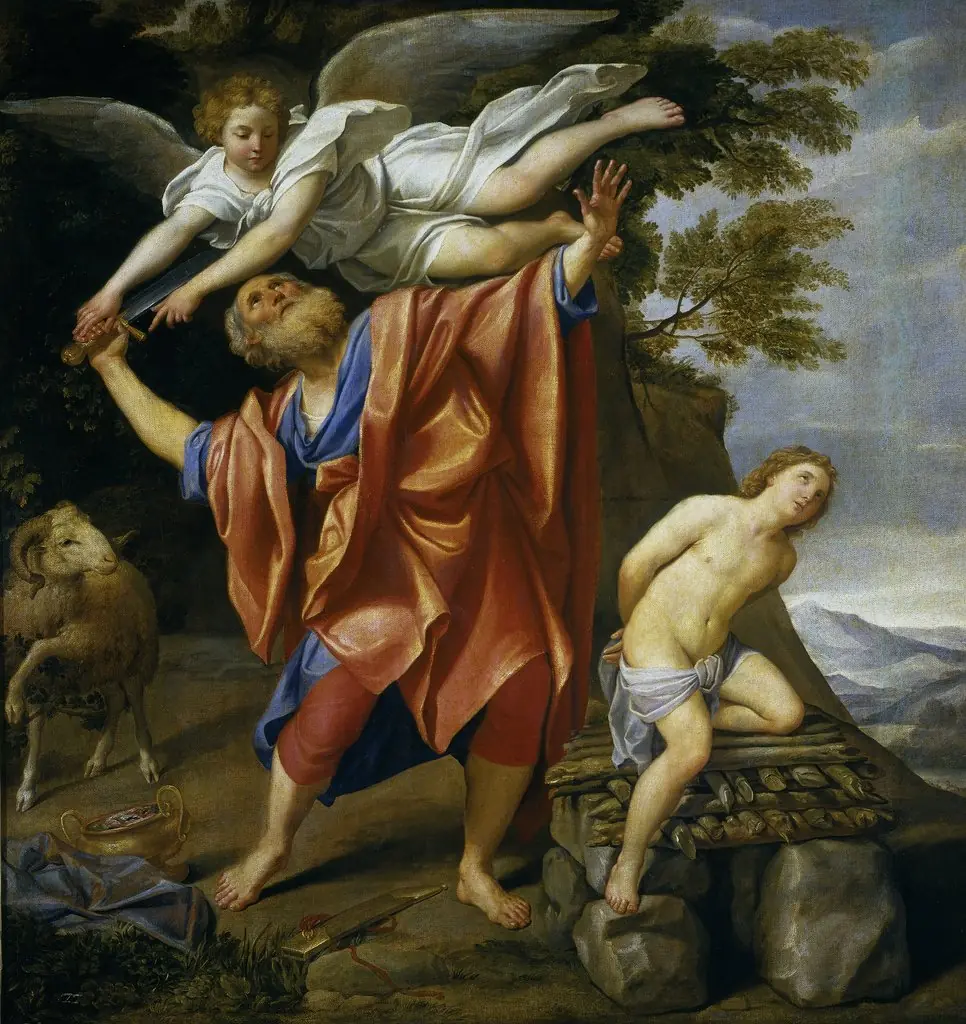
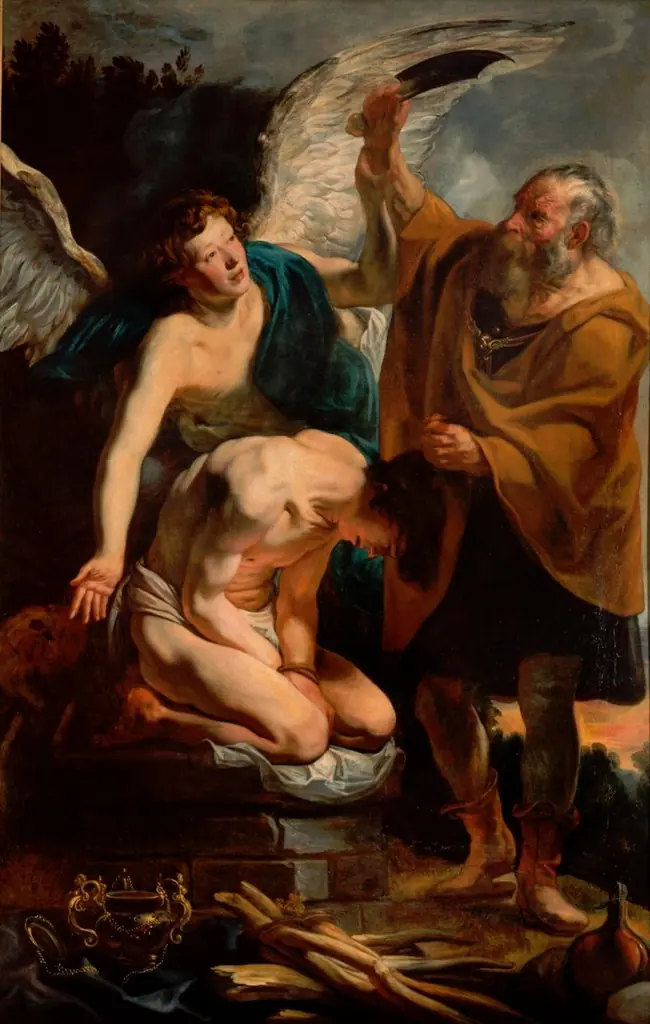
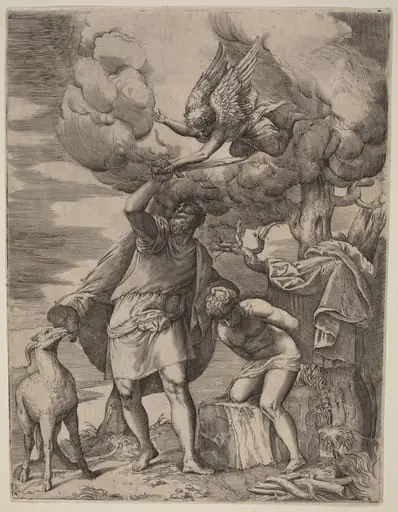
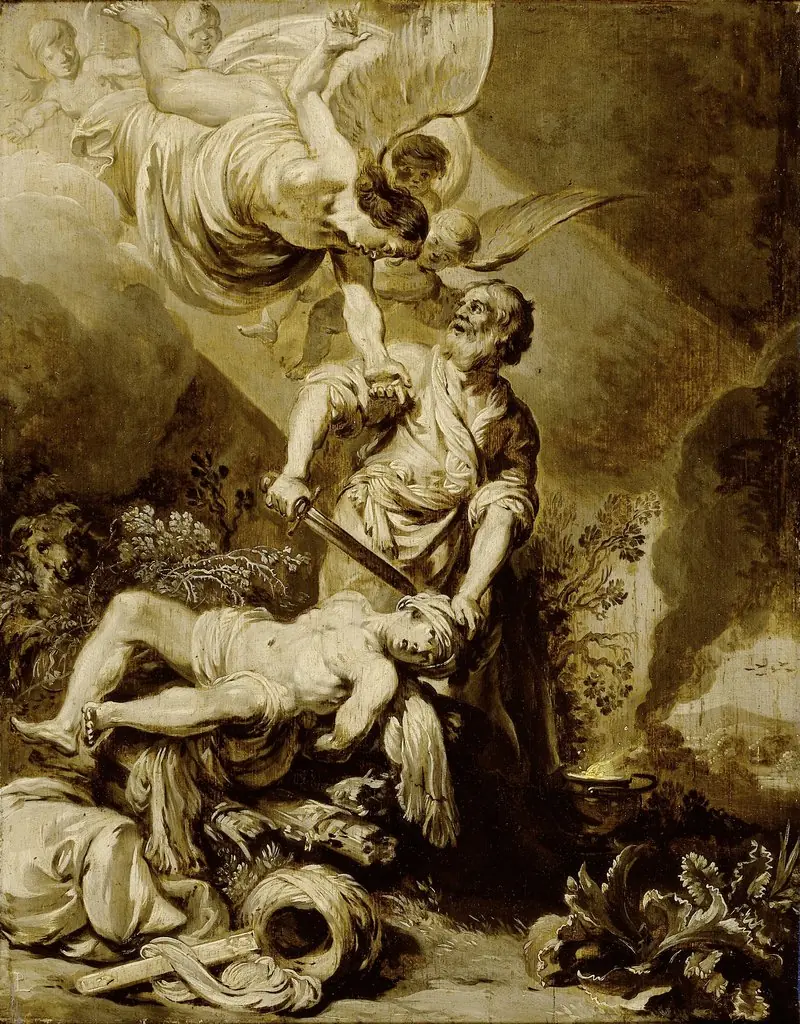
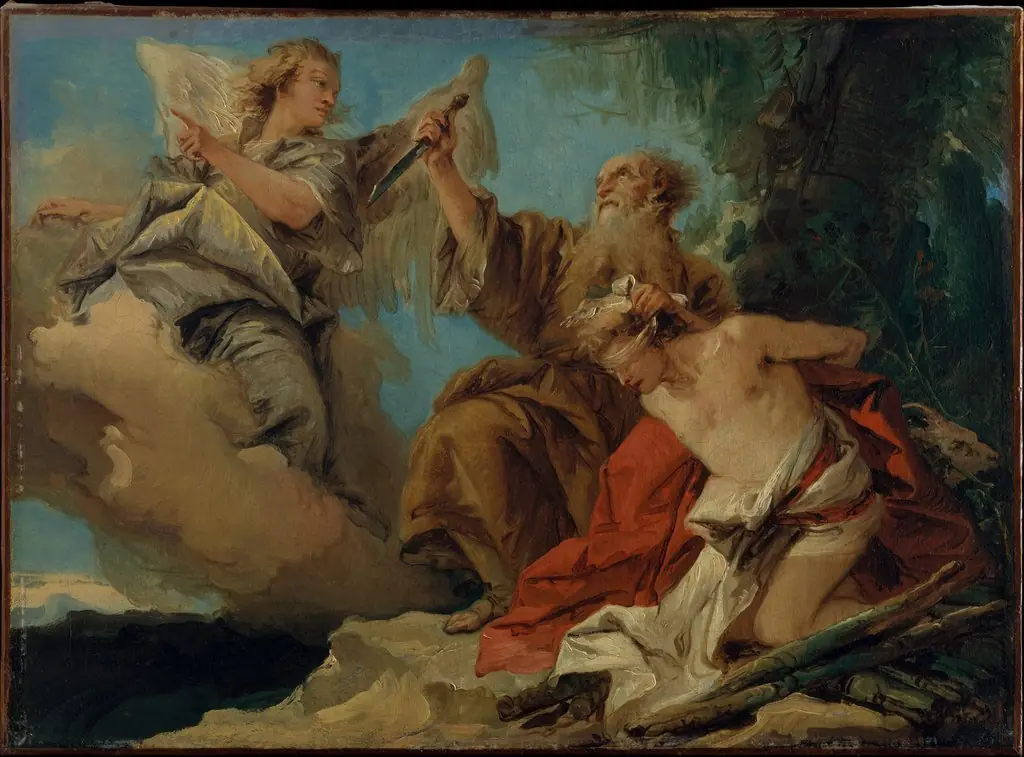
In the painting, the aged patriarch holds a knife above the bound youth, while an angel descends to restrain him.
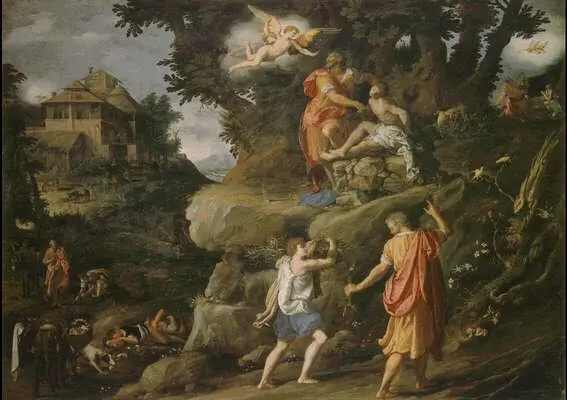
The work depicts the biblical Binding of Isaac, a moment drawn from Genesis 22 in which Abraham is commanded by God to sacrifice his son Isaac as a test of faith. In the painting, the aged patriarch holds a knife above the bound youth, while an angel descends to restrain him. A ram, provided by divine intervention, appears in the thicket as a substitute offering.
The scene emphasizes Abraham’s obedience and God’s provision, underscoring themes of faith, divine mercy, and substitutionary sacrifice that recur in Christian typology.
Technique & Style
Executed in oil on canvas in 1585, the work measures 129 cm in height and 95 cm in width. The handling is characteristic of late sixteenth-century Venetian practice, with fluid, luminous brushwork and a warm, sunlit palette that emphasizes the dramatic moment through contrasting light and shadow. The composition balances crowded figural groups with open sky, directing focus toward the tense confrontation between Abraham and the angel while retaining narrative clarity.
The canvas support and oil medium contribute to the painting’s glowing color saturation and subtle modulations of tone, consistent with Veronese’s mature style.
History & Provenance
The Sacrifice of Isaac is generally dated to 1585, with some records indicating an inception range of 1585–1586. The work was executed in oil on canvas by Paolo Veronese. Its ownership history prior to entering the Museo del Prado is not documented in the available sources, and the painting has been part of the Prado’s collection since at least the early twentieth century, where it remains on display today. No earlier provenance or commission details are recorded in the consulted references.
Context
Paolo Veronese painted The Sacrifice of Isaac in 1585, an oil on canvas work now housed in the Museo del Prado, where it remains on public view. The painting illustrates the biblical moment of Isaac's binding, reflecting Counter-Reformation emphasis on dramatic narrative and devotional clarity. Contemporary scholarship highlights Veronese's mastery of composition and color as emblematic of late Renaissance Venetian mastery, situating the work within his broader oeuvre of large-scale religious canvases designed for altarpieces and state ceremonies.
Art historians regard it as a key example of narrative painting that bridges Mannerist dynamism with emerging Baroque sensibilities, influencing later depictions of Old Testament themes across European collections.
Overview
The Sacrifice of Isaac is a 1593 oil painting by Paolo Veronese, a prominent Venetian artist associated with the Mannerist movement.
Own this work as a print
Artist & collection
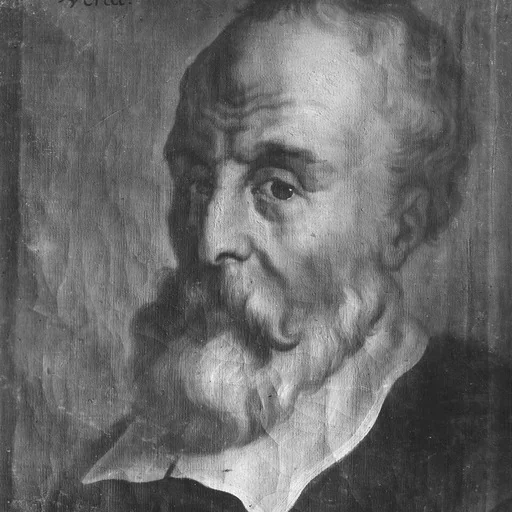
Artist
Paolo Caliari (1528 – 19 April 1588), known as Paolo Veronese ( VERR-ə-NAY-zay, -zee, US also -see; Italian: ), was an Italian Renaissance painter based in Venice, known for extremely large history paintings of…