Artwork
The Sacrifice of Isaac
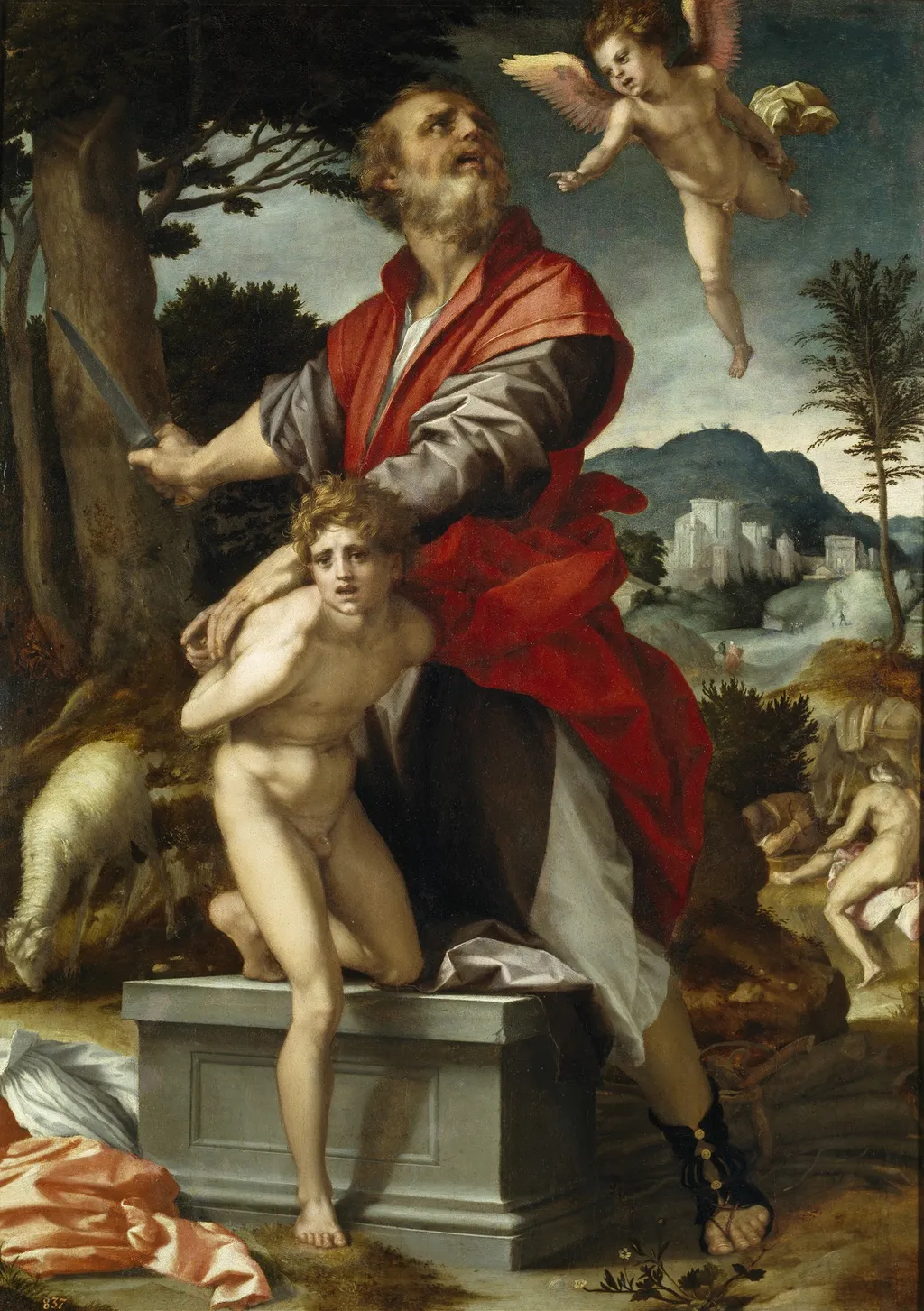
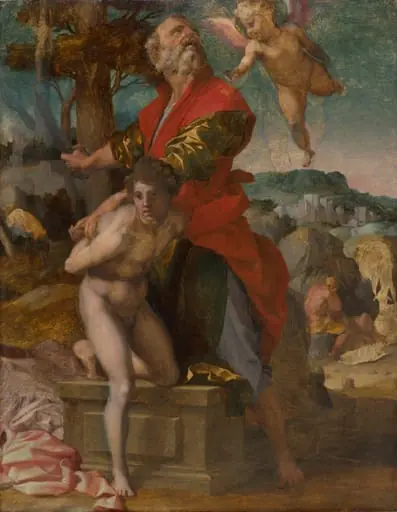
The Sacrifice of Isaac is an oil painting by the High Renaissance artist Andrea del Sarto. It dates from 1528 and is held in the collection of the Museo del Prado.
About this work
Subject & Meaning
This subject was a common devotional motif in Renaissance art, often used to explore moral and theological questions surrounding sacrifice and divine authority.
The painting illustrates the biblical moment when Abraham prepares to sacrifice his son Isaac in obedience to God's command, a scene drawn from Genesis. The composition emphasizes the tension of the act and the divine test of faith, underscoring themes of devotion and obedience. Symbolic elements such as the altar, the ram caught in the thicket, and the distant mountain landscape reinforce the narrative of providential intervention.
This subject was a common devotional motif in Renaissance art, often used to explore moral and theological questions surrounding sacrifice and divine authority.
Technique & Style
The work is executed in oil paint on a wooden panel, measuring 98 cm in height and 69 cm in width, and depicts the biblical scene of the Binding of Isaac. The painting was created by Andrea del Sarto in 1528 and is presently housed in the Museo del Prado, where it entered the collection following its acquisition by Ferdinand VII of Spain.
History & Provenance
The Sacrifice of Isaac is an oil painting on panel created in 1528 by Andrea del Sarto. It was commissioned as part of a decorative program for the Royal Palace of Aranjuez and subsequently entered the collection of Ferdinand VII of Spain, remaining in the Museo del Prado in Madrid. The work portrays the biblical Binding of Isaac and measures 98 cm by 69 cm.
The Sacrifice of Isaac, an oil-on-panel painting by Andrea del Sarto created in 1528, is housed in the Museo del Prado in Madrid, where it is recorded under the inventory number P00969. The work entered the Spanish royal collection through King Ferdinand VII, who transferred it to the museum in the early 19th century. It has been featured in exhibitions focused on High Renaissance art and Spanish royal collections, including displays at the Prado and traveling exhibitions on Italian Renaissance masters in Europe during the 2000s.
Context
Andrea del Sarto's 1528 oil painting The Sacrifice of Isaac, depicting the Binding of Isaac, was created for the Medici family and later entered the Spanish royal collection. It is housed in the Museo del Prado, where it remains part of their religious art holdings. The work has been studied within the context of High Renaissance religious painting and del Sarto's broader output, including his altarpieces and fresco cycles.
Overview
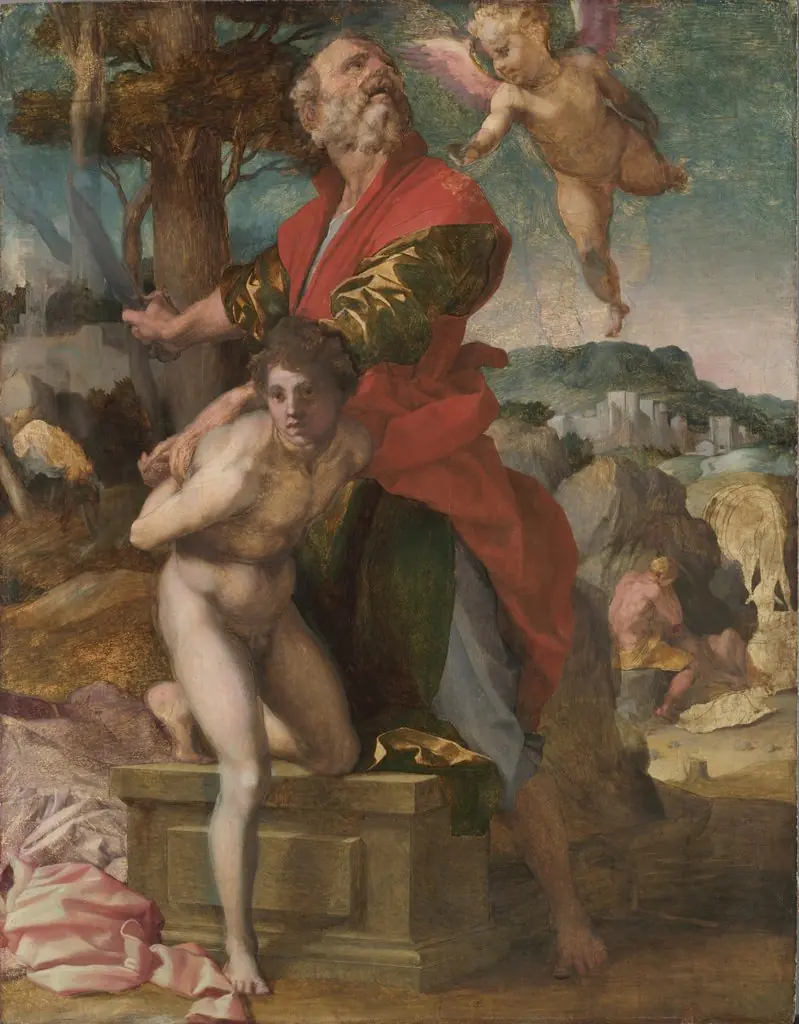
Andrea del Sarto's The Sacrifice of Isaac, executed in 1528, depicts the biblical moment where the angel of the Lord intervenes to stop Abraham from sacrificing his son. The composition centers on the dramatic tension between the two figures: Abraham, clad in a vibrant red robe, stands with a raised knife, his body twisted in hesitation, while the nude Isaac kneels on a stone altar, looking upward in submission. A small angel descends from the upper left, grasping Abraham's arm to halt the act.
The setting features a serene landscape with rolling hills, trees, and a distant body of water, characteristic of the High Renaissance integration of figure and environment. Created during the artist's mature period, shortly before his death, the work demonstrates del Sarto's mastery of colorito and his ability to convey complex psychological states through gesture and expression. The painting reflects the artist's shift toward a more dynamic, Mannerist-influenced style while maintaining the harmonious balance typical of Florentine tradition.
This work stands as a significant example of religious narrative painting in 16th-century Italy, showcasing del Sarto's technical precision and emotional depth.
Own this work as a print
Artist & collection
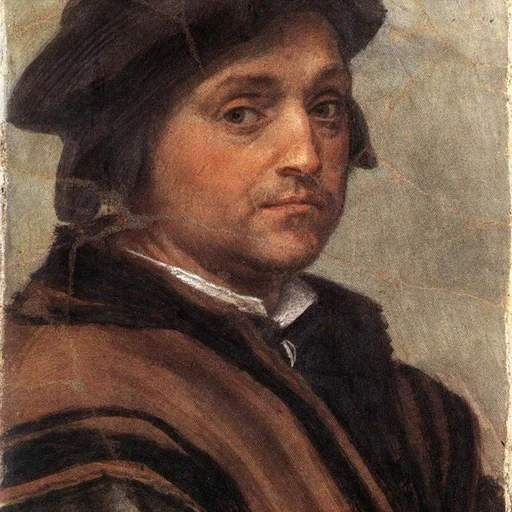
Artist
Andrea del Sarto was an Italian painter from Florence, whose career flourished during the High Renaissance and early Mannerism.