Artwork
Judith and Holofernes
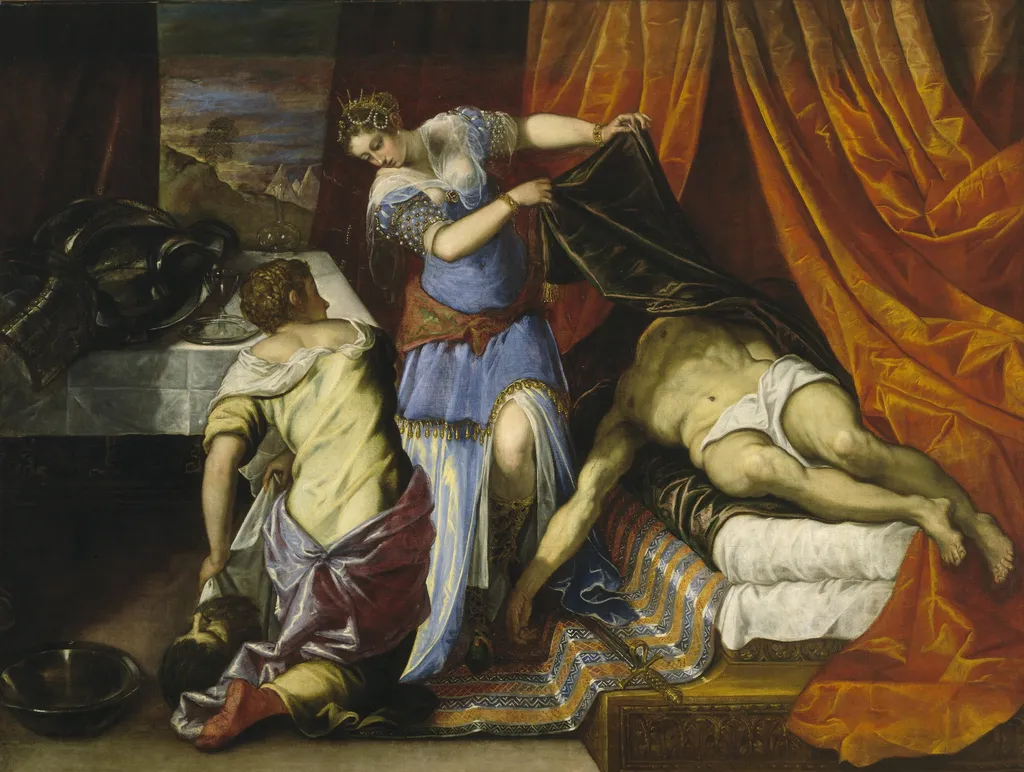
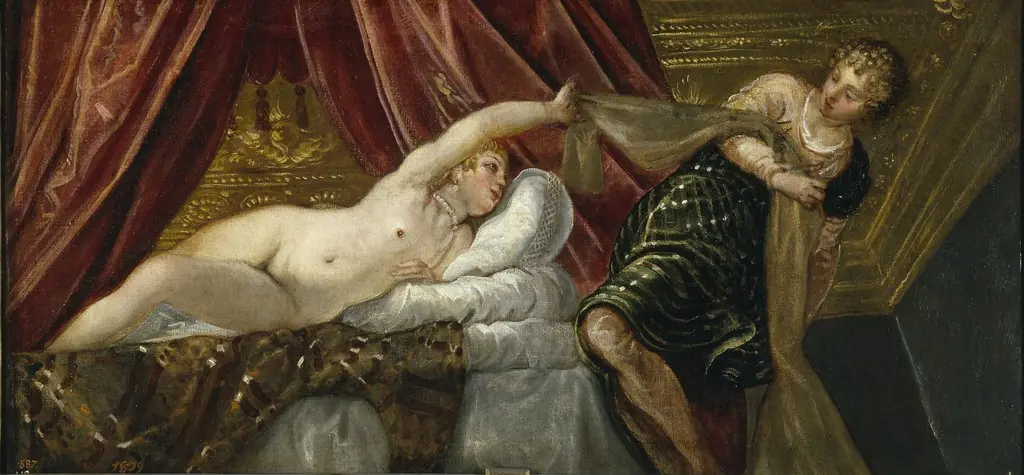
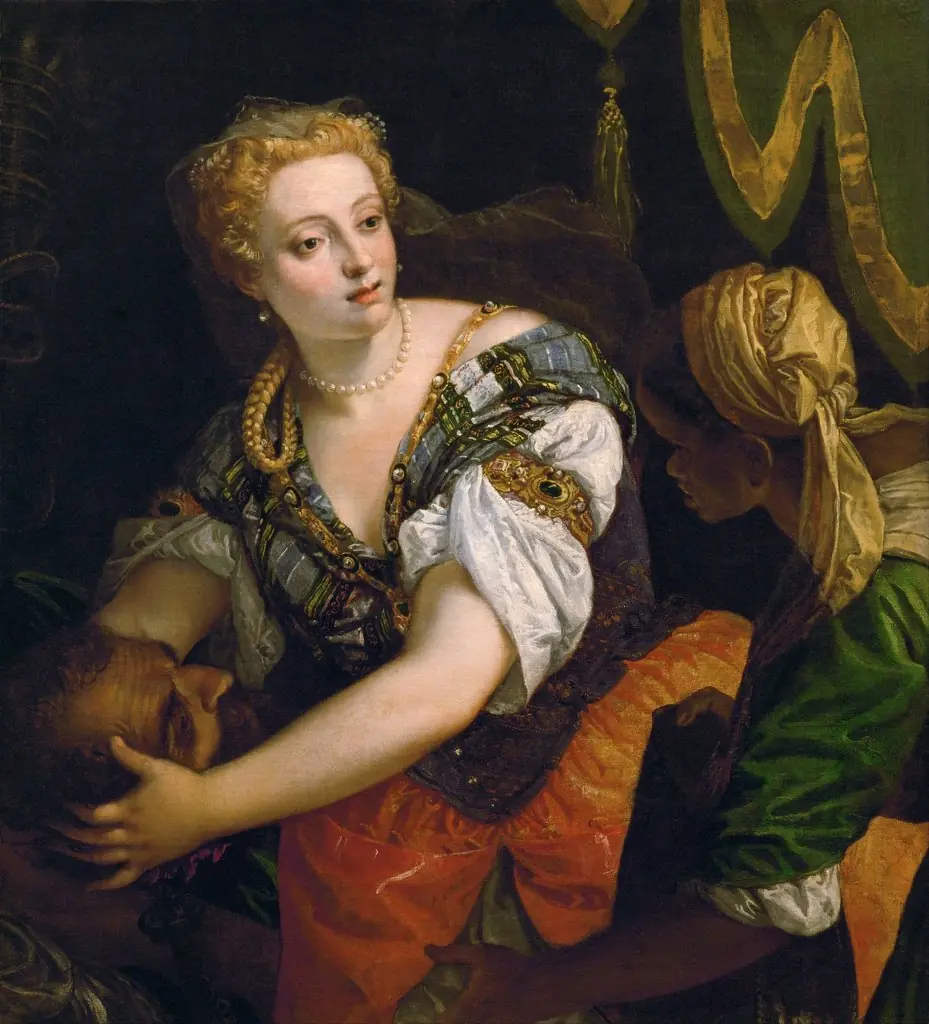
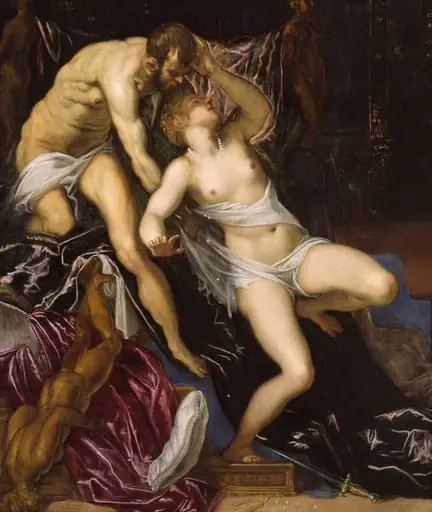
Judith and Holofernes is an oil painting by the Mannerist artist Jacopo Tintoretto. It dates from 1589 and is held in the collection of the Museo del Prado. Created around 1577, this oil on canvas depicts the biblical episode of Judith beheading Holofernes.
About this work
Technique & Style
While originally considered an autograph work from Jacopo Tintoretto's youth, the painting is now attributed to the workshop of Tintoretto.
Created around 1577, the artwork is executed in oil paint on canvas and measures 188 by 251 cm. The composition falls within the religious genre and depicts the biblical figures of Judith and Holofernes alongside iconographic elements such as a sword and a gemstone. While originally considered an autograph work from Jacopo Tintoretto's youth, the painting is now attributed to the workshop of Tintoretto.
History & Provenance
The painting dates to circa 1577 and is executed in oil on canvas. It was originally regarded as an autograph work from Tintoretto's youth, though it is now attributed to his studio rather than to the master himself.
The work was formerly owned by the Marquis of La Ensenada before entering the Spanish royal collection in 1760. It subsequently passed to Ferdinand VII of Spain and is now held in the Museo del Prado in Madrid.
Judith and Holofernes is currently held by the Museo del Prado in Madrid. The painting entered the Spanish royal collection in 1760, having previously been owned by the Marquis of La Ensenada. It was later owned by Ferdinand VII of Spain. The work has also been historically located at the Royal Palace of Madrid.
Context
Scholarship long treated the Madrid canvas as an early autograph work by Jacopo Tintoretto, but recent studies align with the 1577 date and classify it as a studio piece executed under his supervision. Its inclusion in the Spanish royal collection in 1760, after passing from the Marquis of La Ensenada, anchors it within Habsburg taste for Venetian narrative painting.
Tintoretto’s Judith and Holofernes participates in a Venetian tradition of dramatic, low-light religious scenes that favored psychological intensity over idealized form. The Prado’s canvas is often grouped with other late sixteenth-century Venetian depictions of Judith, reflecting the city’s sustained engagement with biblical heroines as moral exemplars.
Overview
Created around 1577, this oil on canvas depicts the biblical episode of Judith beheading Holofernes. Executed by the workshop of Jacopo Tintoretto, the work was once attributed to the master himself during his early period. It entered the Spanish royal collection in 1760 after passing through the hands of the Marquis of La Ensenada and now resides in Madrid’s Museo del Prado.
Subject & Meaning
The composition captures the climactic instant after Judith has severed Holofernas head. She stands poised, crown and blue mantle framing the act, while a young attendant watches. The scene underscores themes of virtue triumphing over tyranny, a popular moral exemplar in Counter‑Reformation art.
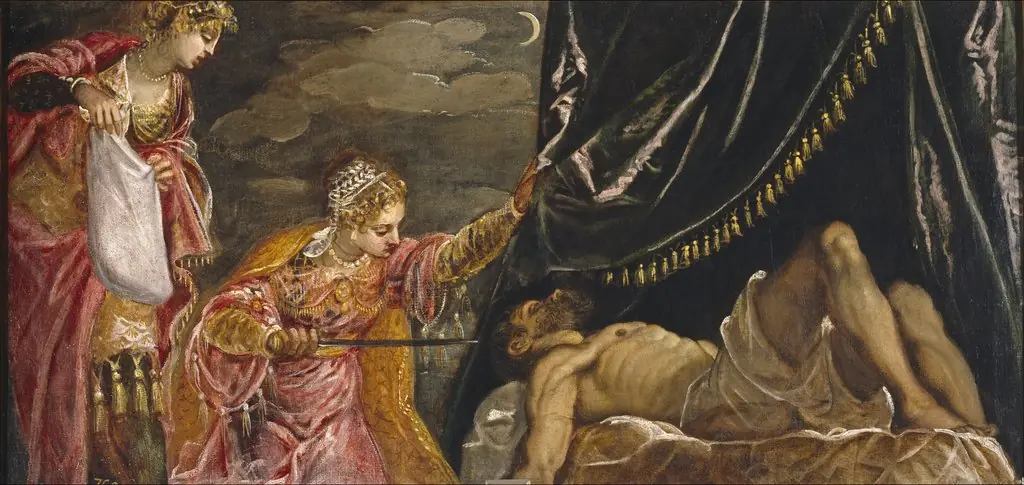
Own this work as a print
Artist & collection
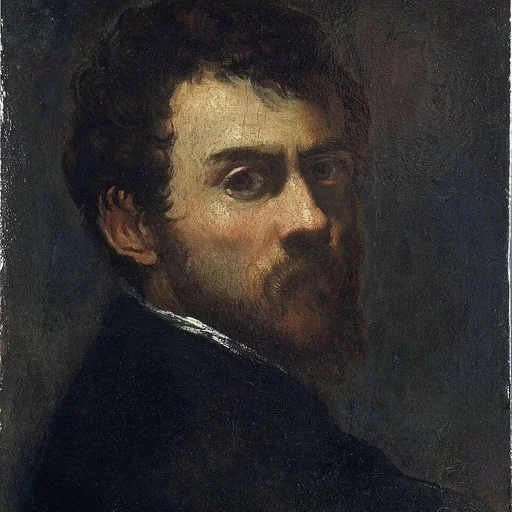
Artist
Jacopo Robusti (late September or early October 1518 – 31 May 1594), best known as Tintoretto ( TIN-tə-RET-oh; Italian:; Venetian: ), was an Italian Renaissance painter of the Venetian school.