Artwork
Emmaus
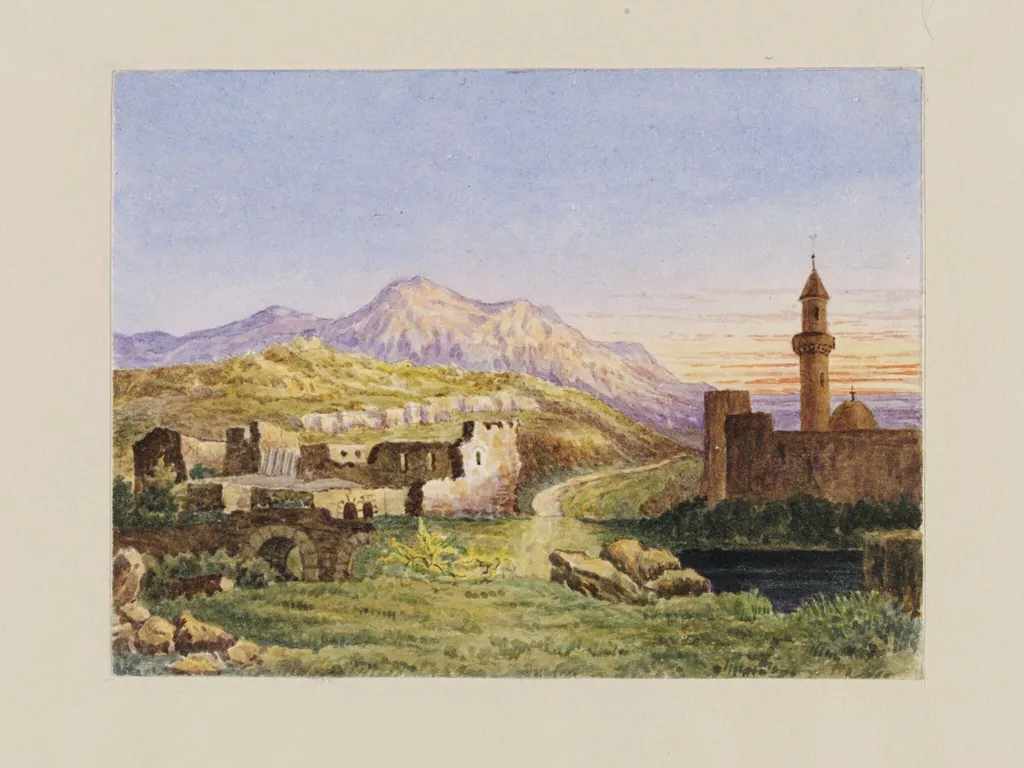
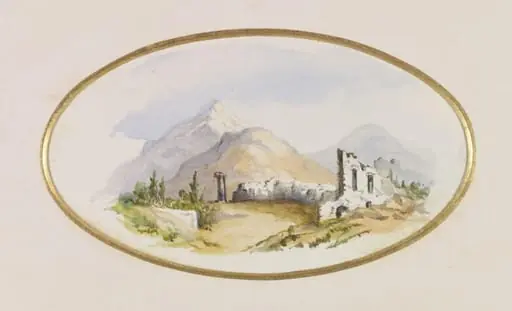
Emmaus is a watercolor work on paper by the British Romanticist artist Mary Parker. It dates from 1825 and is held in the collection of the Victoria and Albert Museum.
About this work
Overview
The artwork Emmaus is a watercolour drawing by Mary (Lady Leighton) Parker, created in 1825. It is suggested that the artist may have accompanied her brother on a journey to Palestine prior to her marriage, providing potential context for the subject matter. The piece entered the collection through a purchase from Alister Mathews of Bournemouth in November 1961 for £3 and 5 shillings.
Own this work as a print
Artist & collection
Artist
Mary Parker painted quiet watercolours of biblical sites in the 1820s. Her sheets show Carmel’s cliffs, the road to Emmaus, Sinai’s slopes, the river Jordan, and Bethlehem’s rooftops, all done in soft washes of color.…

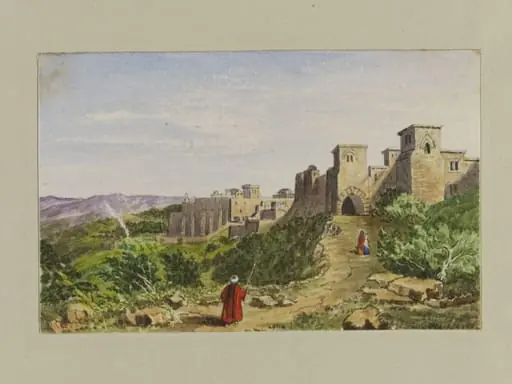
![Tiberais [sic], by Mary Parker](https://artifactworldgallery.com/img/mary-parker--tiberais-sic--e6f3a288c102ee52-w320.webp)
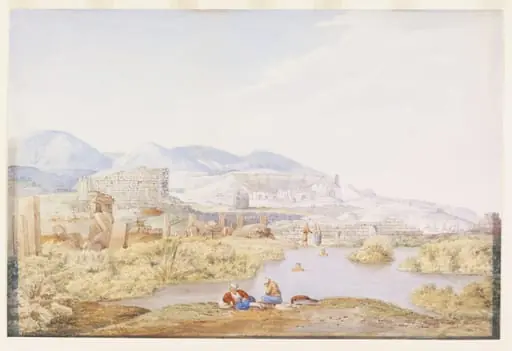 Hierapolis - Natural Hot Spring. Phrygia
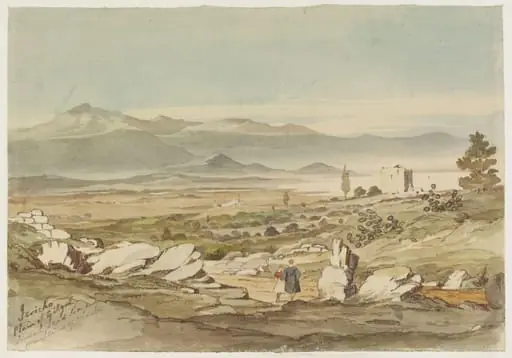 Jericho Plain of Gilgal, Jordan, Dead Sea, and Mountains of Moab
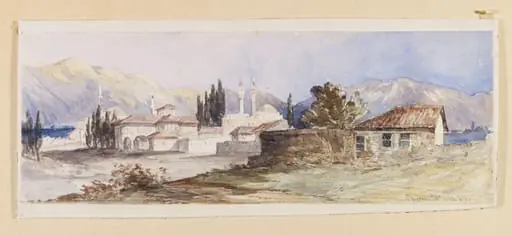 Smyrne
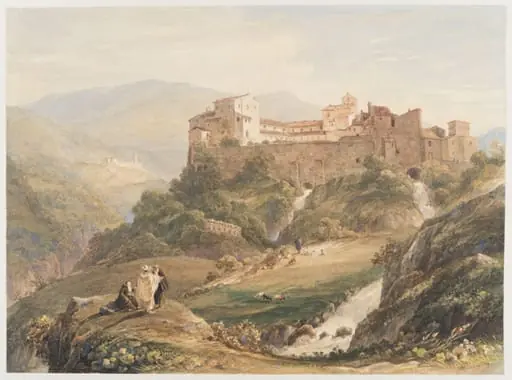 Italian landscape
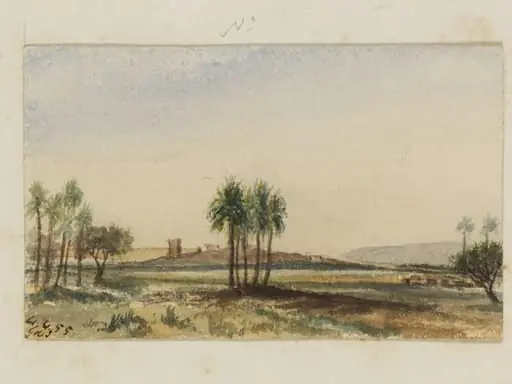 `Temple of Denderah. Distant view from bank of River. Upper Egypt'
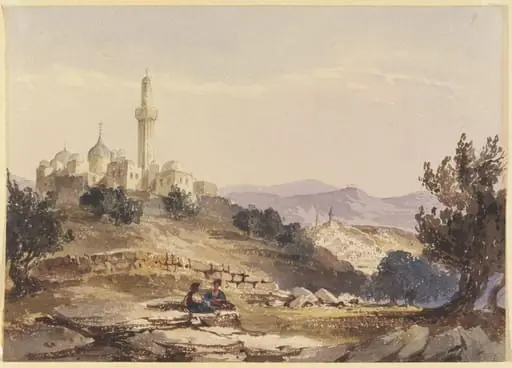 Mosque of the Ascension on the Mount of Olives
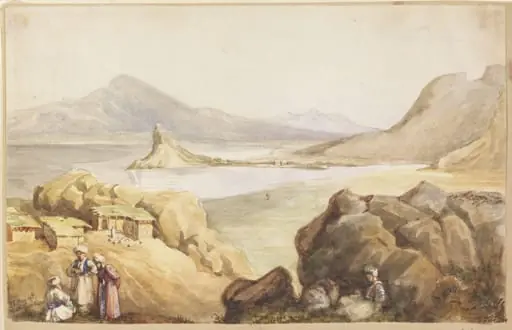 Gule-Hissa Ovassy in the Northern part of Lycia
 Philadelphia -
 Villa Sevillana on the Road from Bona to Constantine
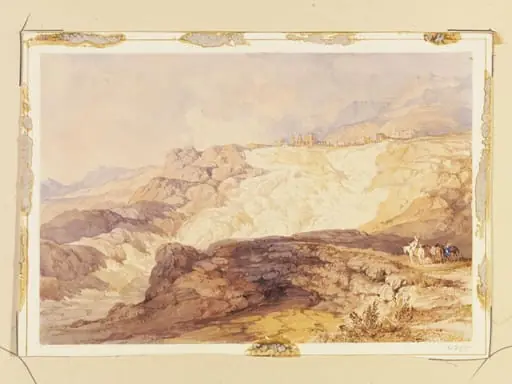 The Ruins of Hierapolis