Artwork
Three Feminine Heads
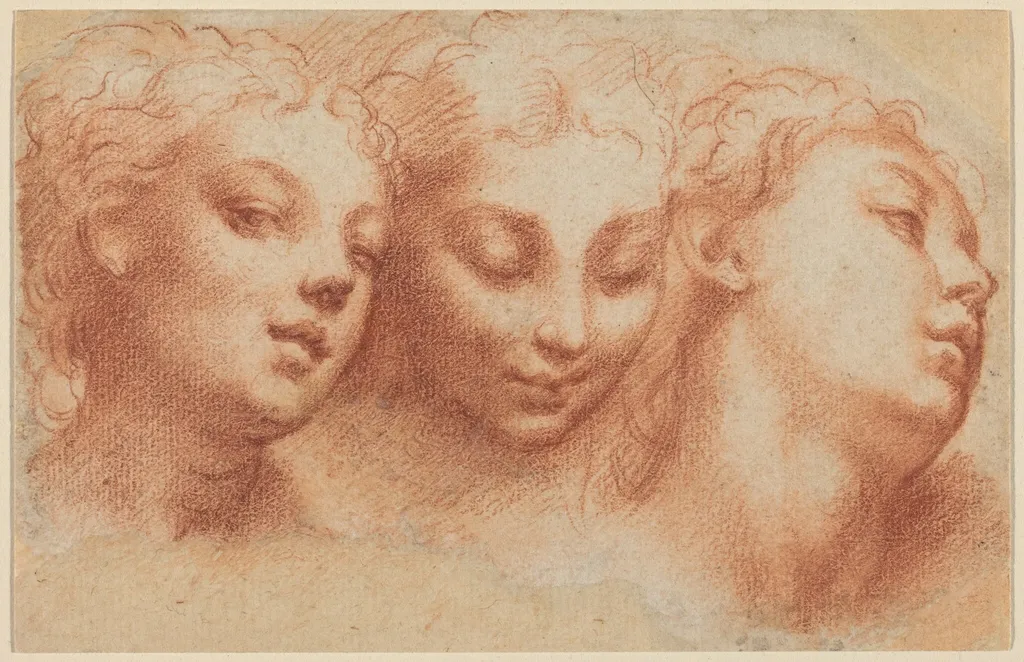
Three Feminine Heads is a chalk drawing by the Renaissance artist Parmigianino. It dates from 1523 and is held in the collection of the National Gallery of Art.
- Inscription
- Inscribed:in R.P. Roupell's handwriting, upper left verso in ink: RPR (Lugt 2234); on mount in Roupell's handwriting, center in ink: R P R / Correggio / From the Aldobrandini and W.Y. Ottley Collections
About this work
Overview
Created around 1523, the drawing titled Three Feminine Heads is executed in red chalk on laid paper. It presents three female profiles positioned closely together; the central figure looks straight ahead while the flanking heads turn outward. The work demonstrates Parmigianino’s characteristic elongation of the human form, a hallmark of early Mannerist aesthetics.
Subject & Meaning
The composition focuses on the serene visages of three women, each rendered with delicate curls and distinct gazes. Though no narrative accompanies the image, the juxtaposition of forward‑facing and profile views invites contemplation of varied perspectives on femininity, a theme explored in other contemporary studies of the human figure.
Technique & Style
Parmigianino employs red chalk to model light and shadow, achieving a warm tonal range that suggests volume. Careful hatching and cross‑hatching create subtle transitions between light and dark, while the smooth texture of the laid paper enhances the drawing’s intimate atmosphere. The elongated proportions and graceful lines reflect the artist’s Mannerist sensibility.
History & Provenance
The drawing originates from Parmigianino’s early career, when he was active in Florence, Rome, and his native Parma. It belongs to a period preceding his more elaborate painted works such as Vision of Saint Jerome (1527) and Madonna with the Long Neck (1534). The piece has remained in private collections before entering its present museum holdings.
Context
During the early sixteenth century, Italian artists began to move beyond the balanced naturalism of the High Renaissance toward the stylized elegance of Mannerism. Parmigianino’s study of the female head exemplifies this shift, emphasizing elongated anatomy and refined surface treatment over strict anatomical accuracy.
Own this work as a print
Artist & collection

Artist
Girolamo Francesco Maria Mazzola (11 January 1503 – 24 August 1540), also known as Francesco Mazzola or, more commonly, as Parmigianino (UK: US: Italian:; "the little one from Parma"), was an Italian Mannerist painter…

 Head of a Woman
 Head of a Woman
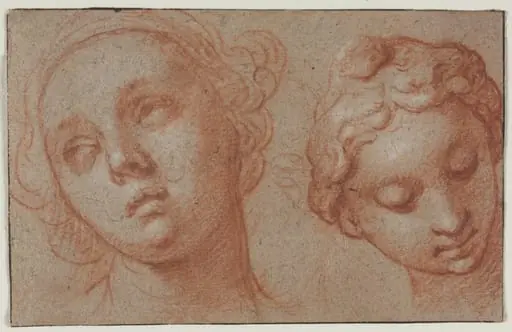 Two Female Heads
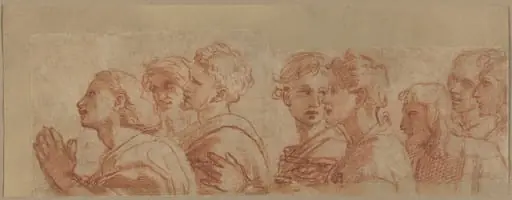 Eight Apostles
![Three Studies of a Woman's Head and a Study of Hands [recto], by Jean Antoine Watteau](https://artifactworldgallery.com/img/jean-antoine-watteau--three-studies-of-a-woman-s-head-and-a-study-of-hands-recto--e8d8dc404a1e0512-w320.webp) Three Studies of a Woman's Head and a Study of Hands [recto]
Three Studies of a Woman's Head and a Study of Hands [recto]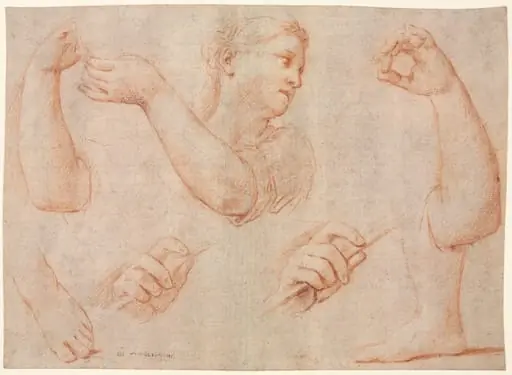 Study of a Young Woman Playing a Tambourine, and Studies of an Arm, Hands, and Feet (Studies for "Miriam Leading the Chorus of Women Who Give Thanks for the Routing of Pharoah"
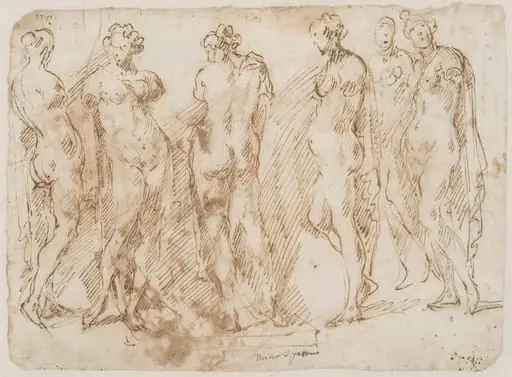 Six studies after an armless state of a female nude
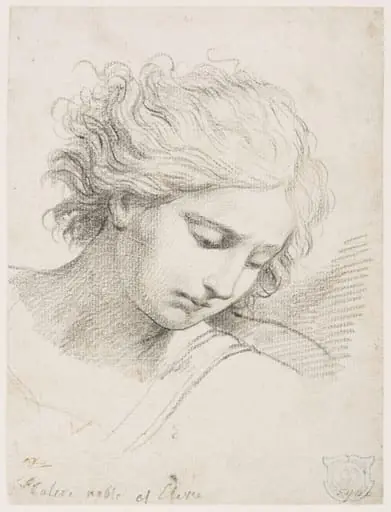 Study of the head of St. Michael
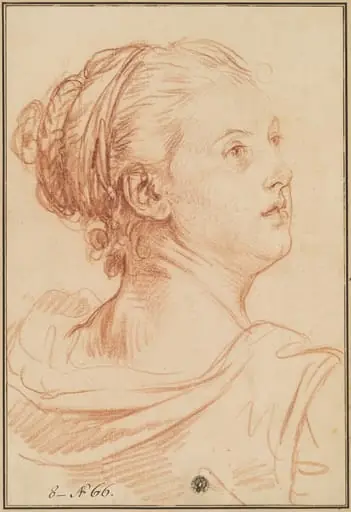 Head of a Woman Looking Back Over Her Shoulder
- Studies of Women's Heads