Artwork
Clio
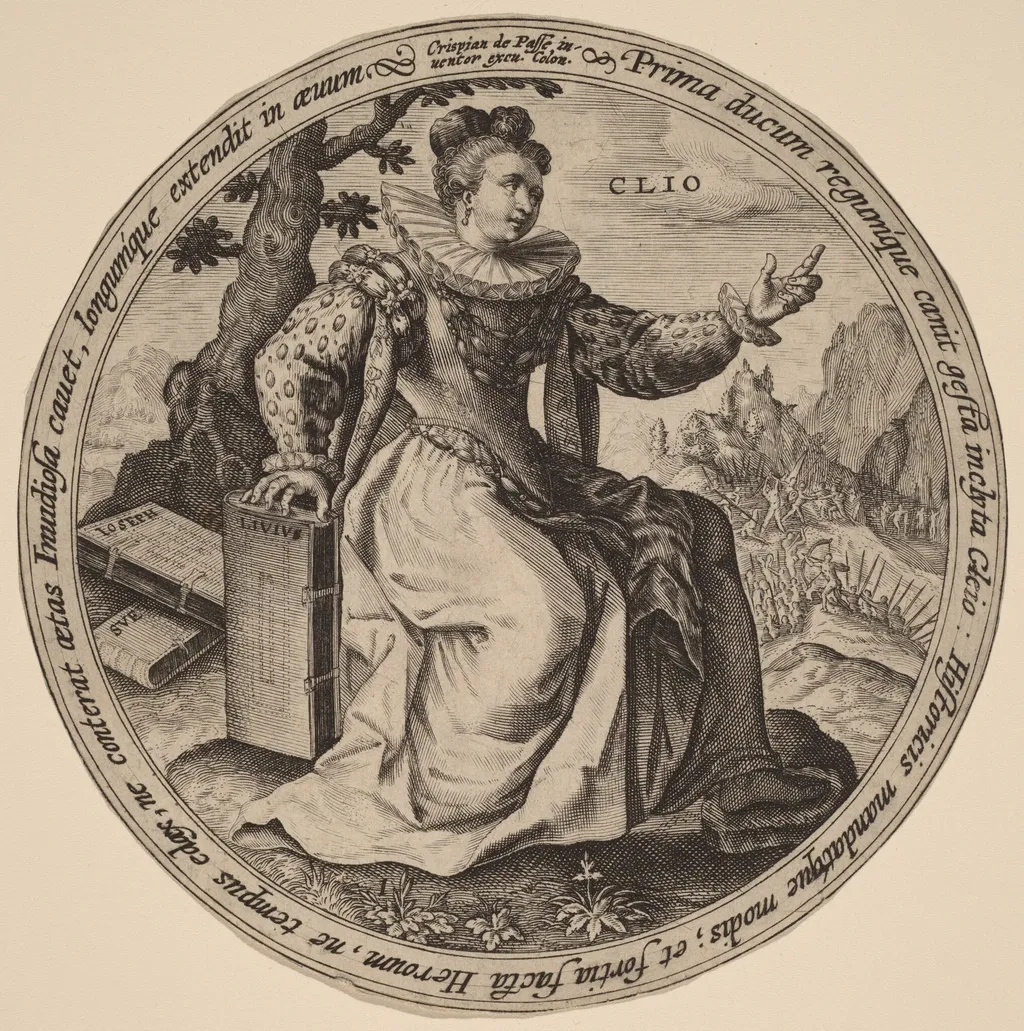
Clio is an ink print by the Renaissance artist Crispijn van de Passe I. It dates from 1601 and is held in the collection of the National Gallery of Art.
- Inscription
- Inscribed:upper center plate: Crispian de Passe in. / uencor excu. Colon.; around circumference plate: Prima ducum regunique canit gasta inclyta Cleio: Historicis mandatique modis; et fortia facta Heroum, ne tempus edax, ne conterat aetas Inudiosa cauet, longumique extendit in aeuum.; upper center plate: CLIO
About this work
Overview
Crispijn van de Passe I produced an engraving titled Clio in 1601. Executed on laid paper, the monochrome print depicts a classical figure surrounded by symbolic elements. The composition is framed by Latin lettering, and the overall effect resembles a narrative illustration from an early modern antiquarian source.
Subject & Meaning
The central figure represents Clio, the Greek muse associated with history. She is shown in elaborate attire, clutching a trumpet and a scroll, attributes that signify the proclamation and recording of past events. A lion at her feet and a distant ship further allude to the breadth of human experience across time and geography.
Technique & Style
Van de Passe employed the engraving method, incising fine lines into a metal plate to create varied hatching and cross‑hatching. This approach generates tonal depth without color, allowing the artist to render textures such as fabric, cloud, and animal fur through subtle gradations of light and shadow.
History & Provenance
The print emerged in the early seventeenth century, a period when emblematic representations of the muses were popular in learned circles. Copies of the work circulated among collectors of printed art and scholarly illustrations, reflecting the broader European interest in classical allegory during the Renaissance.
Own this work as a print
Artist & collection

Artist
Crispijn van de Passe I (1564–1637) was an artist, born in Arnemuiden.

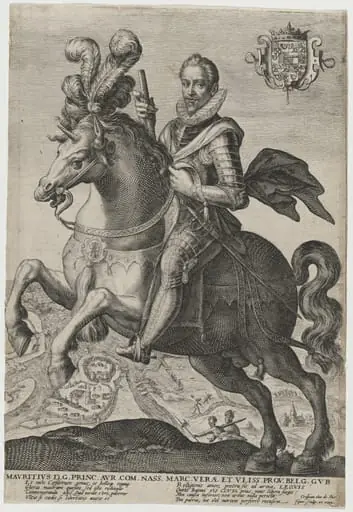
- Juno
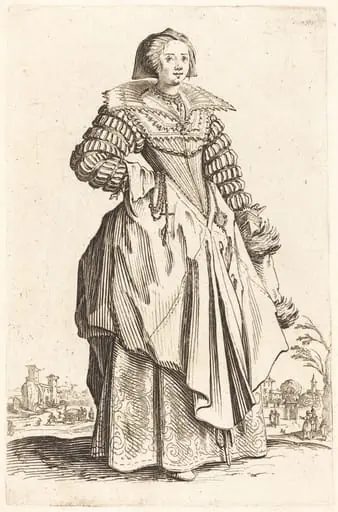 Noble Woman with Large Collar
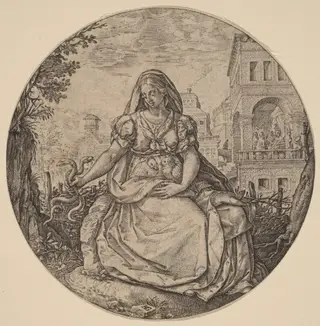 Allegory of Prudence
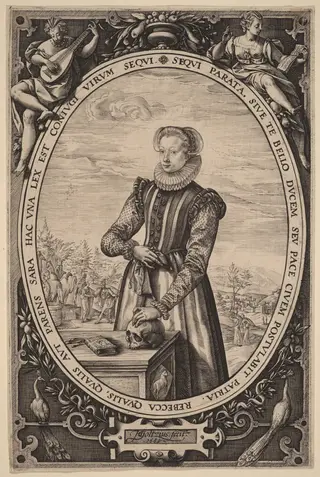 Josina Hamels
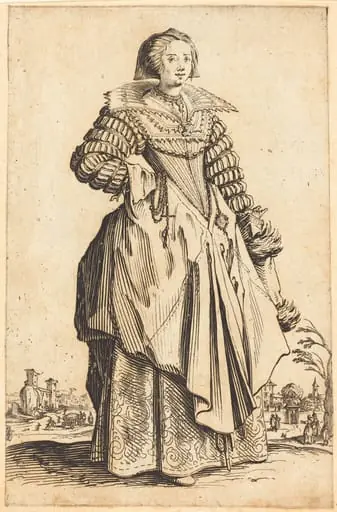 Noble Woman with Large Collar
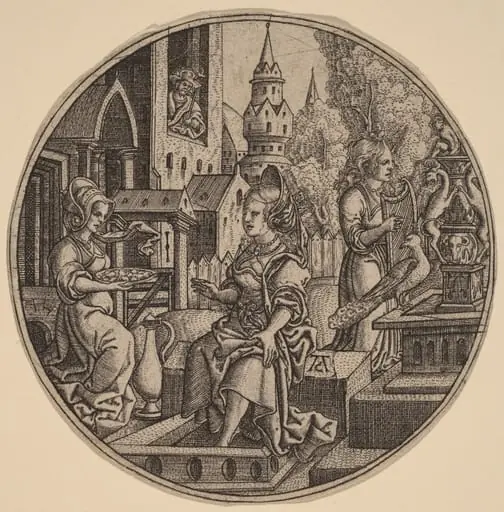 David and Bathsheba
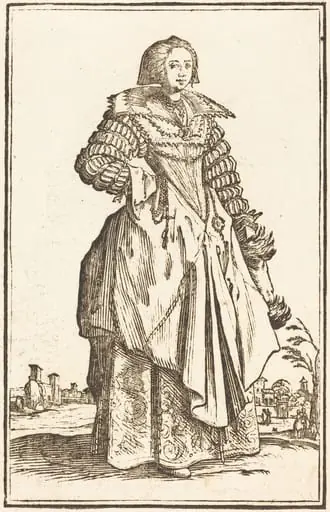 Noble Woman with Large Collar
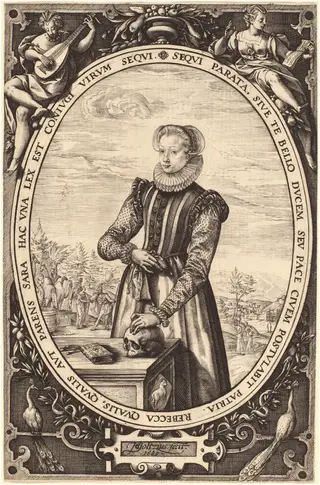 Josina Hamels
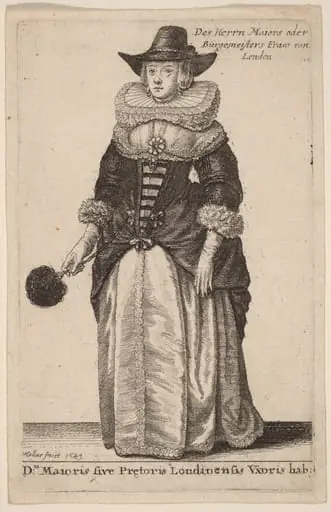 Dni Maioris sive Praetoris Londinensis Vxoris Hab:
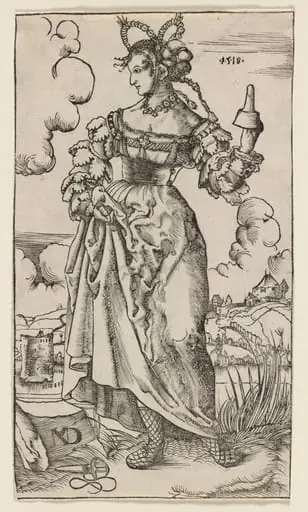 The Wise and Foolish Virgins: The Fifth Foolish Virgin
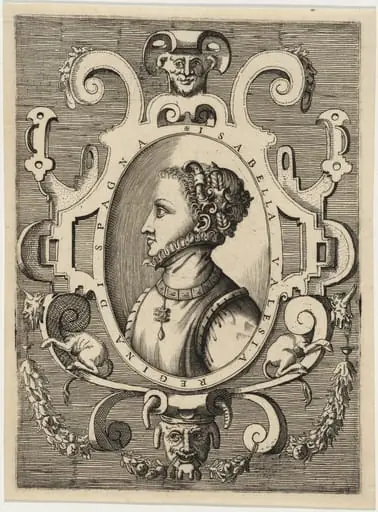 Isabella, Wife of Philip IV of Spain
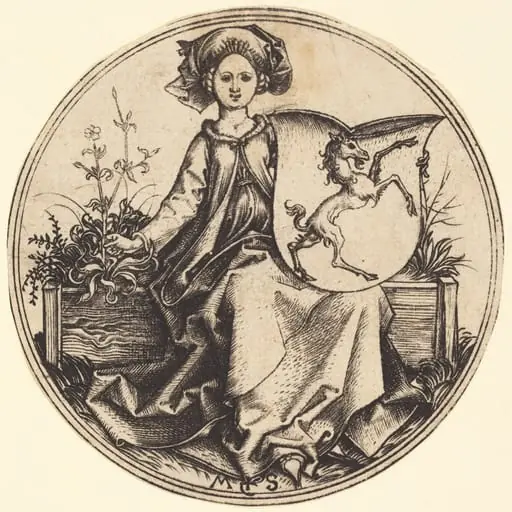 Shield with Unicorn, Held by Woman