Artwork
Baigneuses (Bathers)
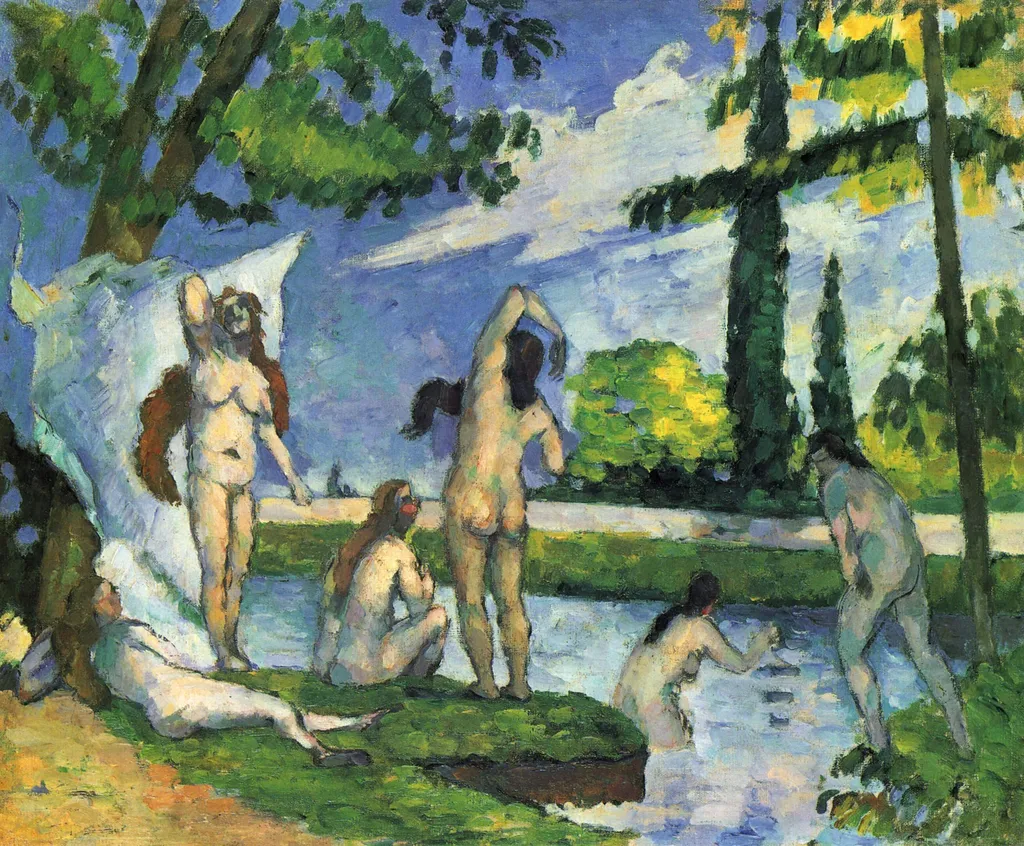
Baigneuses (Bathers) is an oil painting by the Post-Impressionist artist Paul Cézanne. It dates from 1874 and is held in the collection of the Metropolitan Museum of Art.
About this work
Subject & Meaning
The composition centers on the depiction of unclothed bodies in the act of bathing, rendered in oil on canvas and classified within the nude genre.
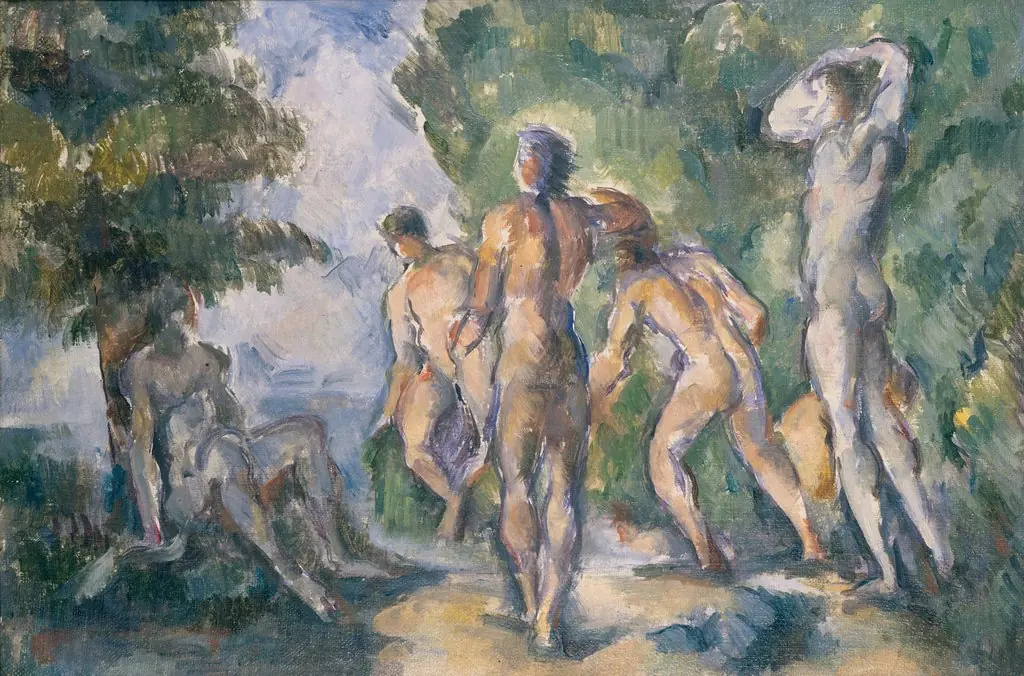
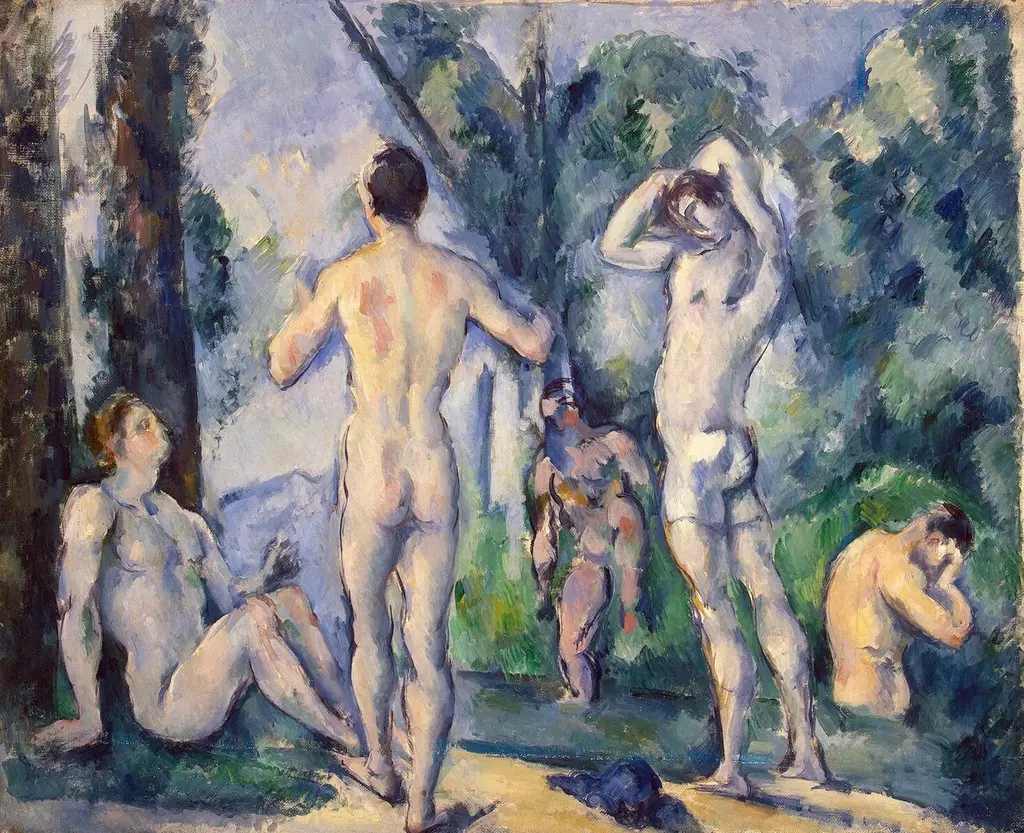
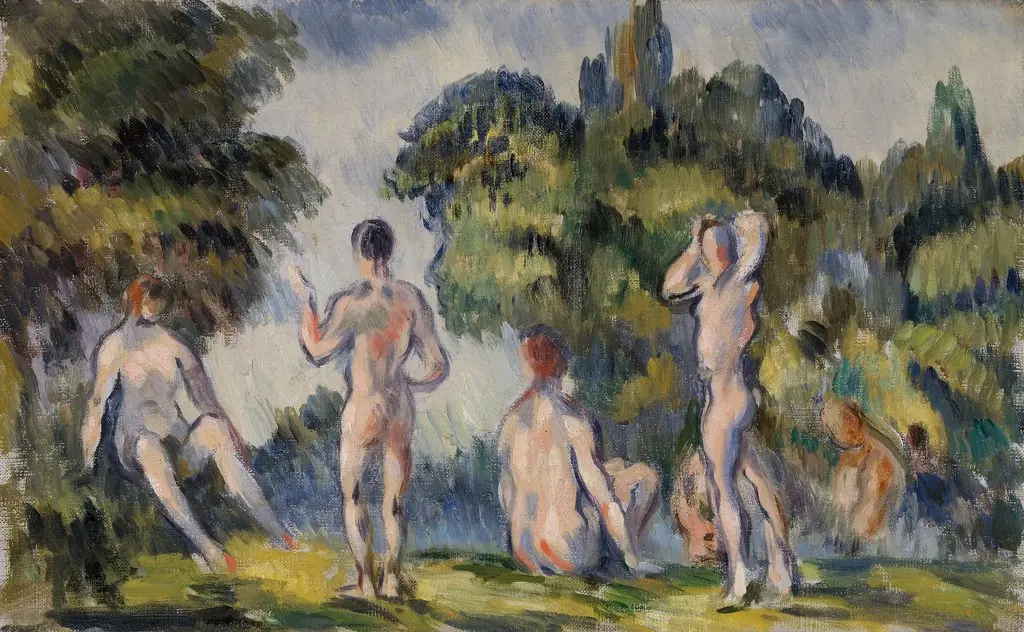
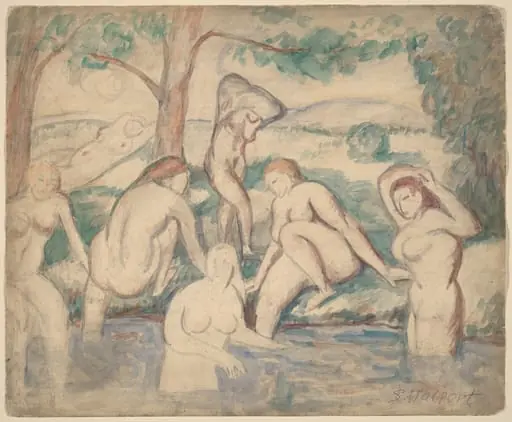
Baigneuses presents a group of nude female figures gathered in a natural setting beside a watercourse, a subject Cézanne approached as part of the broader tradition of the bathers motif in Western art. The composition centers on the depiction of unclothed bodies in the act of bathing, rendered in oil on canvas and classified within the nude genre. By placing his figures outdoors near flowing water rather than within an idealized classical interior, Cézanne aligned the work with a modern reinterpretation of an ancient theme, treating the nude as a study of form integrated with the surrounding landscape.
The painting thus represents both the timeless subject of women bathing and Cézanne's own effort to renew that iconography through direct observation of nature, making the canvas a meditation on the human figure in communion with the elements.
Technique & Style
Executed in 1874, Baigneuses is an oil painting on canvas by Paul Cézanne. The work measures 38.1 centimeters in height and 46 centimeters in width. As a nude genre piece, the composition depicts figures engaged in bathing near a watercourse.
The artist utilized oil paint as the primary medium to render the scene, applying it directly onto the canvas support. These materials define the physical nature of the artwork, which remains part of the collection at the Metropolitan Museum of Art. The painting's dimensions and medium are consistent with Cézanne's practice during this period, focusing on the formal arrangement of nude figures within a landscape setting.
History & Provenance
Paul Cézanne created the oil-on-canvas painting Baigneuses (Bathers) in 1874. The work, measuring 38.1 by 46 cm, depicts nude figures engaged in bathing near a watercourse. According to provenance records, it was formerly owned by Charles Loeser and later by Olga Kaufmann-Lebert, after which it passed through the art dealership M. Knoedler & Co. before entering the collection of the Metropolitan Museum of Art in 1961, where it bears the accession number 61.194.
Overview
This oil painting, titled Baigneuses (Bathers), presents a gathering of nude female figures within a natural landscape. The scene unfolds by a body of water, possibly a river or lake, framed by lush trees and vegetation. The artist employs a palette dominated by earthy tones for the figures, contrasting with the surrounding greenery. The overall surface exhibits a notable texture and a dynamic quality, characteristic of the artist's approach.
Own this work as a print
Artist & collection

Artist
Paul Cézanne ( say-ZAN, UK also siz-AN, US also say-ZAHN; French: ; Occitan: Pau Cesana; 19 January 1839 – 22 October 1906) was a French Post-Impressionist painter whose work introduced new modes of representation,…

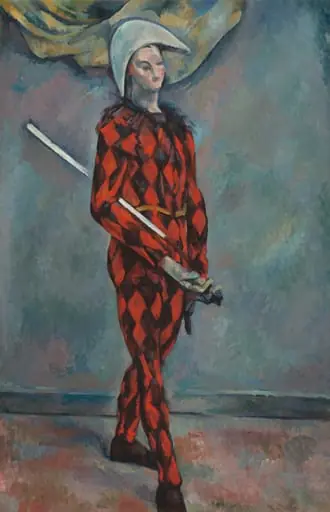 Harlequin
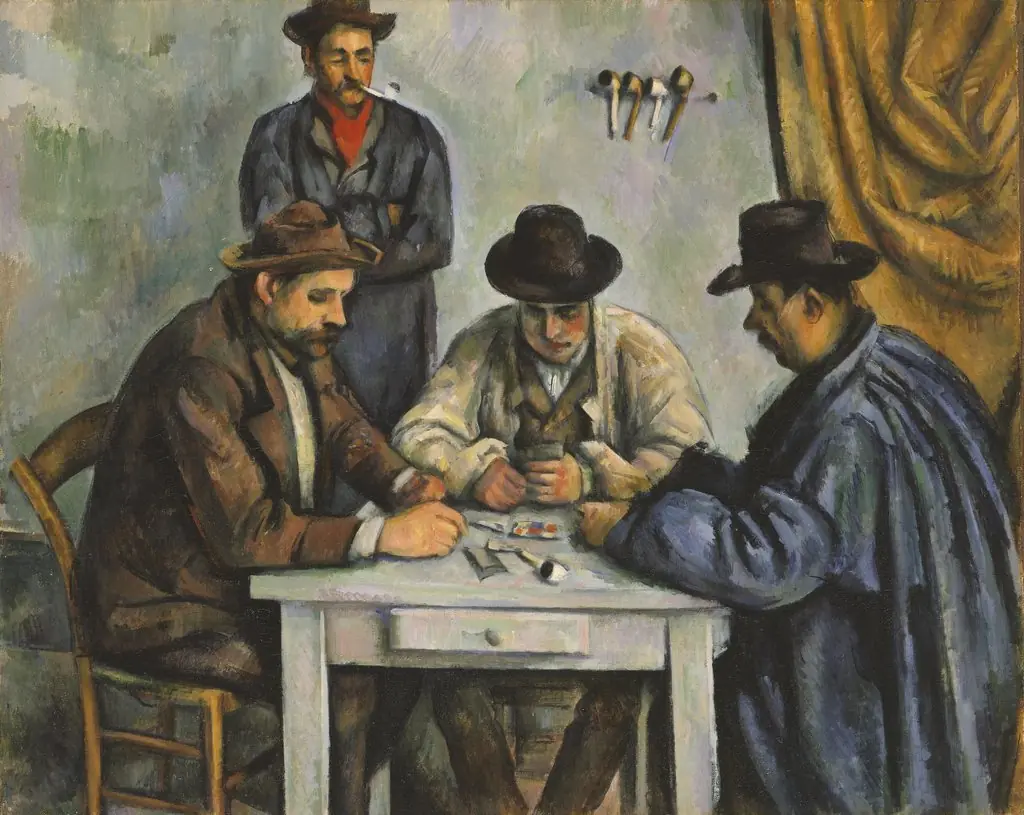 The Card Players
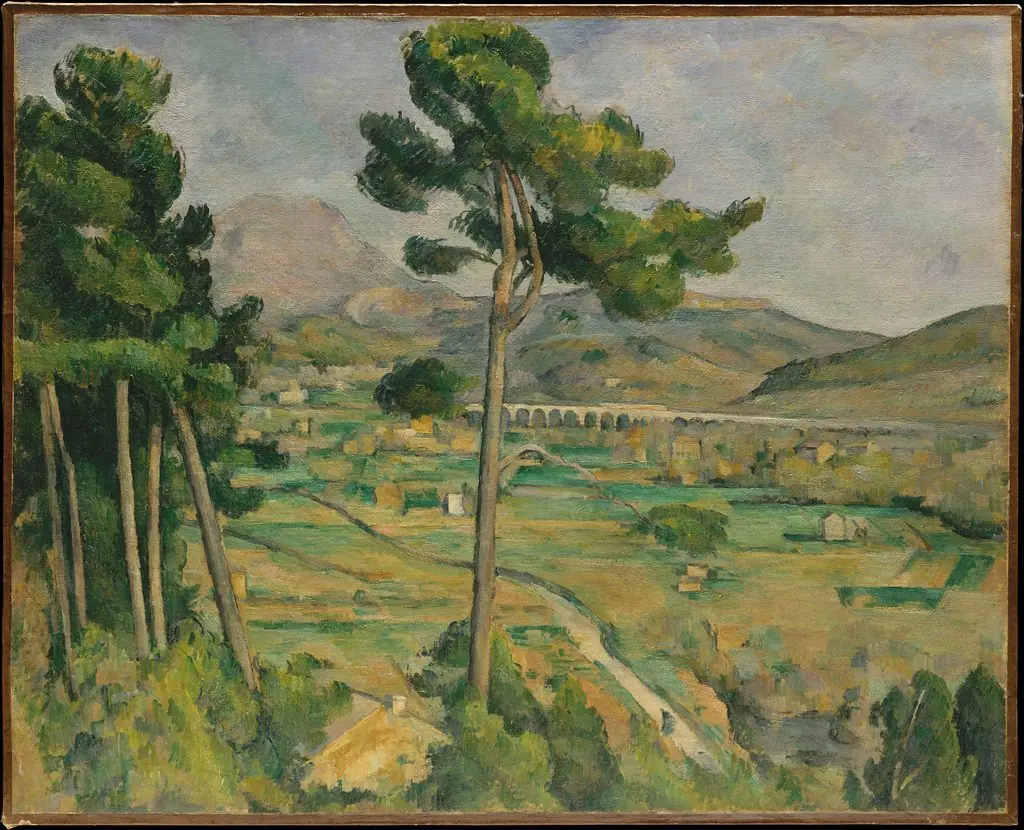 Mont Sainte-Victoire and the Viaduct of the Arc River Valley
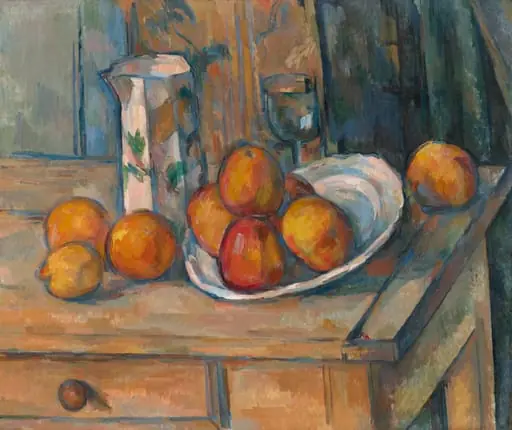 Still Life with Milk Jug and Fruit
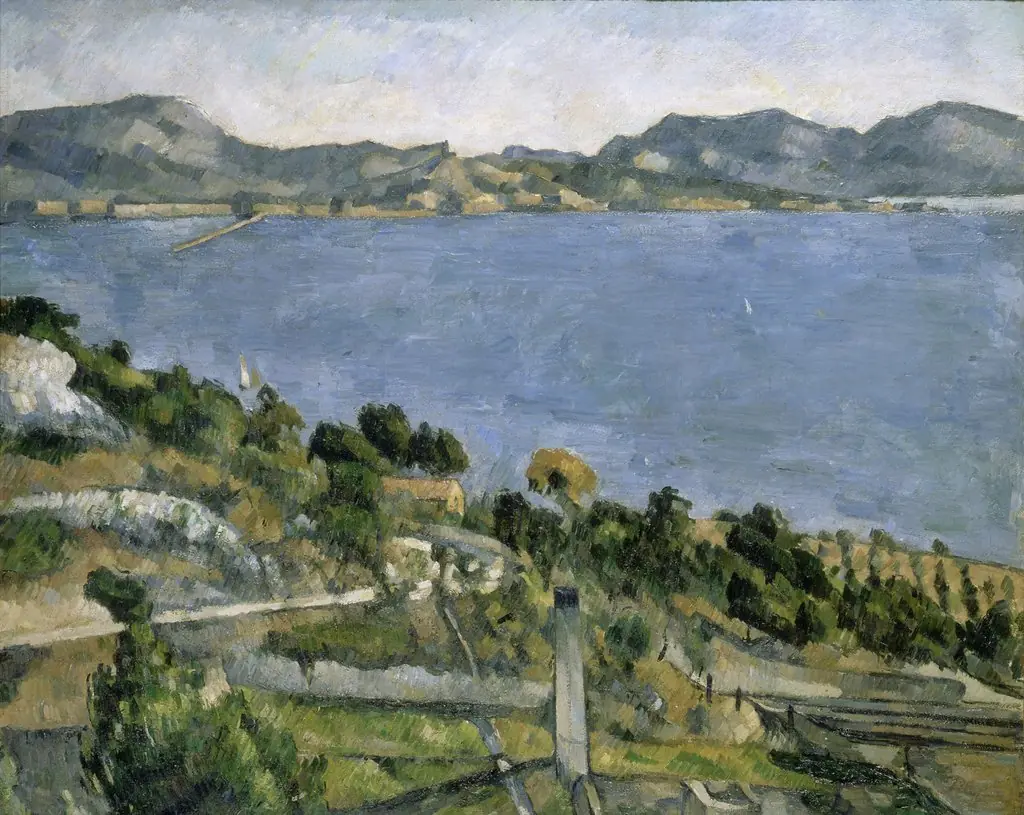 Le Golfe de Marseille vu de l'Estaque (The Gulf of Marseille Seen from L'Estaque)
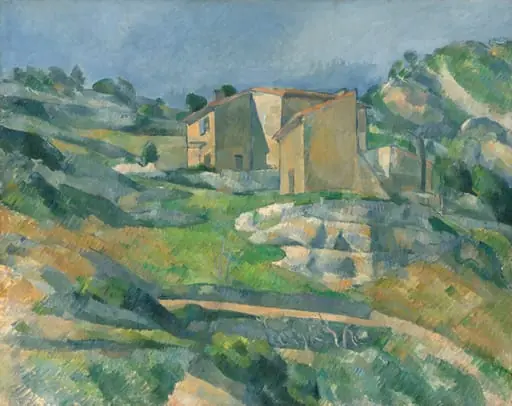 Houses in Provence: The Riaux Valley near L'Estaque
 Louis Guillaume
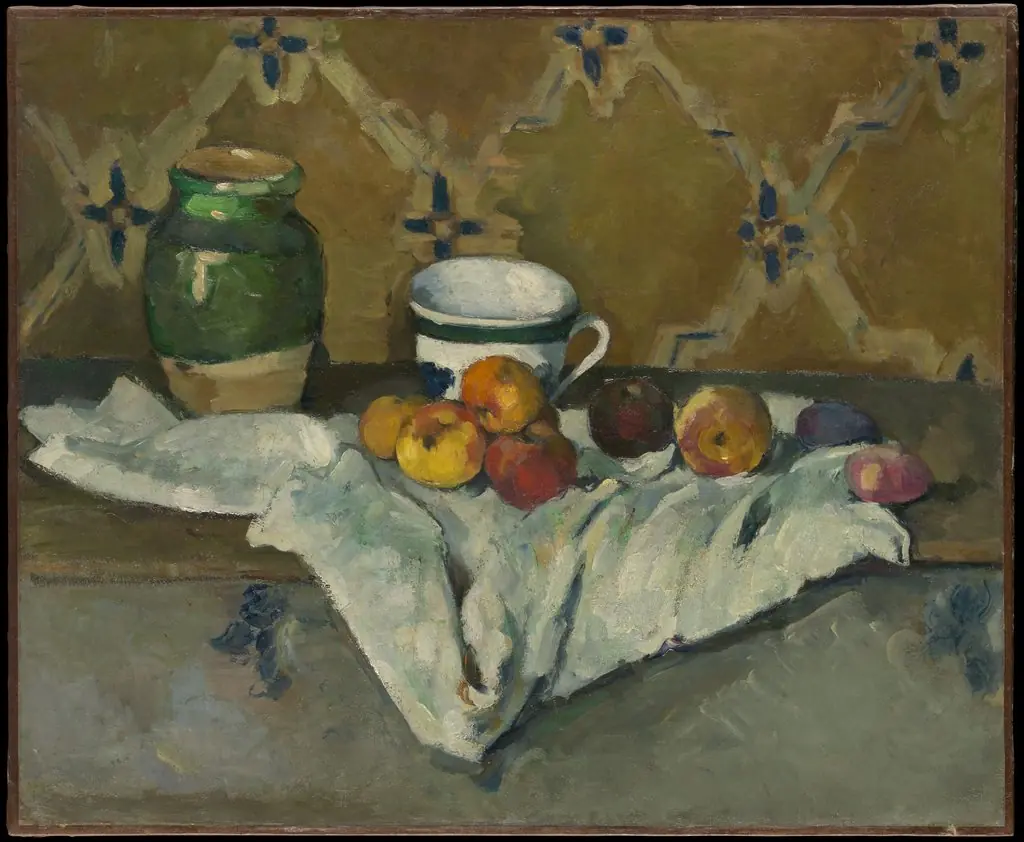 Still Life with Jar, Cup, and Apples