Artwork
Bathers
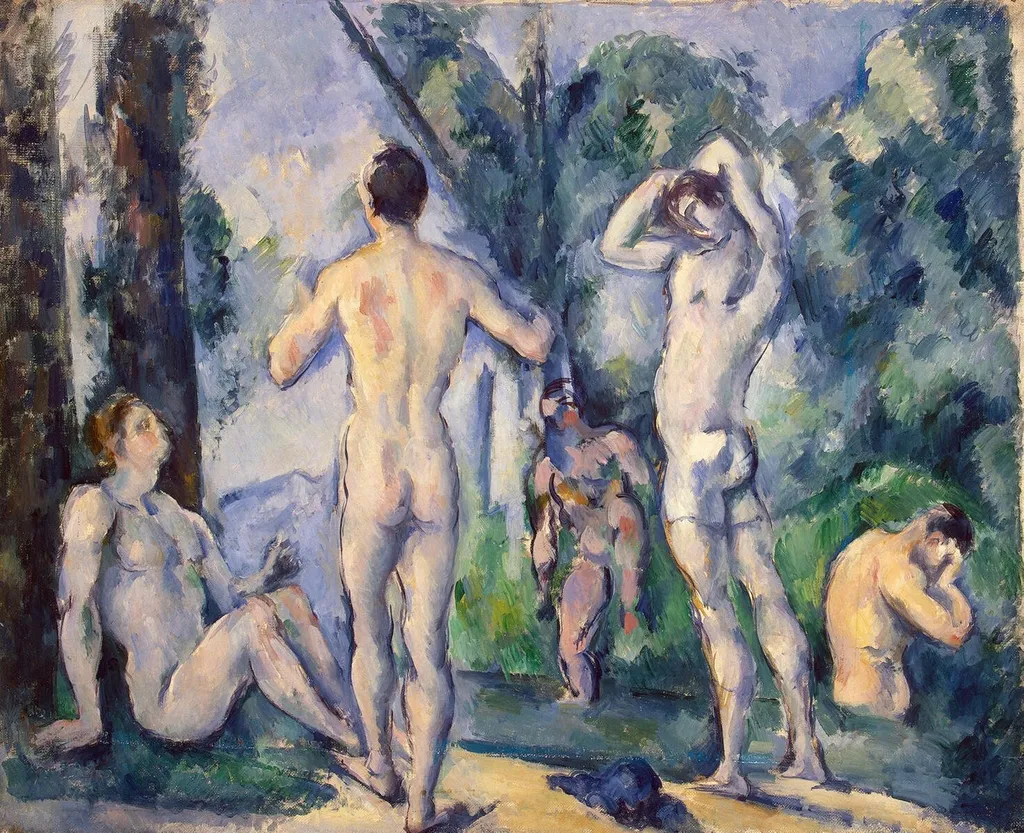
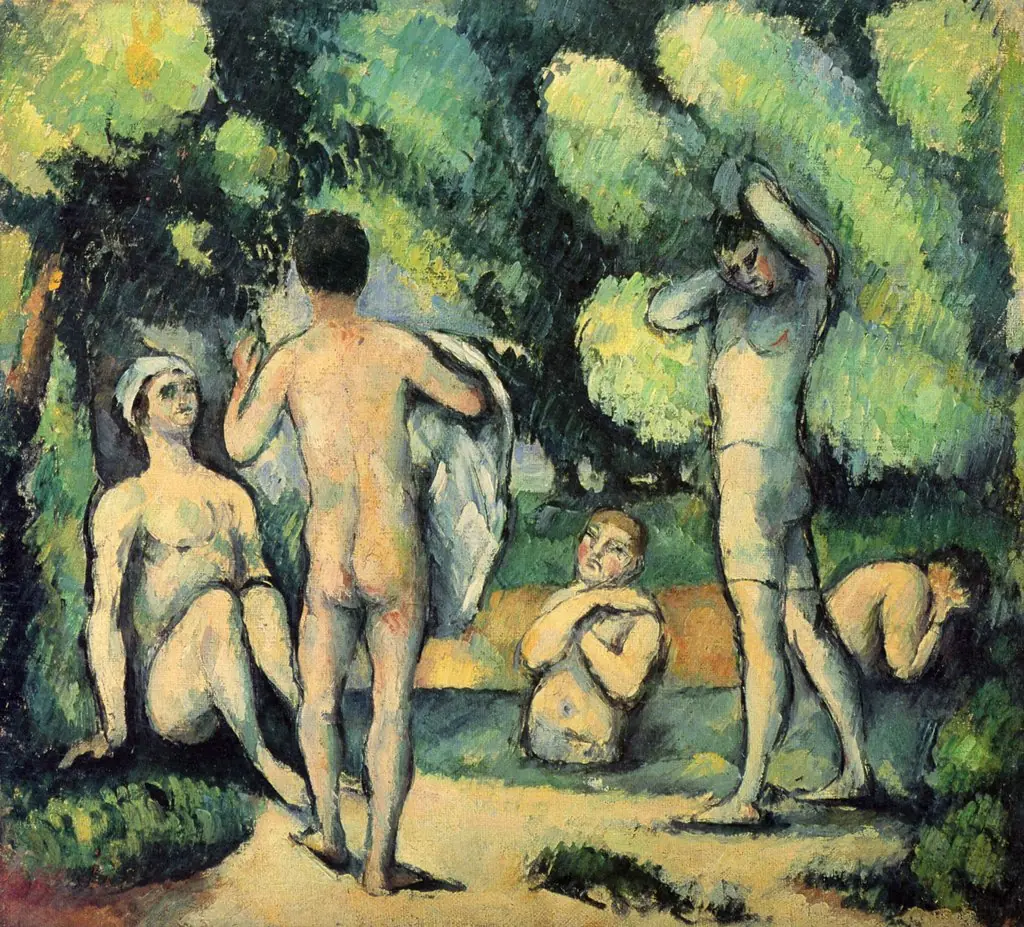
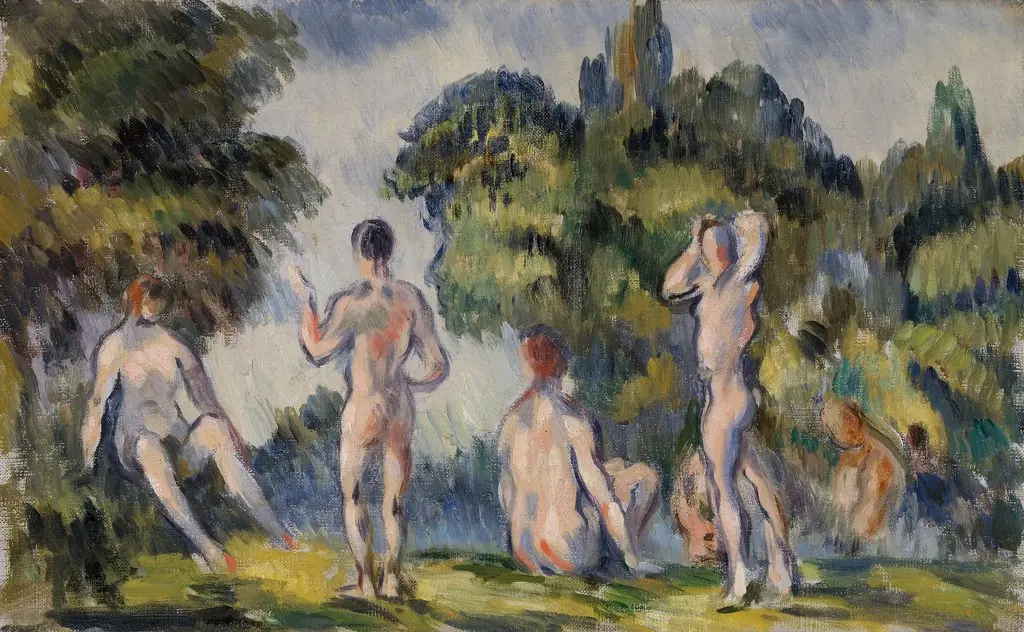
Bathers is an oil painting by the Post-Impressionist artist Paul Cézanne. It dates from 1896 and is held in the collection of the Hermitage Museum.
About this work
Subject & Meaning
The composition revitalizes the genre by drawing upon the artist's personal memories of swimming with friends in the Arc river during his youth.
The painting depicts a group of four bathers situated on the bank of a river during summer. This work extends a traditional artistic theme previously explored by masters such as Titian and Poussin, yet Cézanne approaches the subject differently than the academic salons of the nineteenth century. The composition revitalizes the genre by drawing upon the artist's personal memories of swimming with friends in the Arc river during his youth.
The figures are rendered in idealized poses that evoke Greek mythology, continuing a cycle of bather themes the artist began around 1870. This specific version is characterized by a cooler tonal palette, distinguishing it from other variations on the subject held in different collections which utilize warmer hues.
Technique & Style
The work is an oil painting on canvas executed in 1890. Its composition employs a muted palette with cooler tones compared to contemporaneous variants, emphasizing volumetric structure through juxtaposed color planes rather than linear contours.
Handling is characteristic of Cézanne’s late practice, with layered, directional brushwork that modulates across passages to articulate form while preserving the integrity of the support. The scene depicts four bathers beside a river in a synthesis of figure and landscape, rendered through planar simplification and compressed spatial recession.
History & Provenance
The painting was likely executed around 1890, and it belongs to a broader cycle of bathers scenes that Cézanne developed from the 1870s onward, drawing on classical motifs while departing from academic conventions. It entered the Parisian market through Ambroise Vollard’s gallery in 1911, then passed to Marczell de Nemes in Budapest by 1913. After being offered in a Nemes sale at Bernheim-Jeune, it was acquired by Baron Maurice de Herzog in 1929. By 1945 the work was in the possession of Otto Krebs in Berlin.
Following World War II, it was confiscated by Soviet authorities as war reparations and transferred to the Hermitage Museum in Saint Petersburg, where it entered the collection in 1995. The canvas measures 54.2 cm in height and 66.5 cm in width.
Paul Cézanne's Bathers (1890) is housed in the Hermitage Museum in Saint Petersburg, where it forms part of the Otto Krebs collection. The work was originally acquired by Otto Krebs in Berlin in 1929 and was confiscated by the Soviet Union in 1945 as war reparations before being transferred to the museum. It was first presented to the public at the Hermitage in 1995 during an exhibition of French painting from the 19th and 20th centuries originating from private German collections.
Prior to its arrival in Russia, the painting had a significant exhibition history, appearing at the Salon d'Automne in Paris in 1904, the Museum of Fine Arts in Budapest in 1911, the Städtische Kunsthalle in Düsseldorf in 1912, and galleries in Berlin and Vienna during the 1920s.
Context
Paul Cézanne's Bathers (1890) is widely regarded as the preeminent work among his approximately two hundred paintings, sketches, and drawings on the theme of bathers. The composition revitalizes a classical tradition established by artists such as Titian and Poussin, yet it diverges sharply from the conventions of nineteenth-century academic salons. Instead of idealized mythology alone, the work reflects Cézanne's personal memories of swimming with friends in the Arc river during his youth.
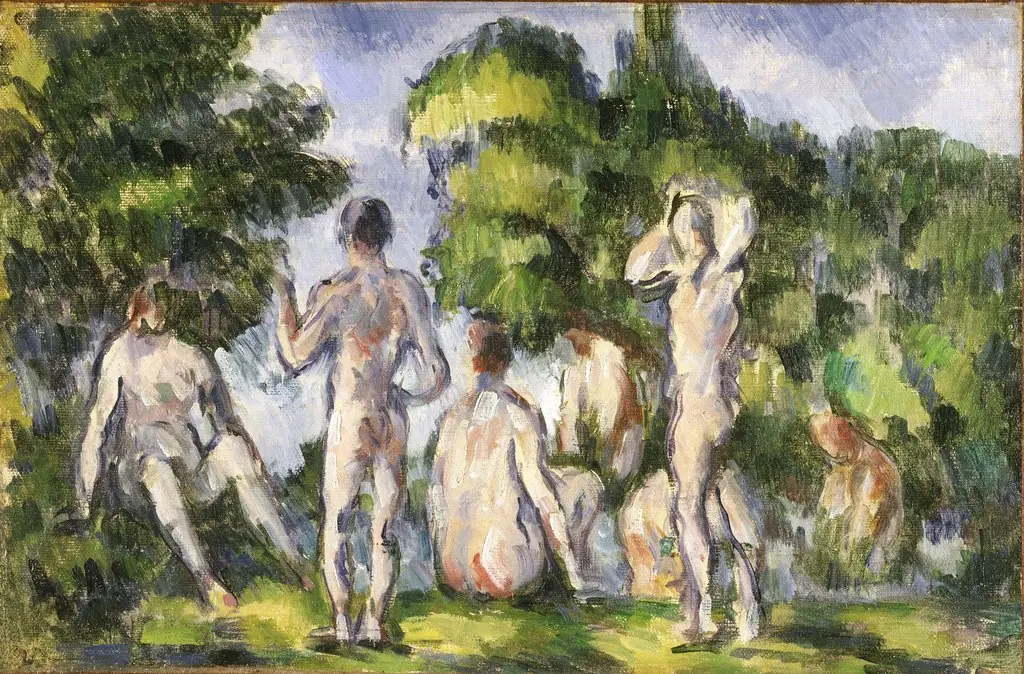
This piece belongs to a broader cycle initiated around 1870, which includes earlier works like The Judgment of Paris (1862–1865) and features figures in poses echoing Greek mythology. Distinct from warmer-toned variants held in the Musée d'Orsay and the Saint Louis Art Museum, the Hermitage version is characterized by a cooler palette. It represents a pivotal moment in Post-Impressionism, bridging historical genre painting with modern structural innovation.
Legacy
The painting’s later reputation rests on its status as a defining work within Cézanne’s lifelong series of bathers, cited as the finest among more than two hundred related studies. Its influence is traced to a radical departure from academic salon conventions, reviving the traditional theme through a modern idiom rooted in the artist’s youthful memories of bathing in the Arc river. The Hermitage’s version, distinguished by cooler tones compared to contemporaneous works, entered public view only in 1995 after transfer from the Otto Krebs collection, reinforcing its significance through delayed exposure within museum contexts.
Exhibitions from 1904 onward, including the Salon d’Automne and later surveys in Budapest and Berlin, consolidated its canonical position among Cézanne’s oeuvre and in broader modernist narratives.
Overview
Created in 1896, this oil on canvas by Paul Cézanne portrays a small group of figures engaged in bathing within a forested setting. The composition gathers five individuals, two men, two women, and a child, arranged in a loosely structured tableau that emphasizes the interaction of bodies and foliage. The work is part of the Post‑Impressionist canon and is currently displayed in the State Hermitage Museum.
Artist & collection

Artist
Paul Cézanne ( say-ZAN, UK also siz-AN, US also say-ZAHN; French: ; Occitan: Pau Cesana; 19 January 1839 – 22 October 1906) was a French Post-Impressionist painter whose work introduced new modes of representation,…

 Harlequin
 The Card Players
 Mont Sainte-Victoire and the Viaduct of the Arc River Valley
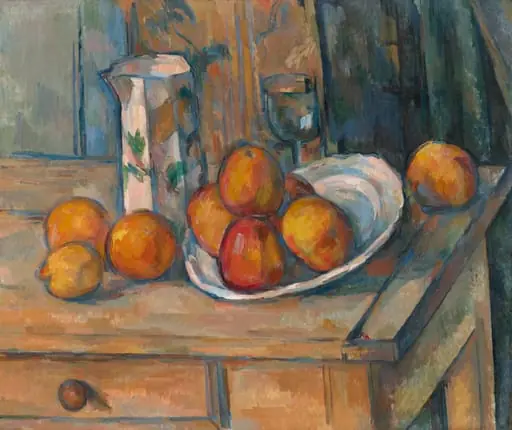 Still Life with Milk Jug and Fruit
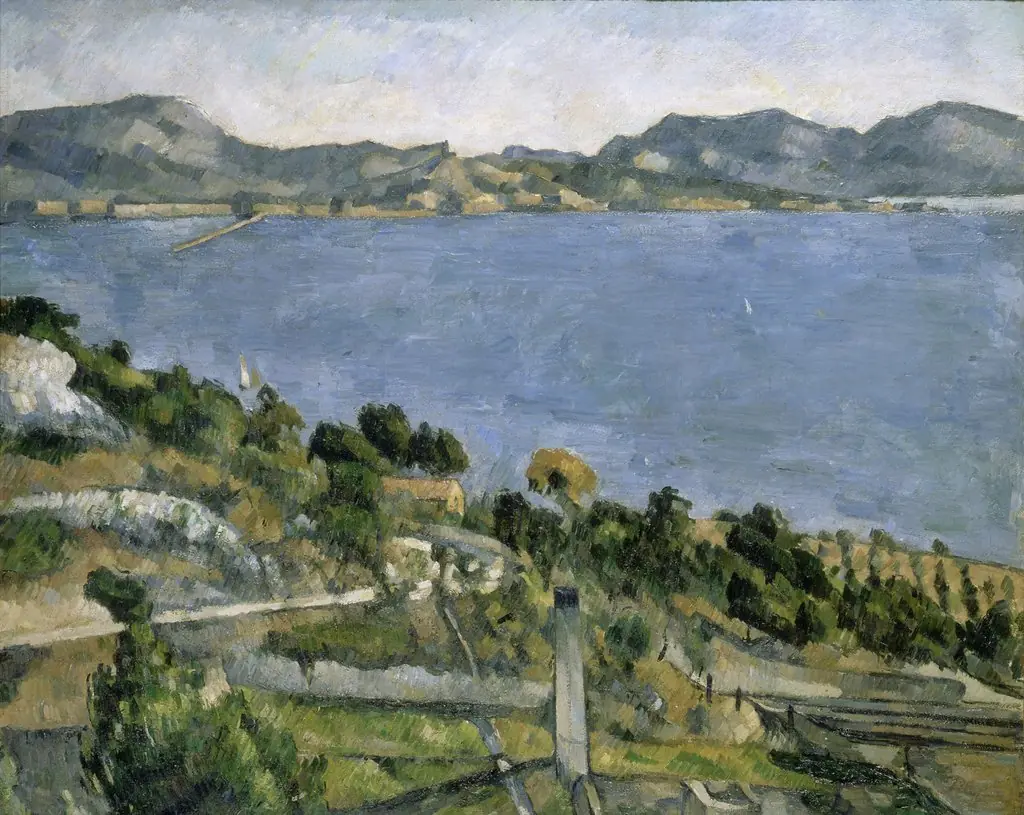 Le Golfe de Marseille vu de l'Estaque (The Gulf of Marseille Seen from L'Estaque)
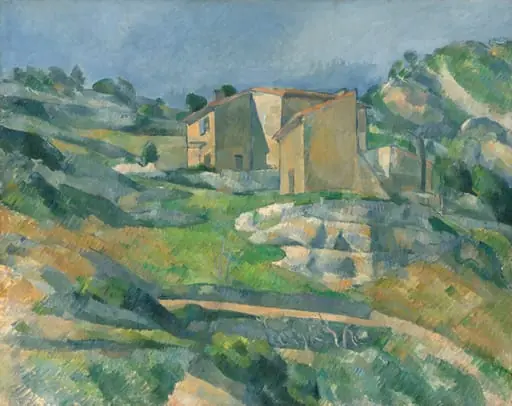 Houses in Provence: The Riaux Valley near L'Estaque
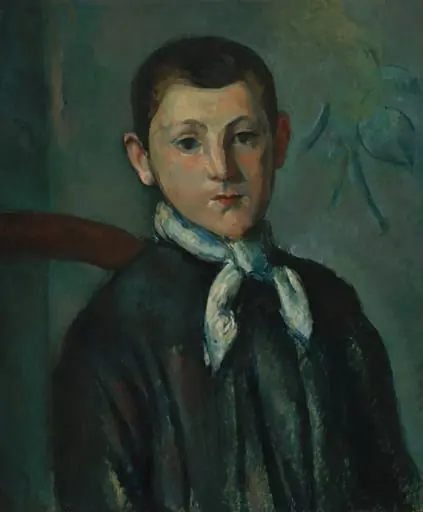 Louis Guillaume
 Still Life with Jar, Cup, and Apples