Artwork
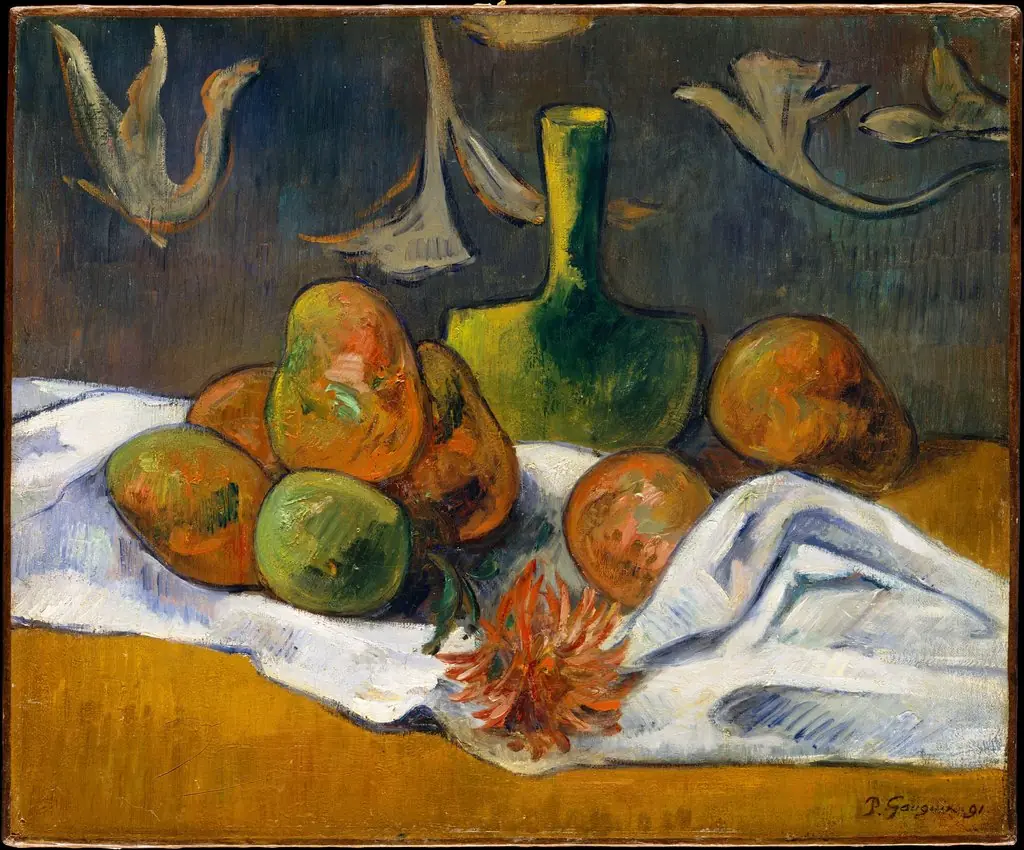
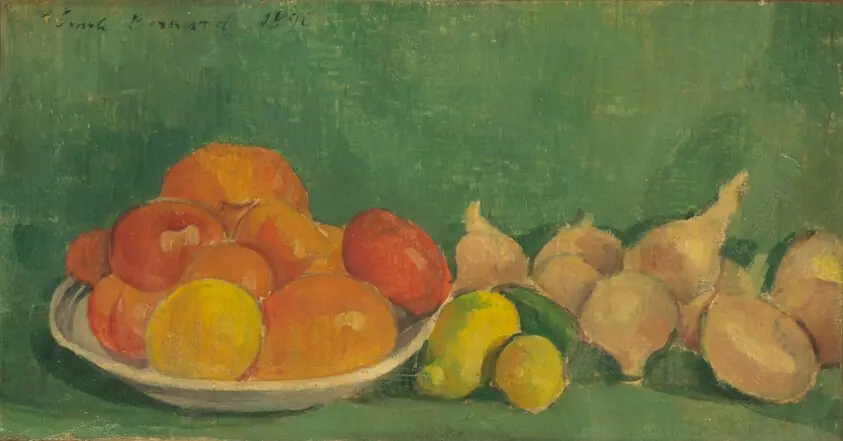
Still Life with Teapot and Fruit
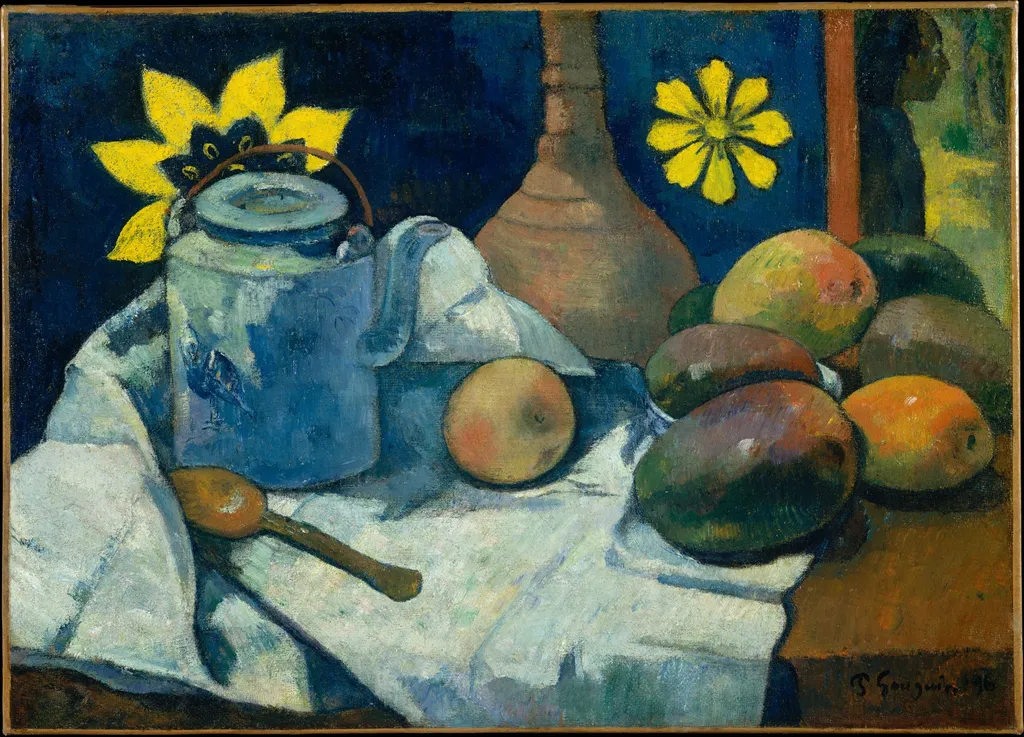
Still Life with Teapot and Fruit is an oil painting by the Post-Impressionist artist Paul Gauguin. It dates from 1898 and is held in the collection of the Metropolitan Museum of Art.
About this work
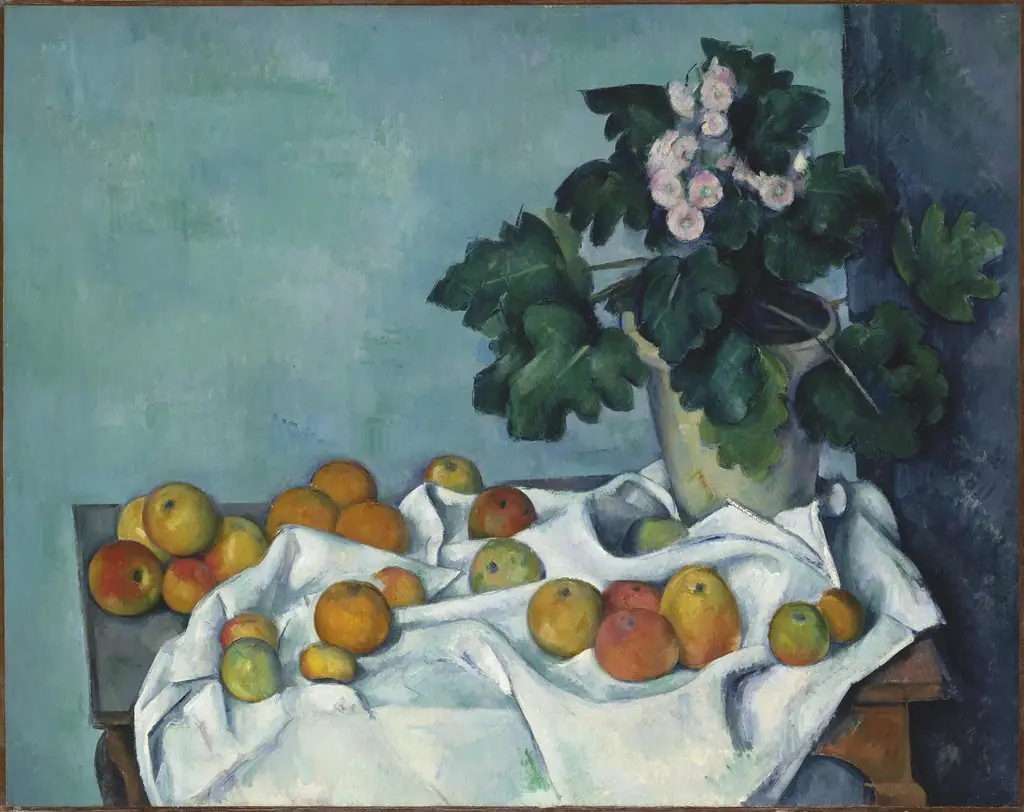
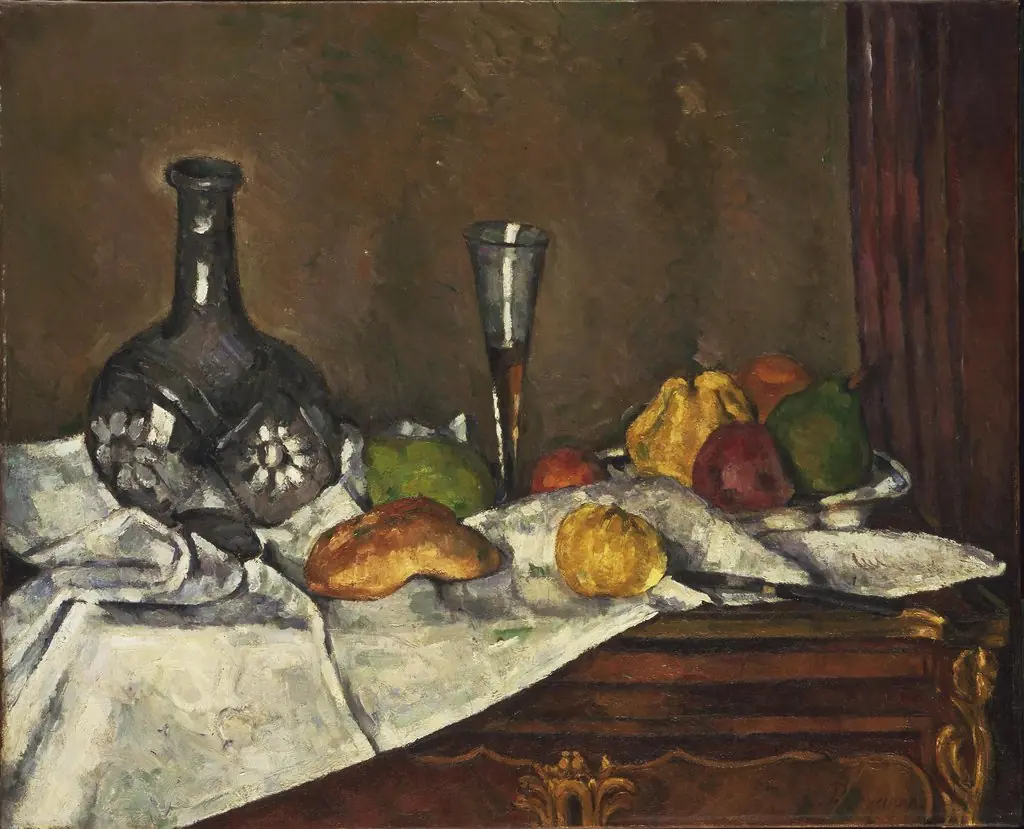
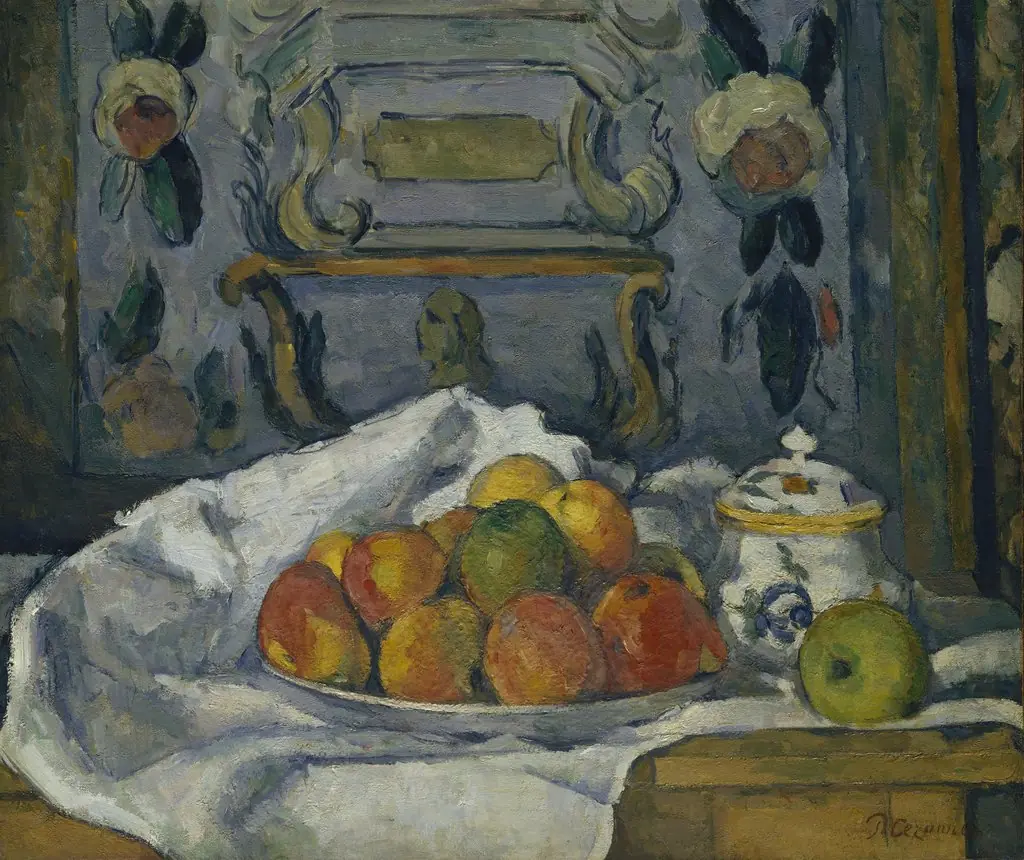
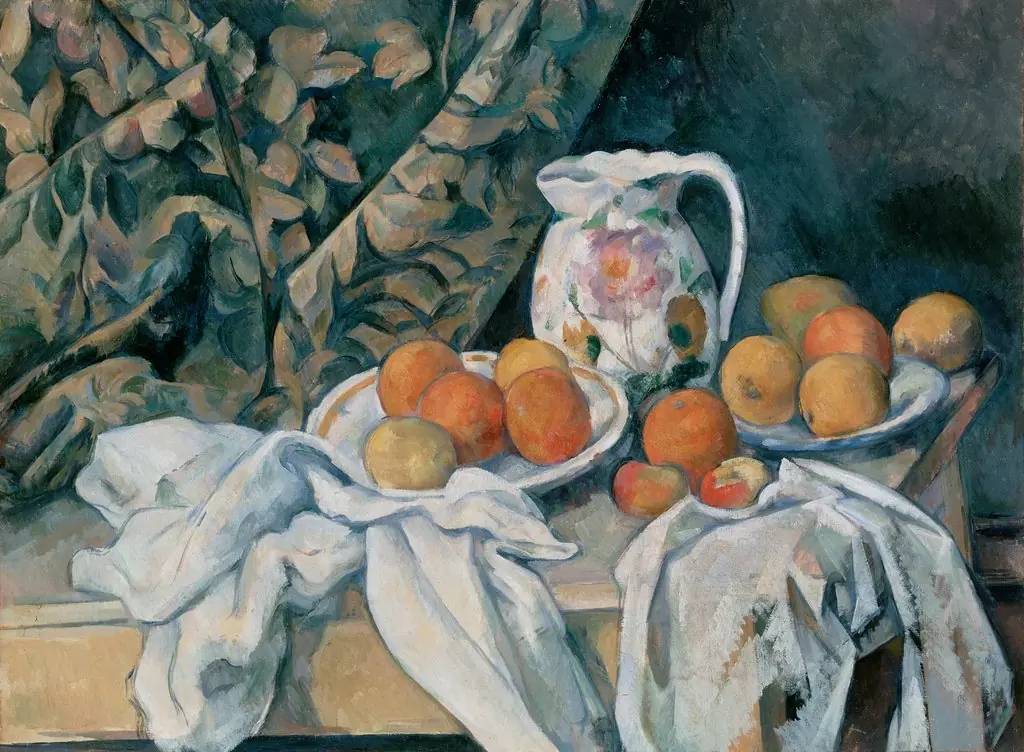
A blue teapot with a brown handle sits among fruit, including a mango and an apple, against a dark blue ground. Paul Gauguin worked the oil in thick, visible strokes, and the muted blues and browns give the 1898 still life a quiet, settled calm.
Subject & Meaning
These objects function as emblematic elements of everyday material abundance, a common motif in the still‑life genre that Gauguin explored around 1896.
The work titled Still Life with Teapot and Fruit presents a domestic still life in which a bowl of fruit and a teapot occupy the picture plane, as recorded in the catalog entry. These objects function as emblematic elements of everyday material abundance, a common motif in the still‑life genre that Gauguin explored around 1896. By arranging such household items, the painting foregrounds themes of nourishment and domestic comfort, reflecting the artist’s interest in ordinary domestic scenes. The composition thus embodies a quiet meditation on the textures and colors of familiar household objects.
Technique & Style
Executed in oil on canvas in 1896, the work employs a dense, matte paint layer typical of Gauguin’s Tahitian period, with visible brushwork in the still-life objects and a flatter handling in the background. The composition balances naturalistic depiction of fruit and a teapot against a patterned planar ground, creating rhythmic contrasts between organic forms and geometric abstraction. Handling shows deliberate impasto in highlights and smoother transitions in shadows, reflecting Gauguin’s synthesis of Impressionist facture with Symbolist compositional rigor.
History & Provenance
The work was painted in 1896, as recorded in Gauguin’s oeuvre and confirmed by the Metropolitan Museum of Art’s records. It belongs to the still-life genre and depicts a teapot amid fruit, consistent with Gauguin’s Tahitian-influenced compositions of the mid-1890s. No documented commission or preparatory materials survive, and the painting’s first recorded location is the Metropolitan Museum of Art, where it remains held.
The work is held by the Metropolitan Museum of Art, New York, where it is recorded with the accession number 1999.278. It entered the museum in 1999 as a gift of Mr. and Mrs. Douglas Dillon. The painting has been exhibited at the Metropolitan Museum of Art in New York as part of its permanent collection displays, though specific temporary exhibitions are not detailed in the cited sources.
Overview
Paul Gauguin's Still Life with Teapot and Fruit, an oil painting from 1898, exemplifies his Post-Impressionist approach to a traditional genre. This work features a simple arrangement of domestic items, reflecting the artist's ongoing exploration of form and color during a pivotal period in his career. It is currently housed in The Metropolitan Museum of Art.
Context
Paul Gauguin, a versatile French artist, was active as a painter, sculptor, printmaker, ceramist, and writer. His artistic journey marked a significant departure from the optical realism of Impressionism, moving towards a more subjective and symbolic expression. This still life from 1898 reflects his mature period, where he continued to refine his unique visual language, influencing subsequent generations of artists.
Own this work as a print
Artist & collection
Artist
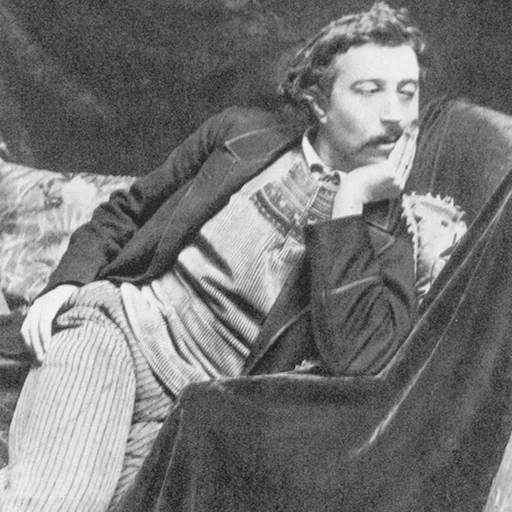
Eugène Henri Paul Gauguin (; French:; 7 June 1848 – 8 May 1903) was a French painter, sculptor, printmaker, ceramist, and writer, whose work has been primarily associated with the Post-Impressionist and Symbolist movements.