Artwork
Twittering Machine
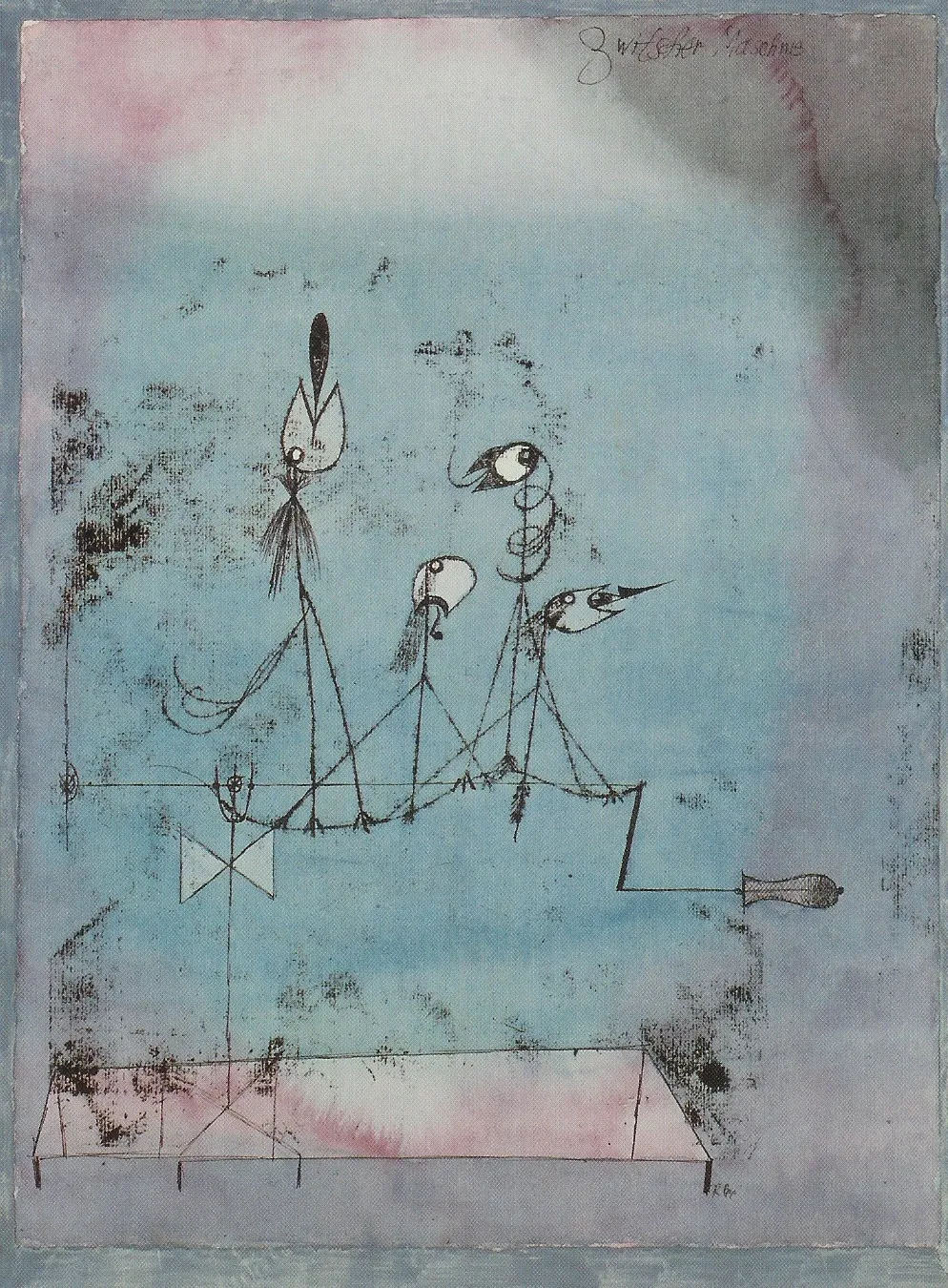
Twittering Machine is an unspecified painting by the Bauhaus artist Paul Klee. It dates from 1922 and is held in the collection of the Museum of Modern Art.
About this work
Overview
Created in 1922, Paul Klee’s “Twittering Machine” combines watercolor, gouache, pen‑and‑ink and oil transfer on paper. The composition shows a handful of stylised birds attached to a thin horizontal line that functions as a crank, suggesting a hybrid of living creatures and a mechanical device.
Subject & Meaning
The work juxtaposes organic forms with a contrivance, prompting varied readings: some view it as a commentary on the artist’s own vulnerability, others as an ironic portrayal of nature’s resistance to industrial control, while still others interpret the arrangement as a visual metaphor for the production of sound.
Technique & Style
Klee employs loose, gestural lines and flat washes of muted blue, punctuated by bold black outlines that define the birds’ silhouettes. The mixture of media creates layered textures, and the simplified geometry conveys movement and playfulness without sacrificing structural clarity.
History & Provenance
First exhibited in Germany, the painting was condemned as “degenerate art” by the Nazi regime in 1933. It was sold by the party to an art dealer in 1939, after which it entered the United States market and was acquired by the Museum of Modern Art in New York, where it remains in the collection.
Legacy
Among Klee’s more than 9,000 works, this piece is frequently reproduced and has inspired several musical compositions. Its distinctive blend of bird motif and mechanical element has also made it a popular decorative choice, notably in children’s rooms, and it continues to be cited in discussions of early twentieth‑century abstraction.
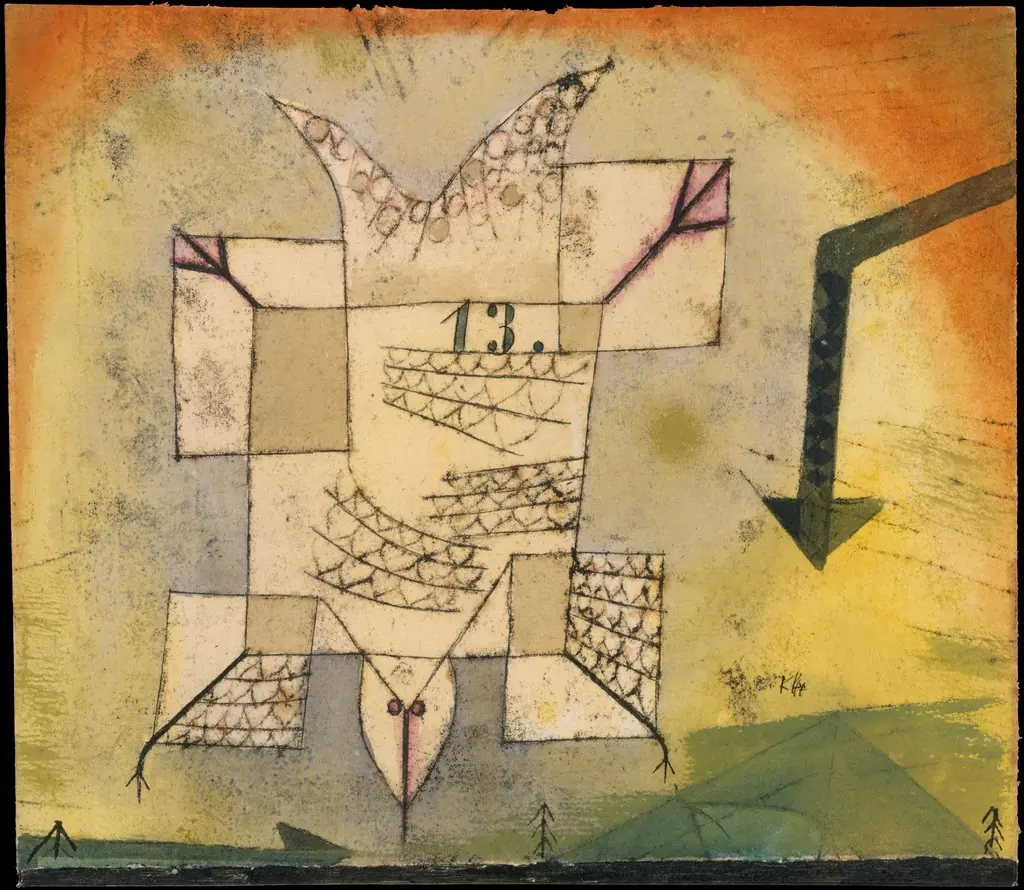
Artist & collection
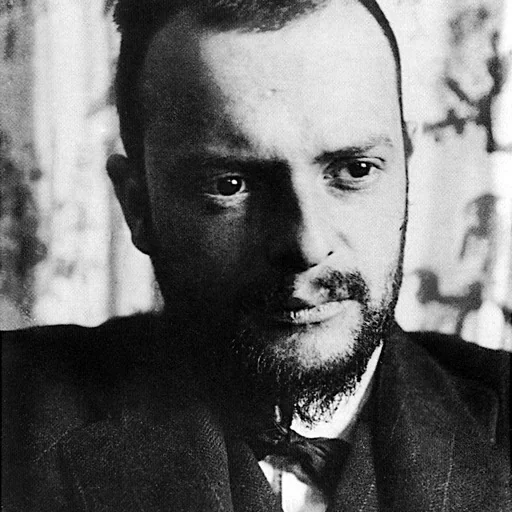
Artist
Paul Klee (German:; 18 December 1879 – 29 June 1940) was a Swiss-born German artist.