Artwork
The Bear Hunt
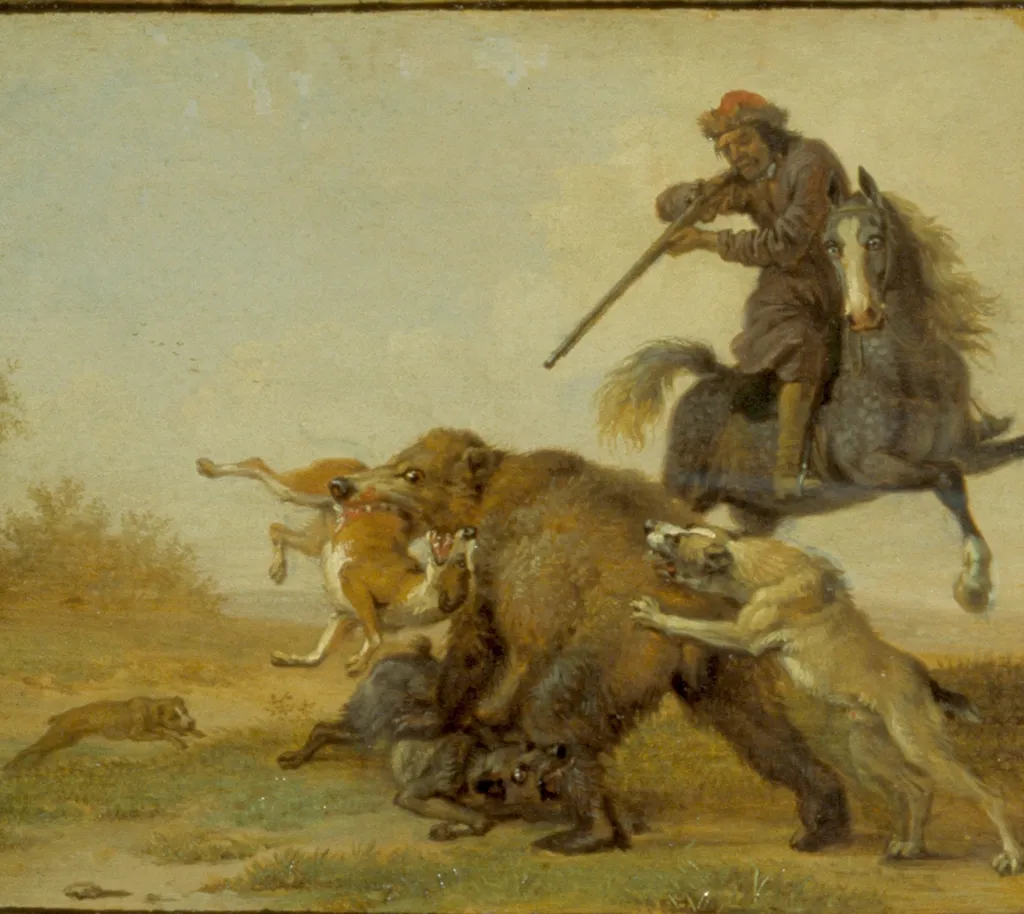
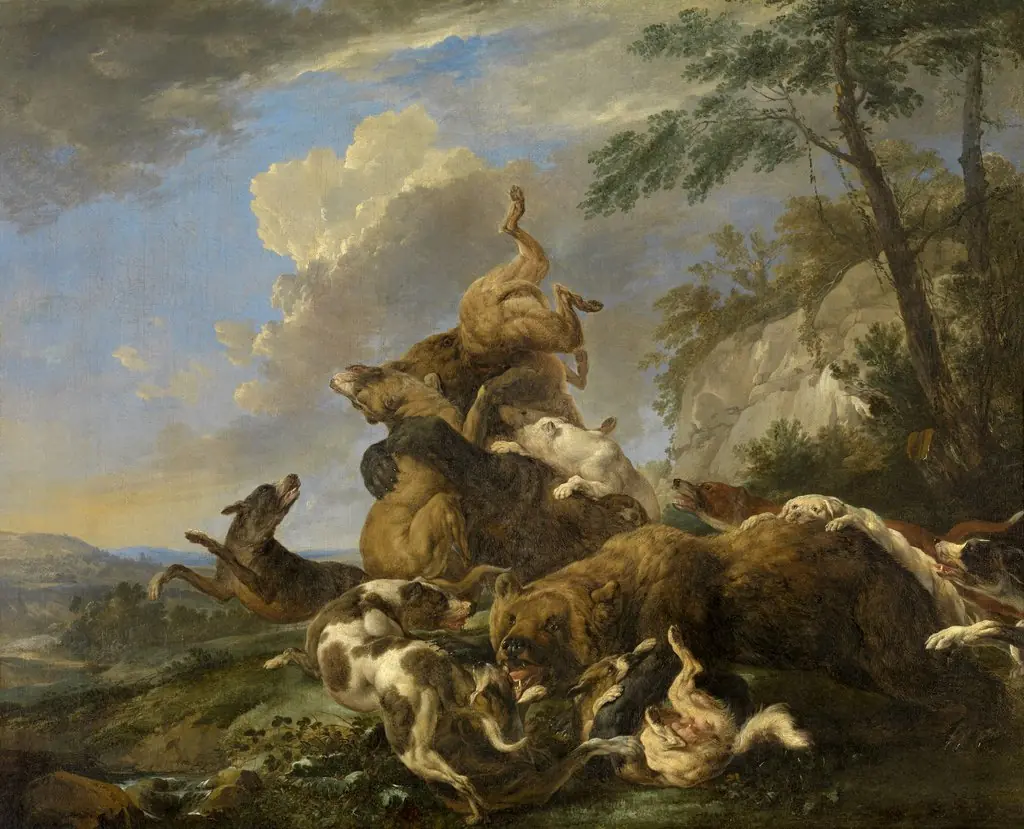
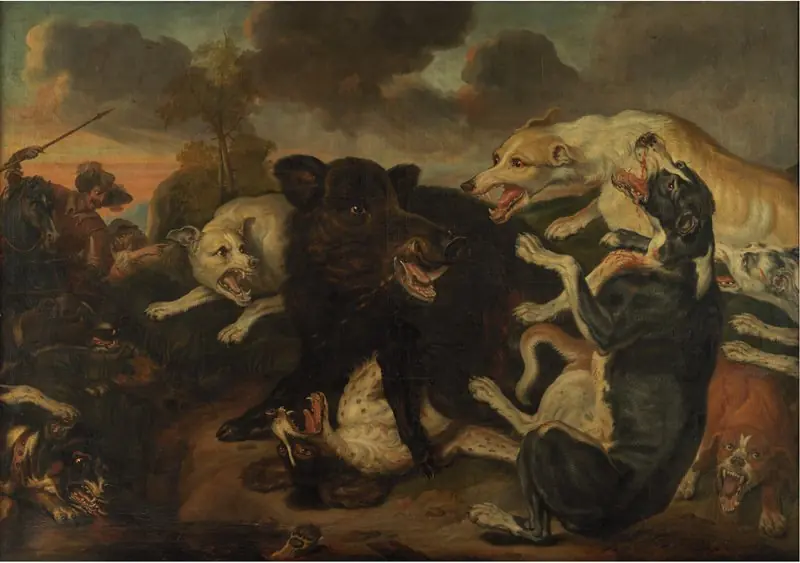
The Bear Hunt is an oil painting by the Dutch Golden Age artist Paulus Potter. It dates from 1650 and is held in the collection of the Hermitage Museum.
About this work
Subject & Meaning
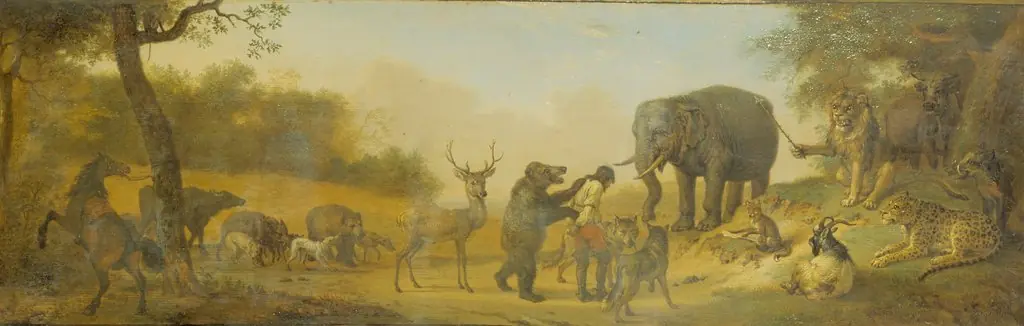
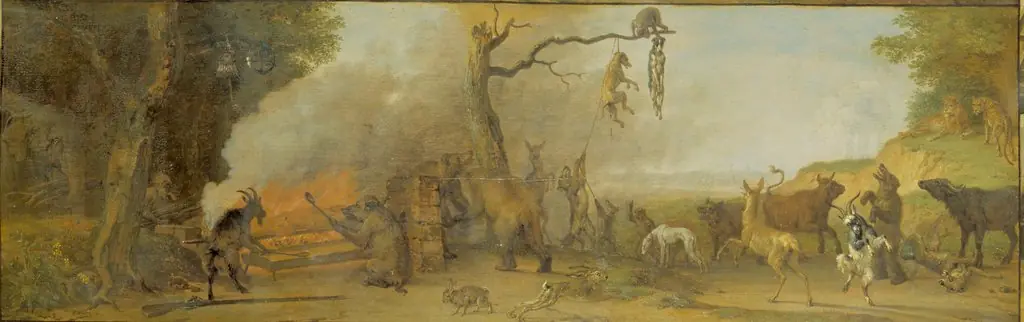
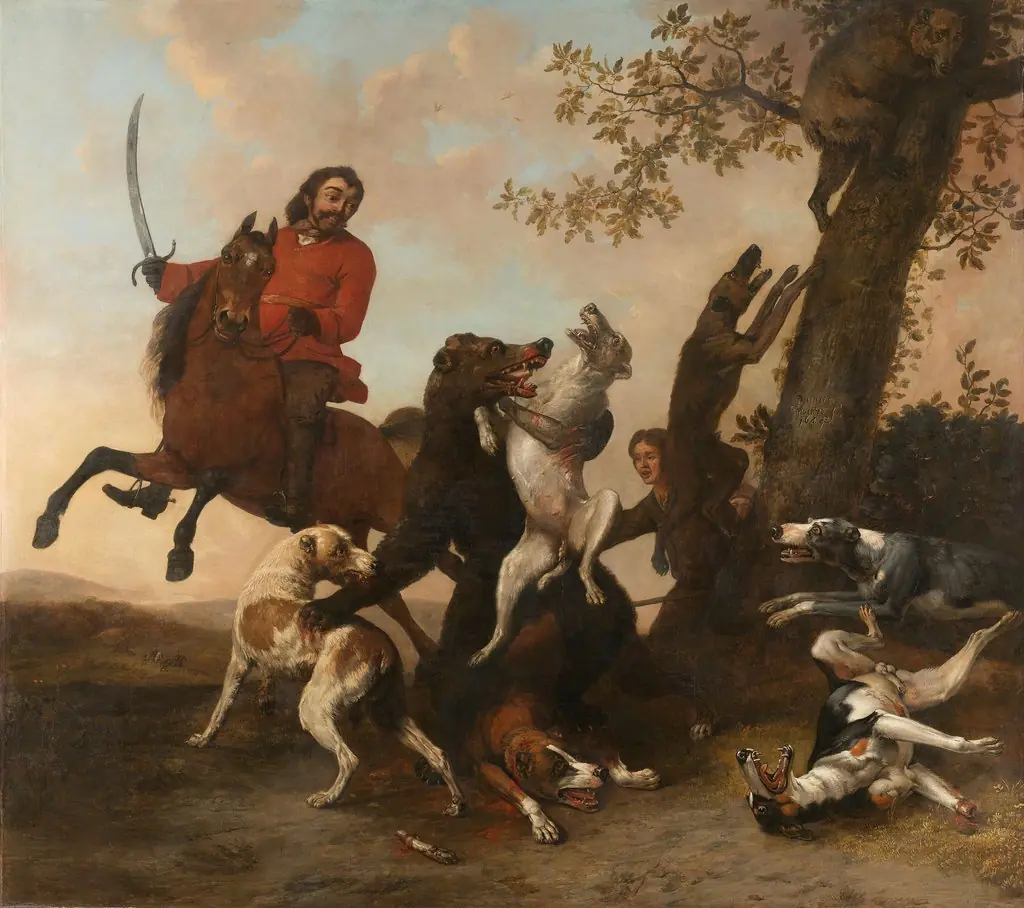
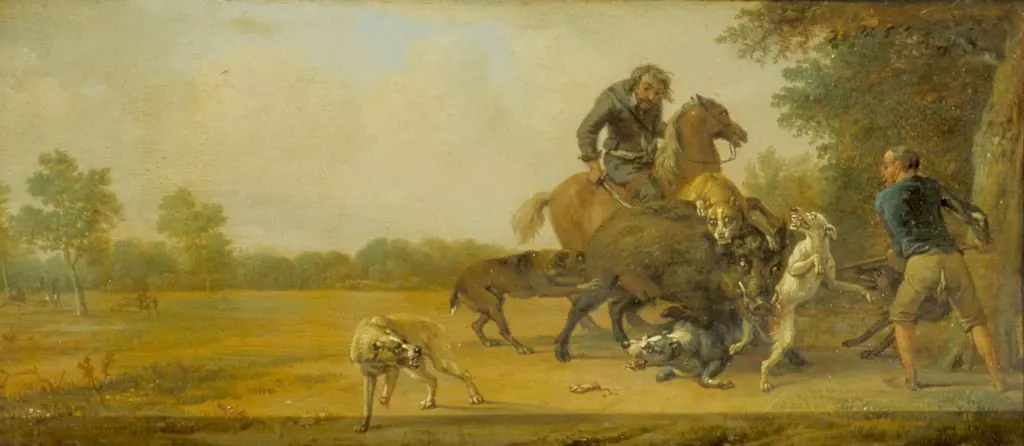
The composition includes specific figures and objects identified as a man, a bear, hounds, a horse, and a rifle, capturing the intensity of the moment.
Paulus Potter's 1650 oil painting, The Bear Hunt, depicts a dramatic genre scene centered on a violent confrontation between a hunter and a bear. The composition includes specific figures and objects identified as a man, a bear, hounds, a horse, and a rifle, capturing the intensity of the moment. The work is also known by the alternative title The Punishment of the Hunter, suggesting a narrative layer where the event represents a moral retribution or consequence for the protagonist.
This interpretation frames the hunting scene not merely as an action sequence, but as a symbolic illustration of justice or the dangers of the hunt.
Technique & Style
Paulus Potter’s The Bear Hunt (1650) is executed in oil paint on a wooden panel support, measuring 17 × 19.8 cm. The artist’s handling is characterized by meticulous attention to textural detail, evident in the rendering of animal fur, equine musculature, and the folds of human attire. Potter’s technique emphasizes fine brushwork, particularly in the delicate depiction of foliage and atmospheric effects, while maintaining a naturalistic palette dominated by earth tones and subtle chiaroscuro.
Stylistically, the work aligns with Dutch Golden Age genre painting, prioritizing observational accuracy over idealization. The composition’s dynamic arrangement of figures and animals, including a man, bear, hounds, and a horse, creates a narrative tension, reinforced by the precise anatomical study and spatial depth. The panel’s condition, while not detailed in sources, appears consistent with surviving works from the period, suggesting stable preservation given its small scale and durable support.
History & Provenance
The Bear Hunt was created by Paulus Potter in 1650, executed in oil paint on panel. The work entered the collection of the Hermitage Museum, where it remains held. No information is available regarding the original commission, intermediate ownership, or acquisition history prior to its inclusion in the Hermitage holdings.
The painting is catalogued under the alternative title Punishment of the Hunter and depicts a man, a bear, hounds, a horse, and a rifle, consistent with its genre classification as a genre scene.
The painting The Bear Hunt, created by Paulus Potter in 1650, is held in the collection of the Hermitage Museum. The work is executed in oil paint on a panel measuring 17 cm in height and 19.8 cm in width. While the piece is identified within the museum's holdings, the available records do not provide a specific inventory or accession number for the work. Furthermore, there is no documented exhibition history listed in the current sources regarding this specific panel.
Overview
Paulus Potter's The Bear Hunt, an oil painting from approximately 1650, exemplifies the Dutch Golden Age artist's focus on animal subjects within natural settings. This dramatic scene captures a violent confrontation between a bear, hunting dogs, and a mounted man. The work is a notable example of Potter's distinctive approach to depicting wildlife, often from a low perspective, and is housed in the State Hermitage Museum.
Context
Paulus Potter was a prominent figure in Dutch Golden Age painting, renowned for his detailed and realistic depictions of animals within landscapes. Despite his significant output of approximately 100 paintings, his career was tragically cut short when he succumbed to tuberculosis at the age of 28. His distinctive style, characterized by a keen observation of animal anatomy and behavior, left a lasting impact on the genre.
Own this work as a print
Artist & collection
Artist
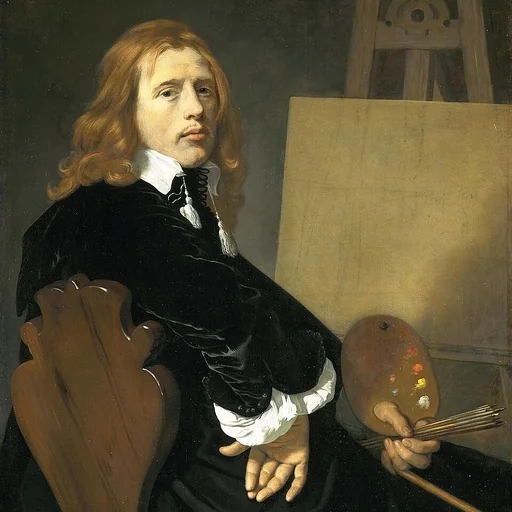
Paulus Potter (Dutch pronunciation:; 20 November 1625 (baptised) – 17 January 1654 (buried)) was a Dutch painter who specialized in landscapes featuring animals, often from a low vantage point.