Artwork
John Philip de Haas
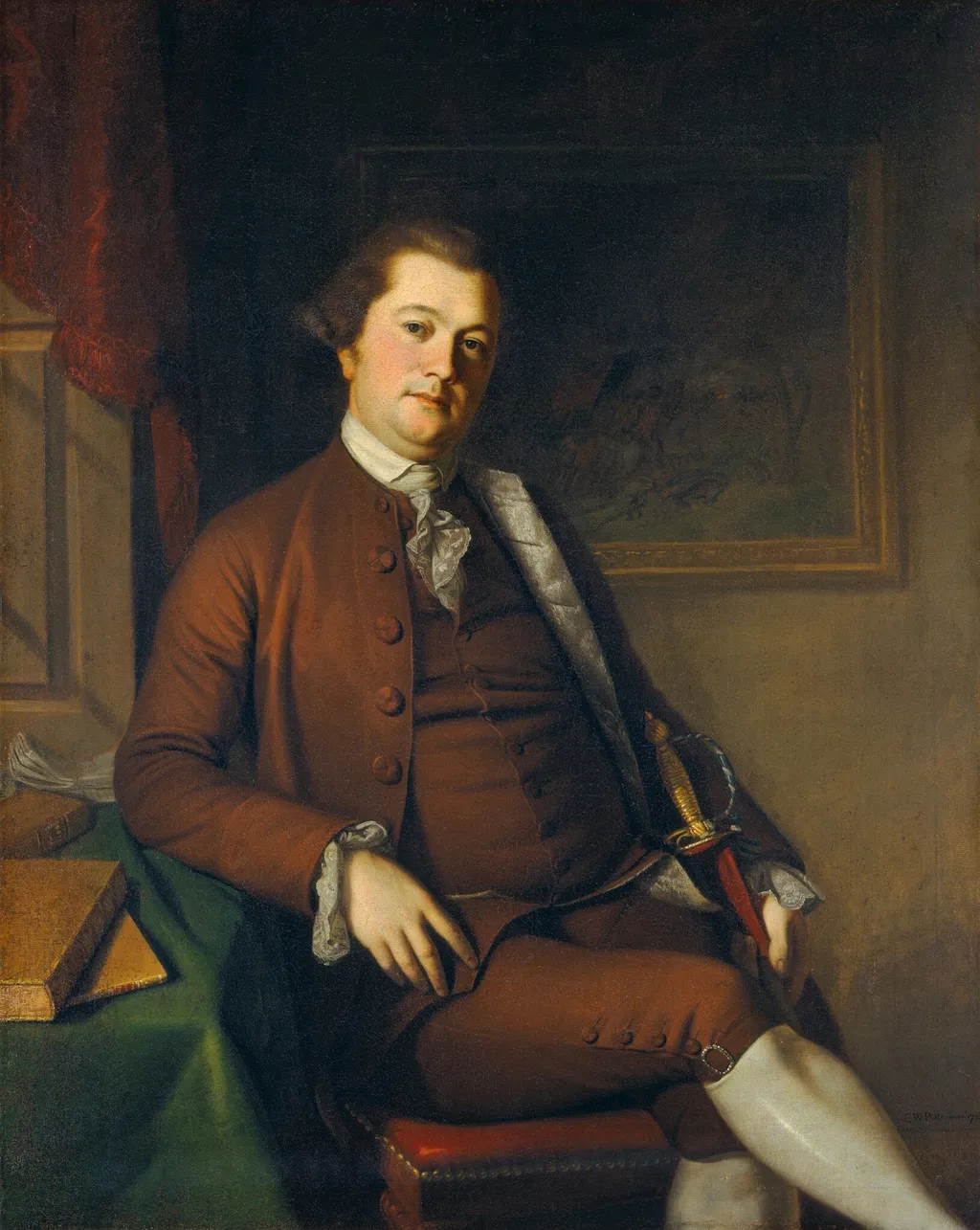
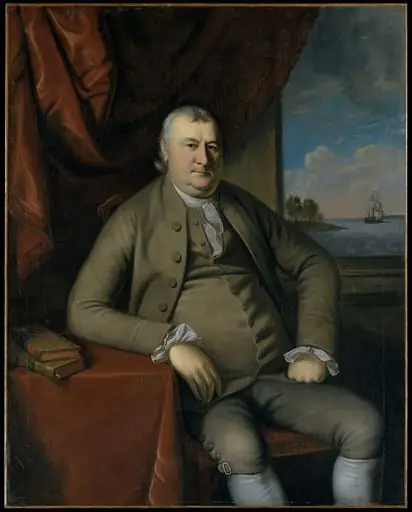
John Philip de Haas is an oil painting by the American Impressionist artist Charles Willson Peale. It dates from 1772 and is held in the collection of the National Gallery of Art.
- Inscription
- Inscribed:lower right: C. W. Peale pinxt:1772; on reverse: I.P.deHAAS AE 37 / Chas W. Peale PINX--1772
About this work
Subject & Meaning
The painting depicts John Philip De Haas, identified in the artist's family records as one of General George Washington's generals.
The painting depicts John Philip De Haas, identified in the artist's family records as one of General George Washington's generals. The work serves as a formal portrait of this military figure, capturing his likeness as an officer in the Continental Army. While the composition focuses on the sitter's physical representation, the subject's status is explicitly noted in historical inventories and family listings that describe him by his rank and association with Washington.
The depiction functions as a commemoration of De Haas's service during the American Revolutionary period, preserving the image of a specific leader within the early American military hierarchy.
Technique & Style
The work is an oil painting executed on canvas, measuring 127 cm in height by 101.6 cm in width. It portrays John Philip De Haas, a subject rendered with the naturalistic brushwork and attention to detail characteristic of Charles Willson Peale’s portraiture. The painting’s surface retains its original oil medium without visible degradation, and the canvas support remains taut and stable. No structural handling issues or restoration interventions are documented in the provenance records.
History & Provenance
Charles Willson Peale painted the portrait of John Philip de Haas in 1772 using oil on canvas. The work may have originally been part of the estate of John Philip de Haas, who left pictures to his wife Eleanor Bingham de Haas in his will dated February 21, 1786, as an inventory from July 13, 1786, listed five pictures in his front parlor. By 1858 or earlier, the painting was sold by the artist's niece, Margaretta Angelica Peale, to her sister Mary Jane Peale, who recorded the acquisition in an 1884 list.
It subsequently passed to Louise Harriet Hubley Peale, then to Anna Frances Peale Carrier, before being sold on December 5, 1922, to Thomas B. Clarke in New York. Following Clarke's death, the work was sold from his estate on January 29, 1936, through M. Knoedler & Co. to The A. W. Mellon Educational and Charitable Trust, eventually becoming a gift to the National Gallery of Art in 1942.
The portrait of John Philip de Haas by Charles Willson Peale is held in the collection of the National Gallery of Art in Washington, D.C., as part of the Andrew W. Mellon collection. The work was acquired by the museum in 1942 as a gift from the A. W. Mellon Educational and Charitable Trust, having been purchased earlier that year through M. Knoedler & Co. from the estate of Thomas B. Clarke. Prior to its entry into the Mellon collection, the painting passed through several generations of the Peale family before being sold in 1922. details the provenance chain, while confirms the current institutional holding and collection designation. No specific exhibition history is recorded in the provided sources.
Overview
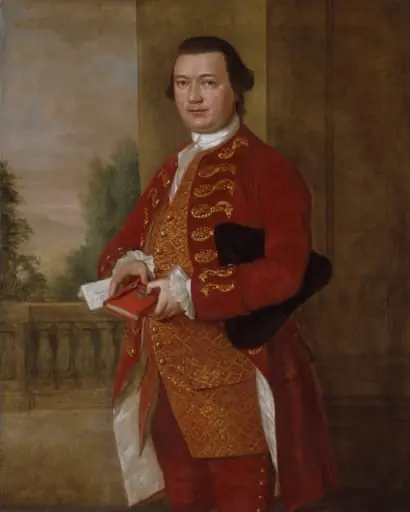
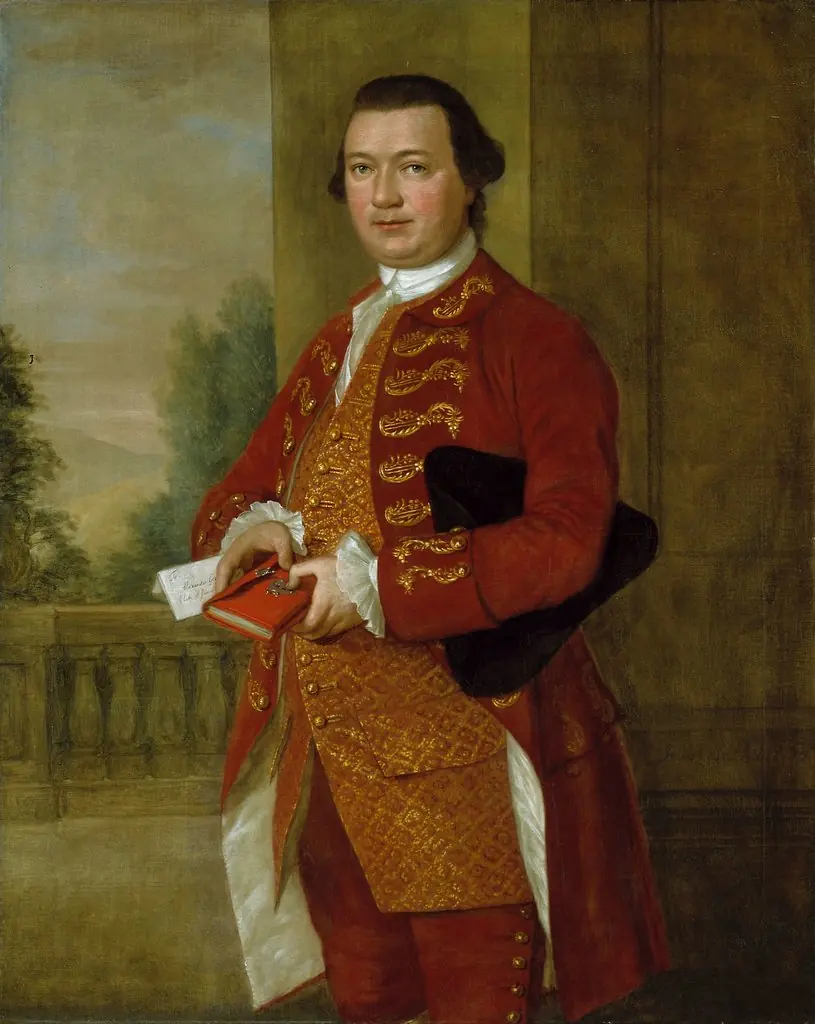
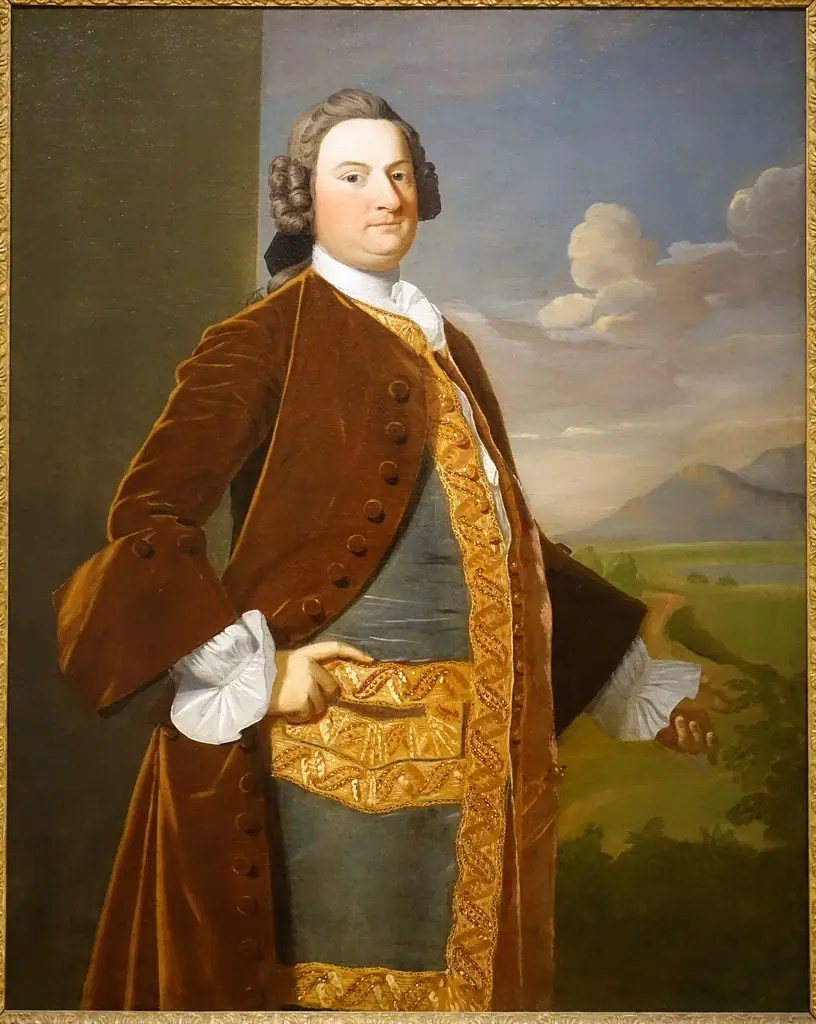
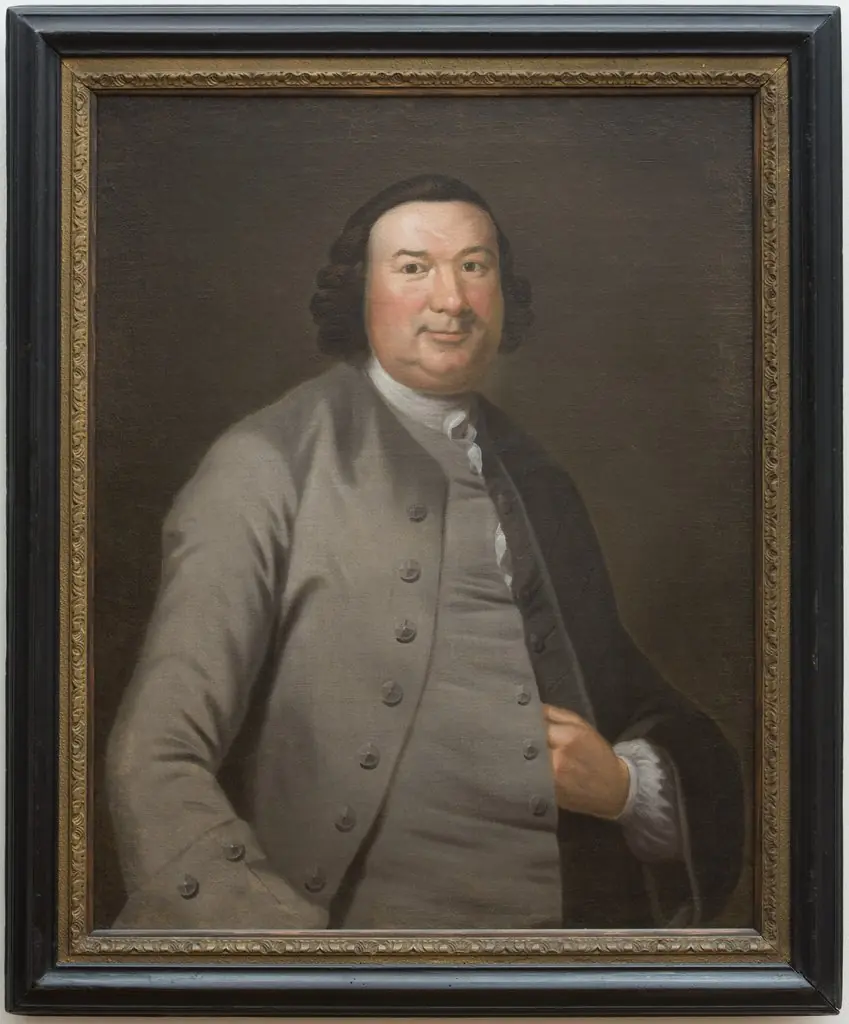
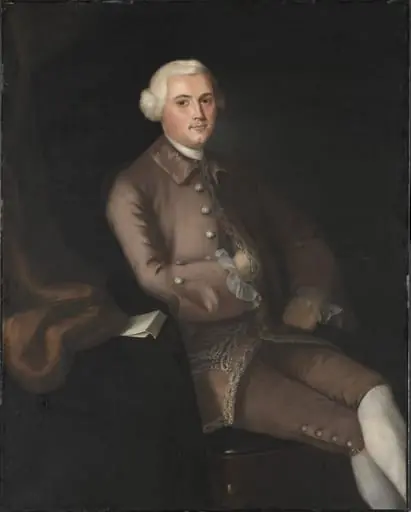
Painted in 1772, Charles Willson Peale's portrait of John Philip de Haas captures the subject in a three-quarter view, seated in a wooden chair against a dark, neutral background. De Haas is depicted wearing a red coat with white facings and a white shirt, attire consistent with his role as a military officer. His right hand rests on the hilt of a sword, signifying his martial status, while his left hand holds a document or glove near a table to his left that supports several books, suggesting his intellectual engagement and civic duties.
Peale employs a restrained palette and precise brushwork to render the textures of the fabric and the subject's serious, direct gaze. This work is a significant example of Peale's early portraiture, created during his formative years in Philadelphia before his extensive service in the Revolutionary War. The painting reflects the artist's commitment to documenting the prominent figures of colonial society with dignity and clarity, establishing a visual record of the American leadership class on the eve of independence.
Context
Created in the years leading up to the American Revolution, the painting reflects the era’s emphasis on individual virtue and public service, qualities often conveyed through portraiture of gentlemen and officers.
Own this work as a print
Artist & collection
Artist
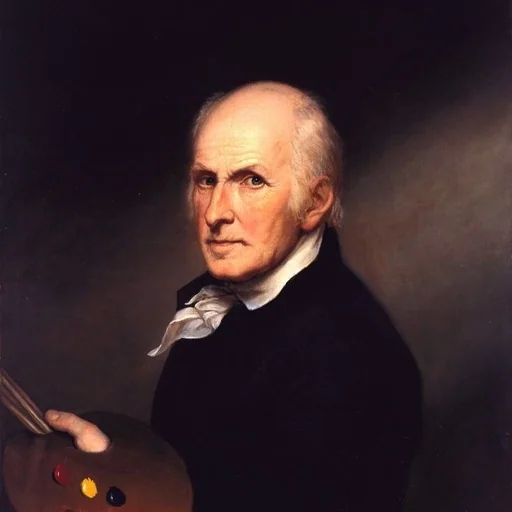
Charles Willson Peale (April 15, 1741 – February 22, 1827) was an American painter, military officer, scientist, and naturalist.