Artwork
The Crucifixion
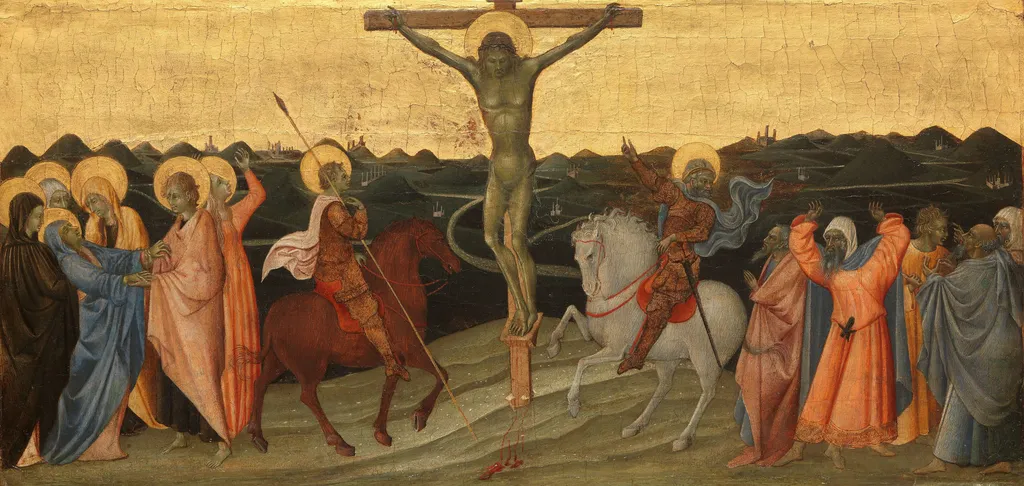
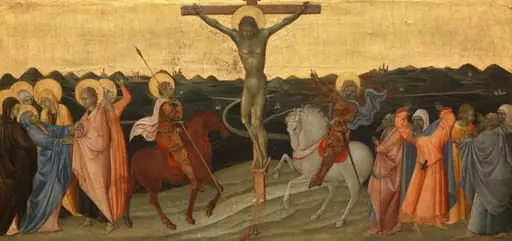
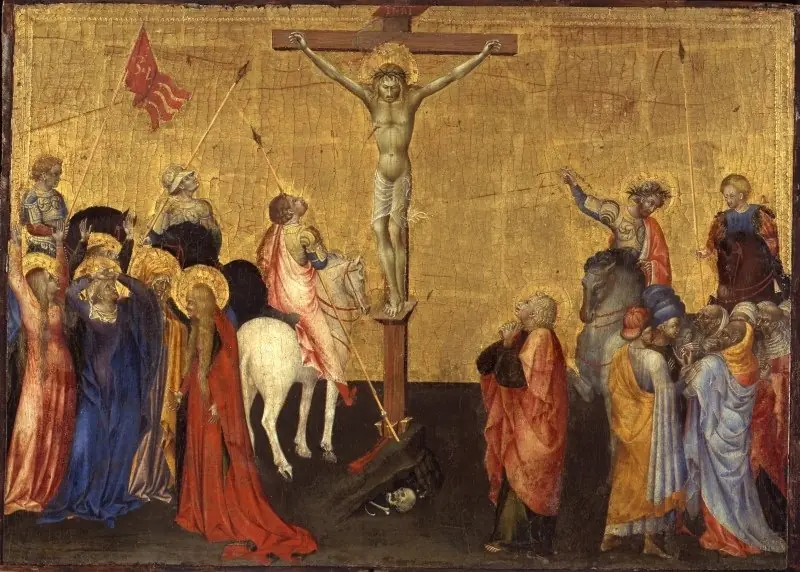
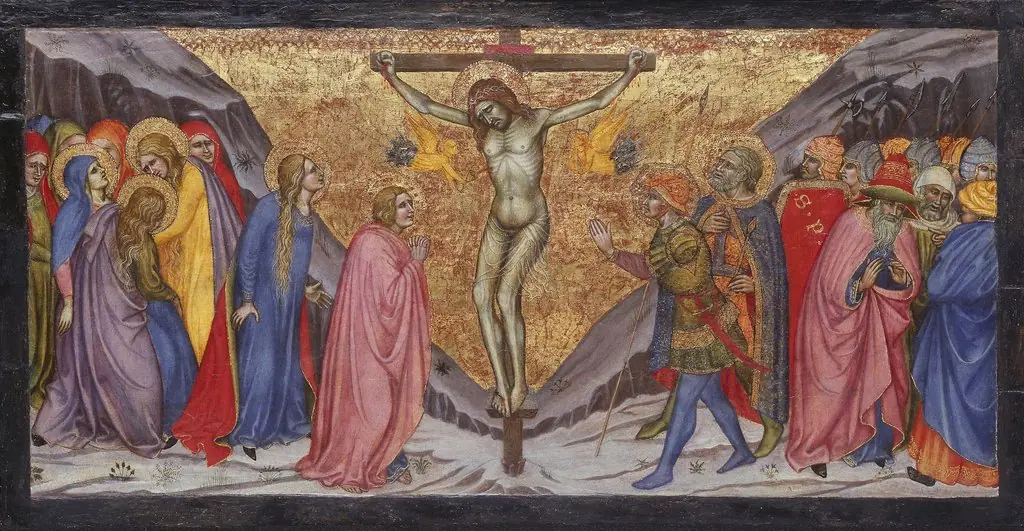
The Crucifixion is a tempera painting by the Early Renaissance artist Giovanni di Paolo. It dates from 1447 and is held in the collection of the Rijksmuseum.
About this work
Subject & Meaning
Giovanni di Paolo renders the event with figures and symbols typical of 15th‑century Sienese devotional works, emphasizing the solemnity of the martyrdom.
The painting portrays the crucifixion of Jesus Christ as its central subject, a standard iconographic motif in Western religious art that signifies redemption and sacrifice. Giovanni di Paolo renders the event with figures and symbols typical of 15th‑century Sienese devotional works, emphasizing the solemnity of the martyrdom. The composition’s meaning is rooted in its function as an altar piece intended to inspire contemplation of Christ’s suffering, reflecting the theological emphasis on atonement prevalent in the period.
The work measures 62 centimeters in width and between 29 and 30 centimeters in height, executed in tempera on a wooden panel in Siena around 1447‑1448.
Technique & Style
Giovanni di Paolo's Crucifixion is executed in tempera, a medium characteristic of mid-fifteenth-century Sienese panel painting. The work is painted on a wooden panel support, a technique consistent with the artist's devotional output of the period.
The panel is small in scale and markedly horizontal in format, with recorded dimensions of roughly 29–30 cm in height and approximately 62–62.5 cm in width. This elongated proportion suits the lateral arrangement of the Crucifixion scene, allowing the figures of Christ on the cross and the accompanying mourners to be distributed across a panoramic field.
Stylistically, the painting belongs to the religious tradition of Sienese art and treats the crucifixion of Jesus as its main subject, rendered in the tempera technique typical of the region.
History & Provenance
The Crucifixion, a tempera painting on panel by Giovanni di Paolo, was created in Siena around 1447 or 1448. The work depicts the crucifixion of Jesus Christ and measures approximately 29 to 30 centimeters in height and 62 to 62.5 centimeters in width. While the specific commission details and original patron are not recorded in the available data, the painting has a documented history of ownership involving multiple religious institutions. It is currently associated with the collections of the Rijksmuseum, the Museum Catharijneconvent, and the Aartsbisschoppelijk Museum.
Overview
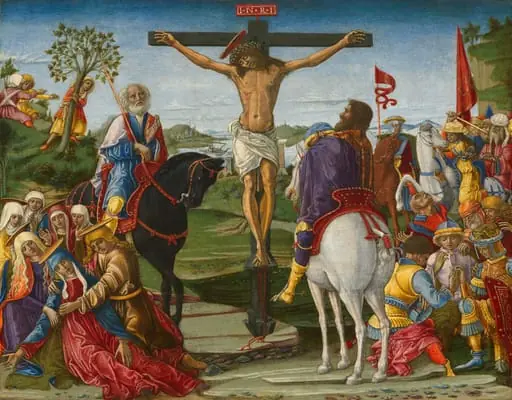
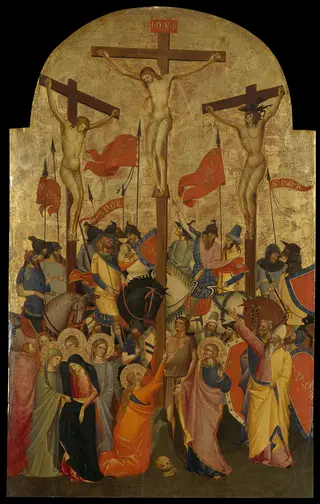
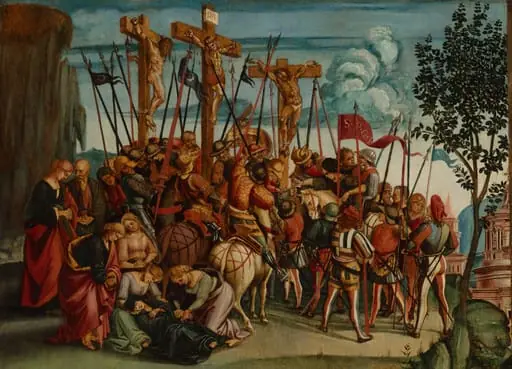
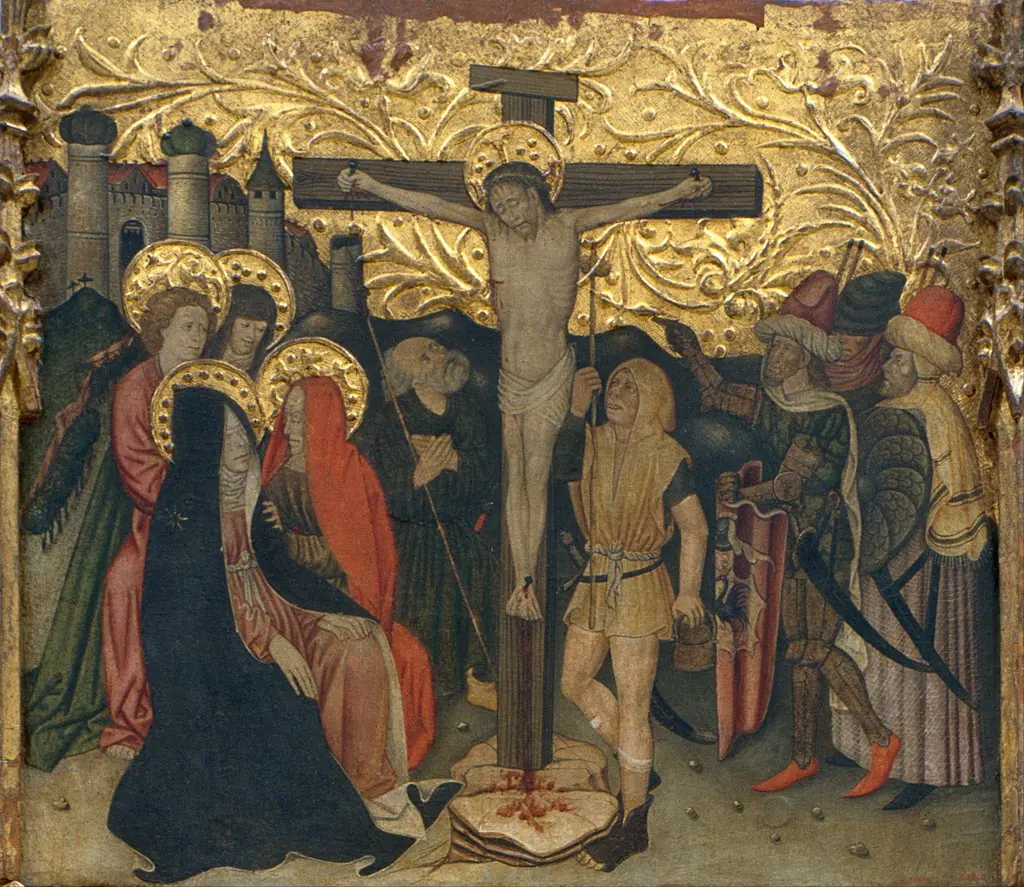
Giovanni di Paolo’s tempera work titled The Crucifixion dates to 1447 and is part of the Rijksmuseum’s collection. The central figure is the crucified Christ, surrounded by a vivid assembly of onlookers and soldiers set against a muted cityscape. The composition balances narrative intensity with a restrained, decorative palette typical of mid‑15th‑century Italian painting.
Context
Giovanni di Paolo worked in the Sienese school, where narrative panels often combined vivid storytelling with ornamental detail. The Crucifixion reflects contemporary theological emphasis on the humanity of Christ and the collective responsibility of witnesses. The painted city in the background alludes to Jerusalem, while the stylized landscape situates the event within a timeless, symbolic space.
Artist & collection

Artist
Giovanni di Paolo di Grazia was an Italian painter, working primarily in Siena, becoming a prolific painter and illustrator of manuscripts, including Dante's texts.

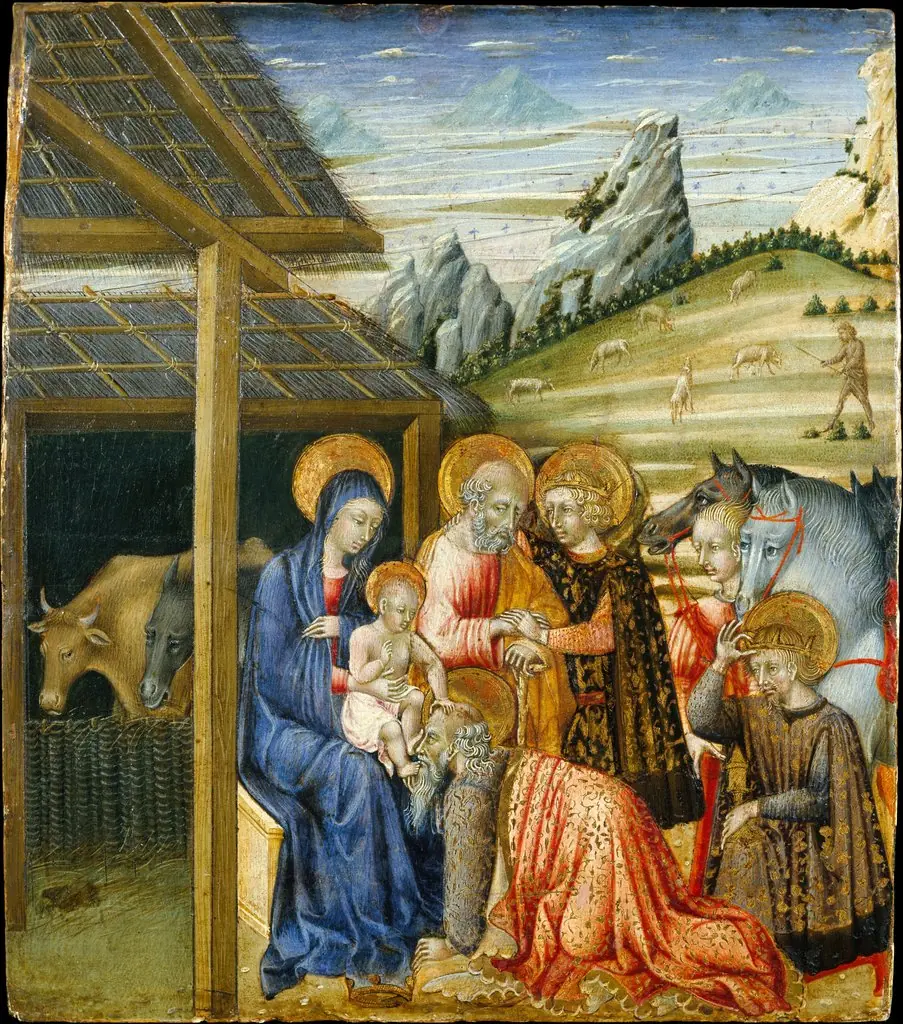 The Adoration of the Magi
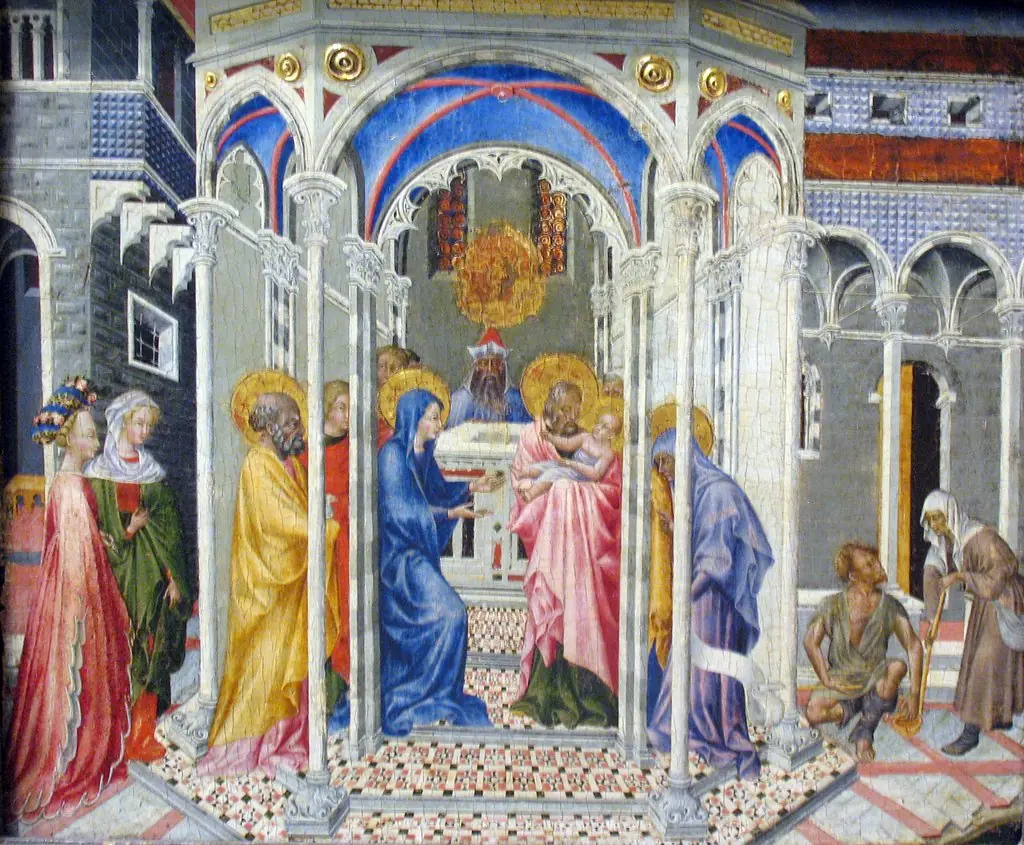 The Presentation of Christ in the Temple
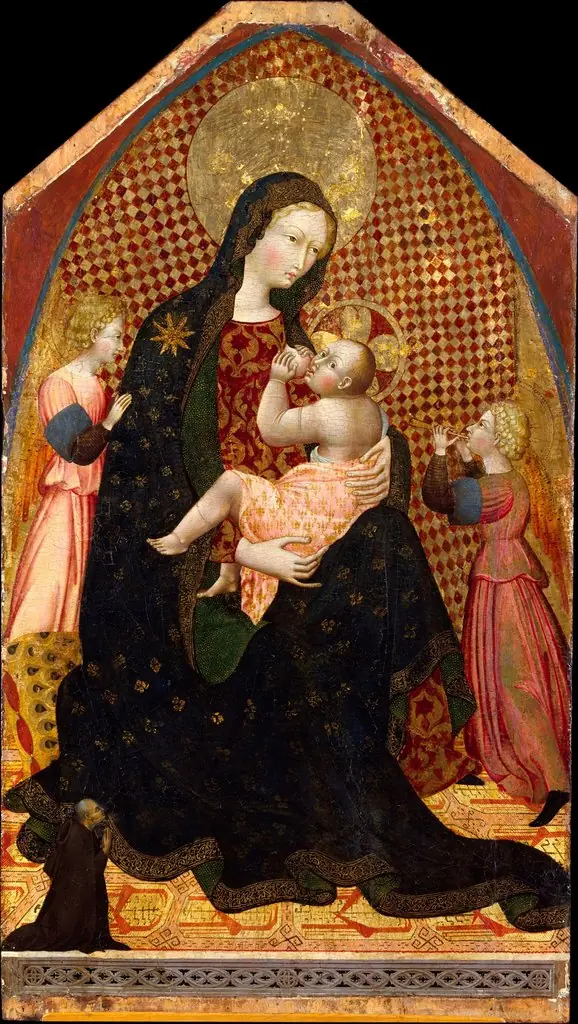 Madonna and Child with Two Angels and a Donor
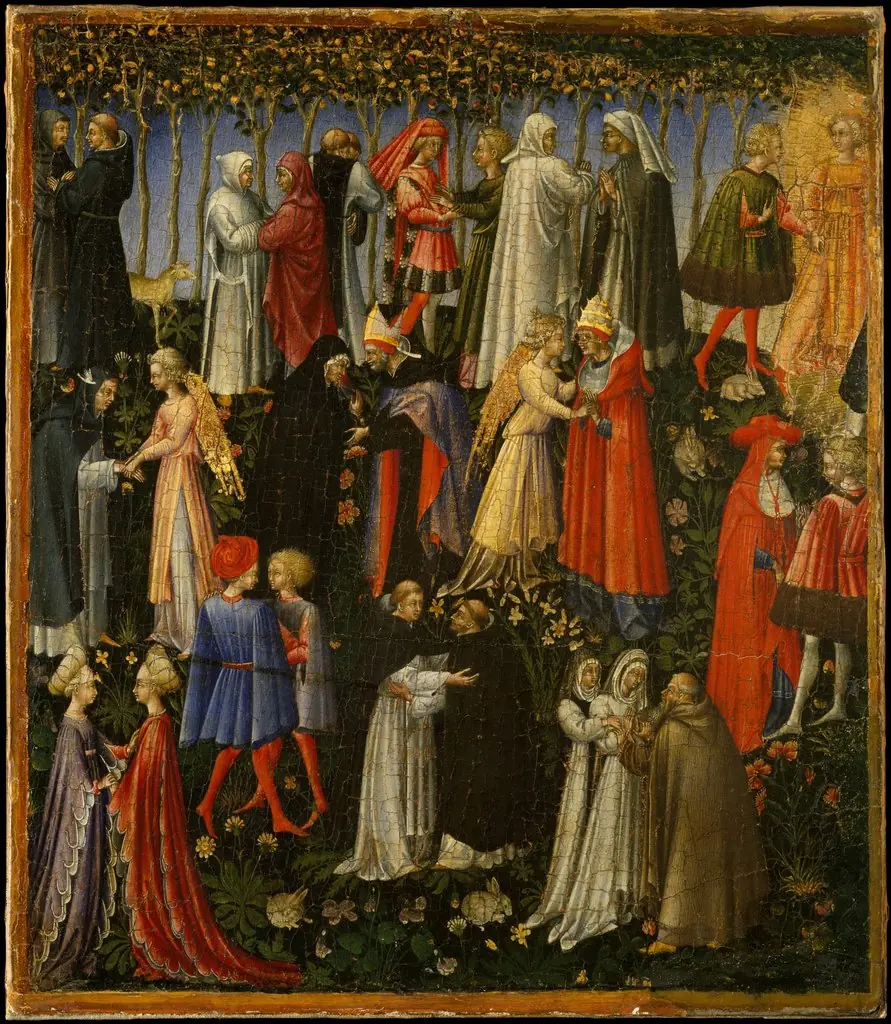 Paradise
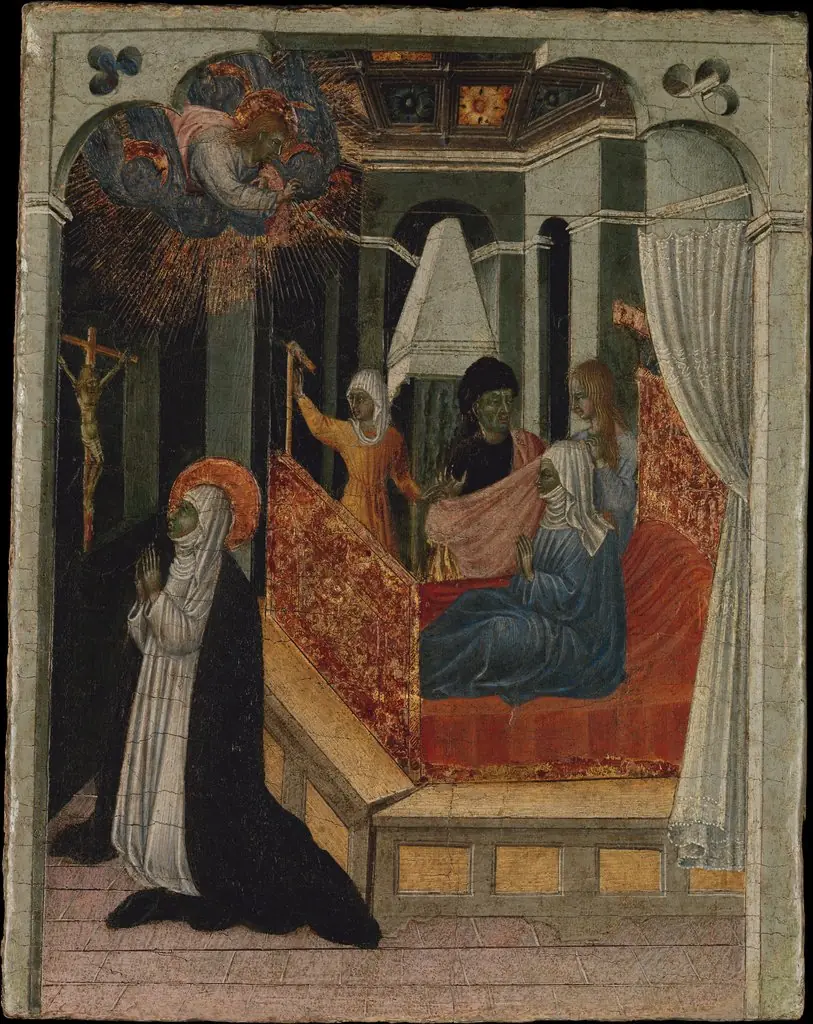 Saint Catherine of Siena Beseeching Christ to Resuscitate Her Mother
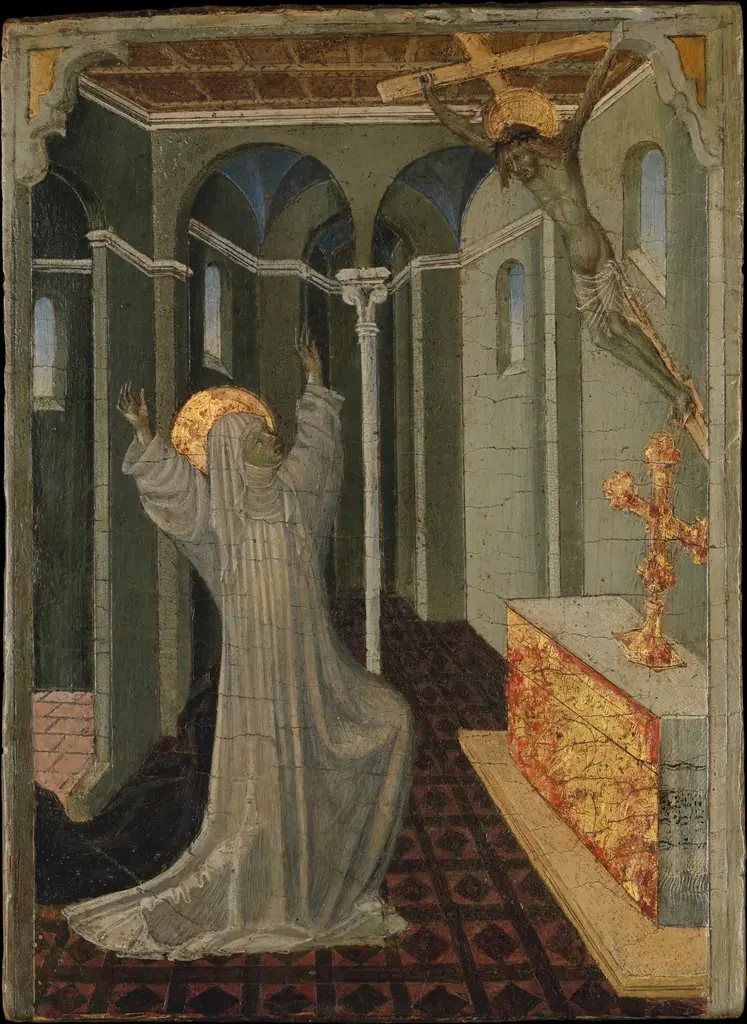 Saint Catherine of Siena Receiving the Stigmata
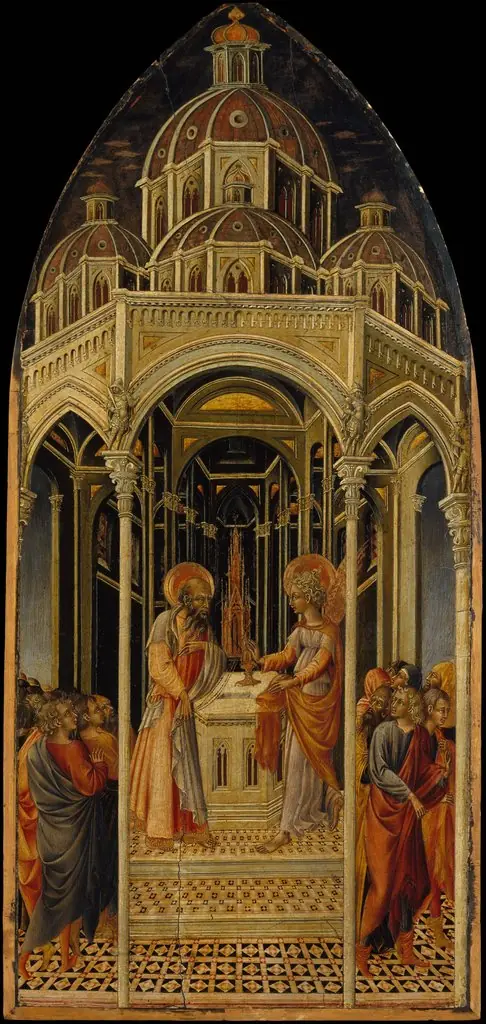 The Annunciation to Zacharias; (verso) The Angel of the Annunciation
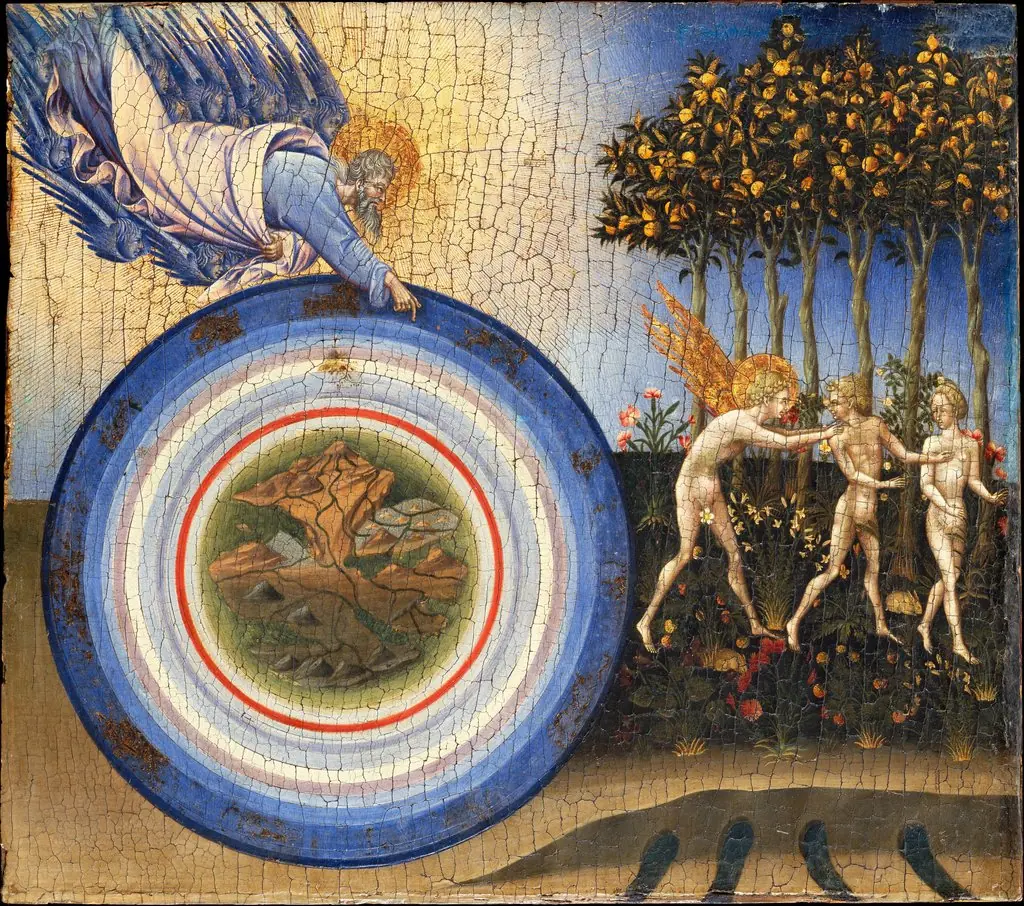 The Creation of the World and the Expulsion from Paradise