Artwork
The Crucifixion
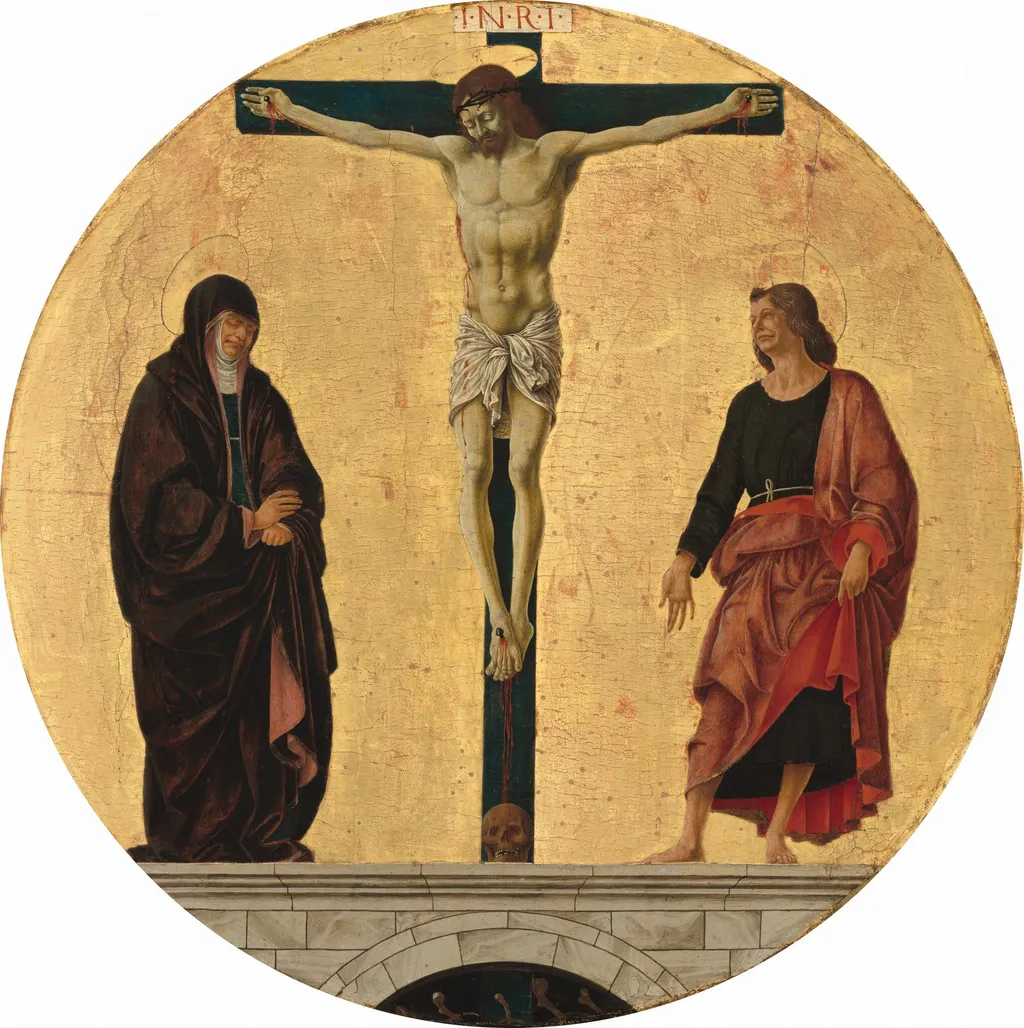
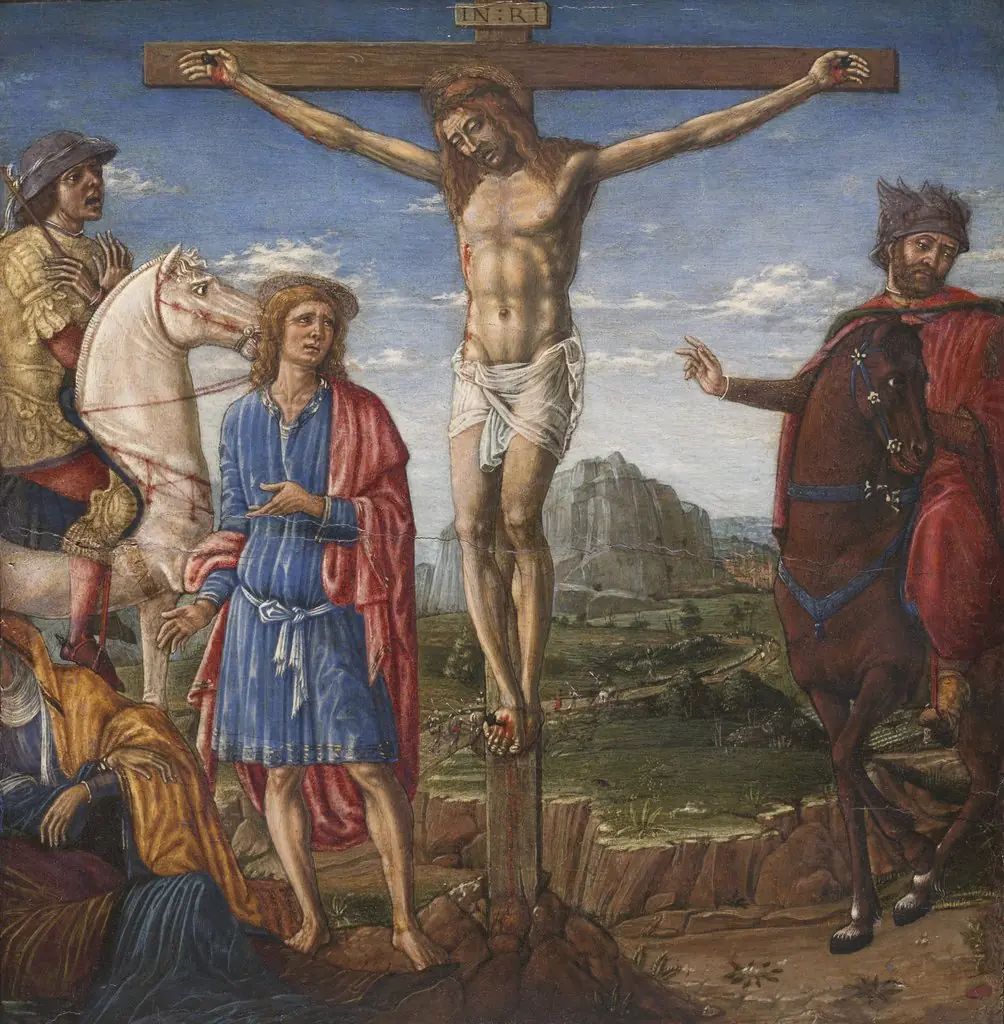
The Crucifixion is an oil painting by the Early Renaissance artist Francesco del Cossa. It dates from 1474 and is held in the collection of the National Gallery of Art.
- Inscription
- Inscribed:over the cross: INRI (Iesus Nazarenus Rex Iudaeorum = Jesus of Nazareth, King of the Jews, from John 19:19)
About this work
Subject & Meaning
The painting depicts the Crucifixion of Jesus Christ, identified by the sources as its main subject.
The painting depicts the Crucifixion of Jesus Christ, identified by the sources as its main subject. As a religious work commissioned for a family chapel in San Petronio, Bologna, it belongs to the devotional tradition of Italian Renaissance altarpieces, with the central image of the crucified Christ serving as the focal point of veneration. The accompanying predella, noted in Vasari's account, featured small figures executed with great diligence, extending the narrative and devotional program of the altarpiece.
The work's religious function is underscored by its original placement in a chapel dedicated to Saint Vincent, situating the Crucifixion within a broader sacred context intended for liturgical and contemplative use.
Technique & Style
Francesco del Cossa's The Crucifixion (1473) is executed in tempera on a poplar panel support. While Giorgio Vasari's 1550 account describes the work as a tempera altarpiece noted for its recognizable style and a predella of small figures painted with great diligence, later catalog records from the National Gallery of Art identify the material as oil paint on panel. The painting depicts the crucifixion of Jesus Christ within a religious genre framework.
Vasari's 1568 edition further contextualizes the piece by attributing the predella to Ercole de' Roberti and noting the main altarpiece's placement in a chapel dedicated to Saint Vincent at San Petronio in Bologna. The work remains a significant example of mid-15th-century Ferrarese painting, characterized by its specific medium and stylistic execution on wood.
History & Provenance
Around 1473 the altarpiece known as The Crucifixion was commissioned by Floriano Griffoni for a family chapel in the church of San Petronio, Bologna. It was executed by Francesco del Cossa in tempera on a poplar panel and originally placed in that chapel’s sixth niche on the north aisle. By the early eighteenth century the work had been transferred to the Casa Aldrovandi collection in Bologna, where it remained until at least 1782.
Ownership later passed to Giovanni Costabili in Ferrara by the 1870s, then to the New York dealer Philip Lehman in 1914. The painting entered the Samuel H. Kress Collection in 1943 and was gifted to the National Gallery of Art in 1952.
Context
Vasari recorded the altarpiece in San Petronio, noting that its predella, executed by Ercole de' Roberti, surpassed the main panel in execution. The work, commissioned circa 1473 by Floriano Griffoni for a family chapel, later passed through the Casa Aldrovandi, a Ferrarese collector, and entered the Samuel H. Kress Collection before being gifted to the National Gallery of Art. As a 15th‑century Bolognese religious painting, it exemplifies Cossa’s early synthesis of Ferrarese naturalism and Venetian colorism, marking a transitional phase in Italian altarpiece production.
The panel, depicting the Crucifixion of Jesus, is recognized as part of the National Gallery’s collection and reflects the devotional practices of its original patrons.
Legacy
The Crucifixion was cited by Giorgio Vasari in the 1568 edition of his Lives, highlighting both the altarpiece’s stylistic significance and the superior quality of its predella painted by Ercole de’ Roberti, which helped shape early assessments of Francesco del Cossa’s legacy. Its provenance, from a 15th‑century Bolognese chapel to the Samuel H. Kress Collection and eventual donation to the National Gallery of Art, reflects sustained scholarly and commercial interest in the work;. As part of the National Gallery’s holdings, the painting remains a reference point for studies of Emilian Renaissance religious imagery, underscoring its enduring reputation.
Overview
Francesco del Cossa's painting, The Crucifixion, dates to approximately 1474. Executed in tempera on a poplar panel, this religious work depicts the central event of Christian theology. It showcases the artist's approach to rendering sacred narratives, combining detailed observation with the specific qualities of his chosen medium.
Own this work as a print
Artist & collection
Artist
Francesco del Cossa (c. 1430 – c. 1477) was an Italian Renaissance painter of the School of Ferrara, who after 1470 worked in Bologna. Cossa is best known for his frescoes, especially his collaboration with Cosimo Tura…