Artwork
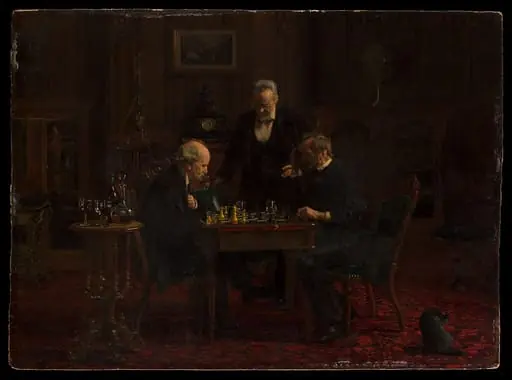
The Backgammon Players
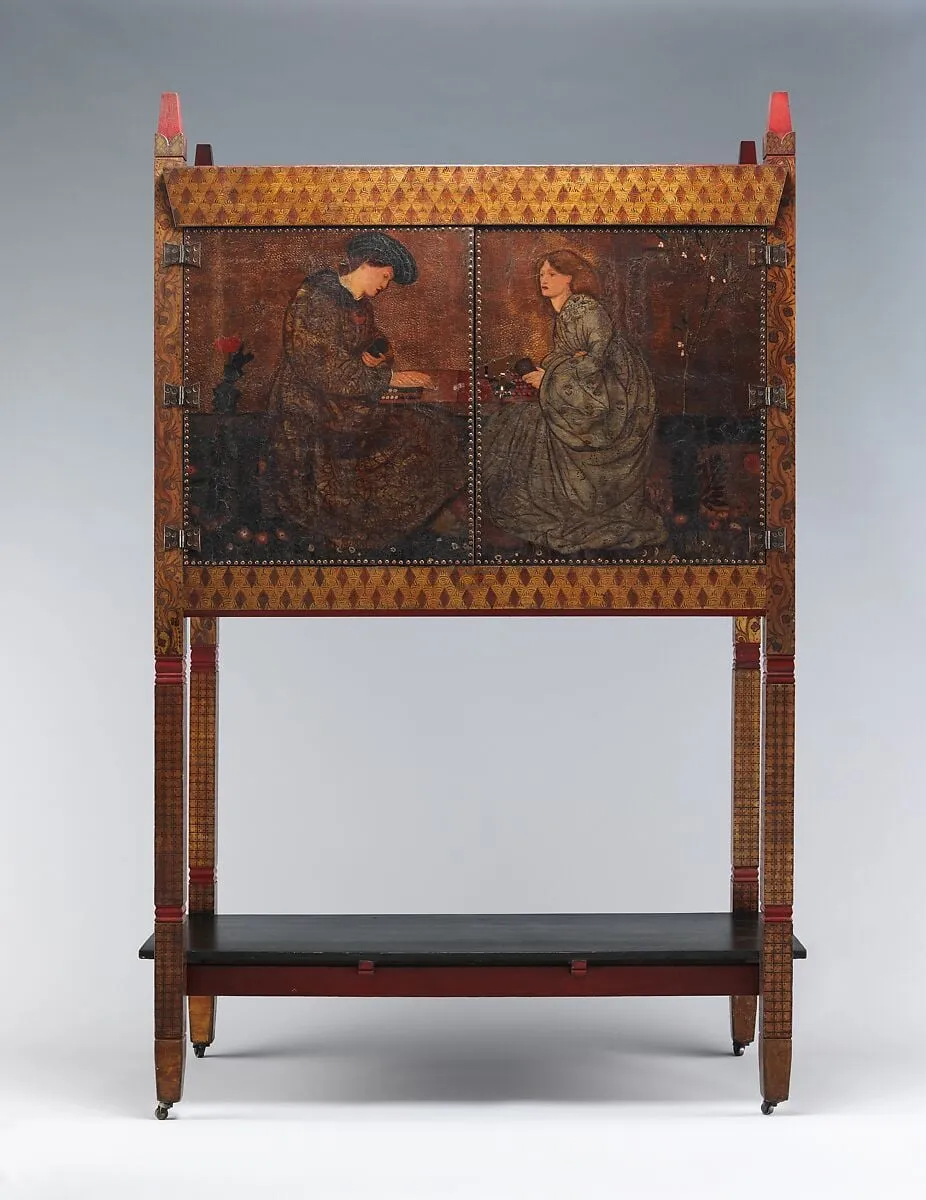
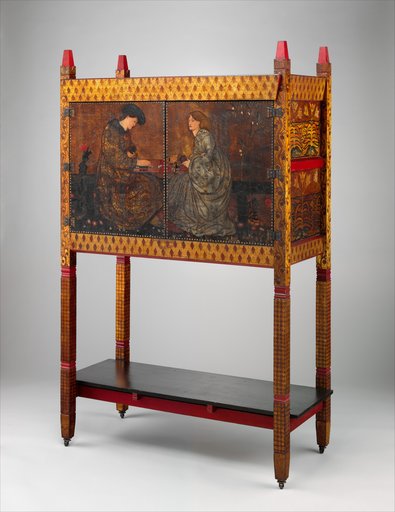
The Backgammon Players is an oil painting by the Arts and Crafts movement artist Marshall, Faulkner & Co. Philip Webb. It dates from 1861 and is held in the collection of the Metropolitan Museum of Art.
About this work
Subject & Meaning
The composition highlights the figures and the game board, emphasizing the shared activity as the central subject.
The Backgammon Players depicts a genre scene featuring a man and a woman engaged in a game of backgammon. Created in 1861, the work presents these figures within a domestic setting, focusing on the intimate act of play rather than a historical or mythological narrative. As a piece of painted furniture, the imagery serves both a decorative and narrative function, capturing a moment of leisure and social interaction between the two players.
The composition highlights the figures and the game board, emphasizing the shared activity as the central subject. This representation aligns with the genre painting tradition of illustrating everyday life, specifically the pastimes of the period, without introducing additional allegorical symbolism beyond the literal depiction of the game and its participants.
Technique & Style
The Backgammon Players (1861) is executed in oil paint on leather, mounted on a painted pine support with brass and copper fittings. This mixed-media construction, classified as both woodwork-furniture and painting, reflects the collaborative ethos of Morris, Marshall, Faulkner & Co., the decorative arts firm co-founded by Burne-Jones, Philip Webb, and William Morris. The choice of leather as a painting surface and the integration of metal hardware indicate a deliberate fusion of fine art and functional craft.
The work's status as a genre scene depicting a man and woman at play aligns with the Pre-Raphaelite circle's interest in intimate, narrative subjects rendered with meticulous attention to material detail.
History & Provenance
The Backgammon Players is part of the Metropolitan Museum of Art's collection, listed under its woodwork‑furniture paintings category. It is housed in the museum's New York premises, where it remains on view as part of the institution's permanent holdings. No accession number is recorded in the available documentation, and the sources do not mention any exhibition history beyond its inclusion in the museum's catalogue.
The work was created in 1861 by the collaborative workshop of Philip Webb, Sir Edward Burne‑Jones, and Morris, Marshall, Faulkner & Co.
Overview
Philip Webb's 1861 work, "The Backgammon Players," presents a distinctive blend of art and craft. This piece, more than a conventional painting, functions as a three-dimensional object incorporating a playable backgammon set. It portrays a quiet genre scene where two figures engage in a game, rendered with oil paint on leather, integrated into a structure of painted pine, brass, and copper.
Context
This work exemplifies an artistic philosophy that challenged conventional distinctions between fine art and decorative crafts. Philip Webb was a key figure associated with Morris, Marshall, Faulkner & Co., a collective known for its commitment to integrating art into everyday life through various media, including furniture and interior design. "The Backgammon Players" reflects this ethos by merging painting with a functional object.
Artist & collection
Artist
Marshall, Faulkner & Co. Philip Webb
This heading refers to Philip Webb and the decorative arts firm Morris, Marshall, Faulkner & Co.

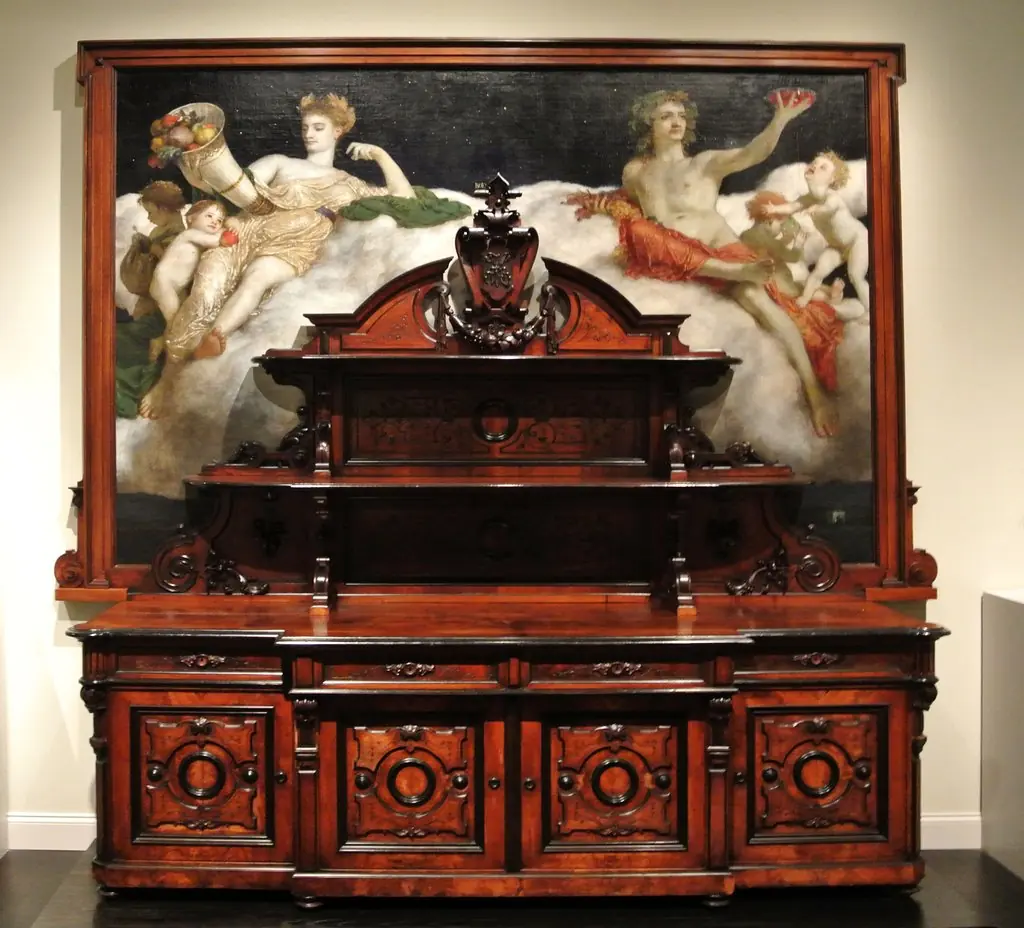
- sideboard
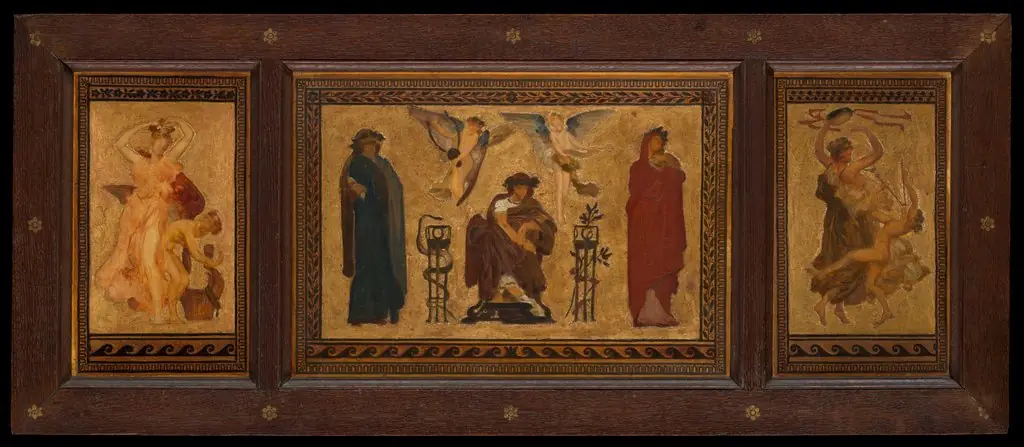 Study for the Ceiling of the Marquand Music Room
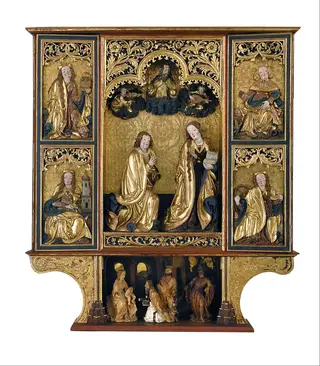 Altarpiece of the Annunciation from Kisszeben
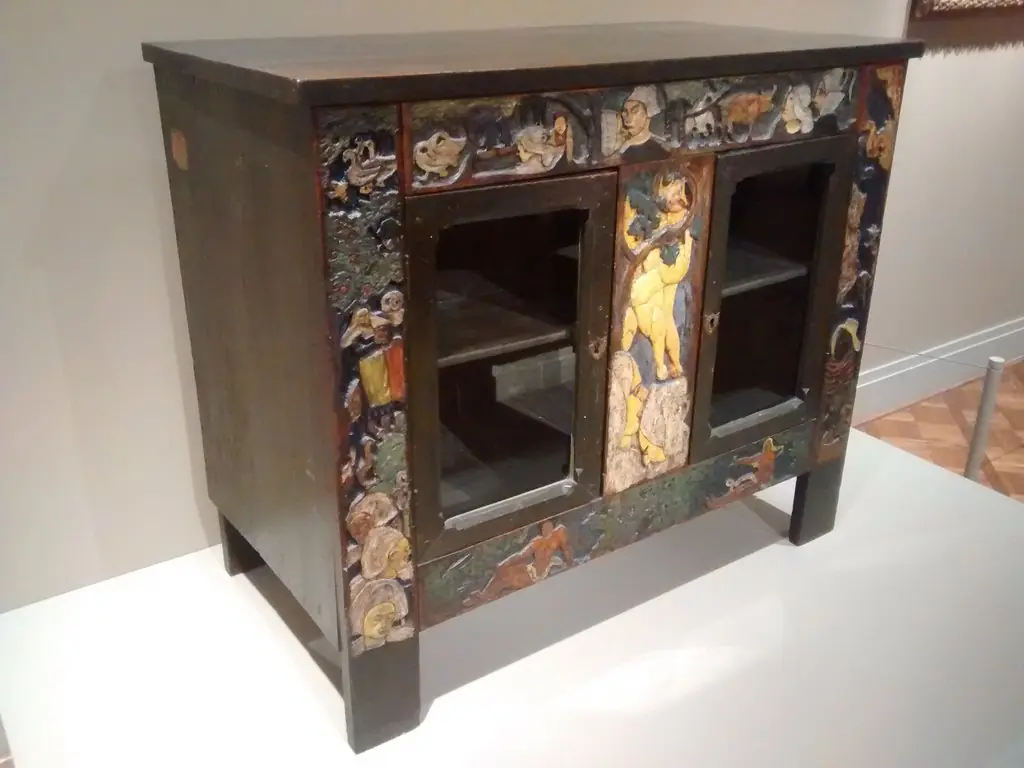 Earthly Paradise
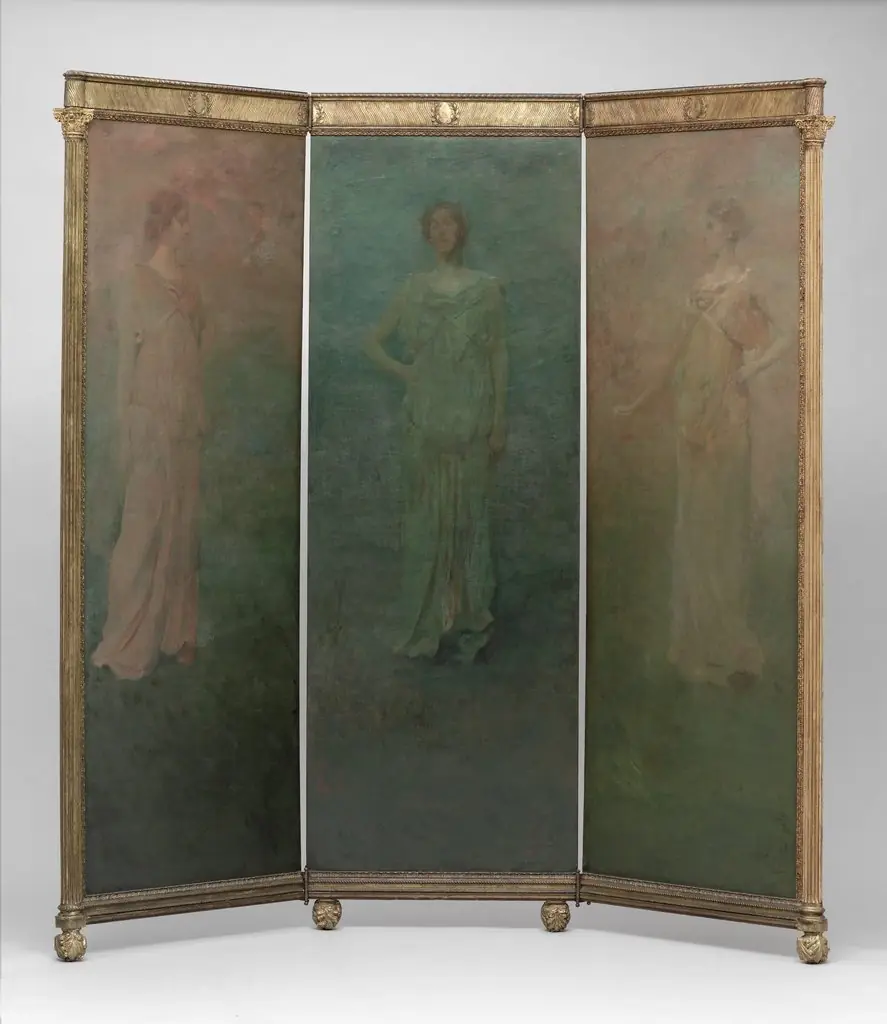 Classical Figures
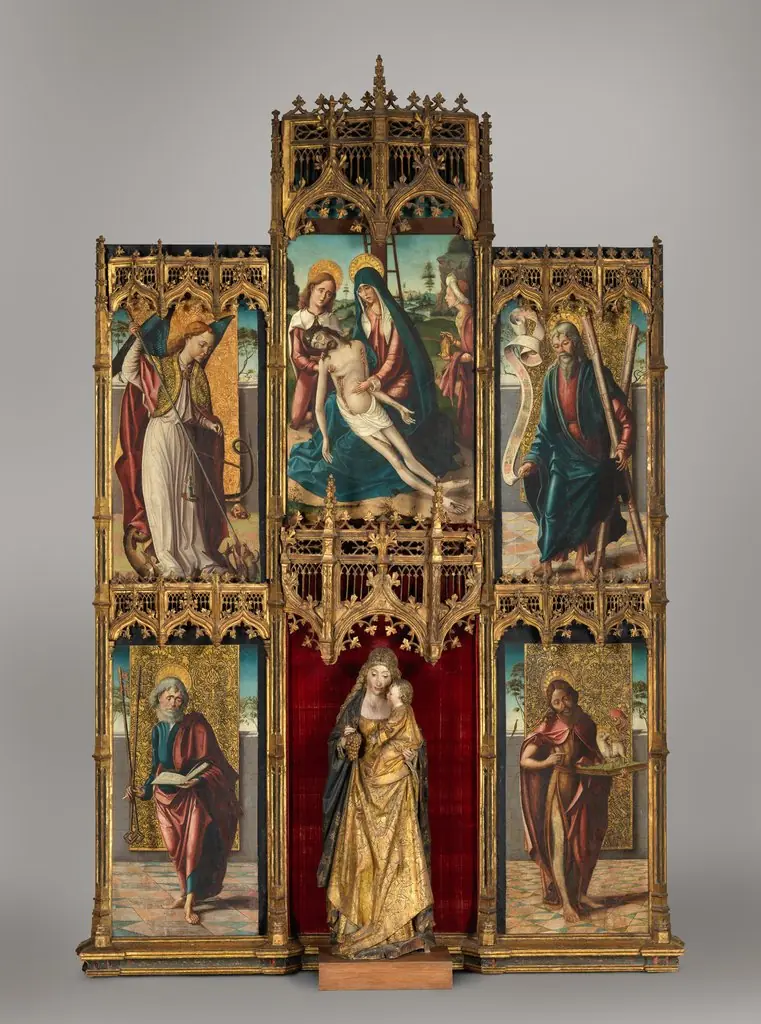 Virgin and Child with the Pietà and Saints
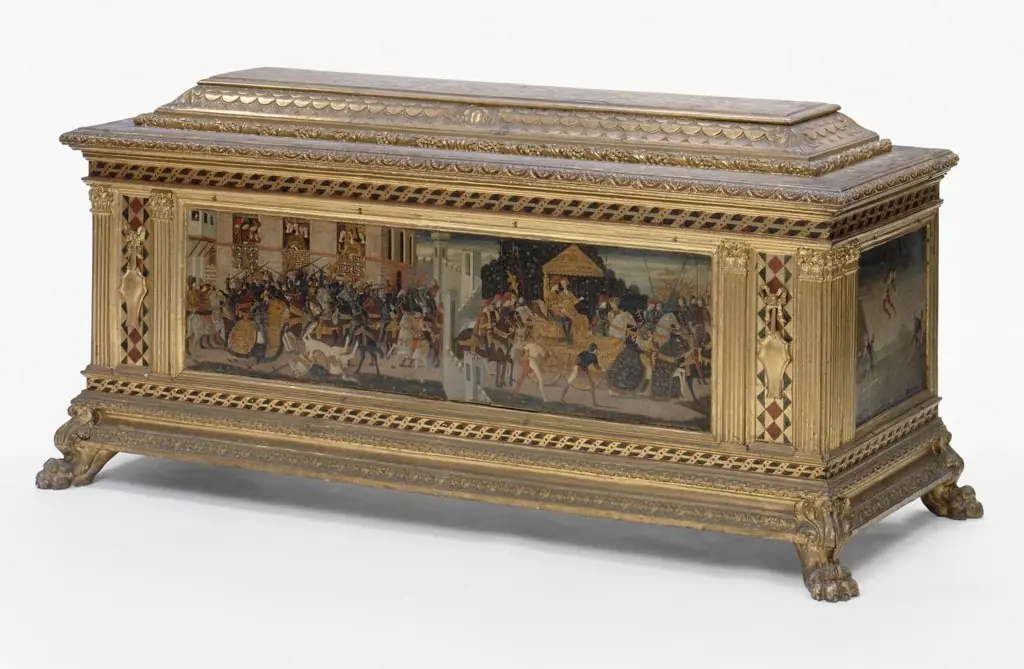 Cassone with three painted panels
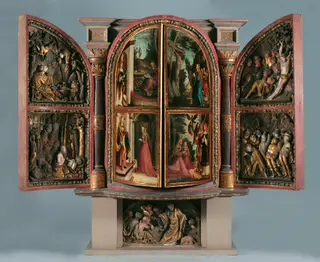 Flügelaltar der Donauschule
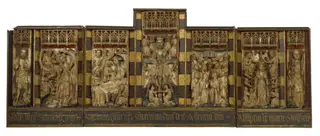 The Swansea Altarpiece
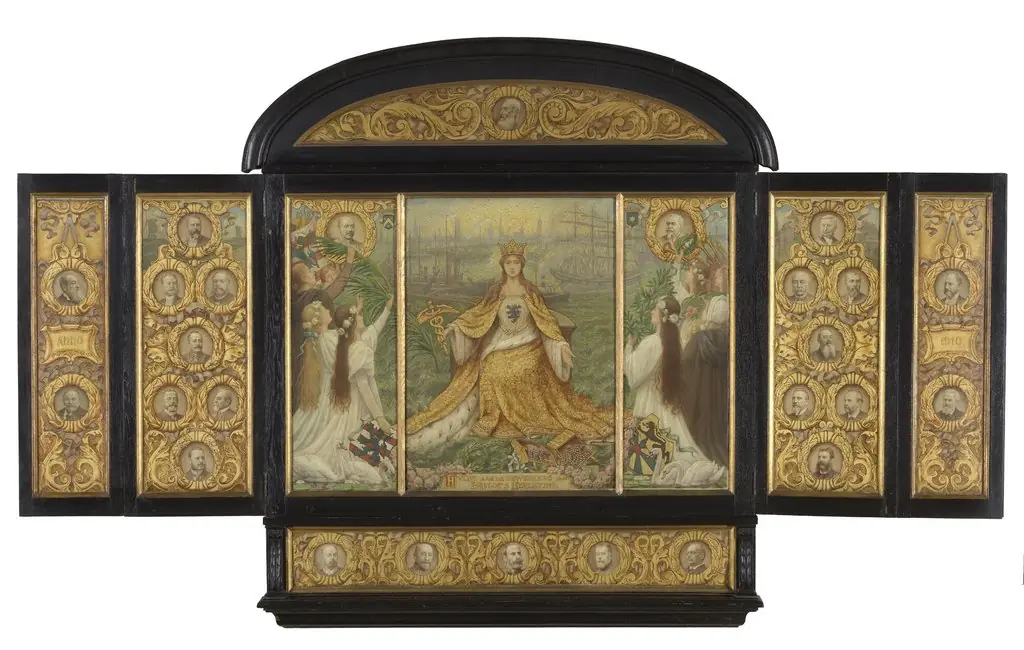 Hulde aan de intiatiefnemers van de zeehaven van Brugge
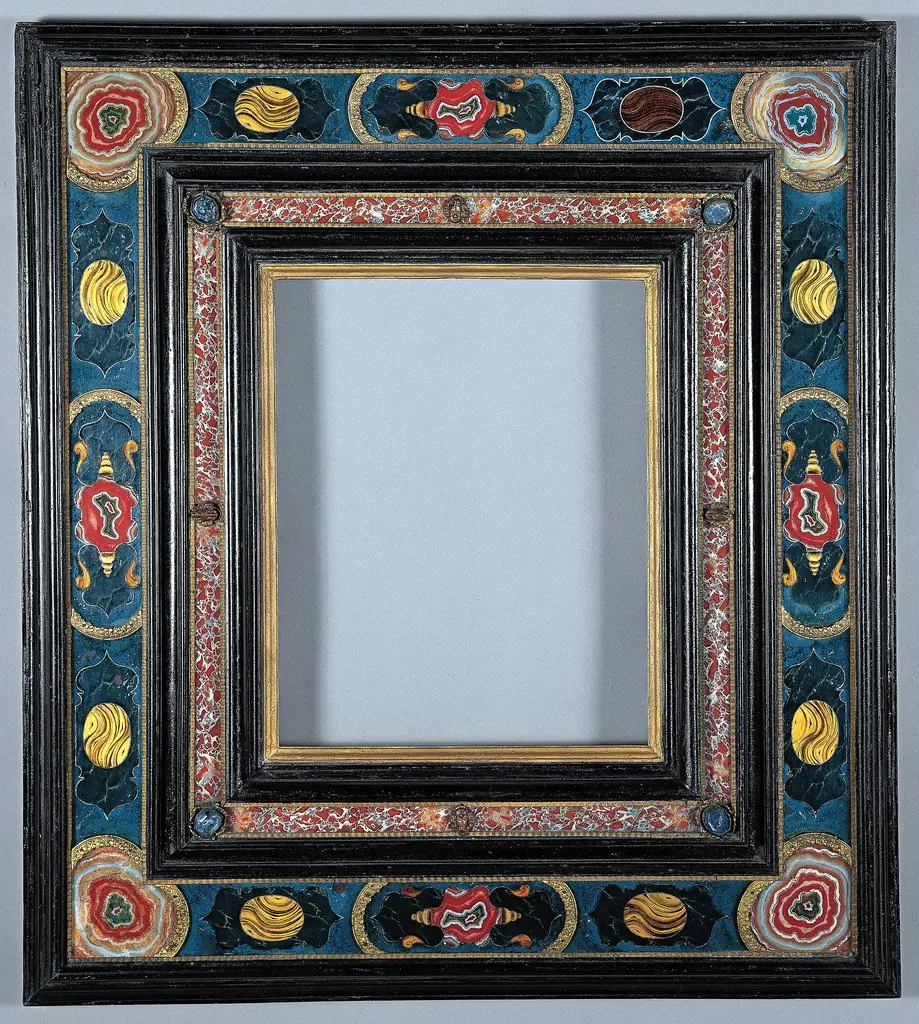 Cassetta frame
 Saint John