Artwork
Hope
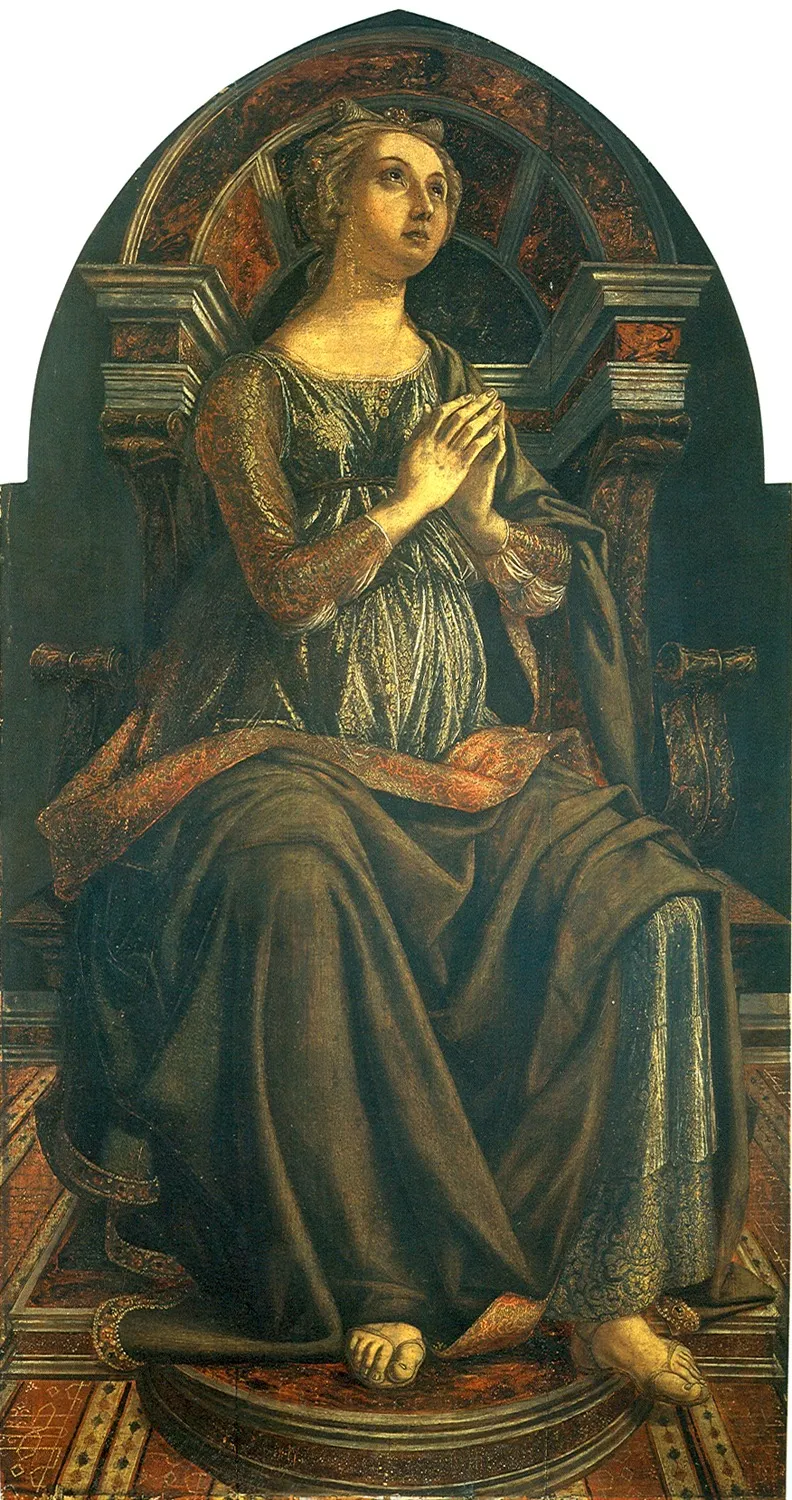
Hope is an oil painting by the Early Renaissance artist Piero del Pollaiuolo. It dates from 1470 and is held in the collection of the Uffizi Gallery.
About this work
Although the painting’s exact subject isn’t described in detail, its title suggests a focus on the abstract idea of hope.
Hope is a painting made around 1470 by the Italian artist Piero del Pollaiuolo. It was created with tempera on a wooden panel, a common technique of the time.
The work is a single‑panel piece that has been part of the Uffizi Gallery’s collection for centuries. Although the painting’s exact subject isn’t described in detail, its title suggests a focus on the abstract idea of hope.
If you’re curious to learn more, check out the Uffizi Gallery.
Subject & Meaning
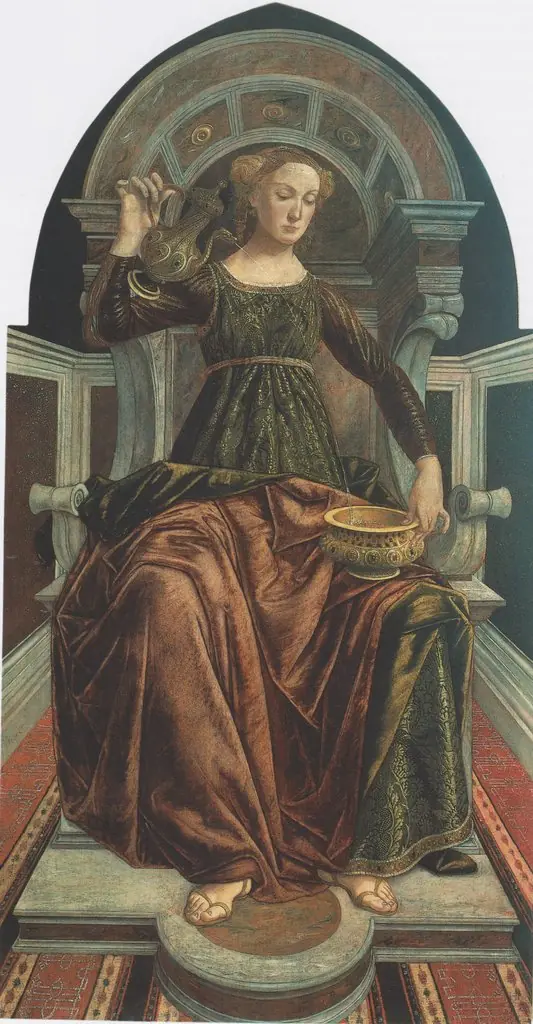
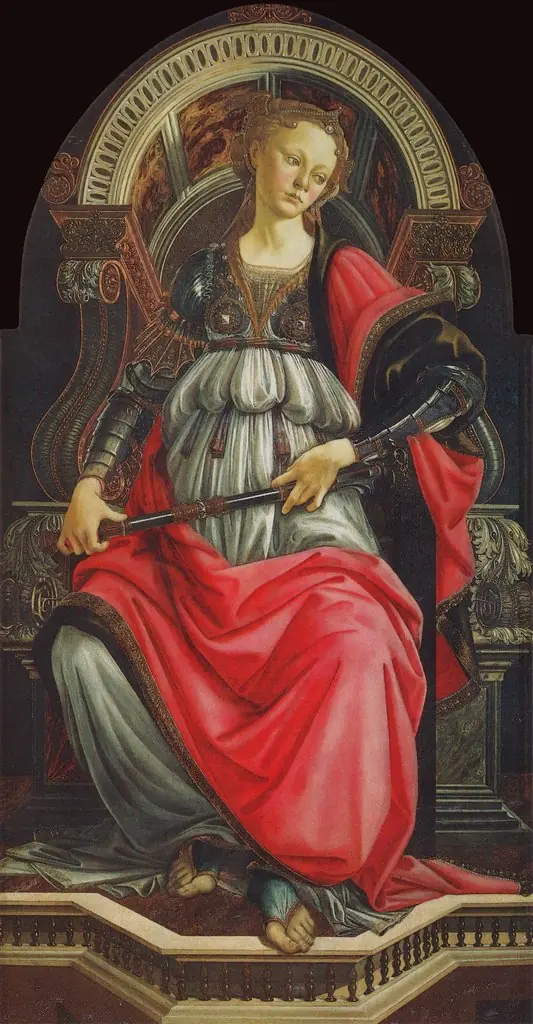
The painting depicts Hope as a female allegorical figure, personifying one of the seven cardinal virtues. She is shown seated on a throne, dressed in green, with her hands joined in prayer and her eyes raised heavenward toward God. Unlike other figures in the series, Hope carries no additional attributes, her identity relies entirely on this gesture of devout supplication. The iconography reflects standard Christian allegorical tradition, presenting an theological virtue through human form. The monumental, sculptural drapery and dark background focus attention on the figure's spiritual concentration rather than worldly setting. The work was part of a larger cycle commissioned to represent all seven virtues, intended for a civic audience hall, blending religious symbolism with public moral instruction.
Technique & Style
The painting is executed in oil on a wooden panel measuring 168 by 90.5 cm. It belongs to an allegorical cycle of the cardinal virtues commissioned by Florence's Tribunale della Mercanzia, and its formal qualities reflect the demands of its original high placement: the figure is optically distorted for a low viewpoint, with a powerful lower body and more slender head and shoulders to create an elongated, imposing effect.
Hope is depicted as a woman in green, identifiable solely through her prayer gesture with eyes raised heavenward. She lacks attributes, making her the most minimally defined virtue in the series. The drapery over her legs is monumental and sculptural, modeled through deep chiaroscuro into broad, soft folds rather than nervous graphic lines. The throne is presented against a dark background without enclosing transenna, and its perspective is dramatically foreshortened using a "wide-angle" technique that simultaneously reveals upper and lower surfaces, exaggerating its depth. Decorative details such as the floor's imitation of an Oriental carpet reveal Flemish pictorial influence. The panel is the most poorly preserved of the series, and in the 19th century its condition was so deteriorated that only Prudence from the cycle was exhibited.
History & Provenance
Commissioned by Florence's Tribunale della Mercanzia to decorate seat-backs in its audience hall, the work originated from a contract dated 18 August 1469 for a series of seven cardinal virtues. Although the commission was briefly transferred to Sandro Botticelli following delays, protests by Piero del Pollaiuolo and his brother Antonio secured a second contract returning the project to Piero's studio. Dated to 1470, the painting's specific execution remains debated; while some scholars attribute the cycle entirely to Piero based on documents, others argue for Antonio's involvement in the design or execution based on stylistic analysis. The series remained with the magistracy until its suppression, entering the Uffizi Gallery collection in 1717. By the 19th century, the panel's poor conservation status limited public display, with only other works from the series regularly exhibited during that period.
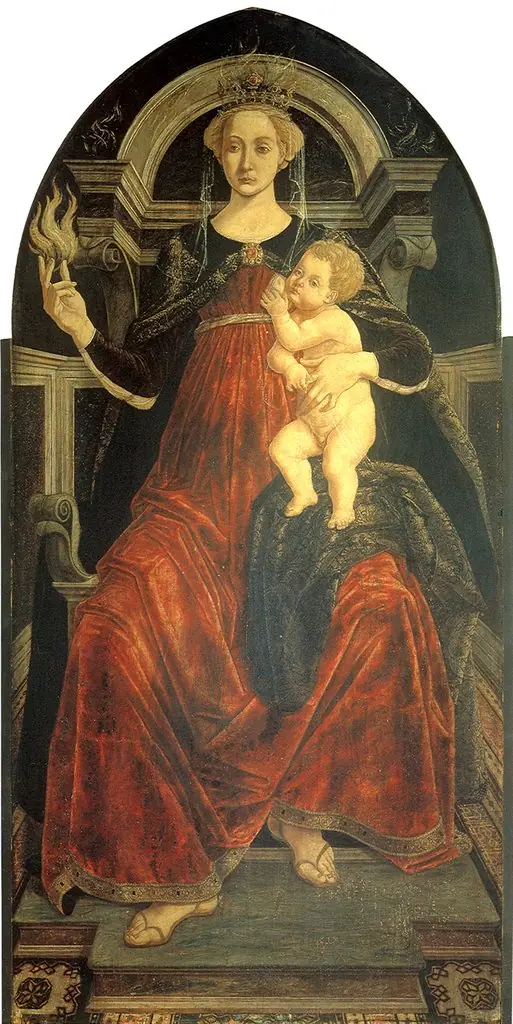
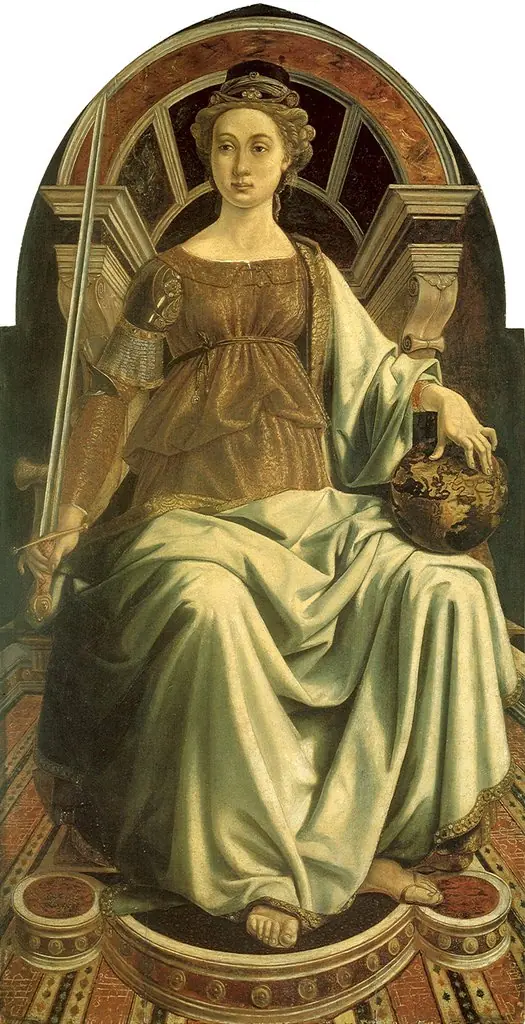
The painting Hope is held in the Uffizi Gallery in Florence, where it has been part of the collection since 1777. It was commissioned by the Tribunale della Mercanzia of Florence in 1469 as part of a series of allegorical paintings depicting the cardinal virtues, intended for decorative seat-backs in the tribunal's audience hall. After the magistracy moved to the Uffizi, the work was exhibited there from 1717 onward. It is an oil on panel work measuring 168 cm in height and 90.5 cm in width, created around 1470. The piece is part of a series that includes Charity, Prudence, Faith, Temperance, Justice, and Fortitude, with Fortitude attributed to Botticelli and the others primarily to Piero del Pollaiuolo, though attribution remains debated. The painting depicts a female personification of hope seated on a throne, dressed in green and engaged in prayer, with richly detailed drapery and architectural elements rendered in a style influenced by Northern European art.
Context
Piero del Pollaiuolo's *Hope* (1470) serves as a pivotal work within the Early Renaissance, commissioned by the Tribunale della Mercanzia as part of a cycle of seven virtues. The painting's creation is historically significant for the dispute it sparked between the Pollaiuolo brothers and Sandro Botticelli, who temporarily executed *Fortitude* before the commission was returned to Piero's workshop. Art historical scholarship remains deeply divided regarding the work's authorship; while some historians attribute the entire cycle to Piero based on contractual documents, others assign the paintings to Antonio del Pollaiuolo based on stylistic comparisons, or propose a division where Antonio designed the cartoons and Piero executed the paint. The work also demonstrates the influence of Flemish painting through its detailed decorative elements. Originally intended for high placement in an audience hall, the figures were deliberately distorted with elongated upper bodies and heavy lower limbs to correct for the viewer's perspective from below.
Artist & collection
Artist
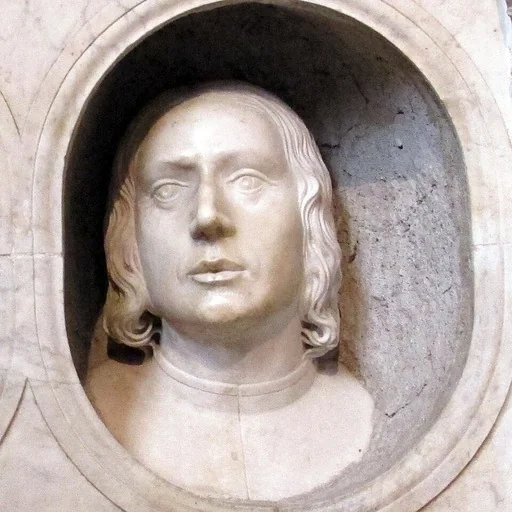
Piero del Pollaiuolo (UK: POL-eye-WOH-loh, US: POHL-, Italian:; also spelled Pollaiolo; c.