Artwork
Madonna Standing
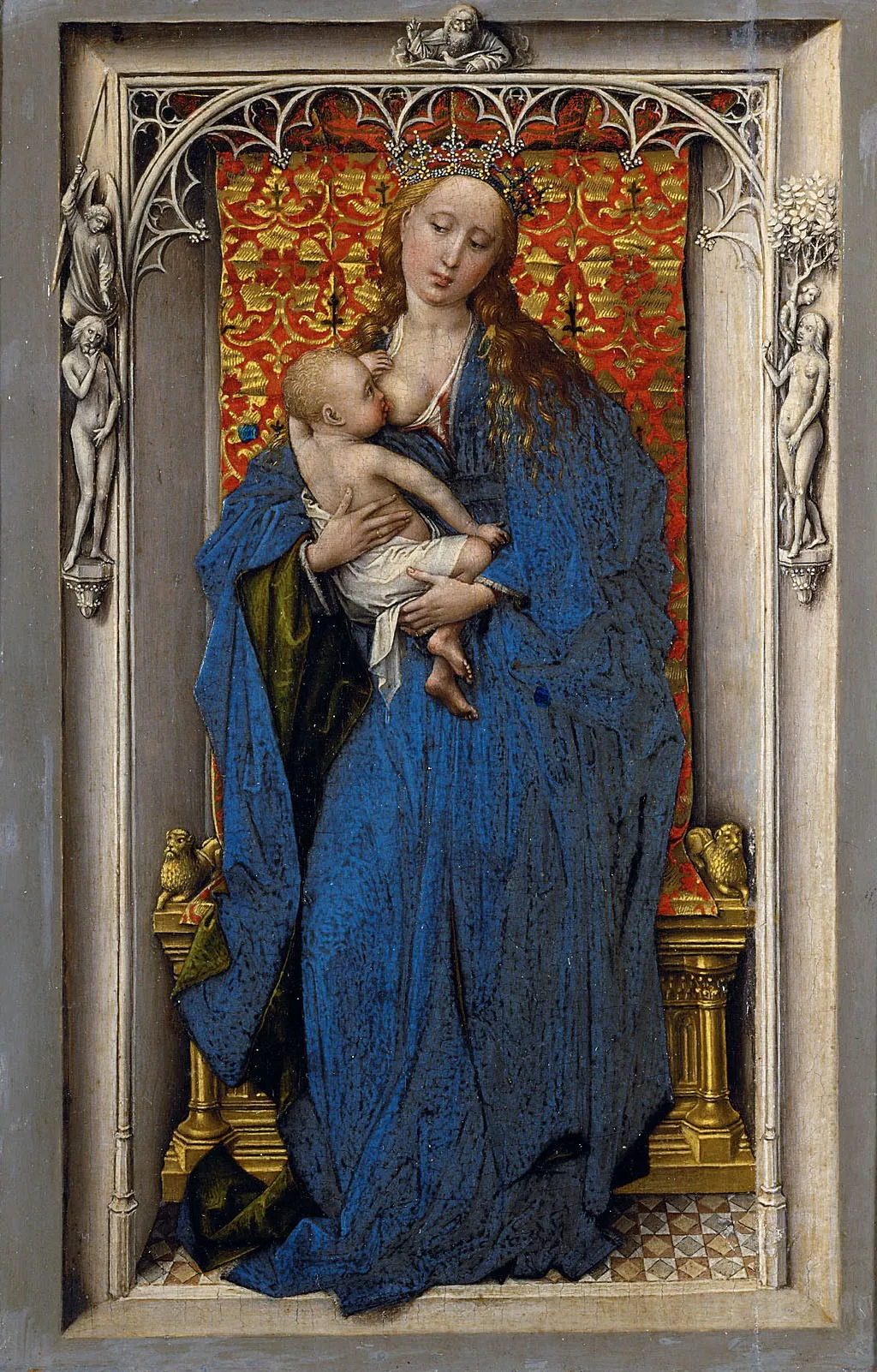
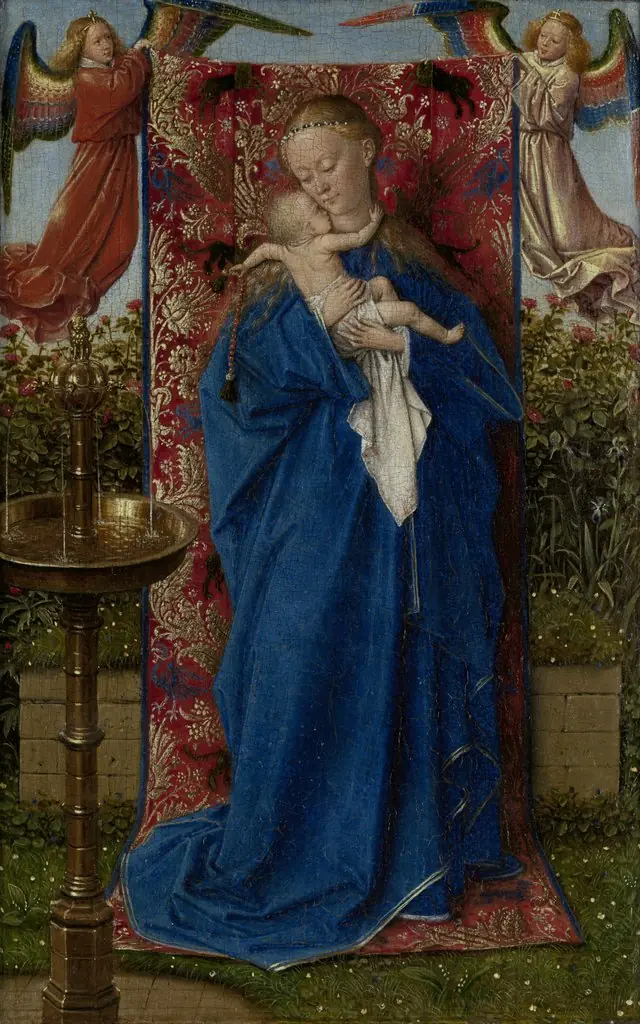
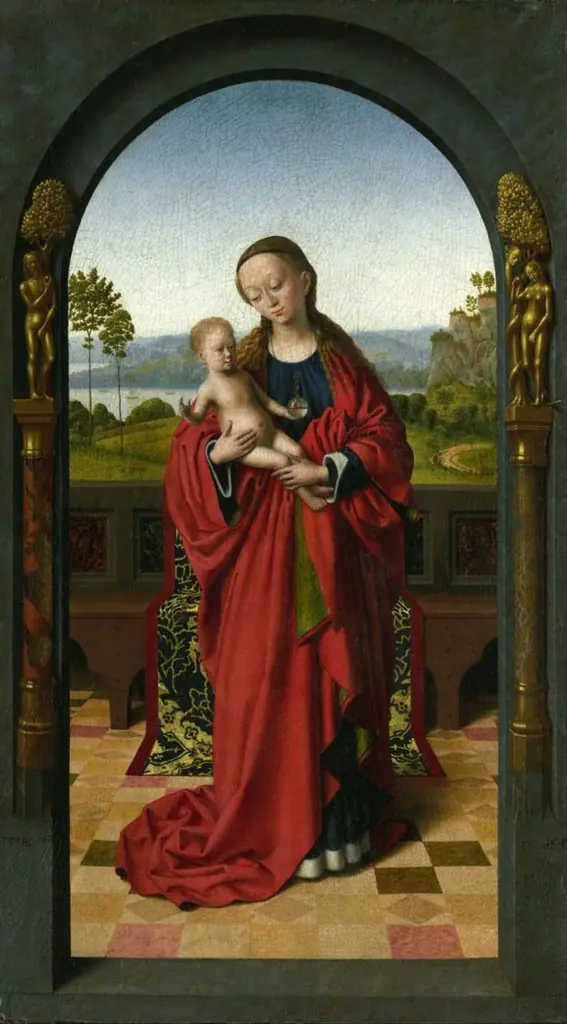
Madonna Standing is an oil painting by the Northern Renaissance artist Rogier van der Weyden. It dates from 1430 and is held in the collection of the Kunsthistorisches Museum. Created circa 1430–1432, this modestly sized oil painting depicts the Virgin Mary cradling the infant Christ.
About this work
Experts think that panel was made by someone in van der Weyden’s workshop, not the artist himself.
This small oil painting shows the Virgin Mary holding the Christ Child. It was made by Rogier van der Weyden around 1430–1432. The work is the left panel of a two-part painting, called a diptych.
The matching right panel shows Saint Catherine. Experts think that panel was made by someone in van der Weyden’s workshop, not the artist himself.
Look up the Kunsthistorisches Museum to see more works from this time.
Subject & Meaning
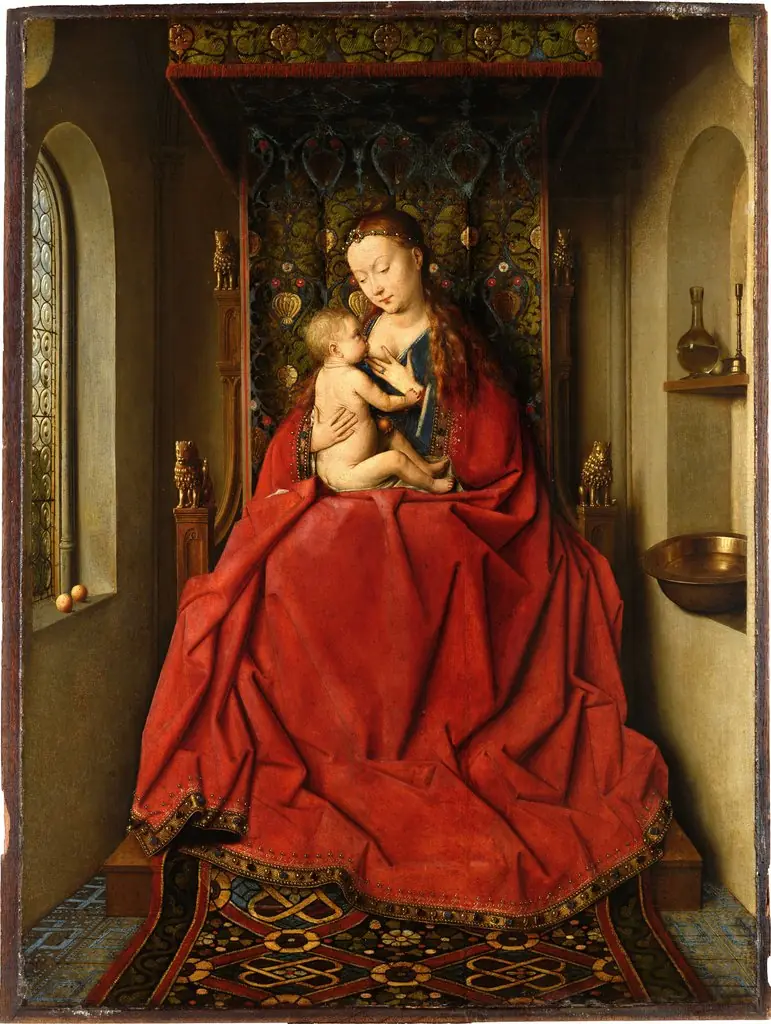
The work depicts the Virgin Mary standing and nursing the Christ Child, a composition known as Madonna Lactans. Mary wears a crown identifying her as Queen of Heaven, while her blue robe symbolizes devotion and fidelity. The unclothed Child, draped only in a white linen cloth, foreshadows the shroud associated with his future burial.
The figures stand within a painted niche featuring grisaille sculptures that distinguish the earthly realm from the divine. Above them, God the Father leans forward in blessing, accompanied by a dove representing the Holy Spirit. Flanking the central pair are Adam and Eve; Eve is shown eating the forbidden fruit beneath an apple tree, referencing the Fall of Man and the necessity of Redemption.
The lions on the throne's armrests allude to the Throne of Solomon, invoking the tradition of Mary as the Seat of Wisdom.
Technique & Style
Executed in oil paint on a single oak panel, the Madonna Standing is a small devotional panel whose handling emphasizes a compressed, relief-like pictorial space. The central figures occupy a shallow niche framed by brocaded hangings and tracery, flattening the composition into a sculptural tableau. Mary stands crowned, her deep blue mantle rendered in smooth, evenly blended glazes that heighten the fabric’s opulence and her symbolic fidelity.
The Child, swathed only in a white linen cloth, is modeled with delicate transitions that foreshadow the shroud of the Deposition. In grisaille, biblical and divine figures, God the Father, the dove of the Holy Spirit, and the first couple, are rendered as frozen, sculptural apparitions within the niche’s architecture, distinguishing the eternal from the earthly. The throne behind Mary features lions on its armrests, evoking the Throne of Solomon and aligning the image with the Seat of Wisdom tradition.
History & Provenance
Madonna Standing is dated to approximately 1430–1432 and is considered one of the earliest known works by Rogier van der Weyden. Art historian Erwin Panofsky proposed that the painting was executed while the artist remained in the workshop of Robert Campin. Conversely, John Ward and Karl Birkmeyer argue for a later date, suggesting completion after van der Weyden left Campin's studio on August 1, 1432, based on the work's stylistic debts to Jan van Eyck's Ghent Altarpiece, which was completed in May 1432.
The painting served as the left panel of a diptych, with the right panel depicting St. Catherine. The complete diptych has been held in the collection of the Kunsthistorisches Museum in Vienna since 1772.
The work is held in the Kunsthistorisches Museum, Vienna, where it has been since 1772.
It forms the left panel of a diptych; the right panel depicts Saint Catherine and is attributed to a workshop member. The painting is inventoried as GG_175 in the museum’s holdings.
Context
Scholarship identifies the Madonna Standing as one of Rogier van der Weyden's earliest works, dated approximately 1430–1432. Art historian Erwin Panofsky originally suggested the piece was created while the artist remained in Robert Campin's workshop. However, later analysis by John Ward and Karl Birkmeyer argues for a post-apprenticeship date, citing documentary evidence that Campin's apprentice did not depart until August 1, 1432.
These scholars point to the painting's sophisticated composition and its clear engagement with Jan van Eyck's Ghent Altarpiece as evidence of the artist's independent mastery. The work is frequently analyzed for its distinctive flattening of pictorial space, a technique Panofsky described as unmistakably Rogerian and one that Van der Weyden would further refine in the Durán Madonna. By integrating grisaille figures with a vibrant central subject, the painting establishes key motifs of the Early Netherlandish movement that define the artist's mature style.
Legacy
The Madonna Standing (c. 1430–1432) became a foundational model for the devotional Virgin Lactans motif in Early Netherlandish art, particularly shaping later representations of the Virgin Mary in domestic settings. Its compositional innovations, including the use of grisaille ancillary figures to distinguish divine from earthly realms and the spatial framing within an architectural niche, were widely emulated by contemporaries and successors. The work’s influence is evident in the treatment of sacred space and narrative symbolism in 15th-century panel paintings across the Low Countries and Germany, where its visual strategies were adapted to convey theological themes with heightened emotional and symbolic resonance.
The painting’s legacy is underscored by its role as a key reference point in scholarly analyses of Rogier van der Weyden’s artistic development, particularly in tracing his engagement with Jan van Eyck’s innovations. Its technical and compositional elements were cited as formative in van der Weyden’s evolution toward more abstracted and expressive devotional imagery, influencing later works such as the Durán Madonna (1435–1438). The diptych’s structural and iconographic features, including the placement of God the Father above the niche and the symbolic use of lilies and serpents, became standard motifs in subsequent Marian imagery, cementing its status as a pivotal reference in the history of Northern Renaissance art.
Overview
Created circa 1430–1432, this modestly sized oil painting depicts the Virgin Mary cradling the infant Christ. It forms the left half of a diptych, the companion piece portraying Saint Catherine. The work resides in Vienna’s Kunsthistorisches Museum, where it has been on display since the late eighteenth century.
Artist & collection
Artist
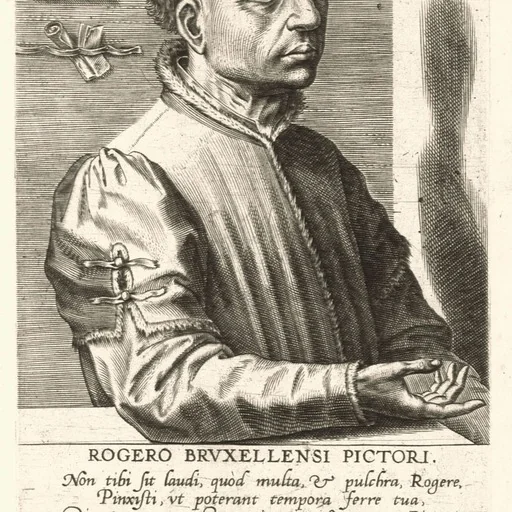
Rogier van der Weyden (Dutch:; 1399 or 1400 – 18 June 1464), initially known as Roger de la Pasture (French: ), was an early Netherlandish painter whose surviving works consist mainly of religious triptychs,…