Artwork
Train and Bardes
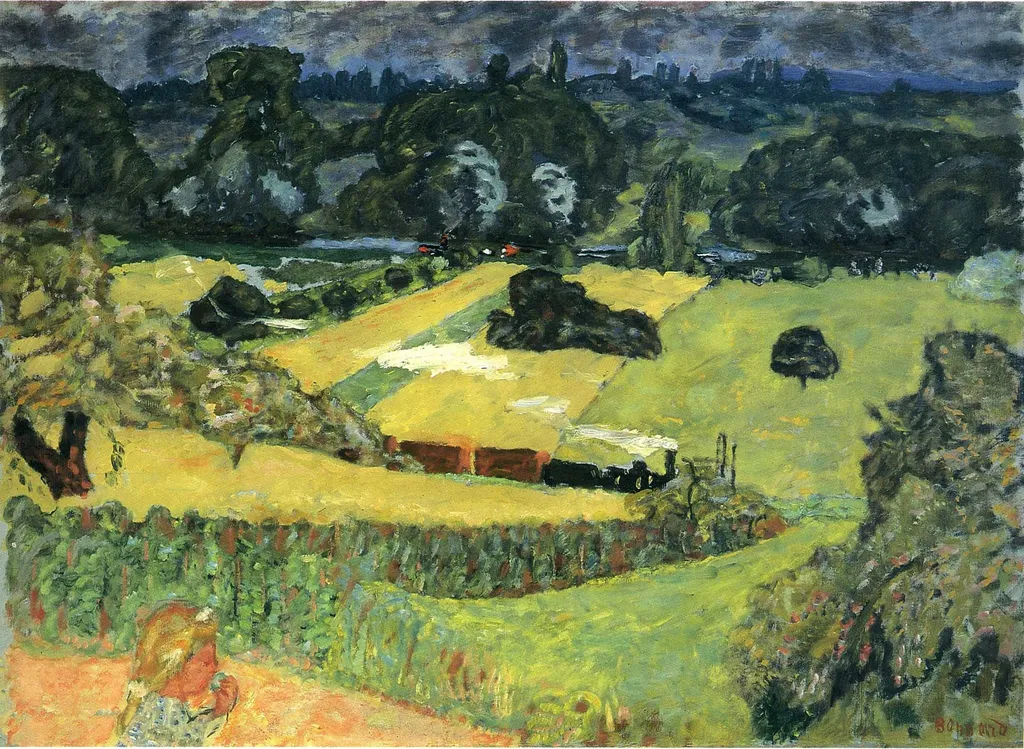
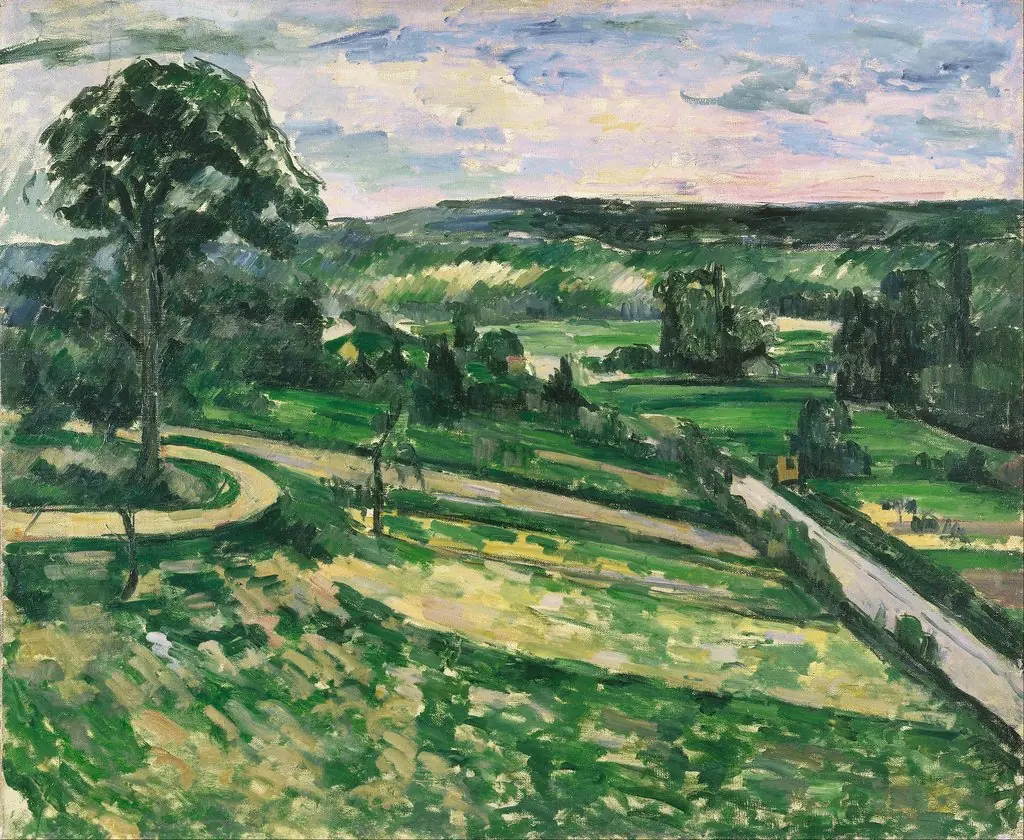
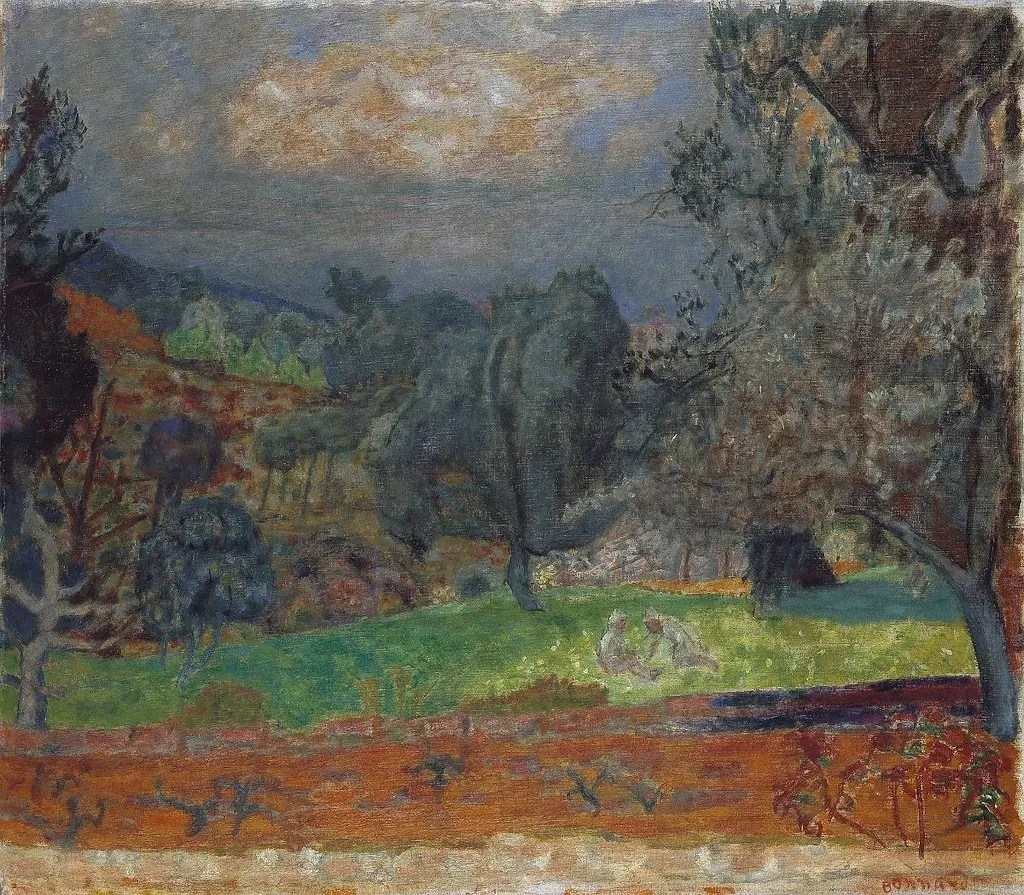
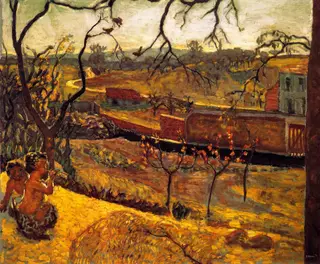
Train and Bardes is an oil painting by the Les Nabis artist Pierre Bonnard. It dates from 1909 and is held in the collection of the Hermitage Museum.
About this work
Overview
It depicts a quiet rural landscape viewed from a slight elevation, with a distant train crossing the horizon and a foreground of fields and scattered trees.
Painted in 1909, Train and Bardes is an oil-on-canvas work by French artist Pierre Bonnard. It depicts a quiet rural landscape viewed from a slight elevation, with a distant train crossing the horizon and a foreground of fields and scattered trees. The painting resides in the State Hermitage Museum in Saint Petersburg, reflecting Bonnard’s interest in everyday scenes rendered with emotional subtlety rather than dramatic narrative.
Subject & Meaning
The painting captures a fleeting moment in the French countryside, where the presence of a train suggests modernity intruding upon pastoral life. Yet the train is small and distant, not dominant. The focus lies in the interplay of light across the land, trees, grass, and sky, imbuing the scene with a contemplative stillness. There is no overt symbolism; meaning emerges from the mood of transition and quiet observation.
Technique & Style
Bonnard employs loose, textured brushwork to suggest form without rigid definition. Colors are subdued, soft greens, grays, and ochres, applied in layered washes that blur boundaries between land, air, and sky. Light is rendered through tonal shifts rather than sharp contrasts, creating atmospheric depth.
The brushstrokes are deliberate yet fluid, conveying movement in the wind and the passage of time without literal motion.
History & Provenance
Created during Bonnard’s mature period, the painting entered the Hermitage’s collection in the early 20th century, likely through acquisitions by Russian patrons or state purchases following the Russian Revolution. Its presence in a major Russian institution reflects broader European interest in French Post-Impressionism during that era, though its specific acquisition record remains undocumented in public sources.
Context
Painted in the years following the height of Impressionism, Train and Bardes aligns with Bonnard’s broader engagement with the Nabis group’s emphasis on personal vision over realism. While contemporaries like Monet focused on light’s optical effects, Bonnard prioritized emotional resonance and compositional harmony. The train, a symbol of industrial progress, appears not as disruption but as a quiet element within nature’s rhythm.
Legacy
The work exemplifies Bonnard’s distinctive approach to landscape: intimate, non-heroic, and deeply attuned to atmosphere. Though less celebrated than his interiors, such paintings influenced later generations of artists interested in mood over narrative. Train and Bardes remains a quiet testament to his ability to transform ordinary views into meditative compositions, valued for their restraint and sensitivity rather than spectacle.
Own this work as a print
Artist & collection
Artist
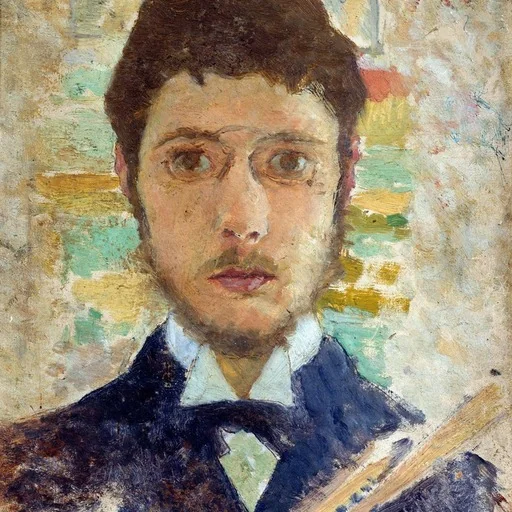
Pierre Bonnard was a French painter, illustrator and printmaker, known especially for the stylized decorative qualities of his paintings and his bold use of color.