Artwork
Kan-Gao, Cayenne Chinese
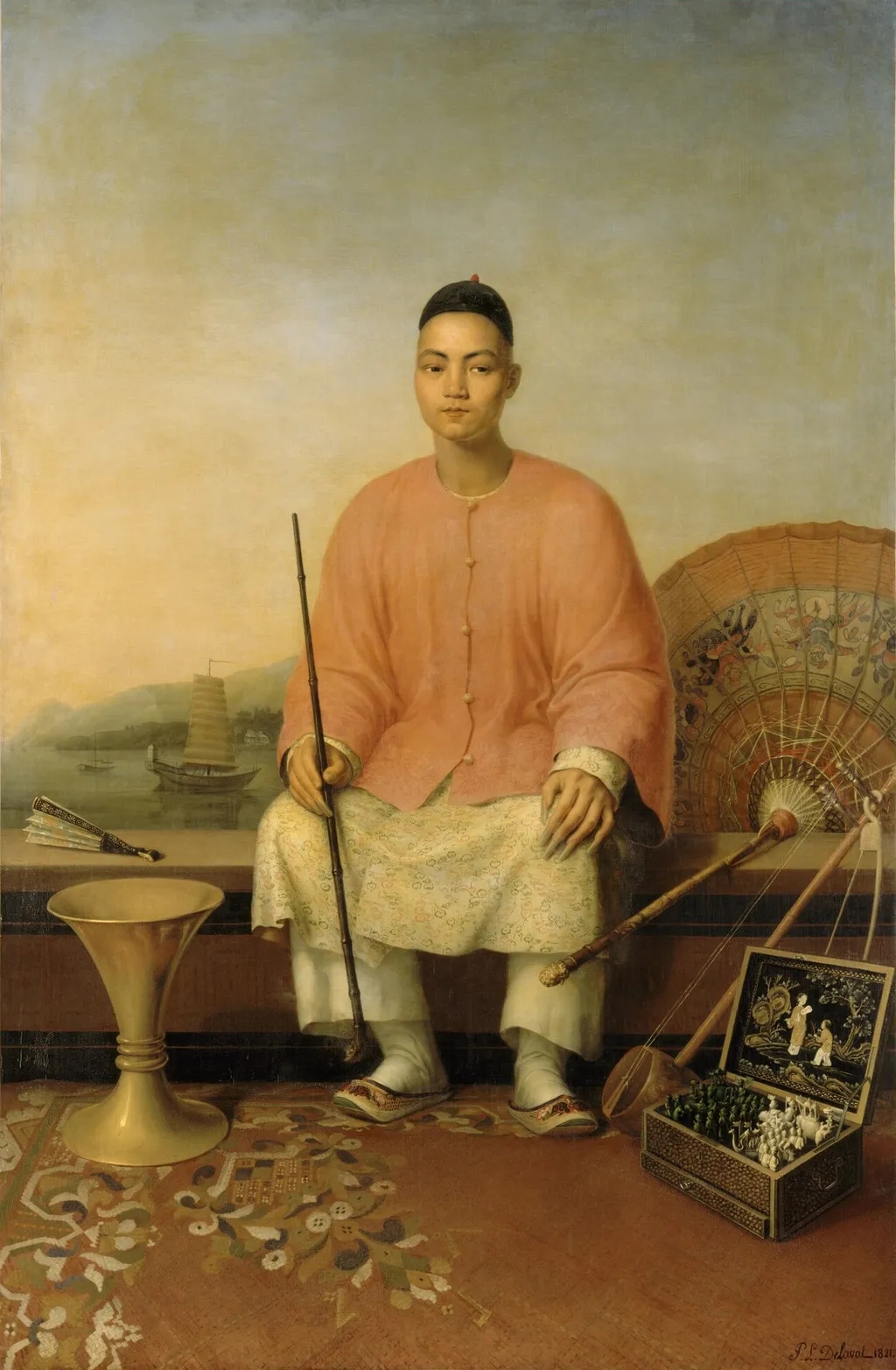
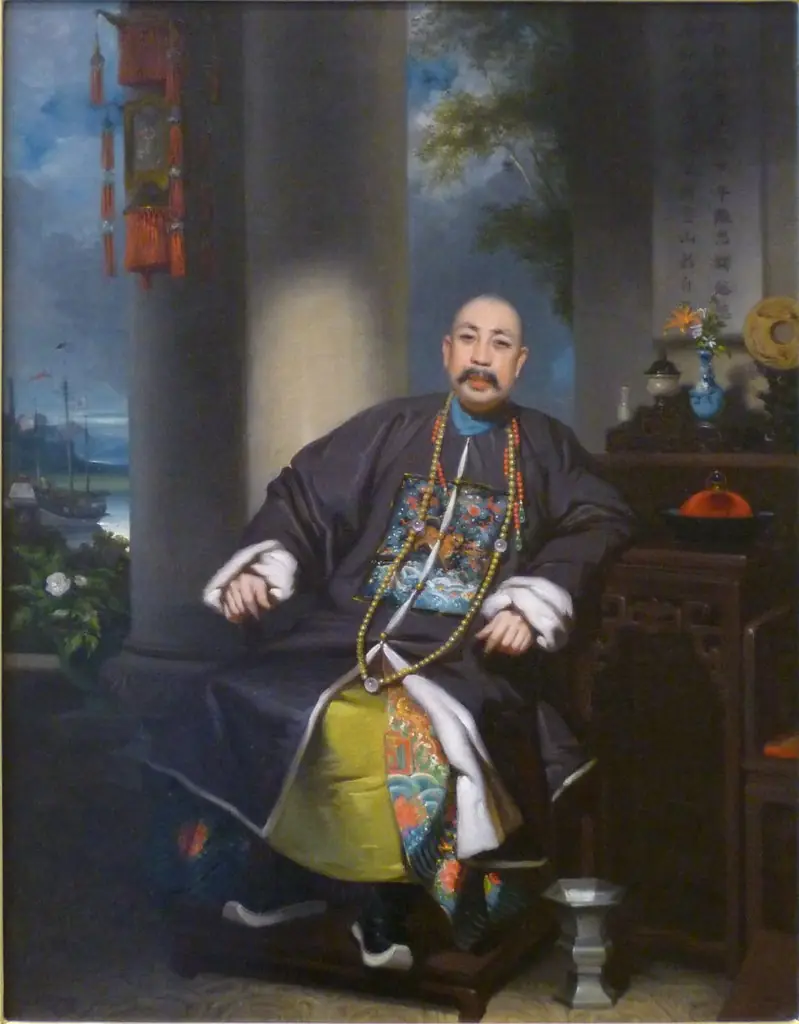
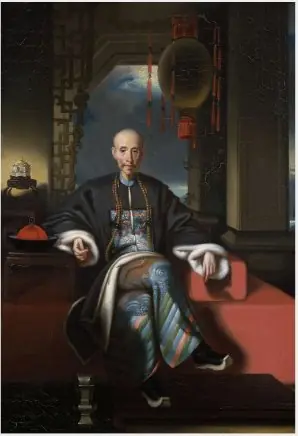
Kan-Gao, Cayenne Chinese is an oil painting by the Patna School of Painting artist Pierre-Louis Delaval. It dates from 1821 and is held in the collection of the Palace of Versailles. Pierre‑Louis Delaval’s 1821 oil painting, titled Kan‑Gao, Cayenne Chinese, presents a solitary figure seated on a chair.
About this work
Subject & Meaning
The inclusion of leisure items like chess and the fan suggests a representation of the subject's lifestyle or status within the context of his time in Cayenne.
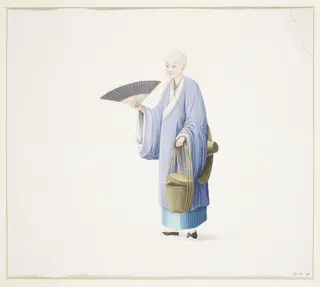
The work depicts Kan-Gao, identified in French records as "Le Chinois Kan Gao," seated in a formal pose. The iconography includes specific attributes such as a chess set, a hand fan, and a beach umbrella, alongside the subject's clothing. These elements combine to present a portrait that emphasizes both the individual's identity and specific cultural or personal markers associated with him during the early nineteenth century.
The inclusion of leisure items like chess and the fan suggests a representation of the subject's lifestyle or status within the context of his time in Cayenne.
Technique & Style
The work is an oil painting executed on canvas, measuring 220 cm in height by 142 cm in width. It portrays a man seated and engaged in chess, surrounded by a hand fan, beach umbrella, and a painting, while wearing traditional Chinese attire. The composition reflects French academic portraiture of the early 19th century, blending European technique with East Asian thematic elements.
The painting was exhibited at the Salon of 1822 and is part of the collection at the Museum of the History of France in Versailles.
The surface bears an inscription in Chinese, confirming its cross-cultural subject matter. The handling of brushwork and modeling of form adhere to the conventions of oil on canvas typical of Pierre-Louis Delaval's practice, with fine detail in facial expression and fabric rendering.
History & Provenance
Pierre-Louis Delaval created Kan-Gao, Cayenne Chinese in 1821 as an oil on canvas portrait. The work entered the collection of the Museum of the History of France at the Palace of Versailles, initially displayed at the Musée de la Compagnie des Indes. It was exhibited at the Salon of 1822 before being formally accessioned under inventory numbers MV 6701, INV 3851, and LP 6609.
The painting remains part of the collections at the Musée national des châteaux de Versailles et de Trianon, reflecting its sustained institutional presence since the early 19th century.
The painting is held at the Musée de la Compagnie des Indes, part of the Museum of the History of France located in the Palace of Versailles. Its inventory numbers are MV 6701, INV 3851, and LP 6609. The work was exhibited publicly at the Salon of 1822.
Legacy
The painting LE CHINOIS KAN GAO by Pierre-Louis Delaval, exhibited at the Salon of 1822, contributed to the genre of portraiture through its depiction of cross-cultural subjects. Its inclusion in the collections of the Museum of the History of France at Versailles established a precedent for incorporating Eastern themes into European artistic discourse. The work's representation of a Chinese subject in contemporary European attire influenced later artists' approaches to depicting intercultural encounters in portraiture, as reflected in its continued presence in French museum inventories.
Overview
Pierre‑Louis Delaval’s 1821 oil painting, titled Kan‑Gao, Cayenne Chinese, presents a solitary figure seated on a chair. The man is dressed in a vivid orange coat and patterned light trousers, holding a walking stick while one hand rests on his knee. The composition includes a brass chess set, a folded beach umbrella, a golden vase, and a miniature marine scene painted on the backdrop.
Own this work as a print
Artist & collection