Artwork
Tableau no. 2
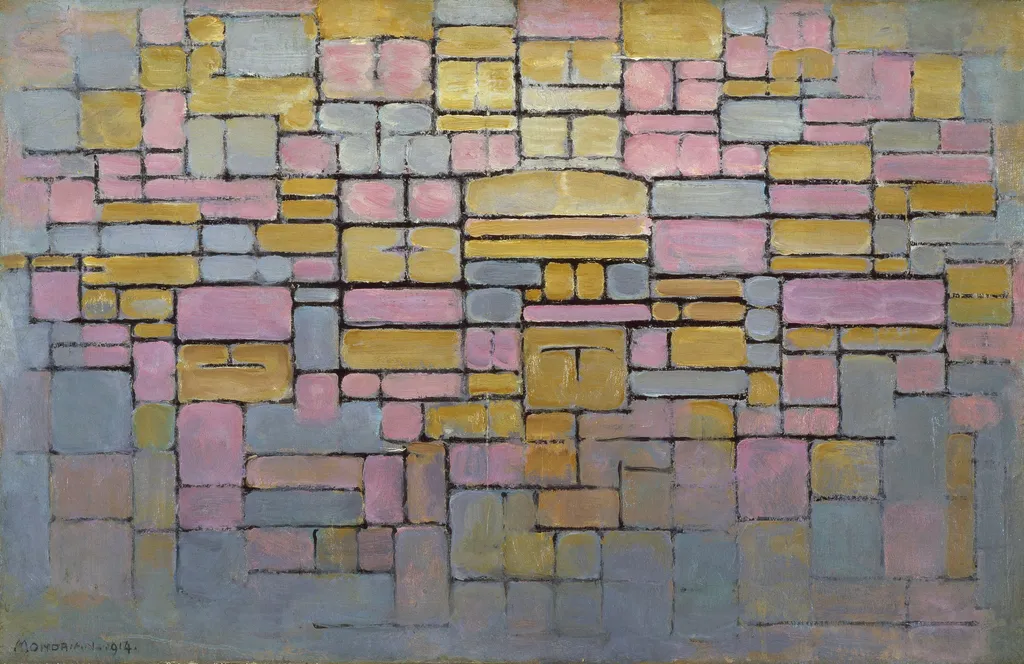
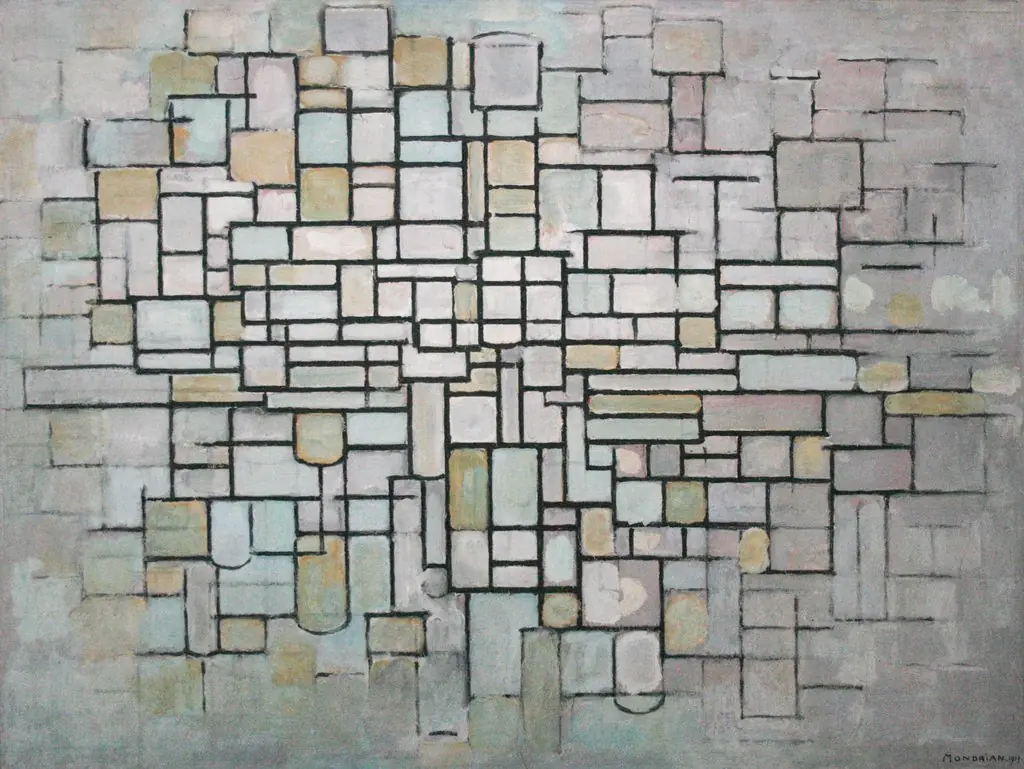
Tableau no. 2 is an oil painting by the De Stijl artist Piet Mondrian. It dates from 1914 and is held in the collection of the Museum of Modern Art. Created in 1914, Tableau no.
About this work
Overview
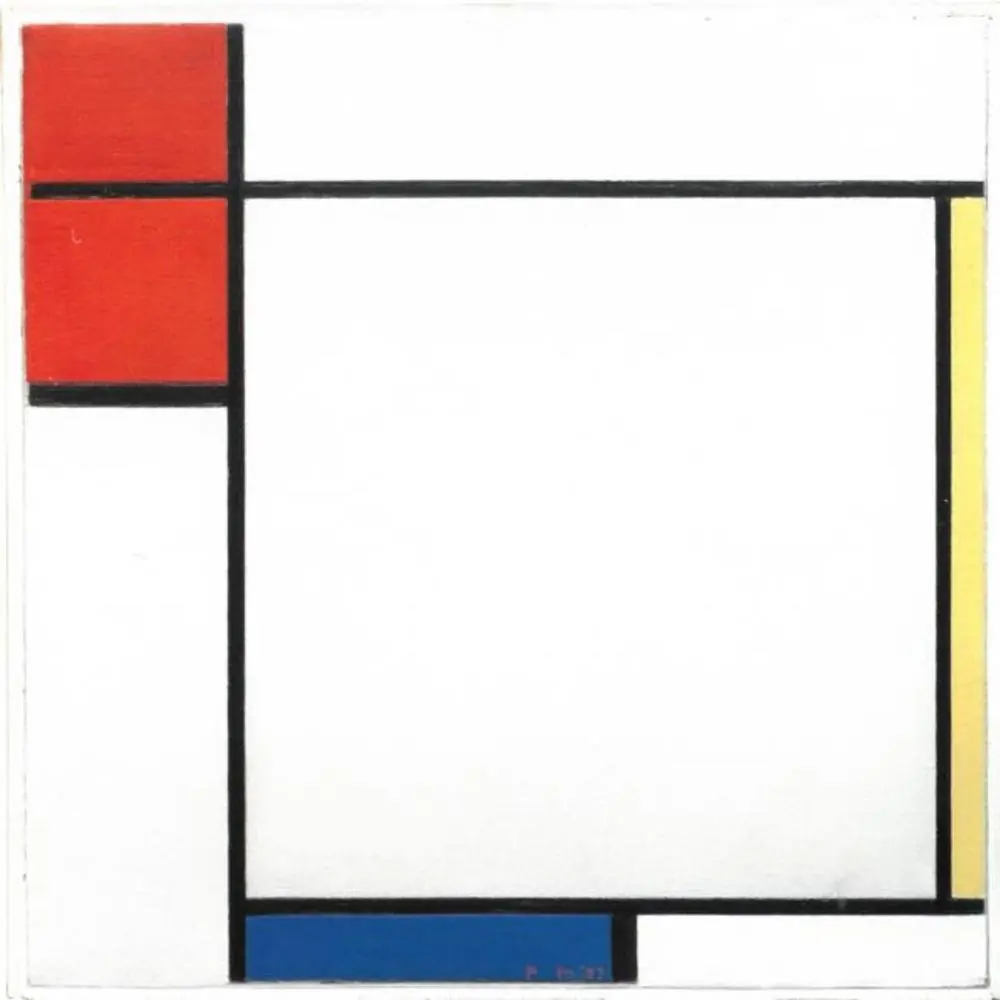
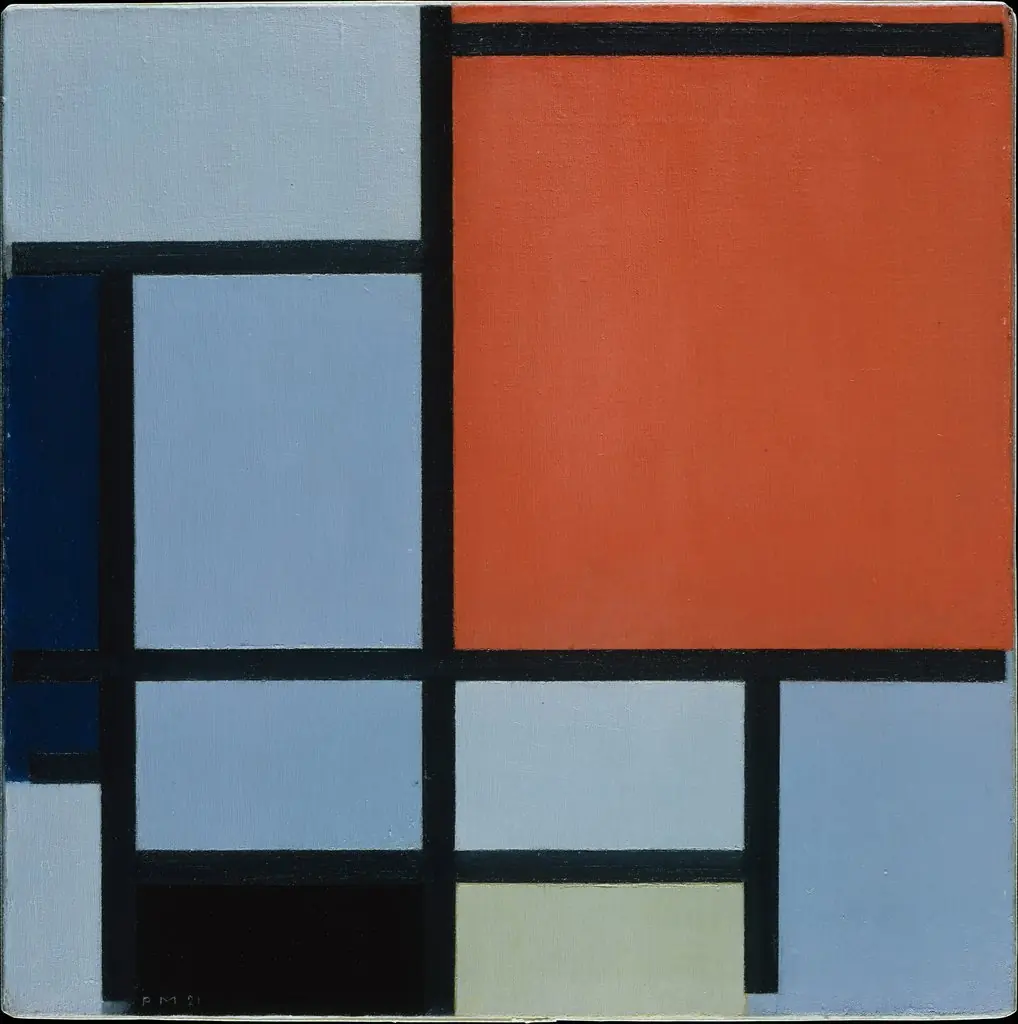
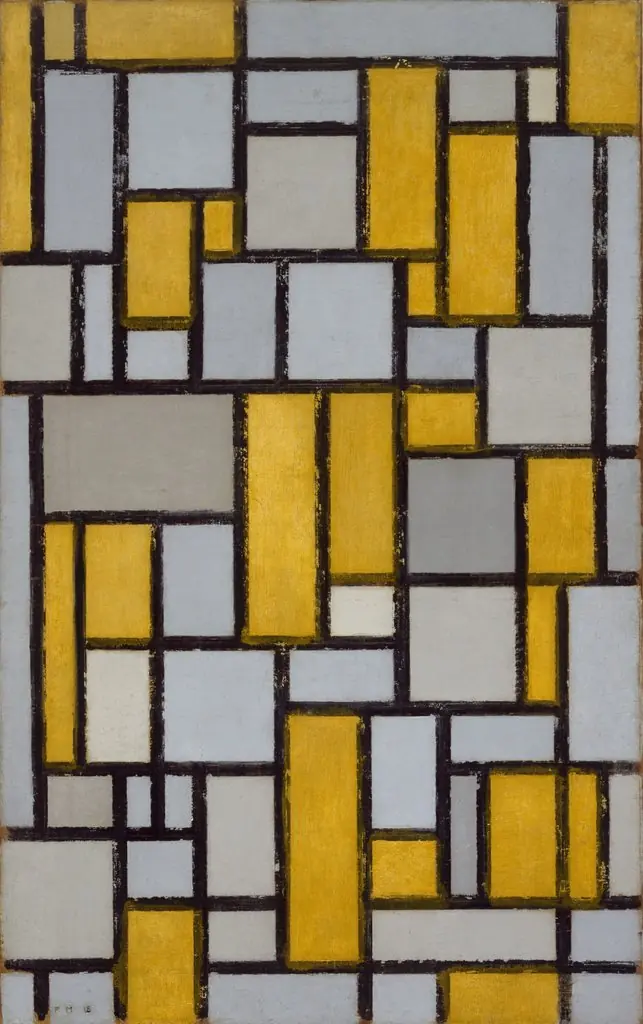
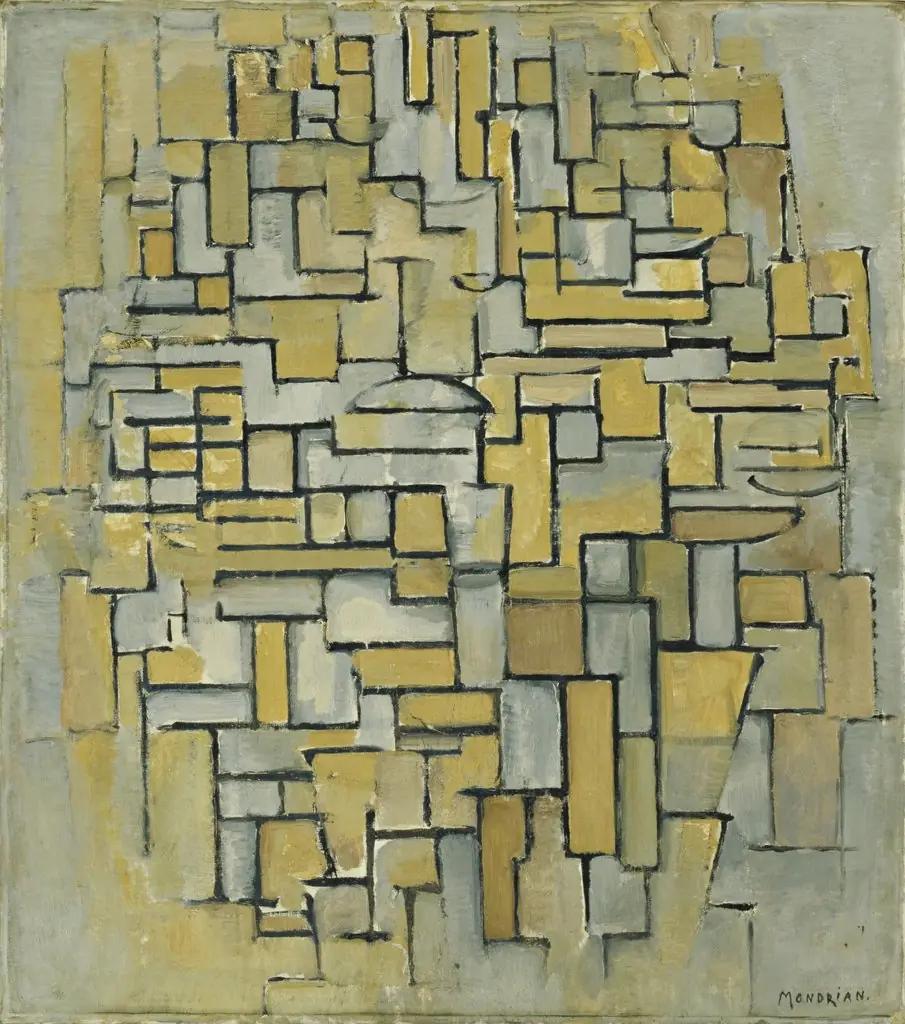
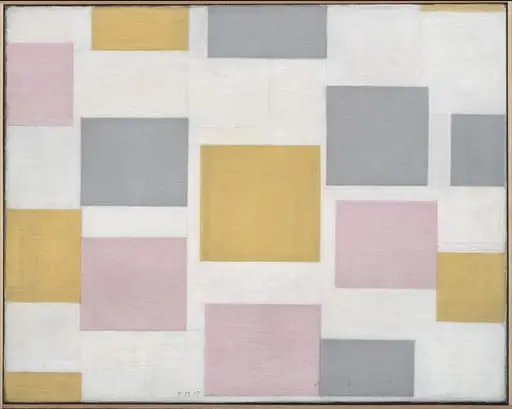
Created in 1914, Tableau no. 2 / Composition no. V is an oil painting by Piet Mondrian that exemplifies his shift from figurative representation toward a purely abstract visual language. The work consists of a rectangular grid composed of smaller blocks of muted pink, yellow, gray and brown, arranged in a balanced, rhythmic pattern that conveys a restrained sense of order.
Subject & Meaning
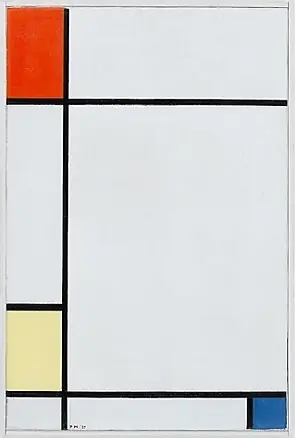
The composition does not depict recognizable objects; instead, it explores the interaction of color and line as autonomous elements. By reducing the picture plane to intersecting rectangles, Mondrian seeks a universal visual harmony, suggesting that aesthetic balance can be achieved through the careful calibration of simple geometric forms and subdued hues.
Technique & Style
Executed in oil on canvas, the painting employs flat, unmodulated areas of color bounded by thin black lines. The palette is limited to soft, earthy tones, reinforcing the work’s calm atmosphere. This approach anticipates the De Stijl aesthetic, where the emphasis lies on structural clarity and the elimination of decorative excess.
History & Provenance
Tableau no. 2 / Composition no. V belongs to the collection of the Museum of Modern Art in New York. It marks a pivotal moment in Mondrian’s career, documenting his movement toward the abstract principles that would later define the De Stijl movement and influence modernist design worldwide.
Own this work as a print
Artist & collection

Artist
Pieter Cornelis Mondriaan (Dutch:; 7 March 1872 – 1 February 1944), known after 1911 as Piet Mondrian (, US also; Dutch: ), was a Dutch painter and art theoretician, who is regarded as one of the greatest artists of the 20th century.