Artwork
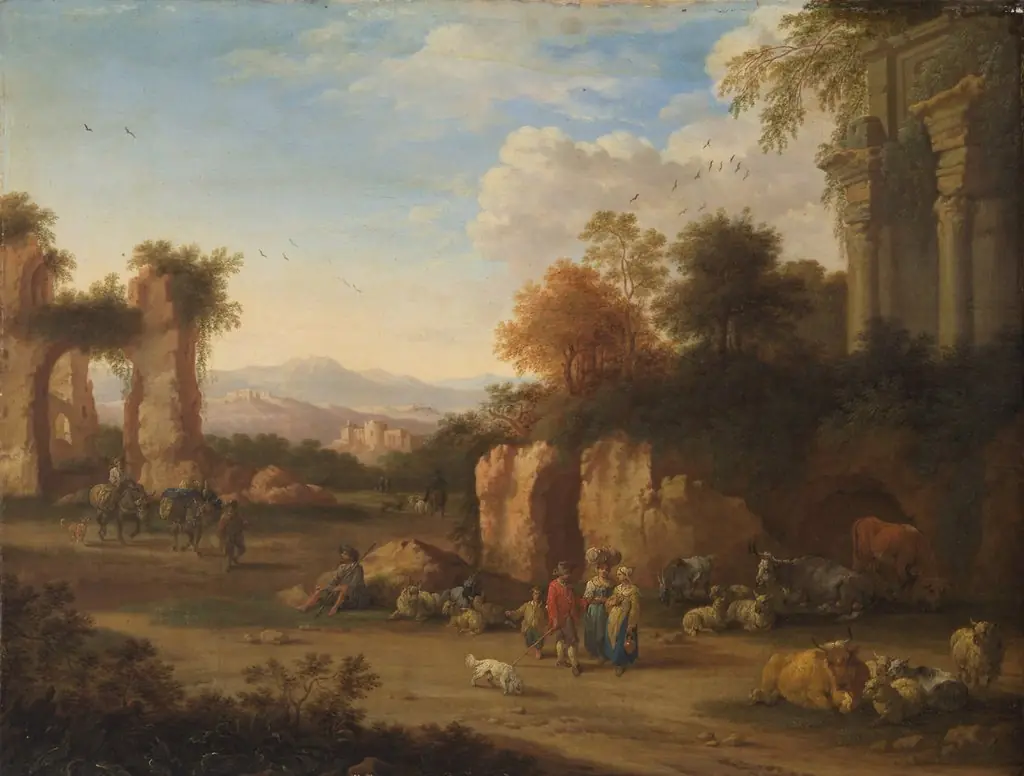
Roman landscape with the Palatine (left) and the parts of the Forum Romanum (right)
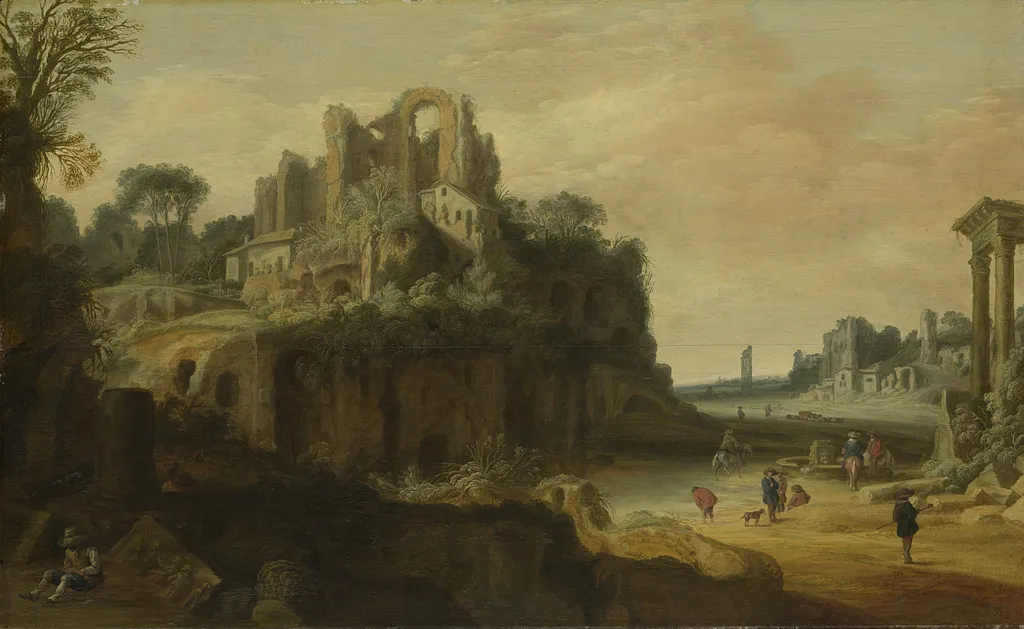
Roman landscape with the Palatine (left) and the parts of the Forum Romanum (right) is an oil painting by the Dutch Golden Age artist Pieter Anthonisz. van Groenewegen. It dates from 1650 and is held in the collection of the Munich Central Collecting Point. Around 1650 Dutch painter Pieter Anthonisz.
About this work
Subject & Meaning
The painting depicts a landscape view of ancient Rome, specifically featuring the Palatine Hill on the left side and sections of the Roman Forum on the right.
The painting depicts a landscape view of ancient Rome, specifically featuring the Palatine Hill on the left side and sections of the Roman Forum on the right. As a work within the landscape genre, the composition incorporates natural elements such as trees alongside these monumental archaeological ruins. The imagery serves as a topographical representation of the city's historic center, capturing the enduring presence of classical antiquity through the specific arrangement of its famous landmarks.
Technique & Style
Created in 1650, this landscape painting is executed in oil paint. The work is supported on both panel and canvas, presenting a scene that depicts the Roman Forum alongside trees. Measuring 56 cm in height and 90.5 cm in width, the piece is classified within the landscape genre.
The composition focuses on architectural ruins and natural elements, characteristic of the artist's approach to Roman subjects during this period.
History & Provenance
The oil painting titled Roman landscape with the Palatine (left) and the parts of the Forum Romanum (right) was created by Pieter Anthonisz. van Groenewegen in 1650. The work depicts the Roman Forum and trees, rendered on a support described in records as panel and canvas. Its ownership history traces a complex path through major institutions and collectors, beginning with the Kunsthandel P. de Boer.
The painting subsequently entered the Führermuseum before being processed by the Munich Central Collecting Point. Following this period, it was held by the Dienst Verspreide Rijkscollecties and the Stichting Nederlands Kunstbezit. The work is currently part of the collection at the Rijksmuseum. It has been featured in exhibitions regarding the Bentvueghels, a notorious art society active in Rome.
Overview
Around 1650 Dutch painter Pieter Anthonisz. van Groenewegen produced an oil on canvas that presents a panoramic view of ancient Rome. The composition balances the Palatine Hill on the left with the ruins of the Forum Romanum on the right, set against a gently hazy sky that recedes into the distance. The work is held in the collection of the Rijksmuseum.
Artist & collection
Artist
Pieter Anthonisz. van Groenewegen
Pieter Anthonisz. van Groenewegen (1590/1600–1658) was a Dutch Golden Age landscape painter. Groenewegen, who was born in Delft, primarily painted landscapes. He traveled to Italy and between ca. 1615-1623 he lived on…
- The Stoning of St. Stephen
 River landscape
 River Landscape
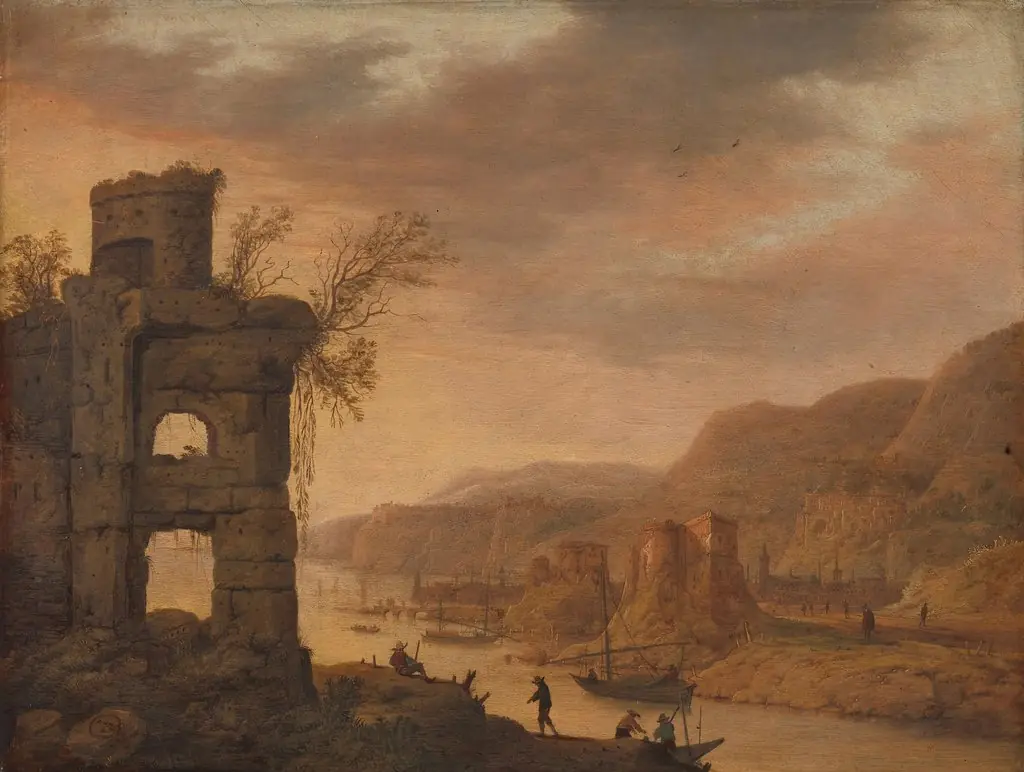 River landscape
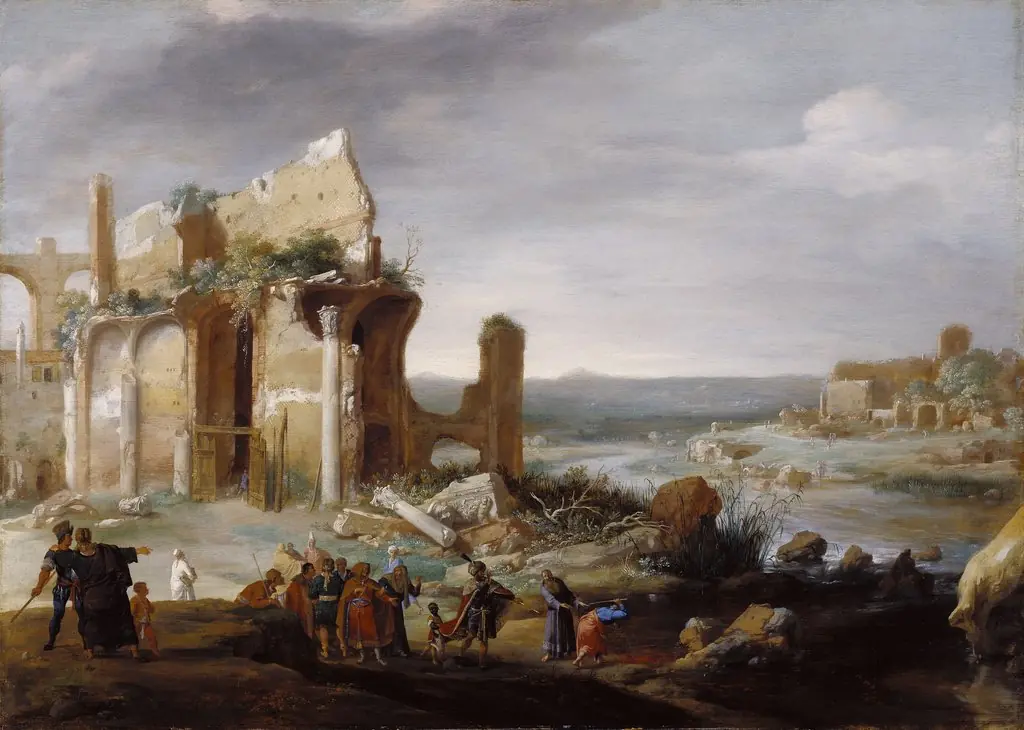 Moses and Aaron Changing the Rivers of Egypt to Blood
 Coast Landscape with the so-called Temple of Sibyl at Tivoli
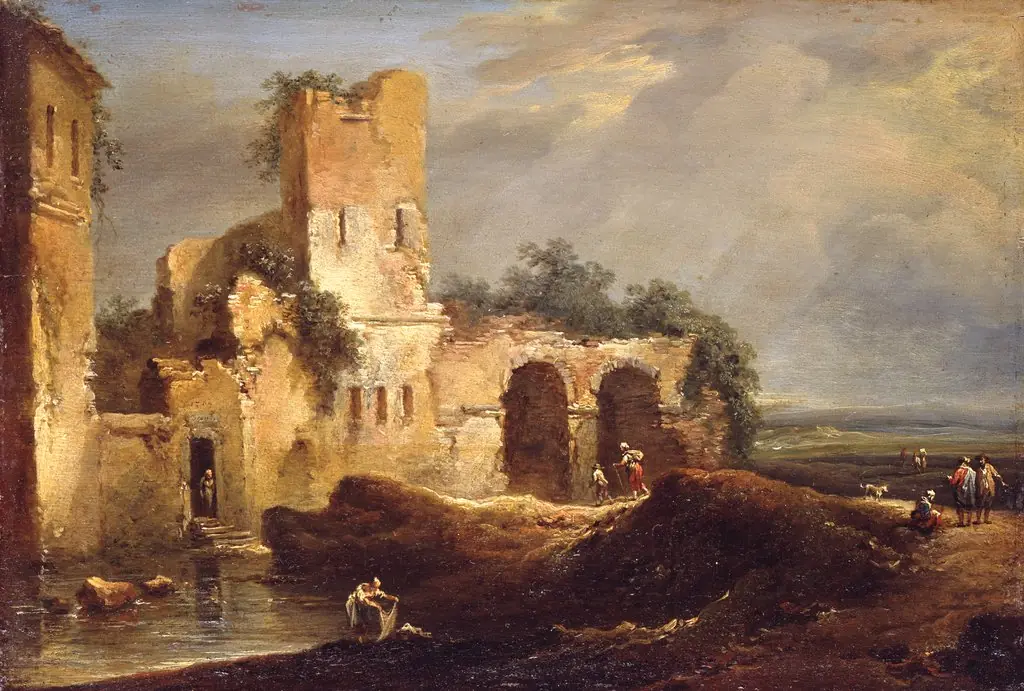 Landscape with a ruin at a stretch of water
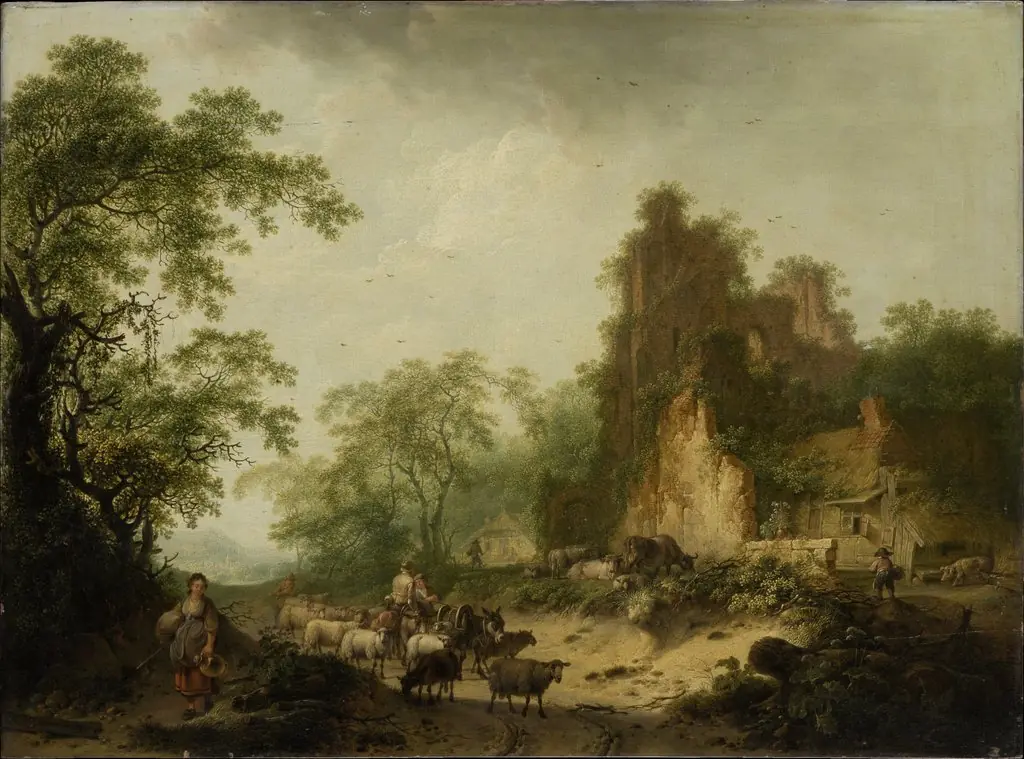 Landscape with Herd of Sheep in Front of a Peasant Hut in a Ruins
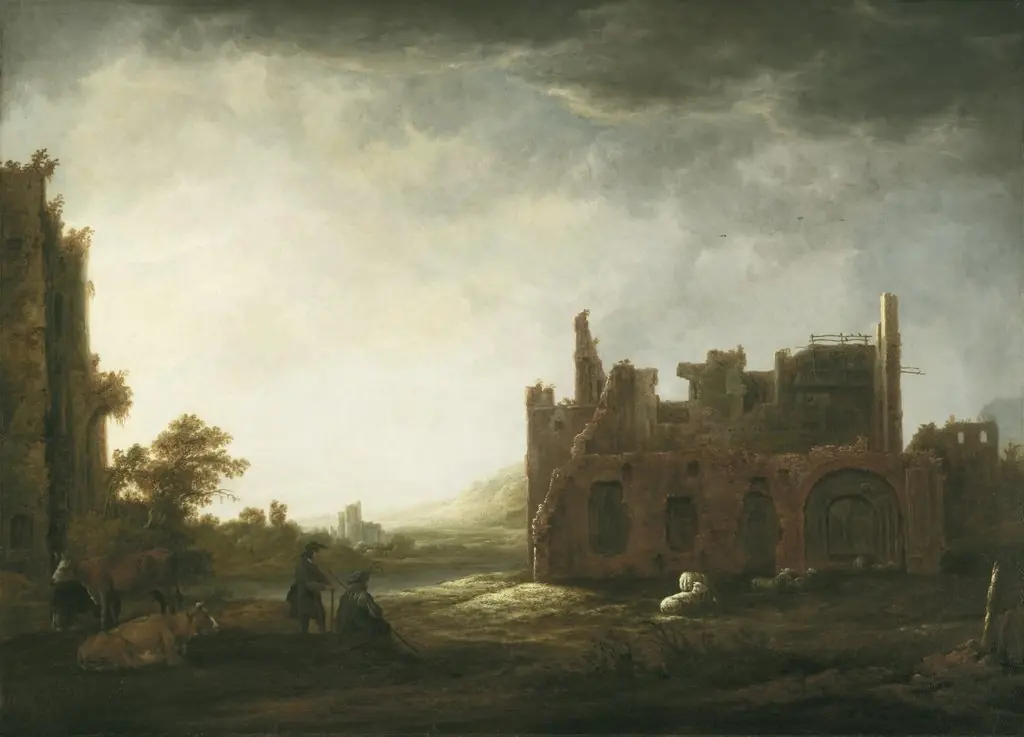 Landscape with the Ruins of Rijnsburg Abbey
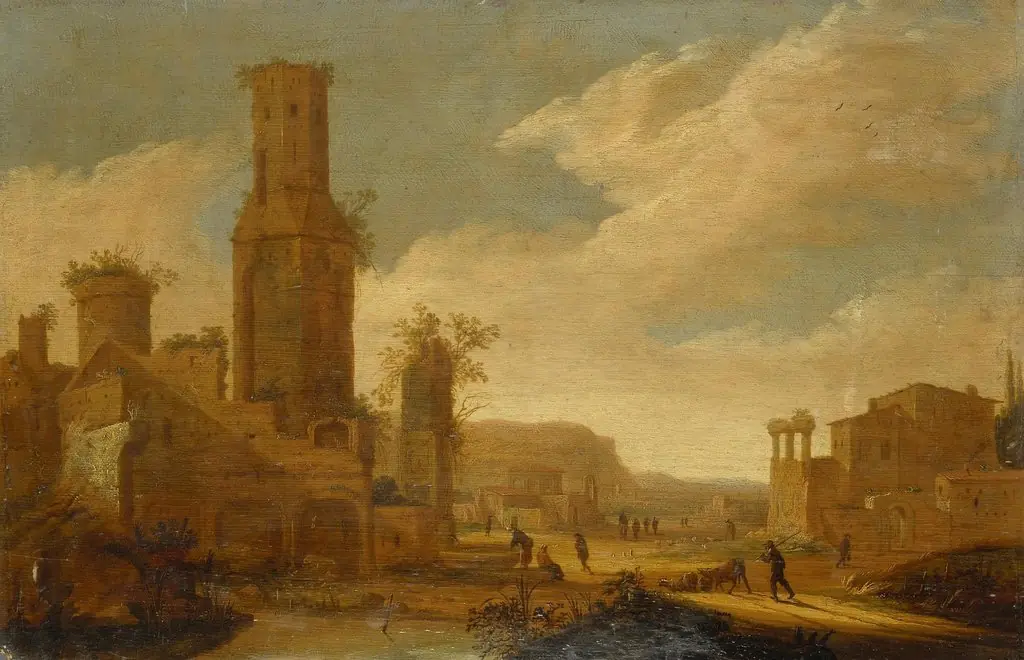 Landscape with Ruins
 Italian landscape with ancient ruins and peasants
 Roman Ruins Landscape