Artwork
The Dance of the Bride
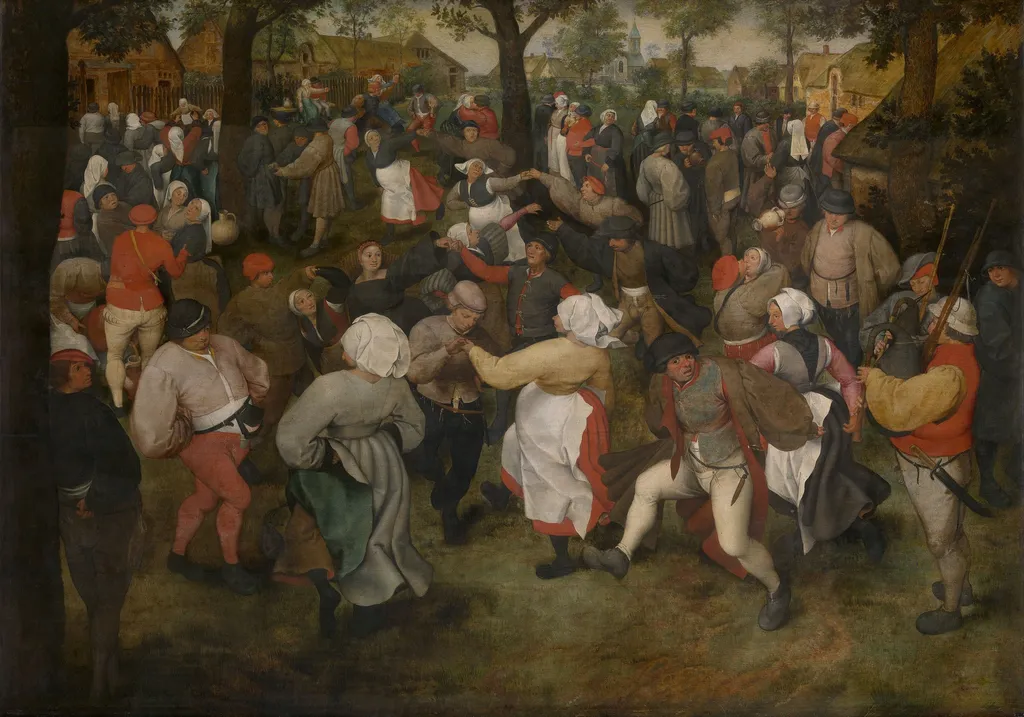
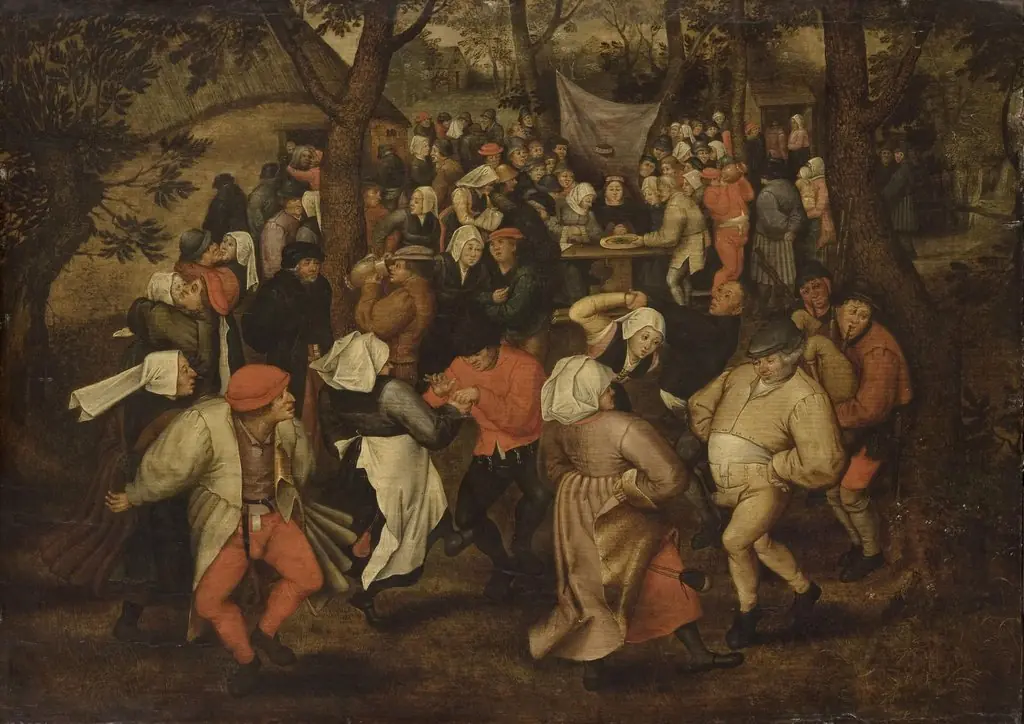
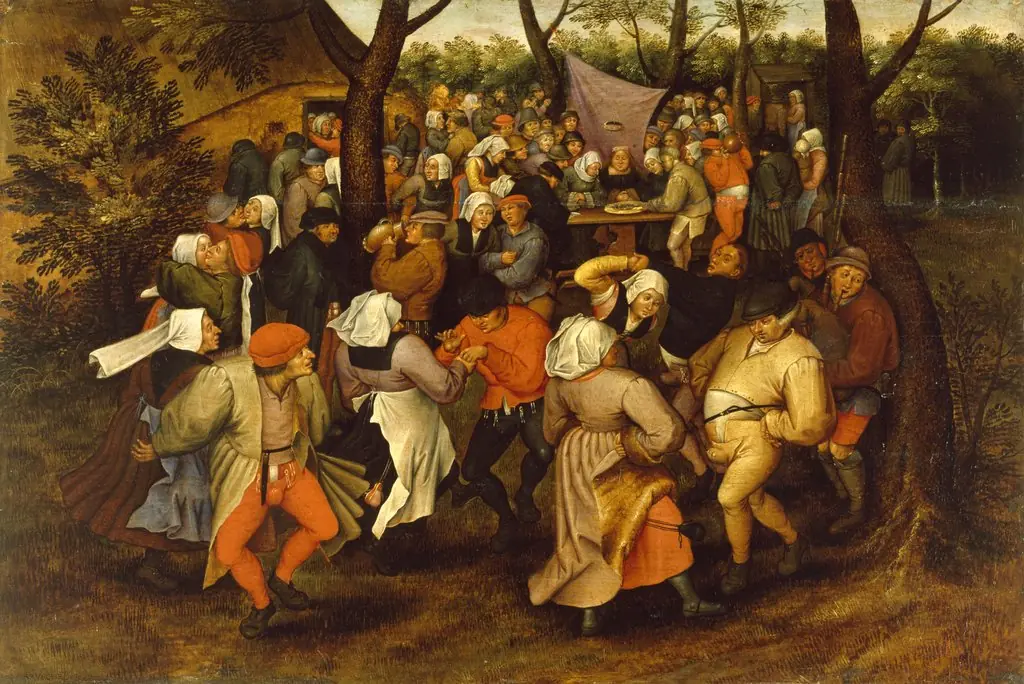
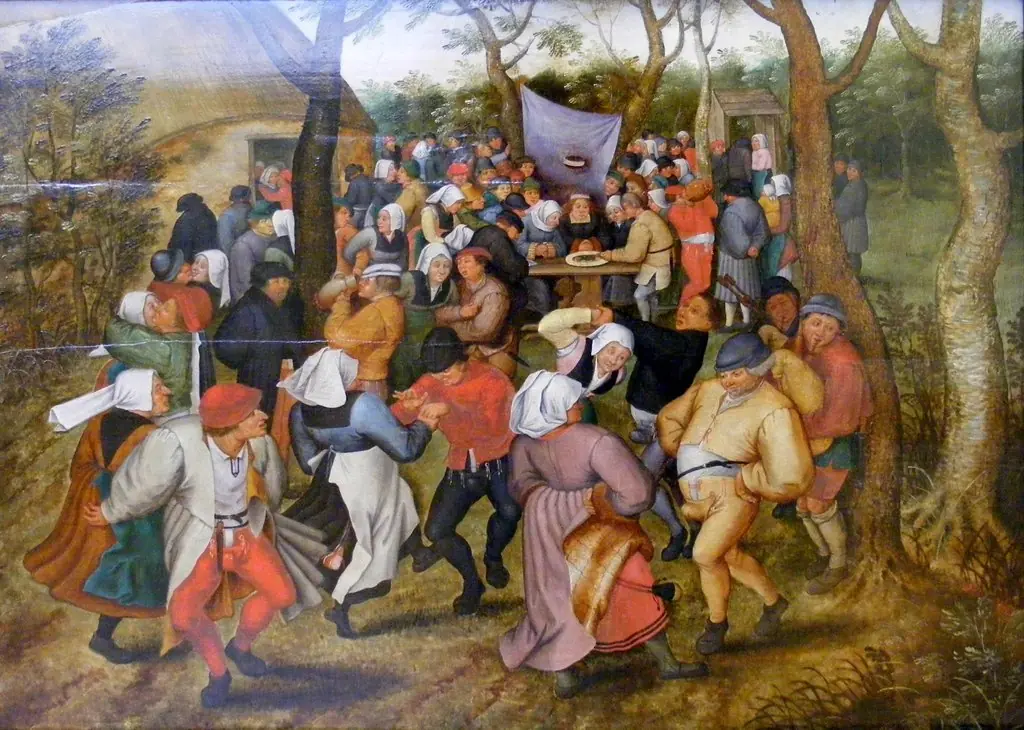
The Dance of the Bride is an oil painting by the Mannerist artist Pieter Brueghel I. It dates from 1550 and is held in the collection of the Royal Museum of Fine Arts Antwerp. Created circa 1550 by Pieter Bruegel the Elder, this oil painting captures a festive outdoor gathering.
About this work
Technique & Style
This intervention reflects both the work's vulnerability and the evolving understanding of its historical appearance.
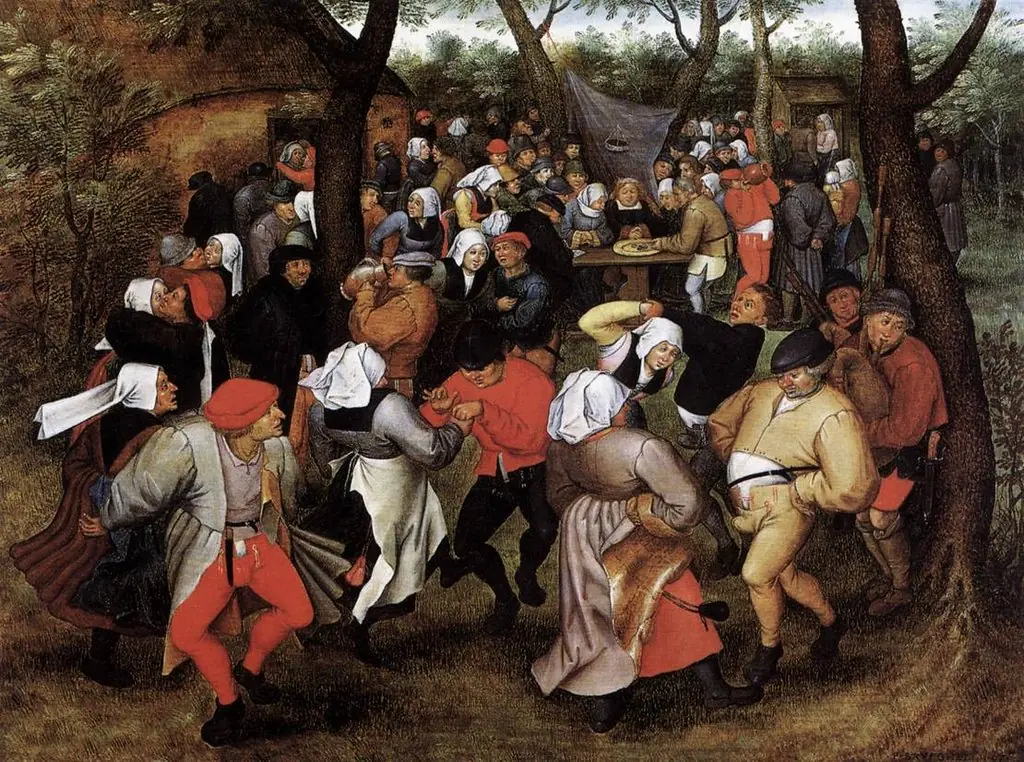
The technique, materials, medium, support, handling, condition, and formal/stylistic qualities of The Dance of the Bride are defined by its execution as an oil painting on wooden panel. According to the sources, the work is created with oil paint and executed on a panel support, consistent with the medium and material specifications from the original corpus and museum records. The composition employs a bird's-eye perspective and high horizon line, with figures arranged in a flowing, elliptical dance that emphasizes movement through color accents of red, white, and green.
The viewer's gaze is drawn across the panel in search of the central bride, depicted in a black dress with wind-swept hair, contributing to the painting's dynamic and disorienting spatial structure. Formal stylistic qualities include the use of vibrant color contrasts, a sense of controlled chaos in the figures' gestures, and a compositional rhythm that guides the eye through pairs of dancing peasants from background to foreground. The painting's condition has been altered over time, notably through 19th-century overpainting on the upper section, which added architectural elements and modified figures, likely by an early restorer unfamiliar with the original composition. This intervention reflects both the work's vulnerability and the evolving understanding of its historical appearance.
History & Provenance
The work is a sixteenth-century copy after Pieter Bruegel the Elder’s lost original, generally dated to around 1550. It entered the Royal Museum of Fine Arts Antwerp in 1929 after the museum purchased it at a Joseph Spiridon sale in Berlin. The panel measures 119.5 × 168.5 cm, slightly larger than the dimensions recorded elsewhere, indicating later framing or panel adjustments.
Technical examination suggests the Antwerp picture was painted shortly after Bruegel’s lost composition of 1566, with its brushwork and palette aligning with early copies rather than the hands of his sons. The top strip shows later overpainting, likely added in the nineteenth century when an earlier restorer, lacking knowledge of the original, reconstructed a heavily damaged upper section.
The Dance of the Bride is held by the Royal Museum of Fine Arts Antwerp (Koninklijk Museum voor Schone Kunsten Antwerpen), which acquired the panel in 1929 at a Joseph Spiridon auction in Berlin. The work is catalogued as an anonymous 16th-century copy after Pieter Brueghel the Elder's original Peasant Wedding Dance of 1566, and is recorded in the museum's published catalogues of Old Masters by Gilberte Gepts, appearing as entry no. 23 in the 1959 edition and as no. 17 in the 1969 edition. It is part of the collection of the Royal Museum of Fine Arts Antwerp within the Vlaamse Kunstcollectie.
Context
The Dance of the Bride is regarded as an anonymous sixteenth-century copy after Pieter Brueghel the Elder's outdoor wedding dance composition of 1566, and its brushwork and colouring indicate it was produced soon after the original rather than by one of Brueghel's sons. Max J. Friedländer judged it a faithful old copy that conveys a true impression of Brueghel's talent, widely regarded as one of the greatest figures of Western European painting. The work belongs to a broader sixteenth-century shift in peasant imagery, in which Brueghel's festive, sinful, and lazy peasants, dancing wildly in the open air with limbs flung outward, stood in deliberate contrast to contemporary bourgeois morality, which prized restraint, piety, and industriousness.
Wealthy burghers nonetheless eagerly commissioned such panels, which depicted a world they felt needed to be warned against. The Antwerp panel was acquired by the Royal Museum of Fine Arts Antwerp in 1929 at a Joseph Spiridon auction in Berlin.
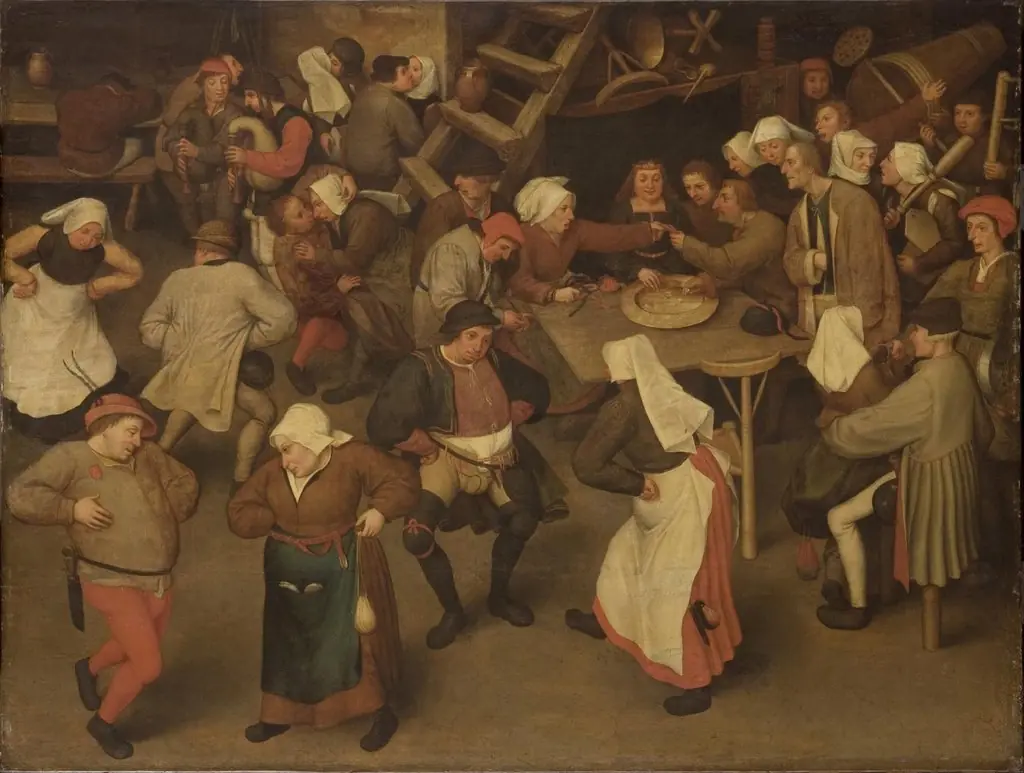
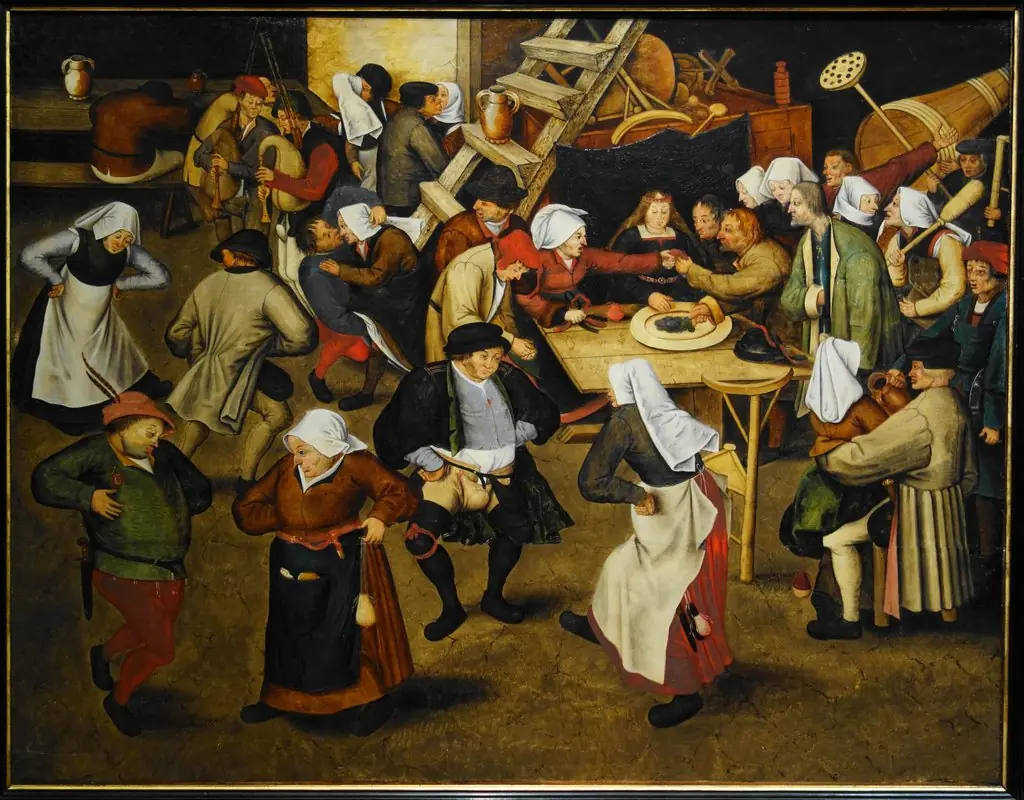
Related copies have been attributed to Pieter Brueghel the Younger, including a version in the Gemäldegalerie der Staatlichen Museen Preussischer Kulturbesitz (assigned by R. Van Bastelaer and Hulin de Loo) and a fragment in Brussels private ownership (assigned by G. Marlier). The painting was catalogued by Gilberte Gepts in the 1959 and 1969 editions of Musea van België.
Legacy
De dans der bruid heeft een duidelijke invloed uitgeoefend op de ontwikkeling van het genre van boerenfeesten in de Europese schilderkunst, met name door de vrije en ongebreideld uitgedrukte beweging van figuren die in contrast staan tot de formele stijl van de hedendaagse burgerij. Het werk wordt als een vroeg voorbeeld van een realistische voorstelling van arbeiders en hun leefstijl gezien, wat bijdroeg aan een bredere waardering van alledaagse scènes in de kunstgeschiedenis. De kopieën en toeschrijvingen die in de 20e eeuw werden gemaakt, getuigen van een toenemend belang in het oeuvre van Pieter Bruegel de Oude en zijn invloed op latere generaties schilders.
Overview
Created circa 1550 by Pieter Bruegel the Elder, this oil painting captures a festive outdoor gathering. The composition centers on a circle of dancers surrounding a bagpiper, with a bride and bridegroom prominently featured among the revelers. The work is part of the Royal Museum of Fine Arts Antwerp’s collection.
Subject & Meaning
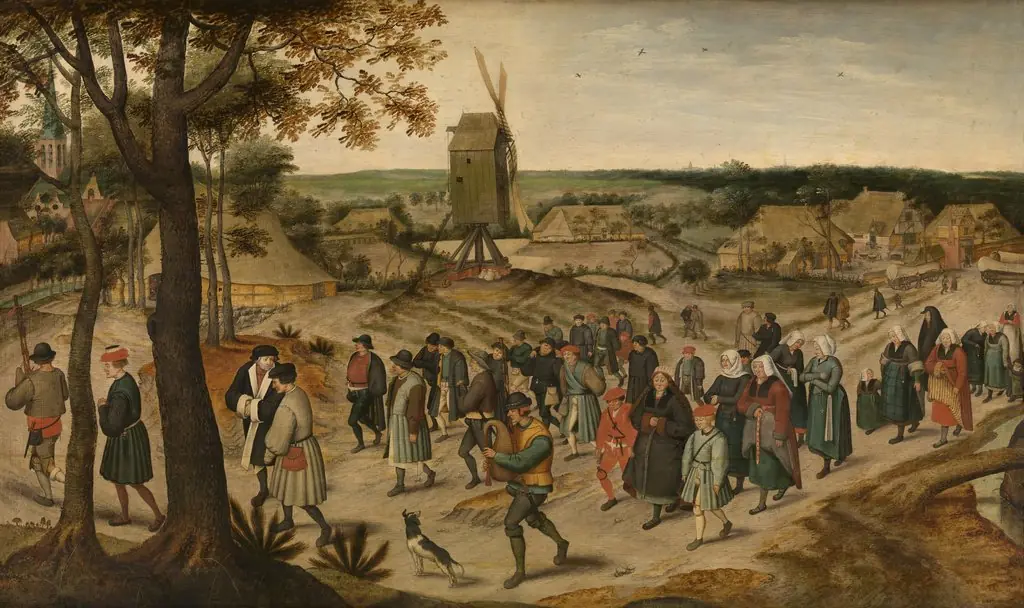
The scene portrays a communal celebration, likely a wedding procession, where participants in traditional attire engage in lively dance. The inclusion of a bagpipe player underscores the musical accompaniment typical of rural festivities, emphasizing themes of joy and social cohesion.
Own this work as a print
Artist & collection

Artist
Pieter Bruegel (also Brueghel or Breughel) the Elder ( BROY-gəl, US also BROO-gəl; Dutch: ; c.