Artwork
Children's Games
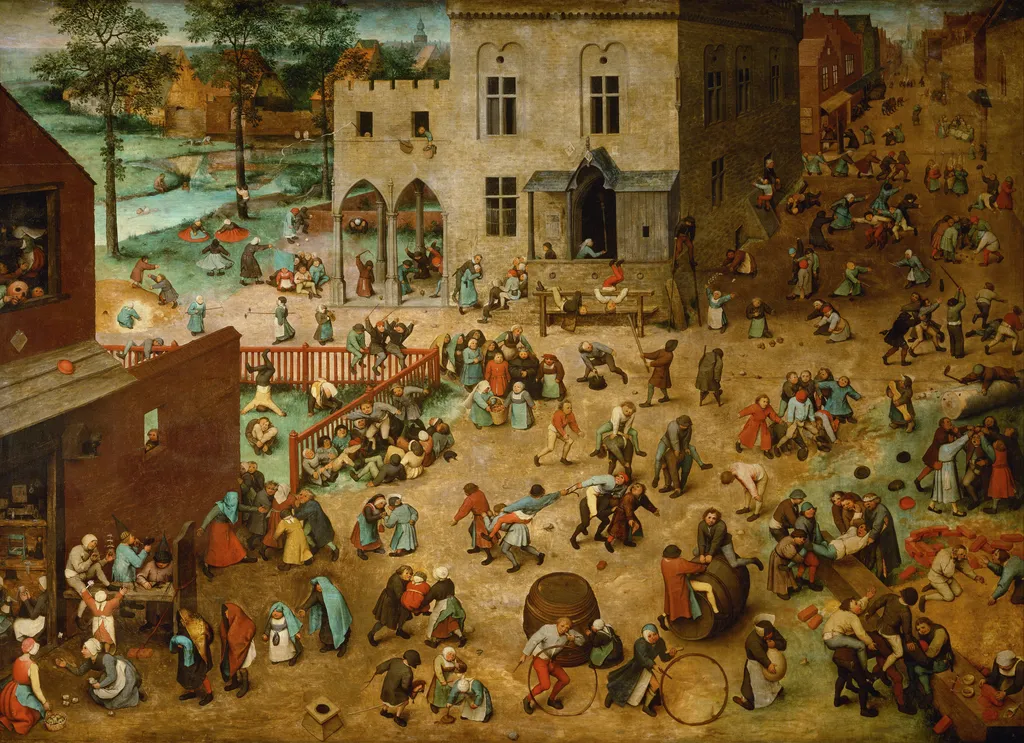
Children's Games is an oil painting by the Northern Renaissance artist Pieter Brueghel I. It dates from 1560 and is held in the collection of the Kunsthistorisches Museum.
About this work
Subject & Meaning
While functioning as a detailed ethnographic record of 16th-century play, the work carries a deeper moral allegory.
Pieter Bruegel the Elder's 1560 painting depicts a crowded town square where approximately 230 children engage in over 80 distinct games, including hoop rolling, wrestling, blind man's bluff, and mock tournaments. While functioning as a detailed ethnographic record of 16th-century play, the work carries a deeper moral allegory. The children's intense absorption in their activities mirrors the seriousness with which adults pursue their own affairs, suggesting that in the eyes of God, adult endeavors are merely childish games.
This interpretation aligns with contemporary literature comparing humanity to children lost in foolish pursuits. The depiction of children commandeering a major civic building implies a critique of adult governance, while specific details like shooting at an owl or wearing a blue cloak hint at themes of lost wisdom and self-deception.
Technique & Style
The work is executed in oil on a wooden panel, measuring approximately 118 cm in height by 161 cm in width. Bruegel painted it in 1560, using the panel support typical of Northern Renaissance easel painting. The composition is organized from a slightly elevated viewpoint, with a strong diagonal axis that leads the eye from the lower left toward a vanishing point near the upper right, creating depth through overlapping figures and architectural framing.
The crowded scene juxtaposes numerous children engaged in identified games with a monumental civic building, emphasizing spatial hierarchy and narrative clarity. Formal qualities include meticulous detail, balanced distribution of figures, and a muted palette that heightens the moralizing tone, while the handling of light and shadow subtly models the forms.
History & Provenance
The painting Children's Games was executed in 1560 as an oil-on-panel work by Pieter Bruegel the Elder. It is first recorded in Karel van Mander's 1604 Schilder-boeck, where it is described as "van allerley spelen der kinderen." According to van Mander, the piece entered the Habsburg collection in 1594 when it was acquired by Archduke Ernest of Austria.
After remaining in the imperial holdings, it eventually became part of the Kunsthistorisches Museum in Vienna, where it is displayed today. Van Mander also suggested that Bruegel envisaged the work as the opening panel of a projected series on the Ages of Man, representing Youth, though no further paintings from such a series are known.
Context
Painted in 1560, Children's Games belongs to a cluster of densely populated Flemish genre compositions Bruegel produced that same year, sharing its large format with Netherlandish Proverbs and The Fight Between Carnival and Lent. The painting was first documented by Karel van Mander in his 1604 Schilder-boeck and entered the collection of Archduke Ernest of Austria in 1594. It is now displayed in the Kunsthistorisches Museum in Vienna alongside other Bruegel masterpieces.
Scholars have debated whether the work initiated a planned Ages of Man series, with Children's Games representing Youth, though no related paintings are recorded. The painting's moral dimension has been linked to a 1530 anonymous Flemish poem published by Jan van Doesborch. Subsequent scholarship includes Victor de Meyere's 1941 identification of games, Walter S. Gibson's 1977 monograph, Sandra Hindman's 1981 Art Bulletin study, Edward Snow's 1987 analysis, and Amy Orrock's 2012 examination of humanist educational contexts.
Legacy
Children's Games has exerted a lasting influence as both an ethnographic record and a moral mirror. Originally acquired by Archduke Ernest of Austria in 1594 and described by Karel van Mander in 1604, its modern legacy extends into pedagogy. Educational theorists utilize the composition to revive forgotten historical games, integrating the work into interdisciplinary school projects spanning physical education, language arts, and visual arts.
Scholars interpret the painting not merely as a catalog of over eighty activities, but as a composition designed to provoke learned discourse among adult viewers regarding the utility of their own time. Its status as a unique, comprehensive depiction of sixteenth-century youth culture remains unparalleled in art history.
Overview
Pieter Bruegel the Elder's 1560 oil-on-panel, Children's Games, captures a bustling scene of youthful activity. This Flemish Renaissance work, now housed in the Kunsthistorisches Museum in Vienna, presents a panoramic view of a town square teeming with children. The painting serves as a detailed visual catalog of the diverse recreational pursuits common among youngsters of the era, depicted with vibrant energy and intricate detail across the expansive composition.
Own this work as a print
Artist & collection

Artist
Pieter Bruegel (also Brueghel or Breughel) the Elder ( BROY-gəl, US also BROO-gəl; Dutch: ; c.

- Kermis of Saint George
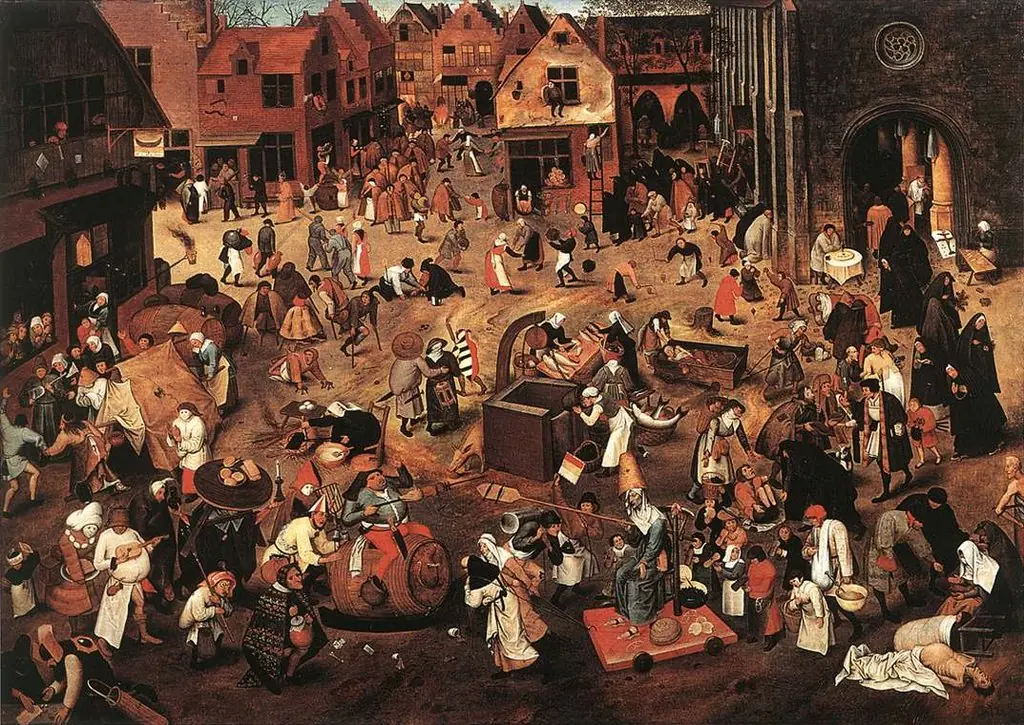 Battle of Carnival and Lent
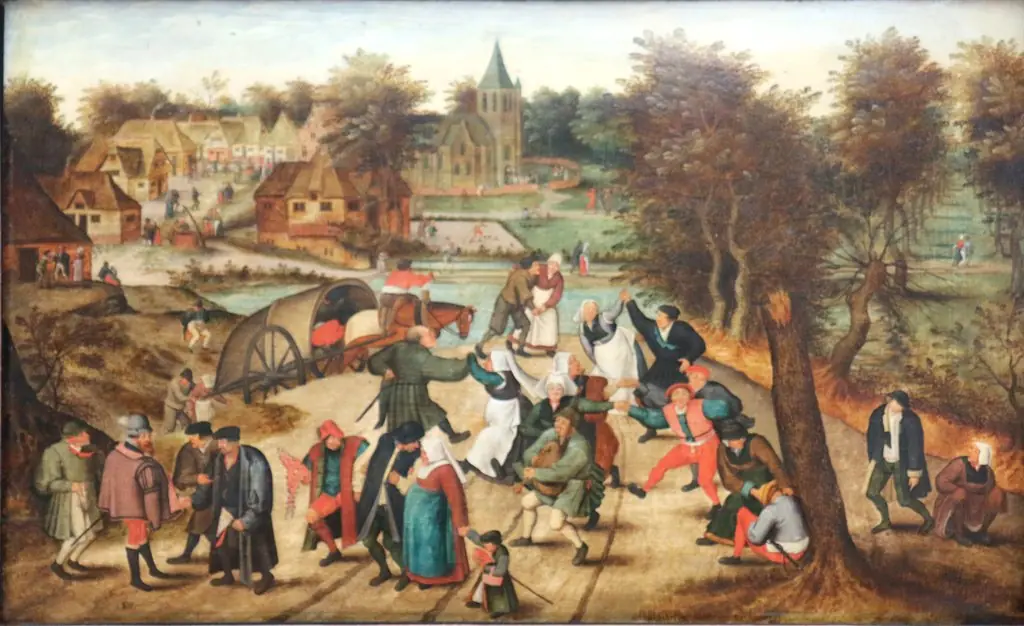 Back from the pilgrimage
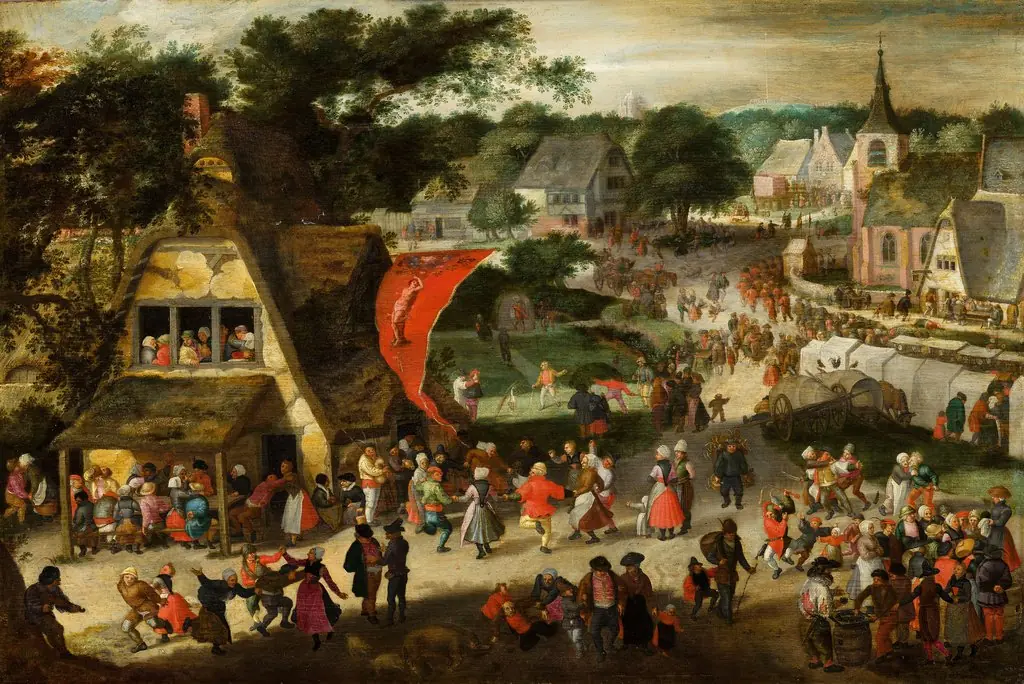 St. Sebastian fair in a Flemish village
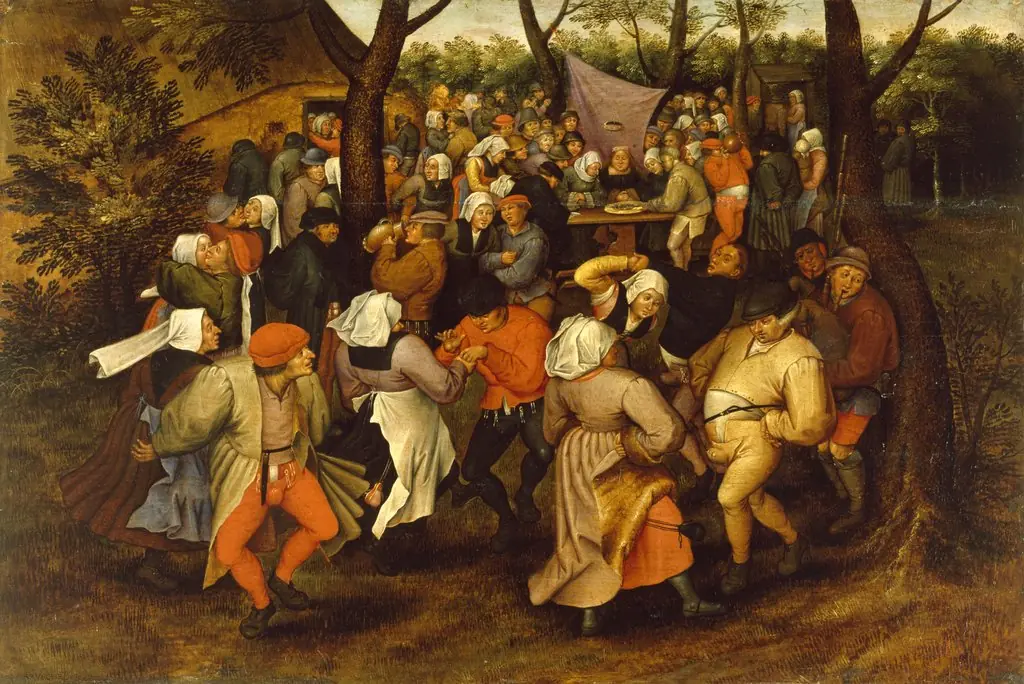 Peasant Wedding Dance
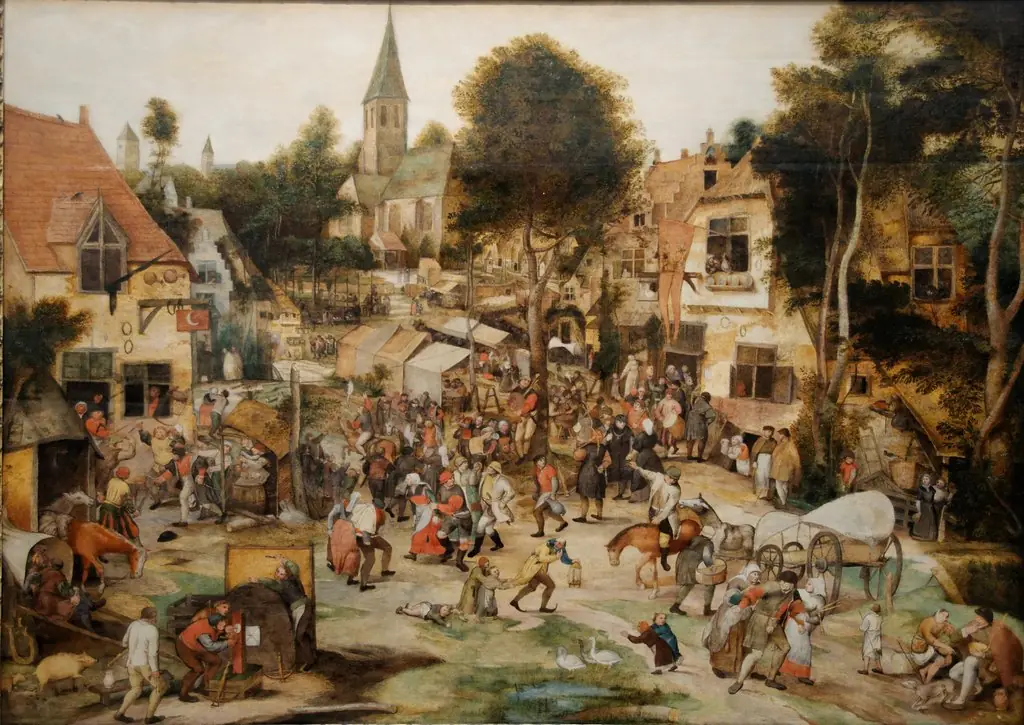 Kermis
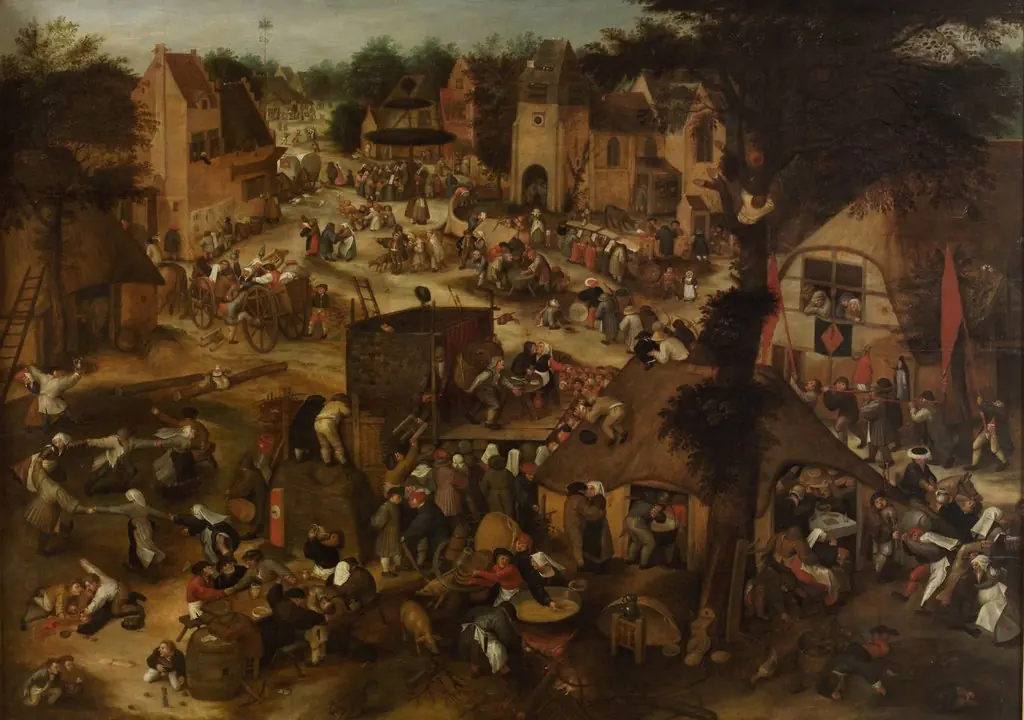 Performance of the farce 'Een Cluyte van Plaeyerwater' (A Clod from Plaeyerwater) at a Flemish Kermis
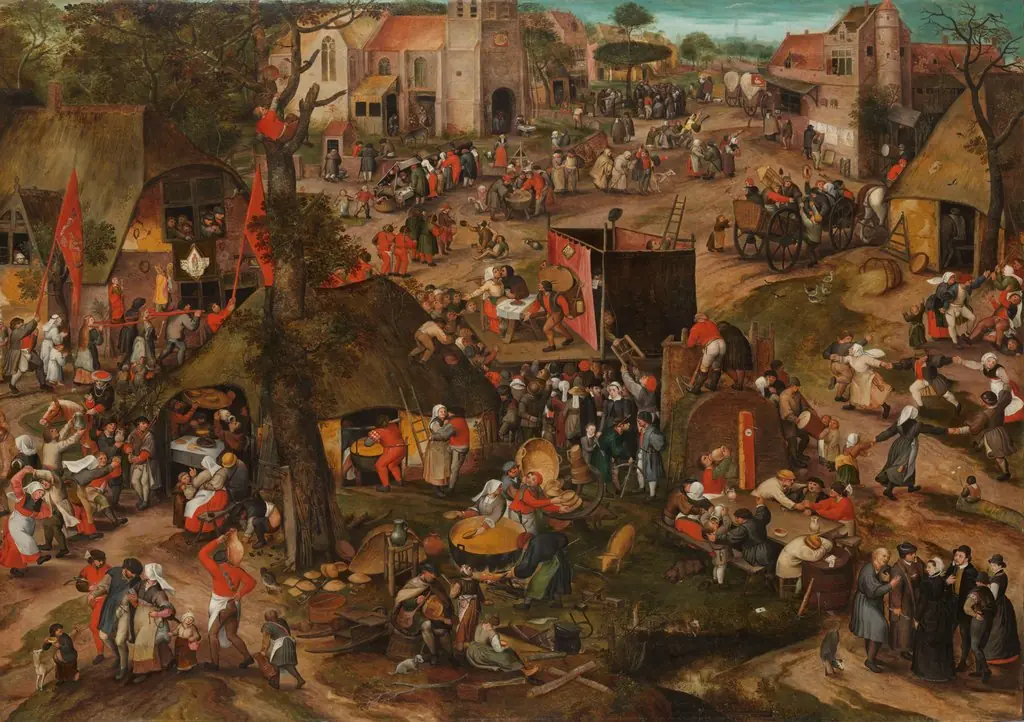 A Performance of the Farce 'Een Cluyte van Plaeyerwater' (A Clod from Plaeyerwater) at a Flemish Kermis
 A Flemish Kermis with a Performance of the Farce ‘Een cluyte van Plaeyerwater’
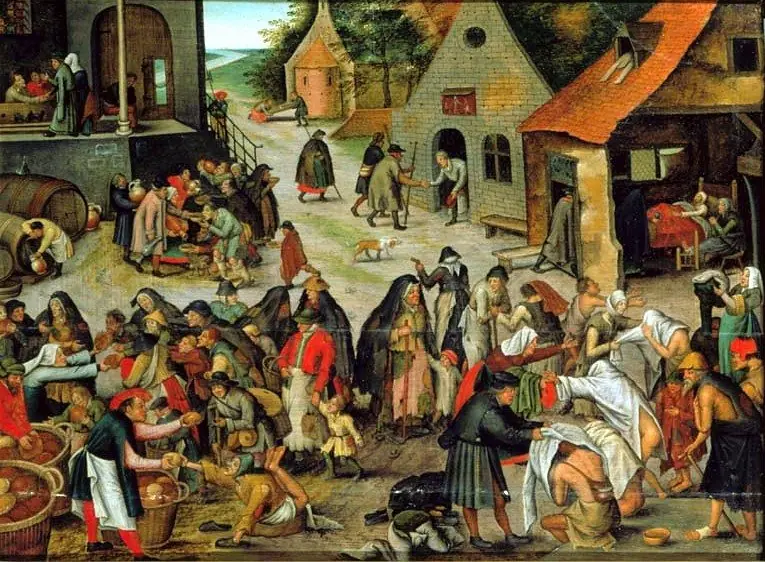 The Seven Acts of Mercy by Pieter Brueghel the Younger
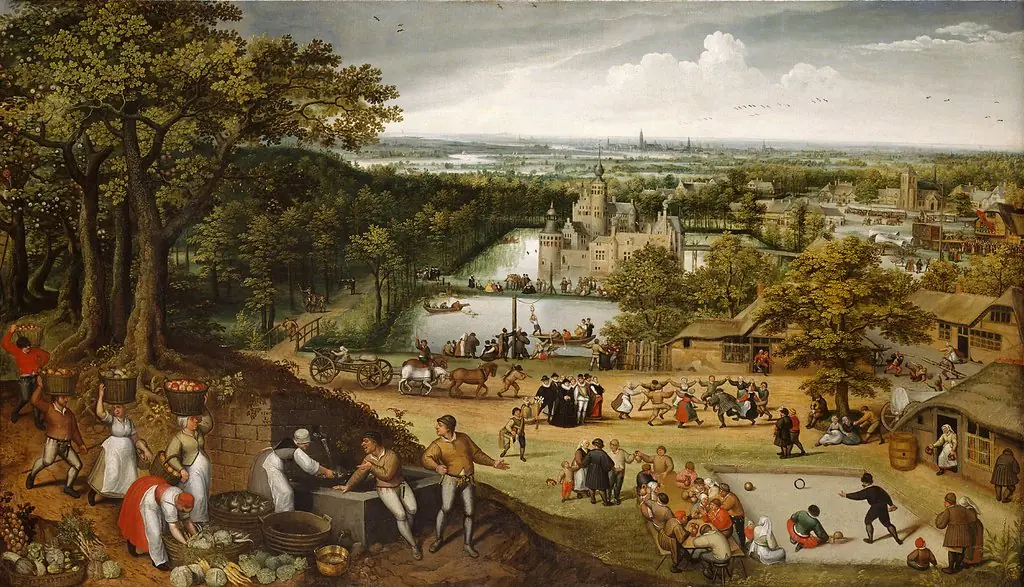 Herbstlandschaft (September)