Artwork
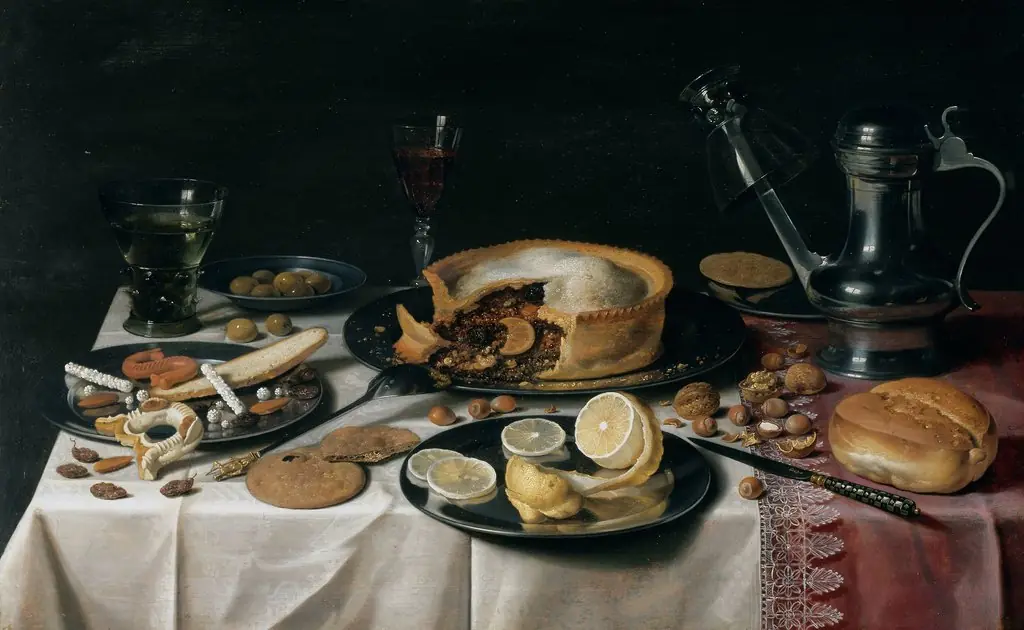
Still Life with a Turkey Pie
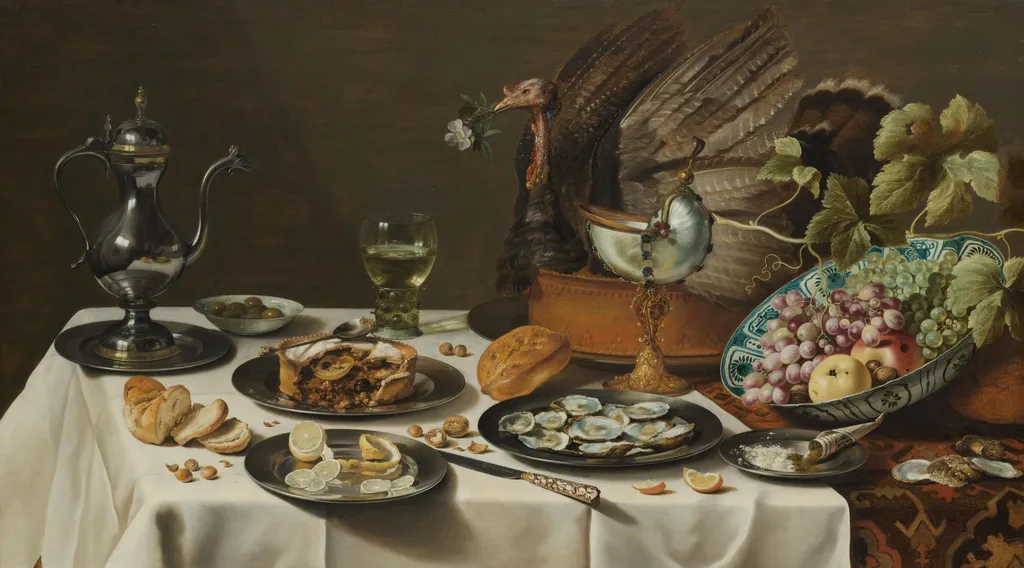
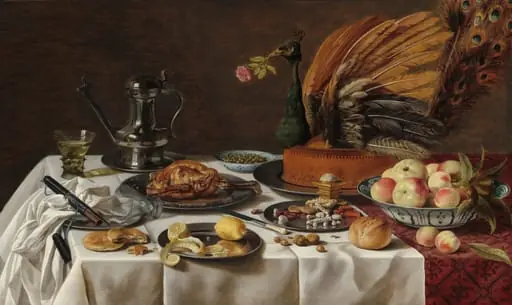
Still Life with a Turkey Pie is an unspecified painting by the Dutch Golden Age artist Pieter Claesz. It dates from 1627 and is held in the collection of the Rijksmuseum.
About this work
Subject & Meaning
, glazed ceramics, metallic vessels), and compositional depth through overlapping objects underscore the painting's technical innovation.
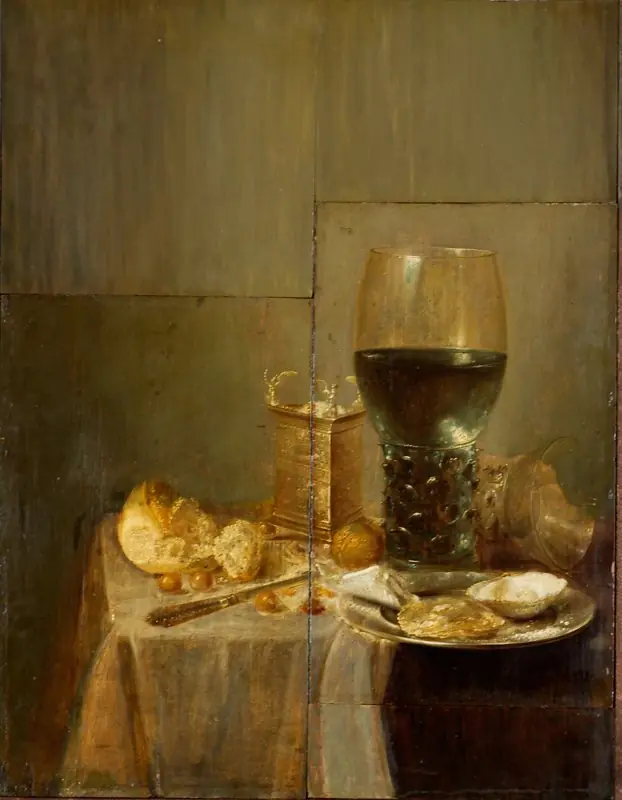
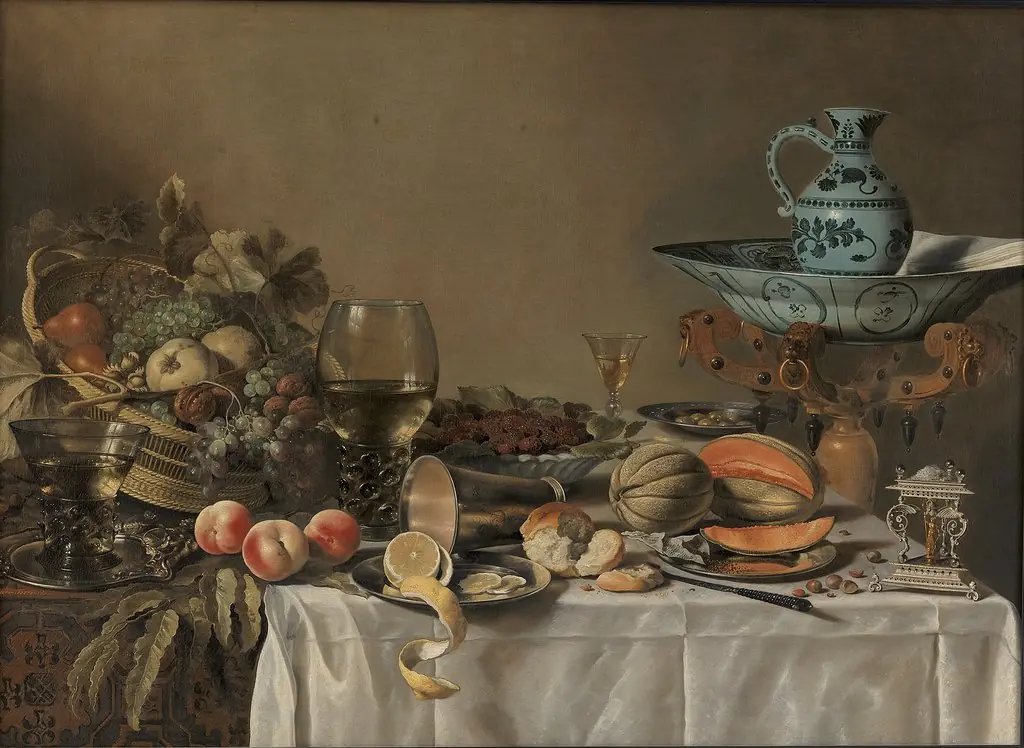
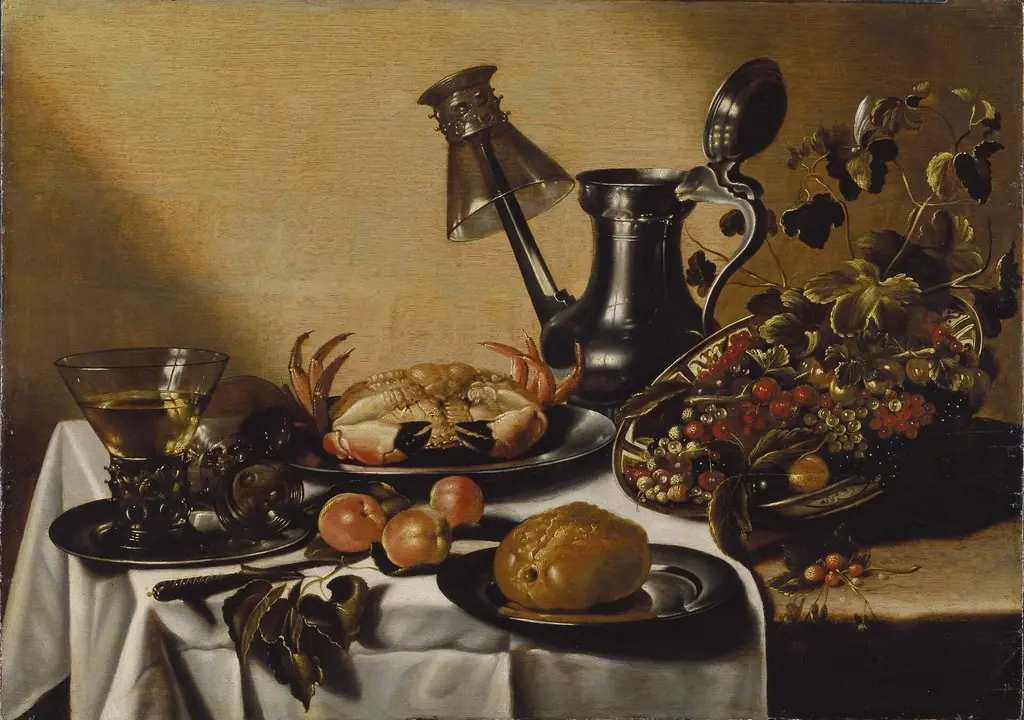
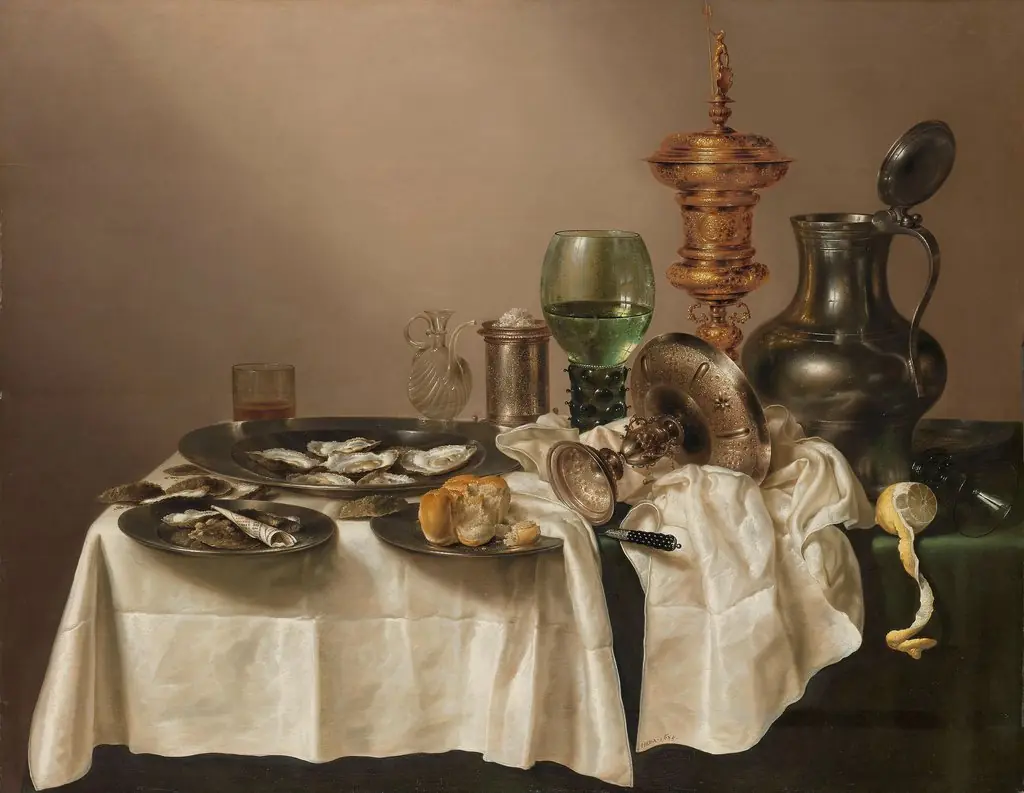
Pieter Claesz's Still Life with a Turkey Pie (1627) depicts a lavish banquet scene centered on a richly detailed turkey pie, a symbol of abundance and conviviality in Dutch Golden Age still lifes. The work belongs to the 'banketgens' subgenre, characterized by fully laden tables representing festive meals, distinct from the simpler 'ontbijtgens' (breakfast) or 'toebackjes' (snack) types. Claesz employs vanitas motifs, such as subtle hints of transience through lighting and object placement, within this celebratory context, reflecting the era's tension between material pleasure and moral reflection. His signature use of subdued palettes, masterful light on textured surfaces (e.g., glazed ceramics, metallic vessels), and compositional depth through overlapping objects underscore the painting's technical innovation. The turkey pie itself, a prized imported dish, signifies wealth and hospitality, while the painting's provenance includes exhibitions at the National Gallery of Art (2005), Frans Hals Museum (2004-2005), and Kunsthaus Zürich (2005), cementing its place in Claesz's legacy as a master of Haarlem still life.
Context
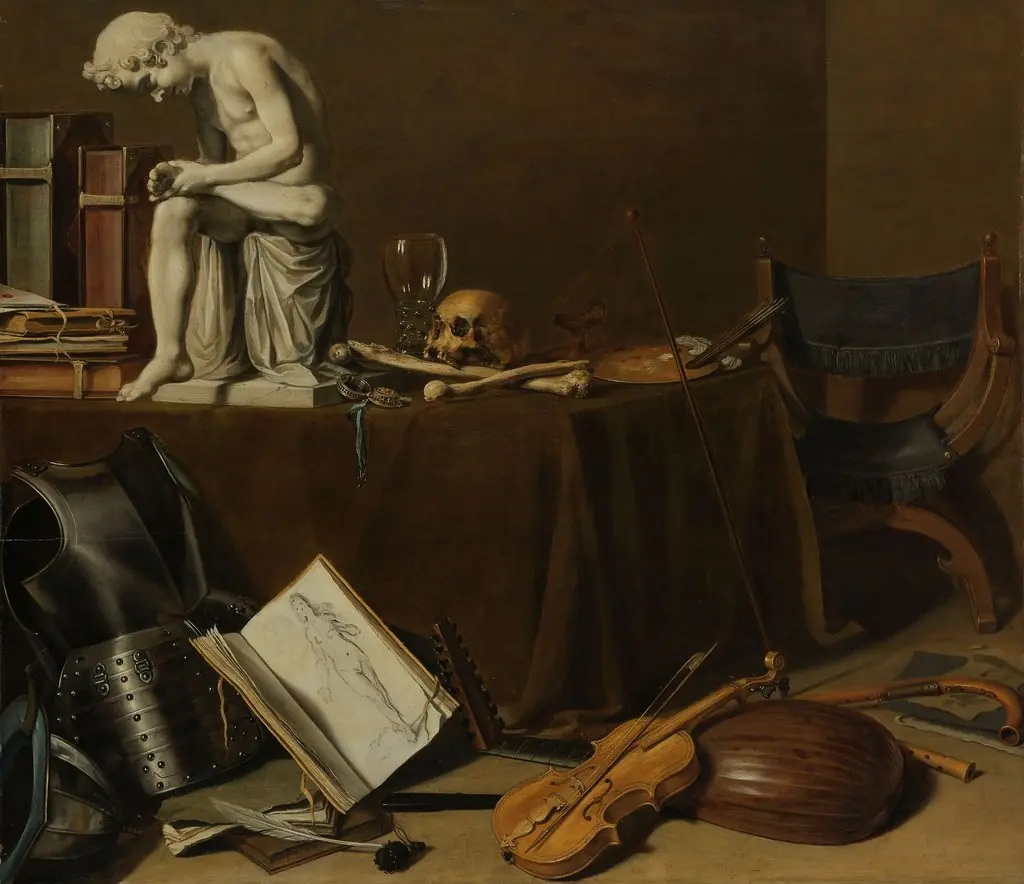
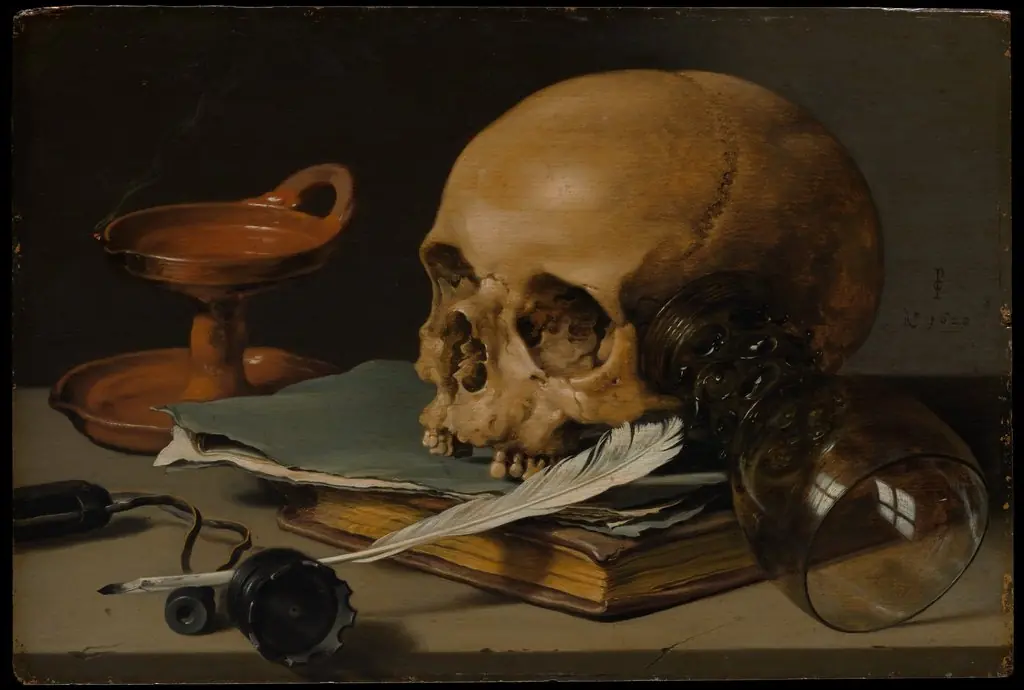
Pieter Claesz is recognized as a leading figure of the Dutch Golden Age and a primary exponent of the Haarlem still life tradition. Working alongside Willem Claeszoon Heda, he helped establish a distinguished school characterized by subdued, virtually monochromatic palettes and a masterful handling of light and texture. His compositions, often categorized as 'ontbijt' or 'banketje,' frequently incorporate vanitas elements such as skulls and extinguished candles to remind viewers of human mortality. Contemporary recognition of his innovative approach appeared as early as 1628 when Samuel Ampzing honored him in a poem dedicated to Haarlem. Art historical scholarship notes his evolution from rigid diagonal arrangements to more complex overlapping forms that create spatial depth. His influence extended to his pupils, including Evert van Aelst and his own son, Nicolaes Berchem, cementing his status as a foundational master of 17th-century Dutch still life.
Legacy
Pieter Claesz's Still Life with a Turkey Pie helped establish the Haarlem school of breakfast and banquet still lifes, influencing later Dutch painters through his innovations in composition, light, and vanitas symbolism. His works were widely collected and exhibited, including at the National Gallery of Art in 2005, and his legacy persists in the tradition of Dutch Golden Age still life painting. The painting is part of a broader body of work that shaped 17th-century Dutch art, with his techniques later echoed by artists such as Willem Claesz Heda. His influence is documented in major exhibitions and scholarly catalogues, including those from the Kunsthaus Zürich and National Gallery of Art.
Artist & collection