Artwork
Portrait of Dirck Wilre with a Servant
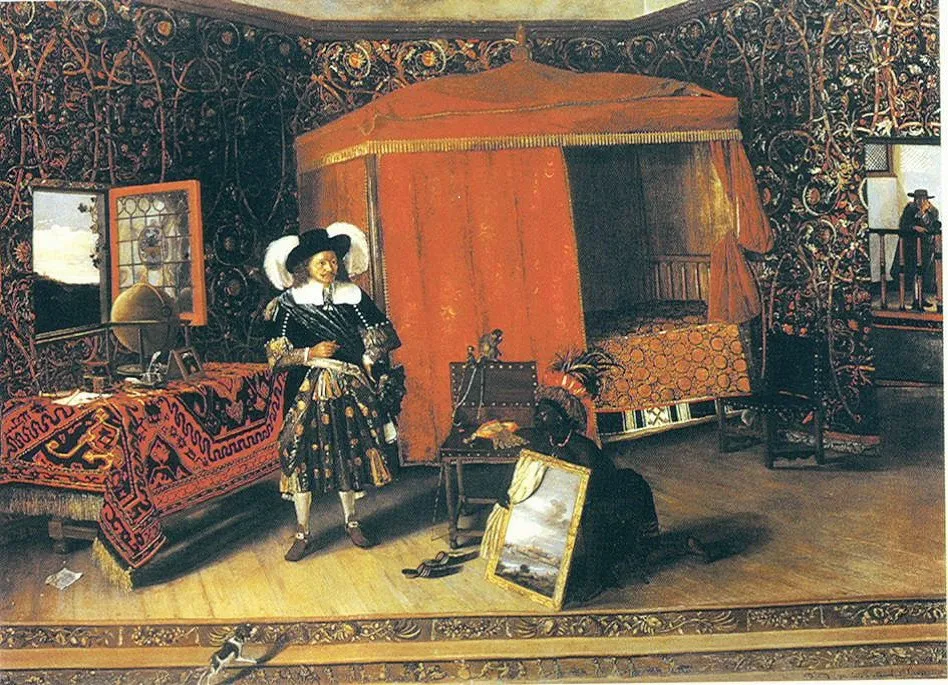
Portrait of Dirck Wilre with a Servant is an oil painting by the Dutch Golden Age artist Peter Candid. It is held in the collection of the Rijksmuseum.
About this work
Technique & Style
The work measures 103 cm in height and 141 cm in width, presenting a substantial scale for a portrait of this era.
Created in 1669 by Pieter de Wit, the Portrait of Dirck Wilre with a Servant is executed in oil paint on canvas. The work measures 103 cm in height and 141 cm in width, presenting a substantial scale for a portrait of this era. As an oil painting, the medium allows for the detailed rendering characteristic of the genre, capturing the figures with the material richness typical of 17th-century Dutch portraiture. The piece is currently held in the collection of the Rijksmuseum.
History & Provenance
The painting titled Portrait of Dirck Wilre with a Servant was created in 1669 by the artist Pieter de Wit. Executed in oil paint on canvas, the work measures 103 cm in height and 141 cm in width. The piece is classified as a portrait and currently resides in the collection of the Rijksmuseum.
The painting Portrait of Dirck Wilre with a Servant by Pieter de Wit is held in the collection of the Rijksmuseum in Amsterdam. Created in 1669, the work is executed in oil on canvas and measures 103 cm in height by 141 cm in width. The provided sources do not contain a specific inventory or accession number for the piece, nor do they list any past or current exhibition history.
Overview
The Portrait of Dirck Wilre with a Servant is a 1669 oil painting by Pieter de Wit, also known as Peter Candid, a Flemish artist associated with the Mannerist style.
Subject & Meaning
The painting depicts Dirck Wilre, a seated figure, accompanied by a kneeling servant in a lavishly decorated interior, featuring a red canopy bed, ornate wood carvings, and various luxury items, suggesting Wilre's wealth and status.
Artist & collection
Artist
Peter de Witte, known in Italy as Pietro Candido and in Bavaria as Peter Candid (c.

 The Annunciation
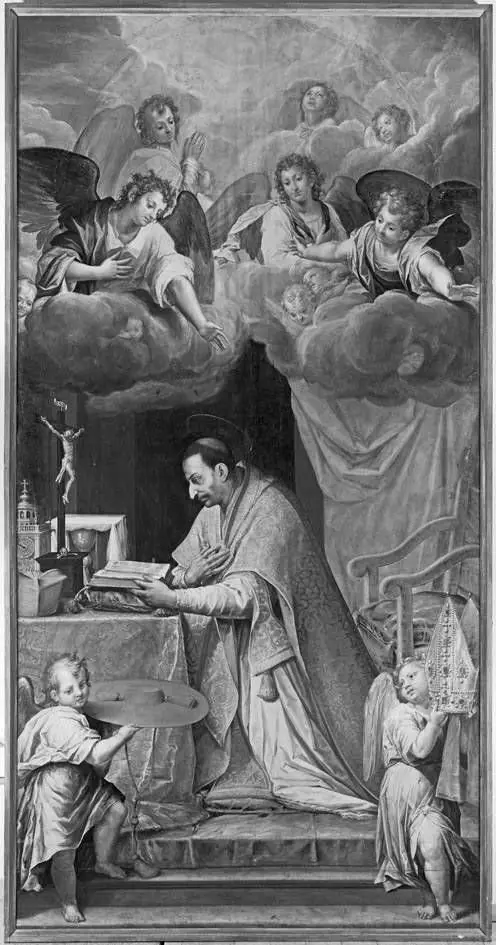 Der hl. Karl Borromäus im Gebet
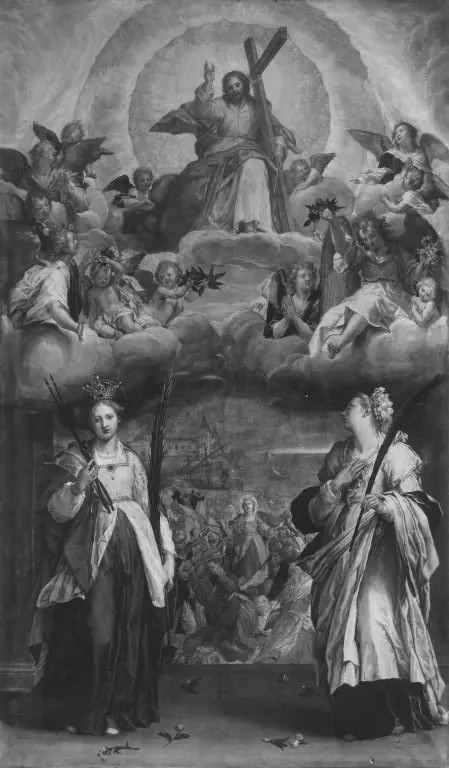 Die hll. Ursula und Cordula
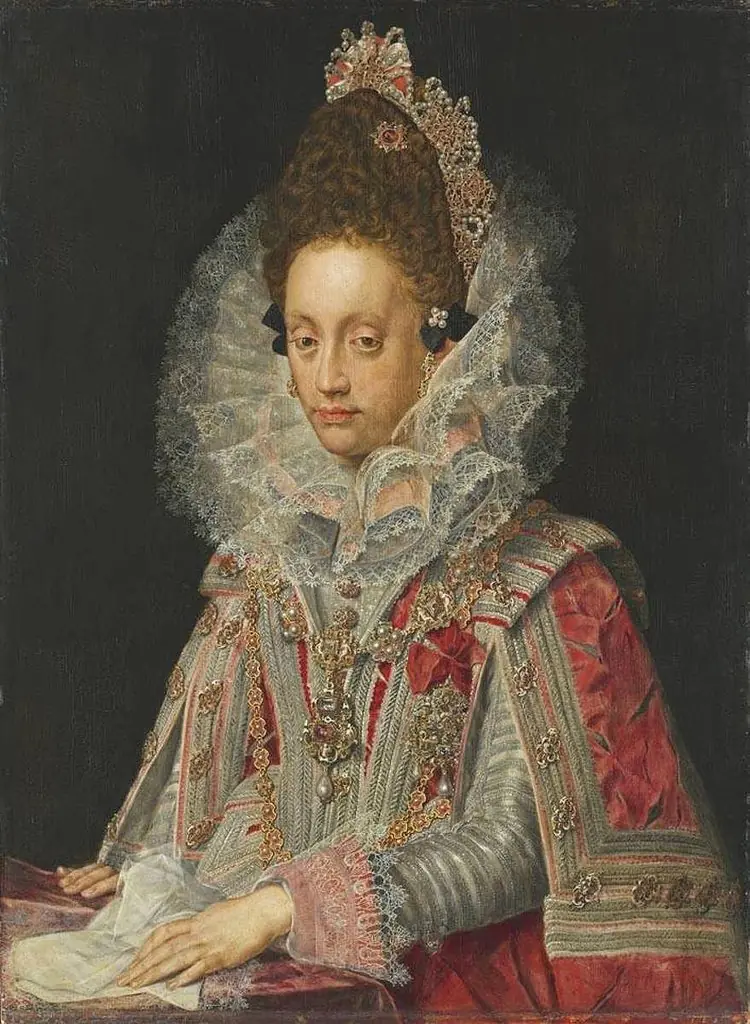 Bildnis der Herzogin Magdalena von Bayern, Gemahlin Herzog Wolfgang Wilhelms von Pfalz-Neuburg, im Hochzeitsstaat (1597-1628)
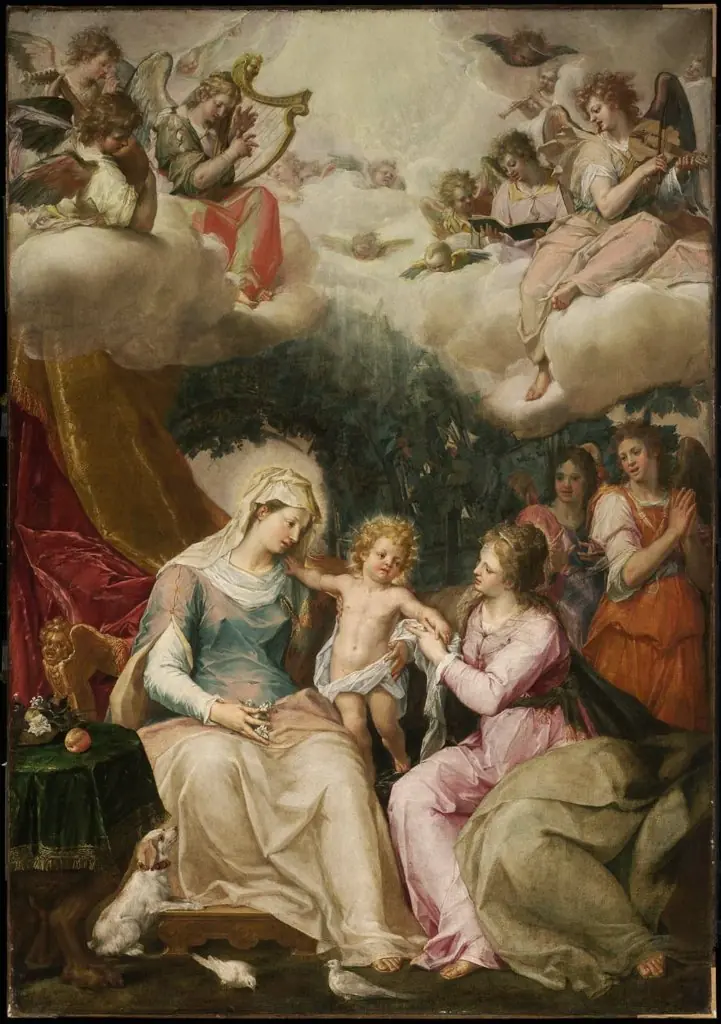 The Mystic Marriage of Saint Catherine
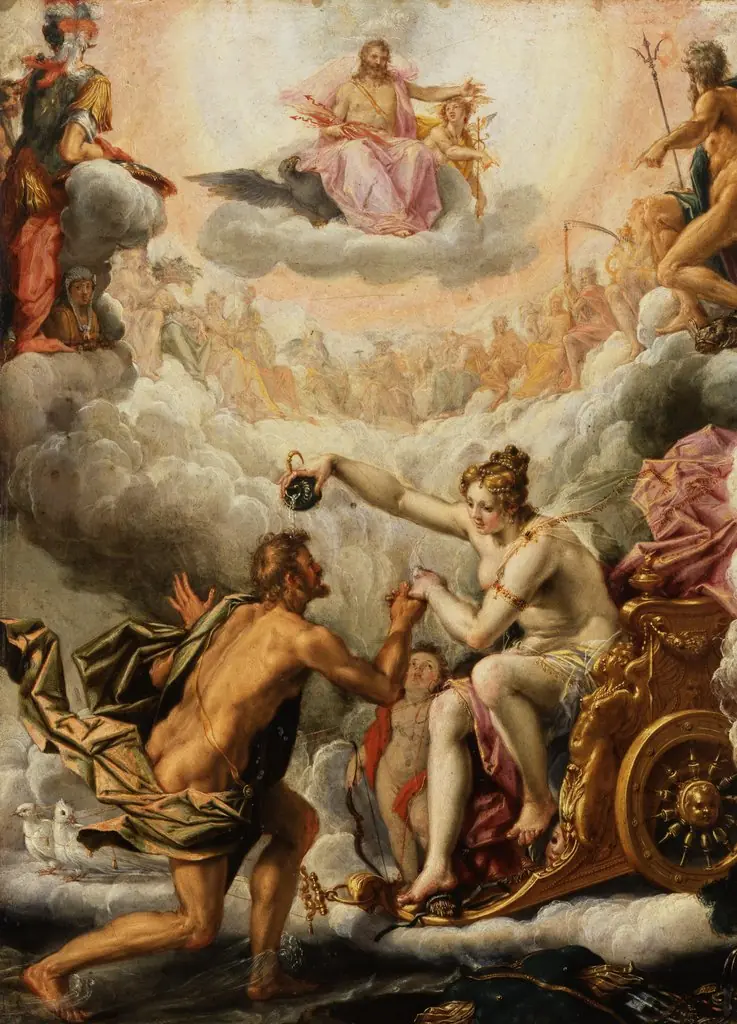 Aeneas wird von Venus in den Olymp aufgenommen
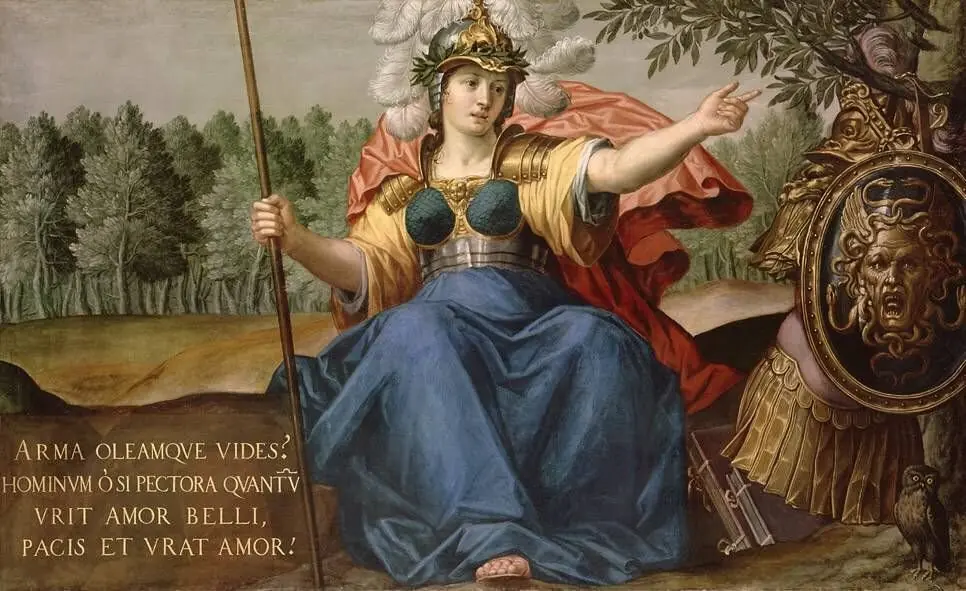 Minerva als Friedensbringerin (Werkstatt)
 Securitas Publica (Werkstatt)
- The Sciences and Arts
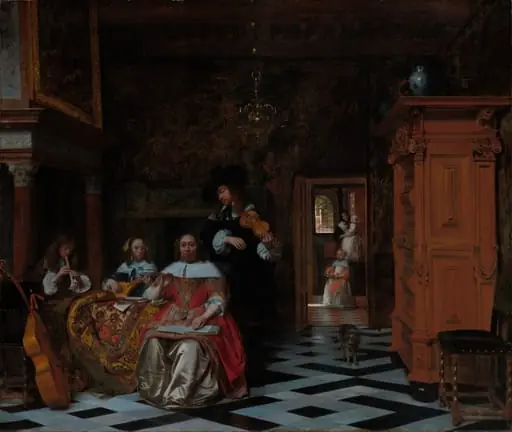 Portrait of a Family Playing Music
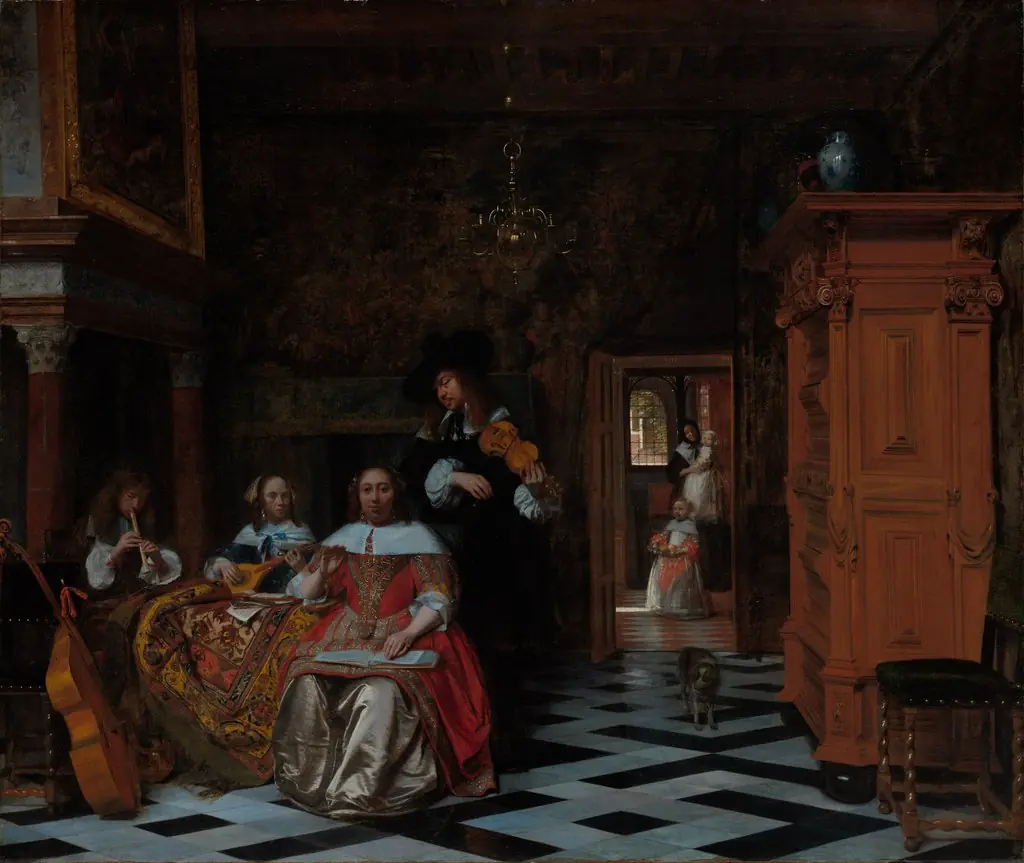 Portrait of a family making music
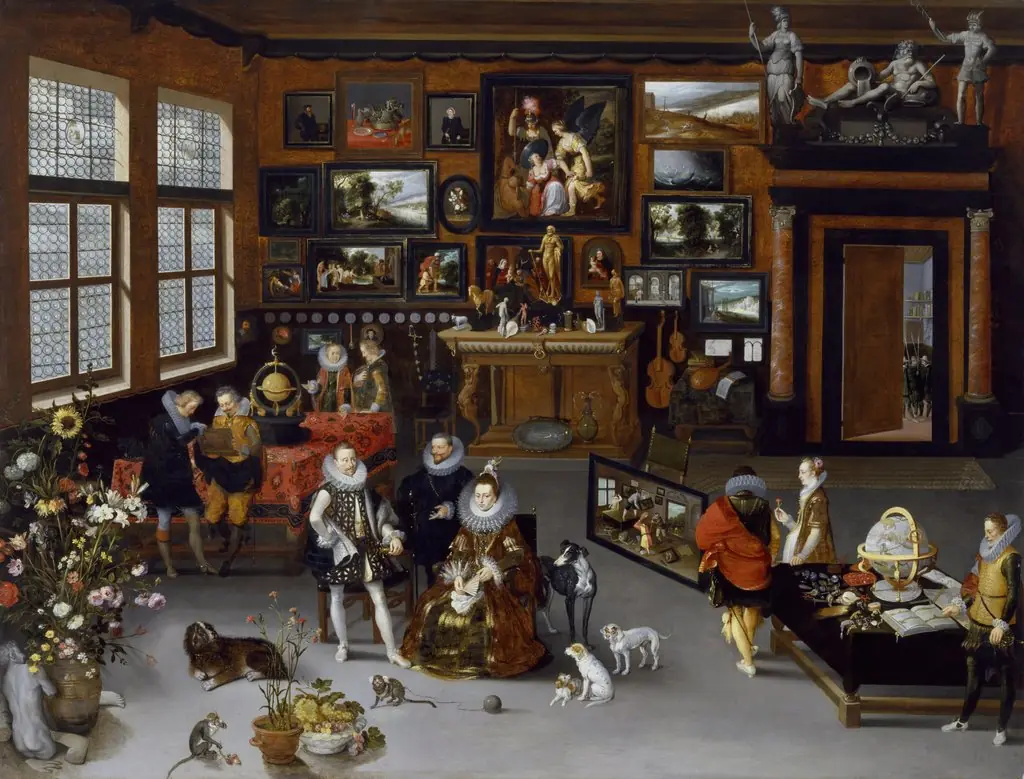 The Archdukes Albert and Isabella Visiting a Collector's Cabinet
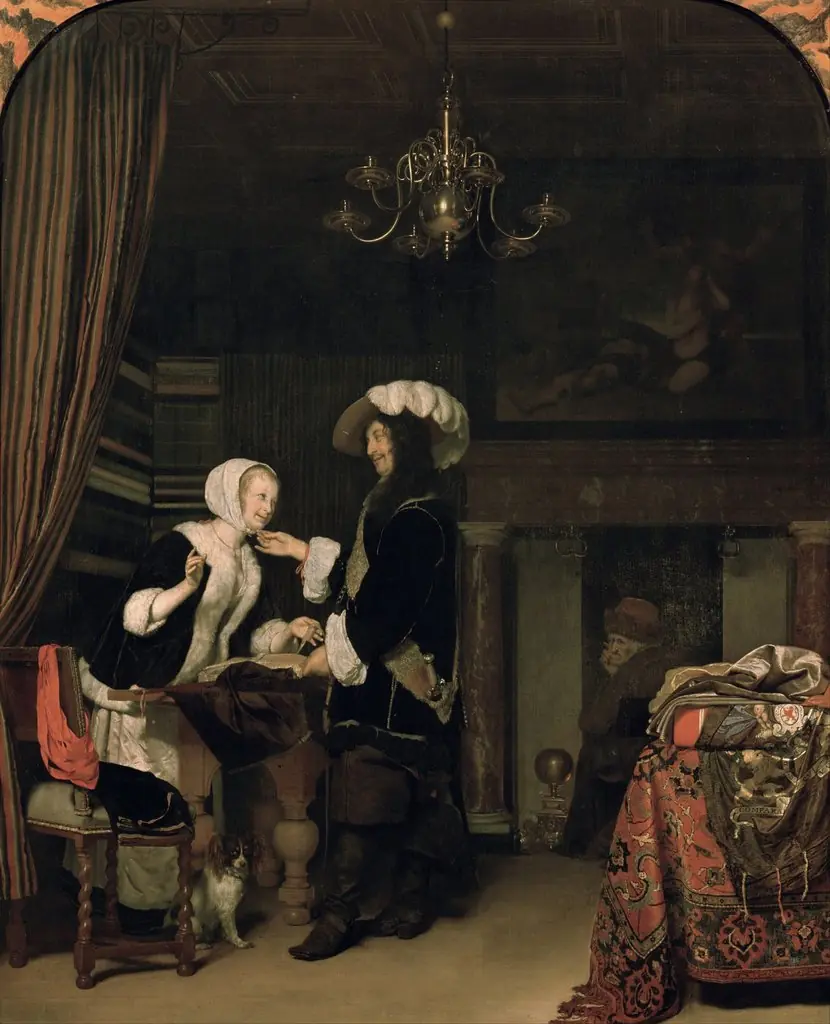 Officer in a Cloth Shop
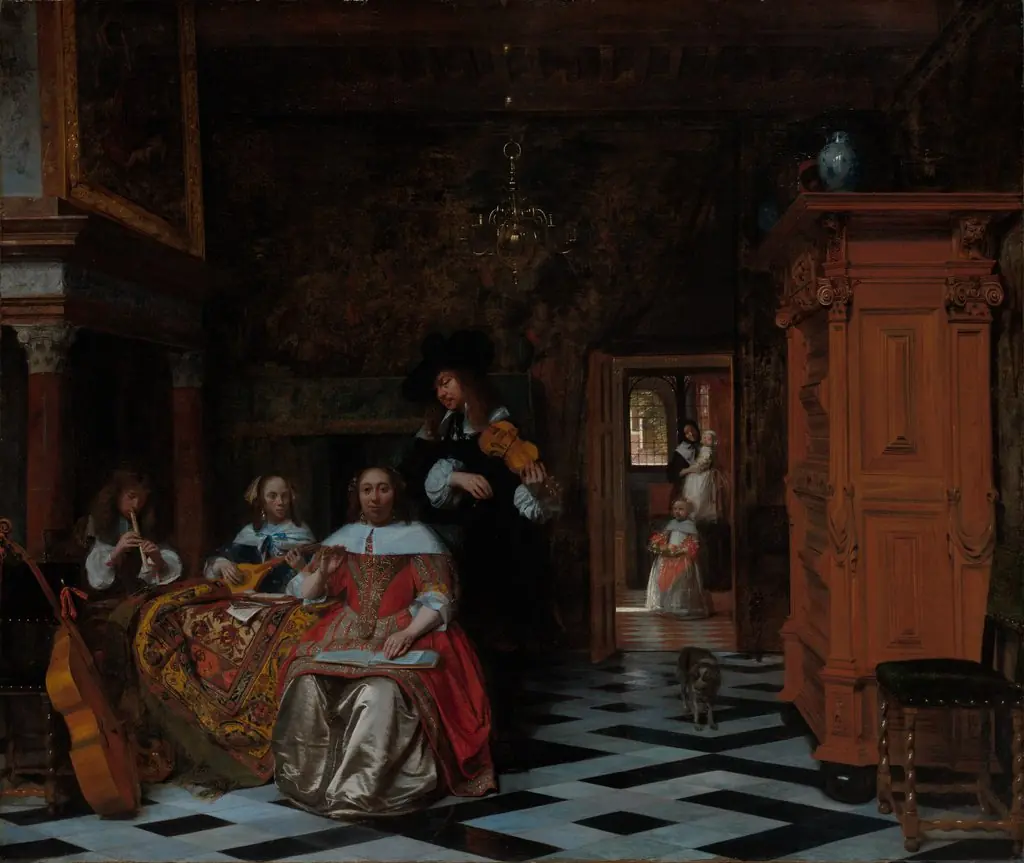 Portrait of a Family Playing Music
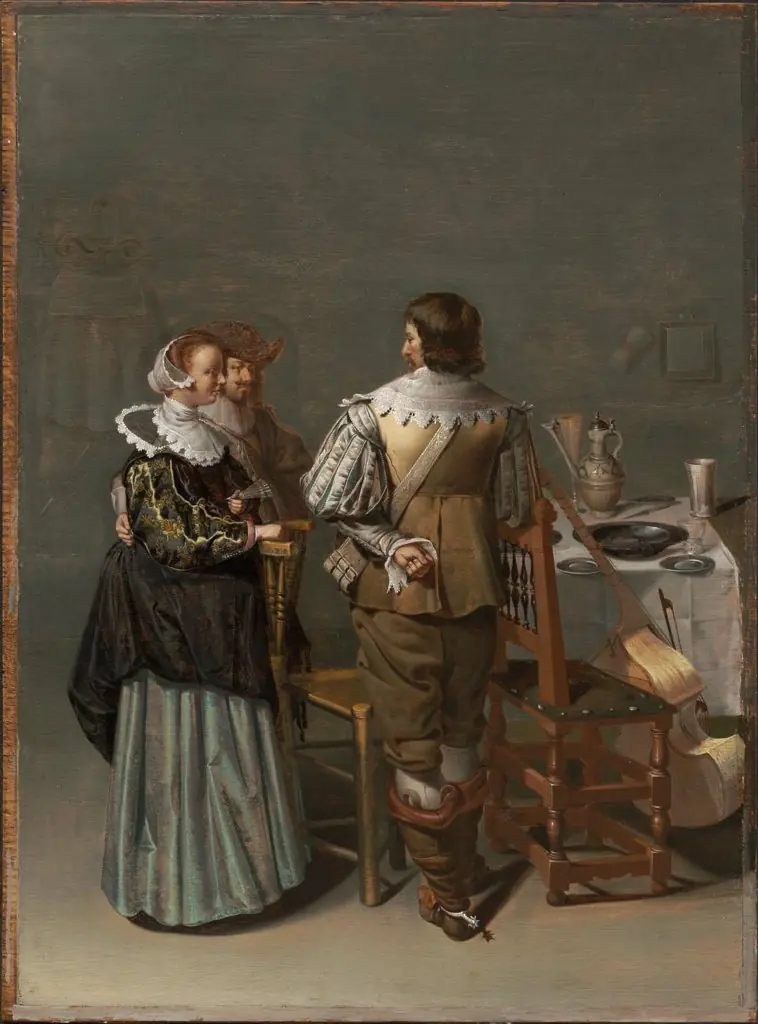 A Merry Company
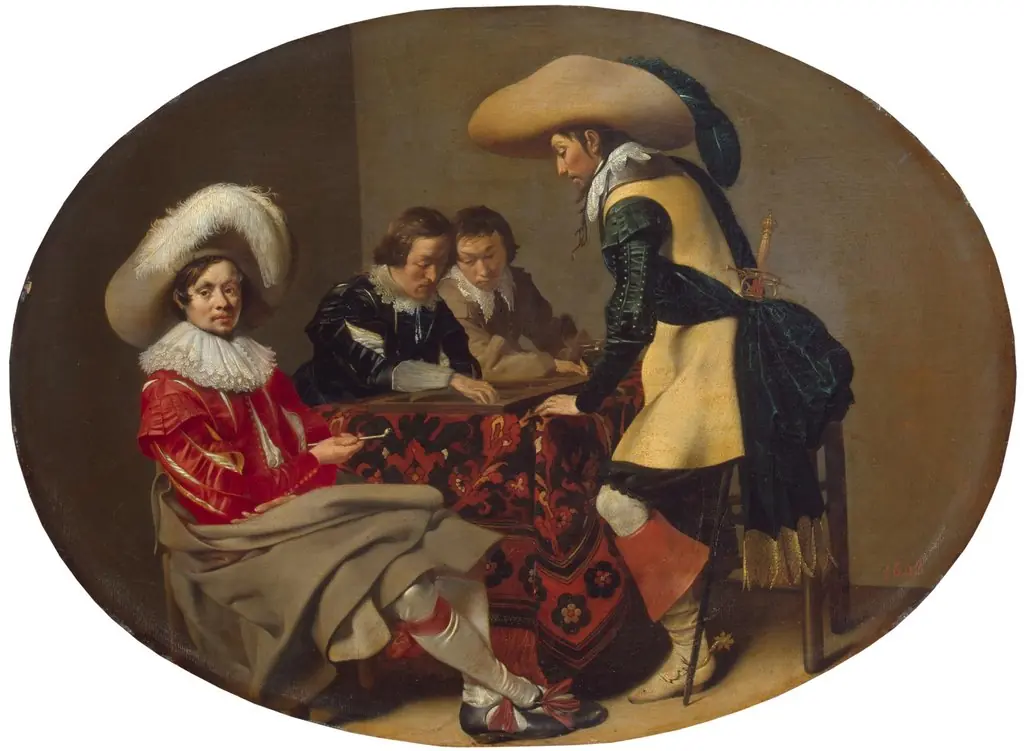 Tric-Trac Players
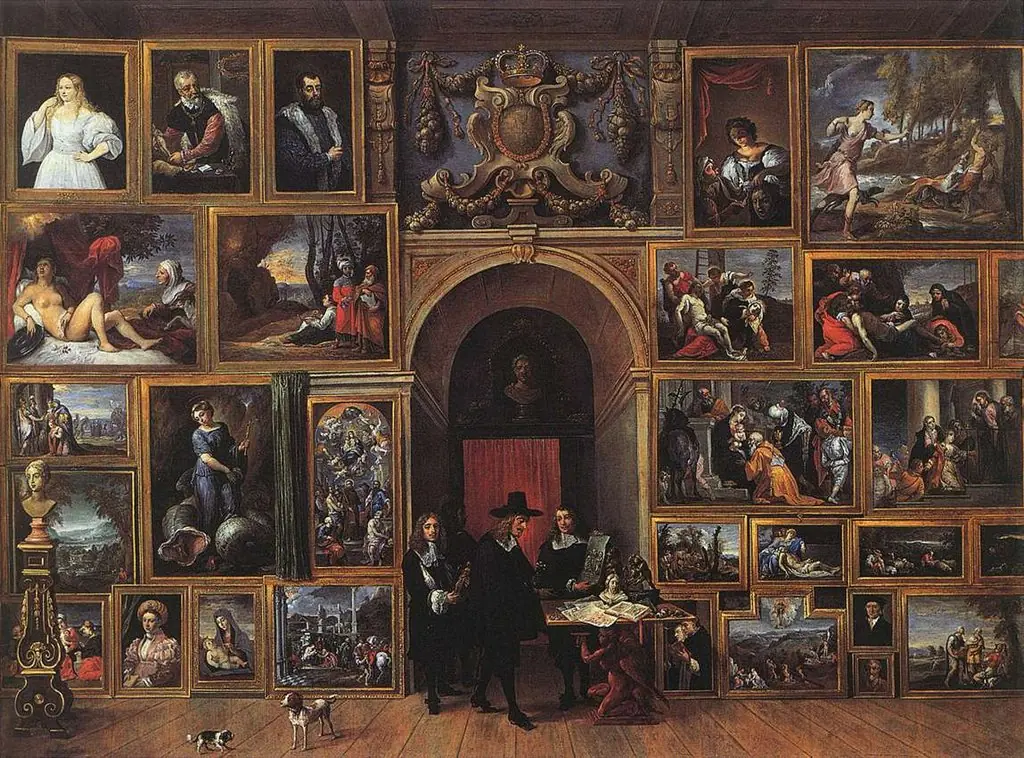 Archduke Leopold Wilhelm of Austria in his Gallery
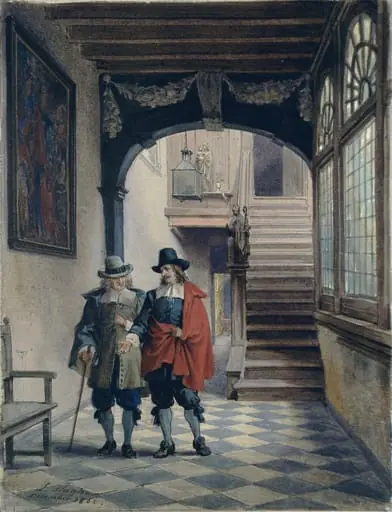 The Corridor, Brewer's Hall, Antwerp
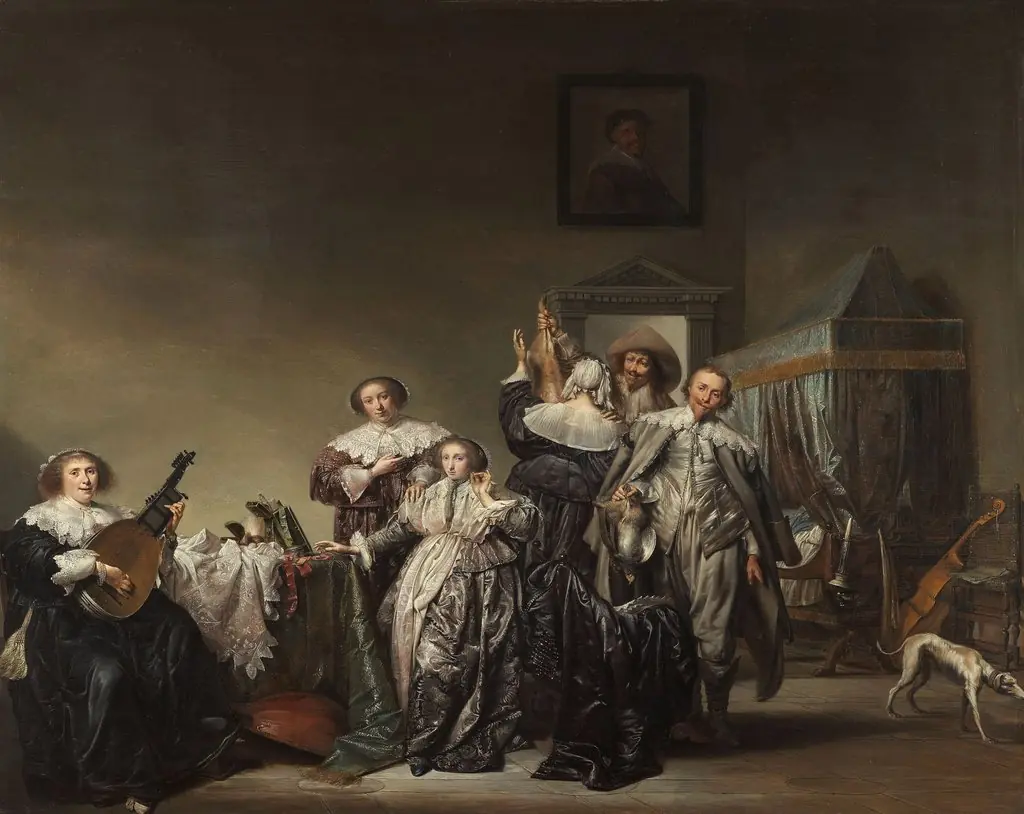 Gallant Company
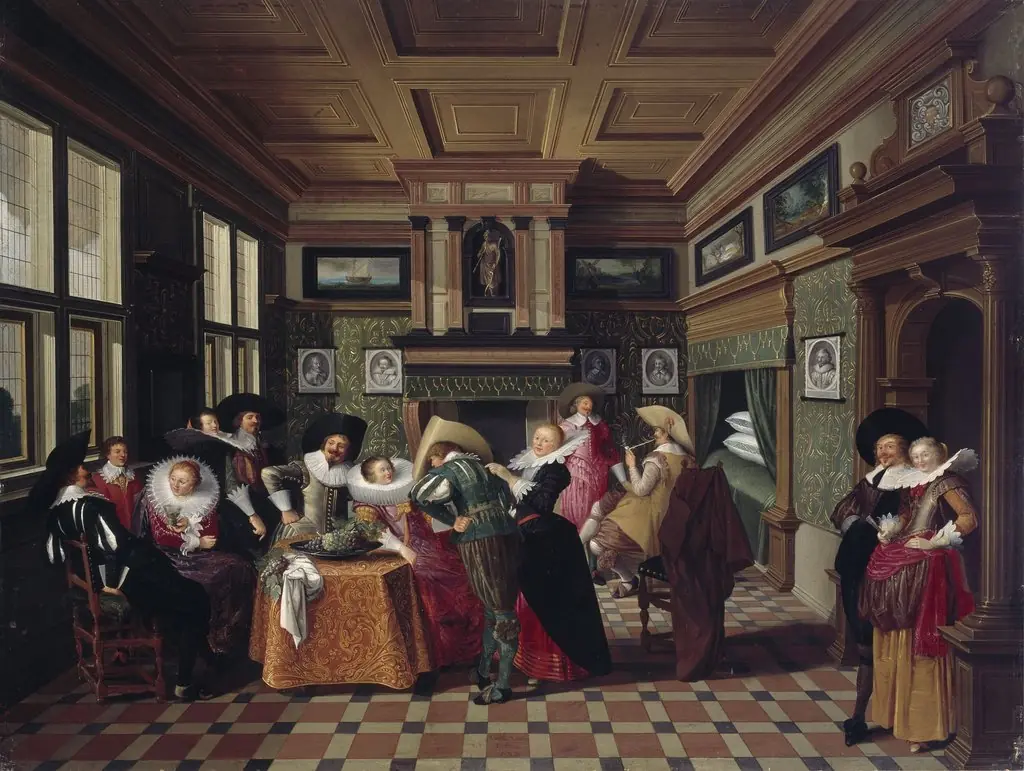 An Interior with Ladies and Cavaliers