Artwork
Christ and the Woman of Canaan
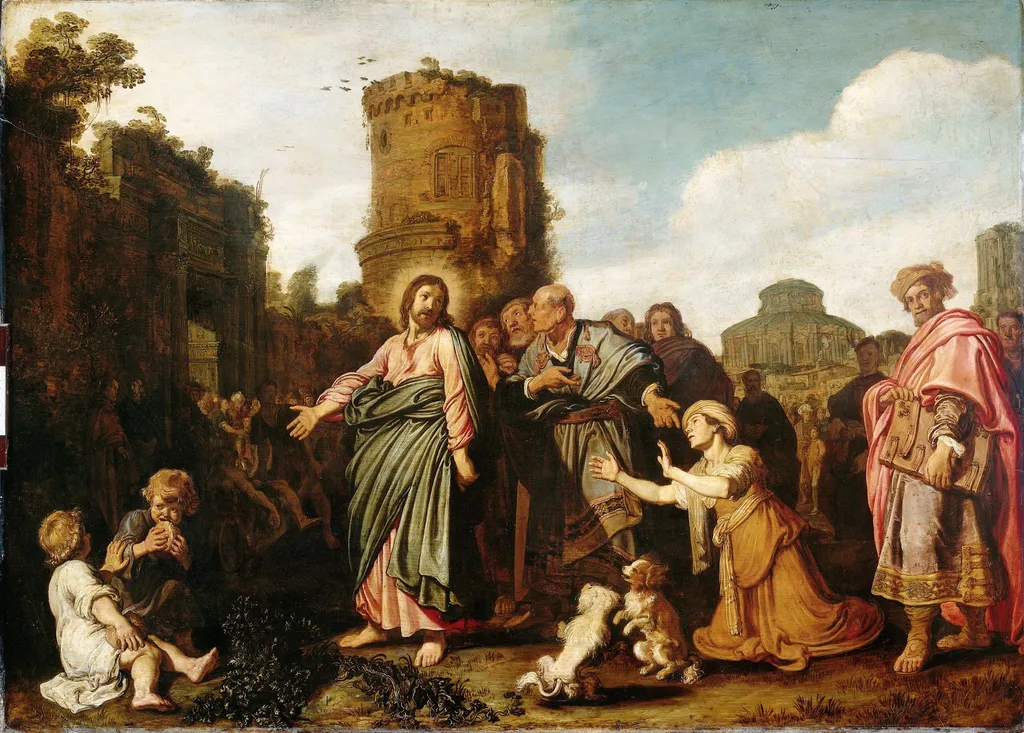
Christ and the Woman of Canaan is an unspecified painting by the Dutch Golden Age artist Pieter Lastman. It dates from 1617 and is held in the collection of the Rijksmuseum.
About this work
The quiet moment, kids eating, dogs playing, contrasts with the serious scene of healing.
You see a woman kneeling before Jesus while his followers watch. Two kids eat bread in the foreground, and dogs play at their feet. In the background, a man is wheeled away in a cart near crumbling buildings.
This painting was made in 1617, but no one knows who painted it. The quiet moment, kids eating, dogs playing, contrasts with the serious scene of healing. It feels like a snapshot of daily life mixed with a Bible story.
To see more works like this, visit the Rijksmuseum.
Technique & Style
Christ and the Woman of Canaan is executed in oil on a wooden panel measuring 78 × 108 cm, consistent with Lastman's documented preference for working on wood for his history pieces. Lastman's mature style, shaped by his exposure to Italian masters between roughly 1604 and 1607, is characterized by a rhetorical handling marked by vivid colors and exuberant gestures, with expression concentrated in the faces, hands, and feet of the figures rather than in idealized anatomy. He placed his actors on different spatial planes, using careful differentiation of gesture and posture to clarify the narrative within a compact pictorial space, achieving an extraordinary concentration of life and meticulous attention to detail.
These formal qualities, Italianate grandeur tempered by Dutch realism, intense facial characterization, and tightly organized multi-figure compositions, define the painting's stylistic character.
History & Provenance
Pieter Lastman created Christ and the Woman of Canaan in 1617. The work is executed on wood and measures 78 × 108 cm. Unlike many contemporaries who relied on specific commissions, Lastman operated within a free market system, selecting his own subjects rather than accepting external orders. Consequently, this painting was likely produced for open sale rather than a specific patron.
The artist, who is noted as the first seventeenth-century painter to specialize exclusively in history painting, worked in Amsterdam during this period. The piece reflects his mature style, characterized by a focus on facial expressions and narrative detail, developed after his formative years in Italy where he studied under the influence of Adam Elsheimer and Caravaggio.
Context
Pieter Lastman is recognized as the most significant history painter of his generation in Amsterdam, credited as the first seventeenth-century artist to specialize exclusively in history painting. By combining Italian grandeur with Dutch realism, he achieved a concentrated vitality within small-scale formats, focusing expressive detail on faces, hands, and feet rather than mannerist physical contortions. His importance in art history stems largely from his role as the teacher of Rembrandt and Jan Lievens; through Lastman, Rembrandt likely absorbed Caravaggio's influence despite never visiting Italy.
Scholars note that Rembrandt adopted many of Lastman's themes and compositional principles, ensuring their transmission to subsequent generations. Lastman's workshop was highly regarded, allowing him to command high prices for works sold on the open market rather than through commissions.
Overview
The canvas, dated 1617, portrays a biblical episode in which a kneeling woman implores Jesus to heal her daughter, who is described as possessed. Jesus is surrounded by his disciples, while everyday life unfolds around them: two children eat bread, dogs play nearby, and a man is being carried away in a cart against a backdrop of classical ruins.
Subject & Meaning
The work juxtaposes the solemn appeal for divine intervention with ordinary domestic scenes, suggesting a link between sacred miracles and the routine of daily existence. The presence of the children and animals softens the intensity of the plea, inviting contemplation of compassion and the intersection of the holy with the mundane.
Own this work as a print
Artist & collection
Artist
Pieter Lastman (1583–1633) was a Dutch painter. Lastman is considered important because of his work as a painter of history pieces and because his pupils included Rembrandt and Jan Lievens. In his paintings Lastman paid…

 The Raising of Lazarus
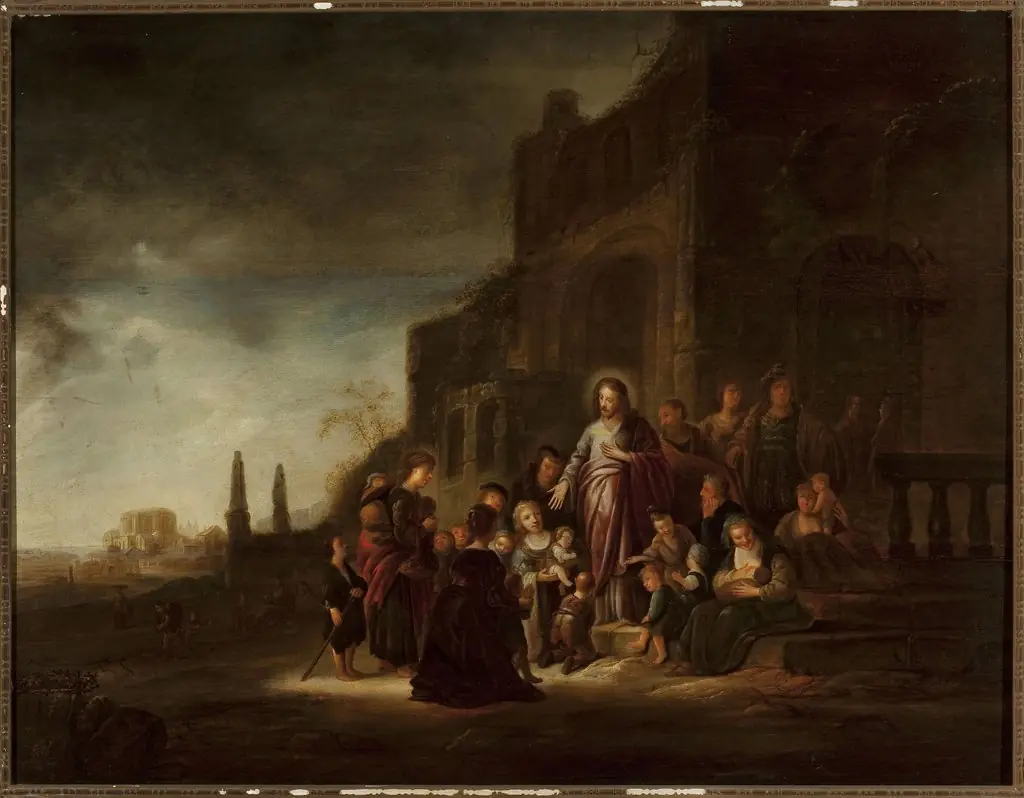 Christ among children
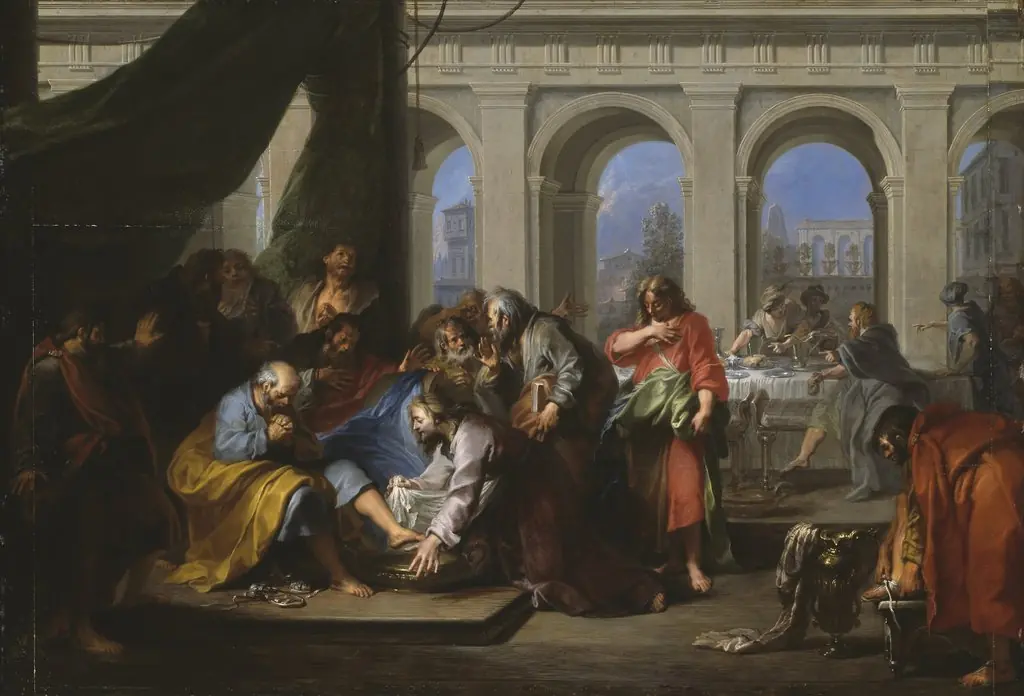 Christ Washing the Feet of His Disciples
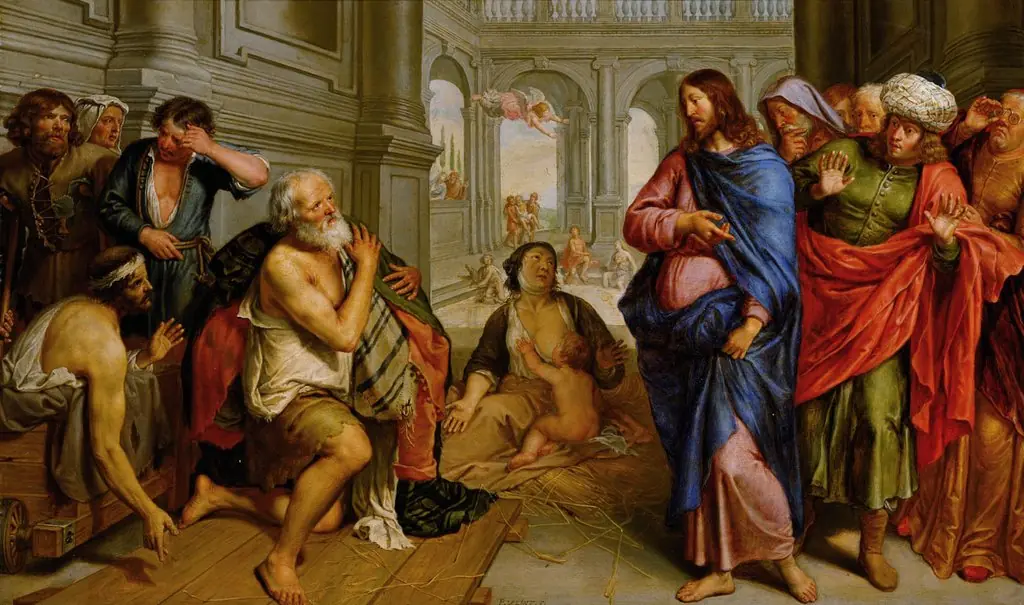 Christ healing the lame at the pool of Bethesda
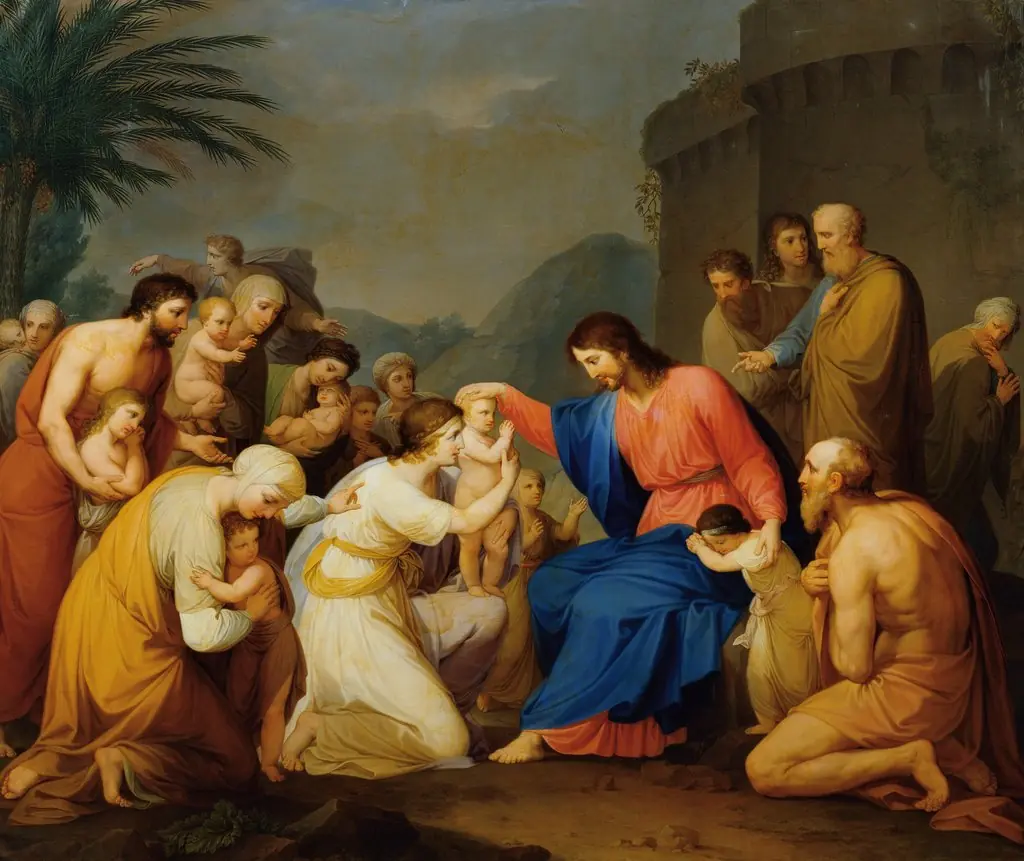 Lasset die Kindlein zu mir kommen
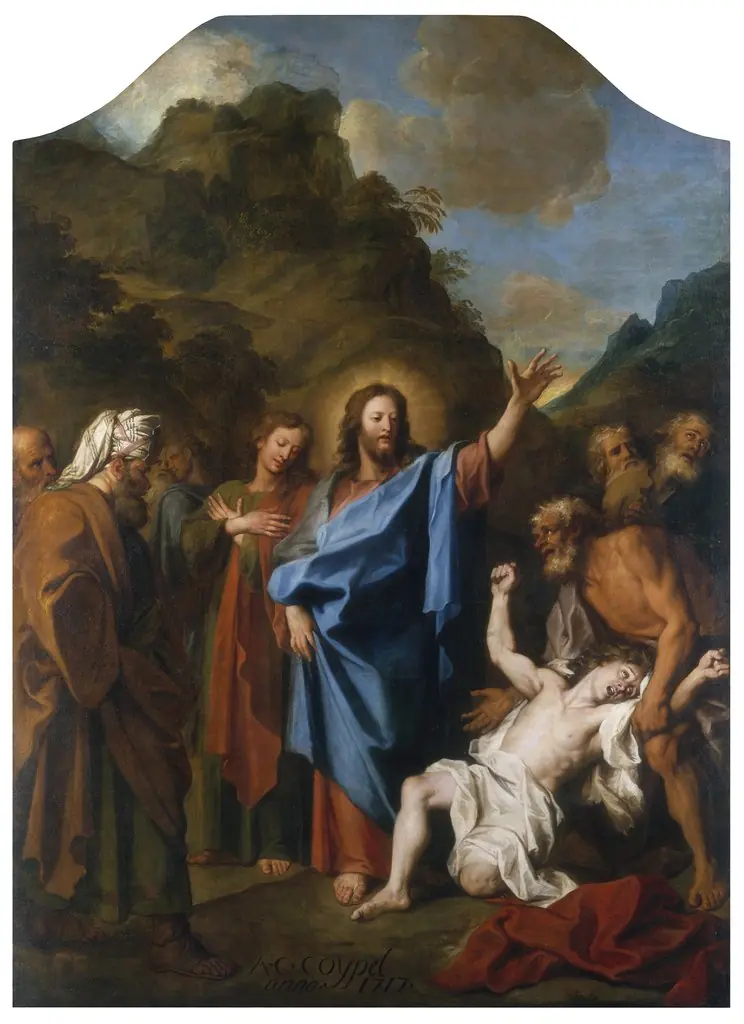 Christ Curing a Possessed Man
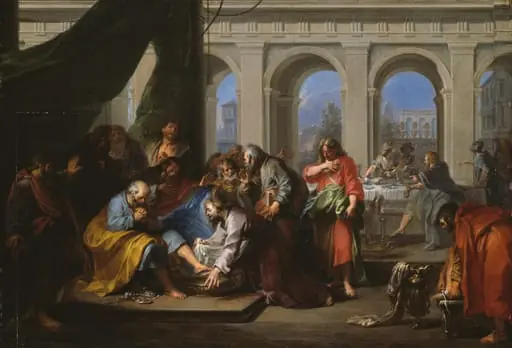 Christ Washing the Feet of His Disciples
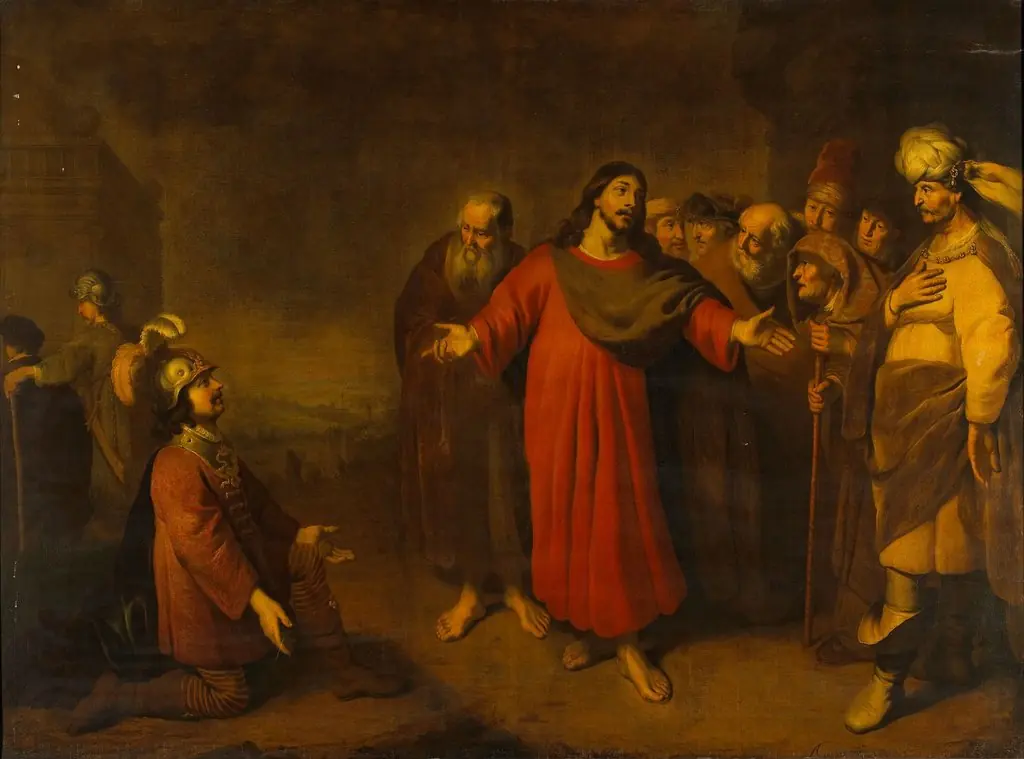 Christ and the Centurion
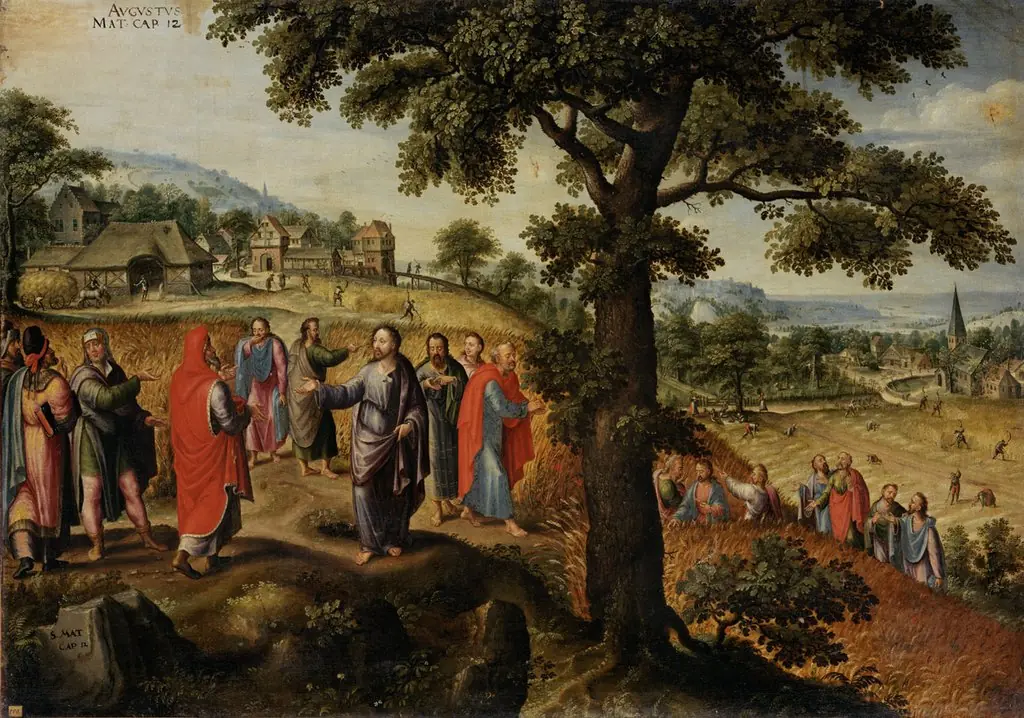 Christ defends the plucking of the ears of grain on the Sabbath (August)
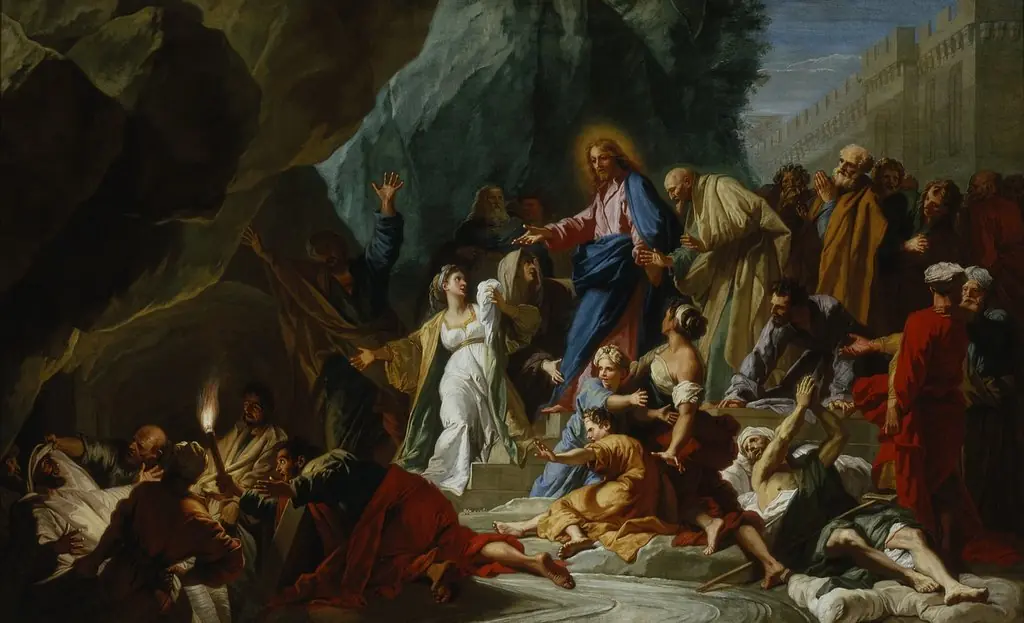 The Raising of Lazarus
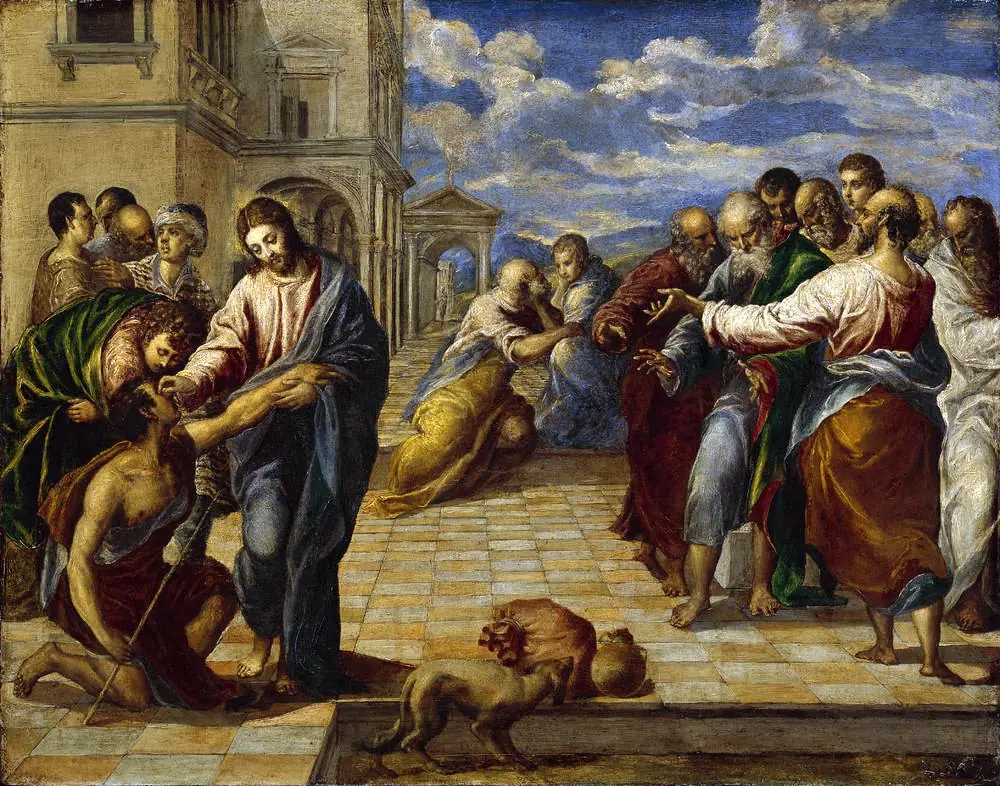 Christ Healing the Blind
- Christ and the woman of Canaan