Artwork
The foolish virgins and the wise virgins
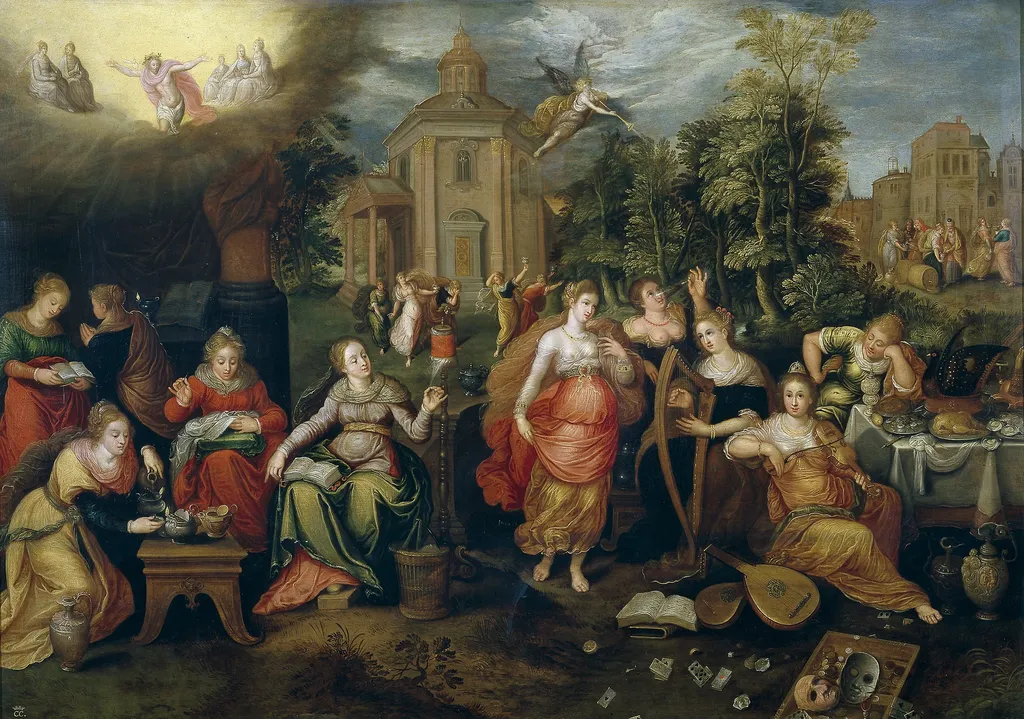
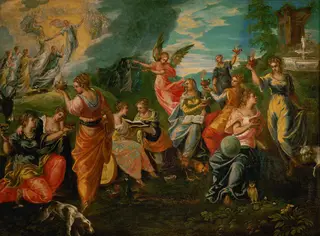
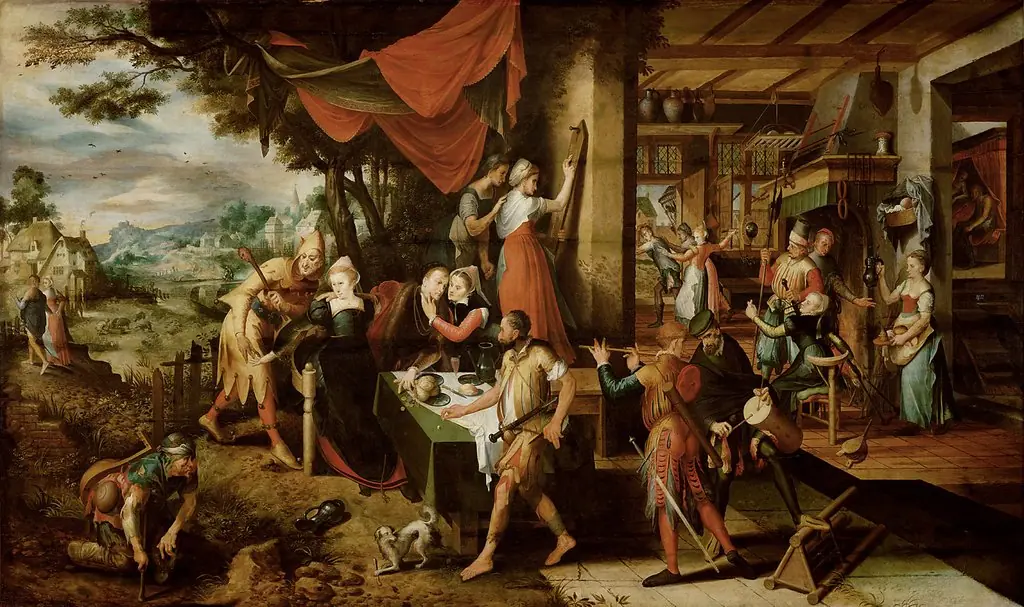
The foolish virgins and the wise virgins is an oil painting by the Early Baroque Italian artist Pieter Lisaert. It dates from 1593 and is held in the collection of the Museo del Prado.
About this work
Subject & Meaning
The contrast between the illuminated and darkened lamps visually reinforces the moral lesson of readiness and the consequences of heedlessness.
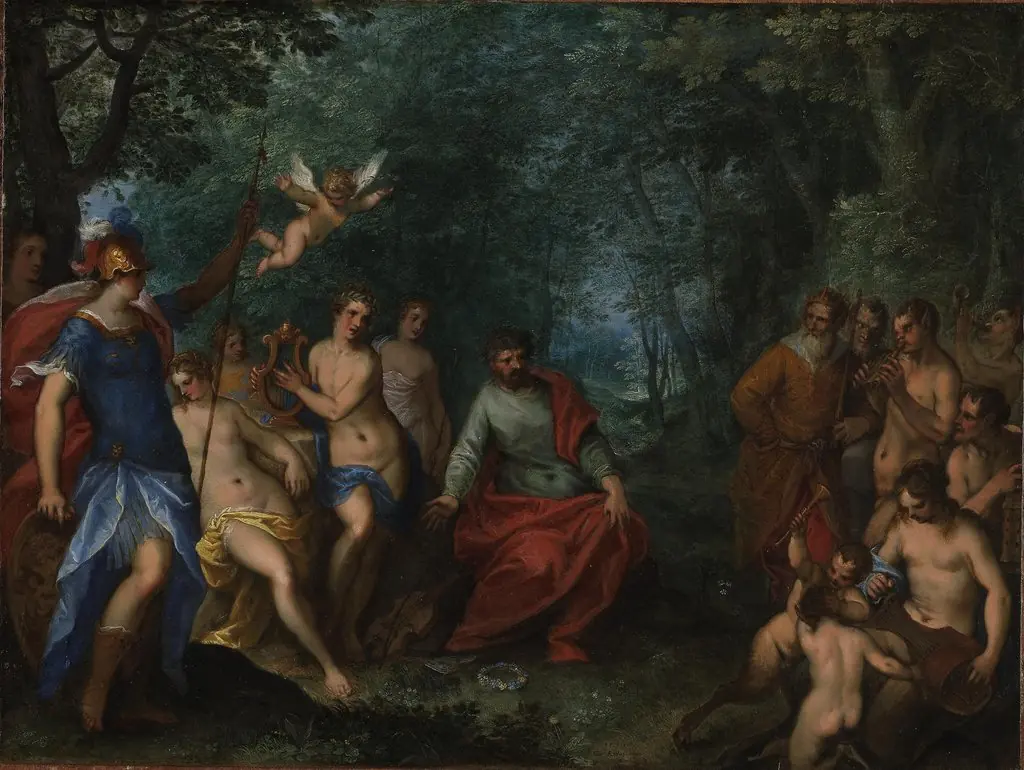
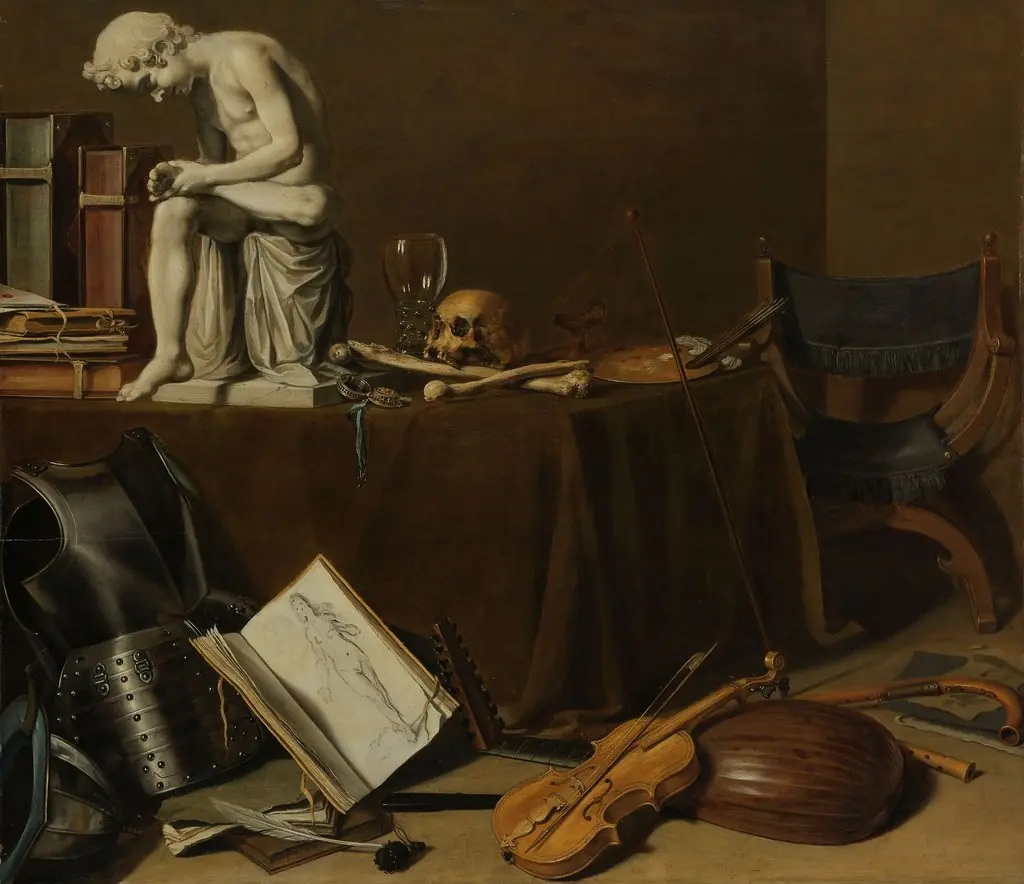
The painting depicts two groups of five virgins, distinguishing between those who are wise and those who are foolish. The wise virgins carry lit lamps, symbolizing preparedness and spiritual vigilance, while the foolish virgins hold extinguished lamps, representing neglect and folly. Musical instruments such as a lute, violin, rattle, trumpet, and playing card appear in the scene, likely underscoring the vanity and distraction that lead to spiritual unpreparedness.
The subject derives from the Parable of the Ten Virgins in the Gospel of Matthew, which warns against unpreparedness for divine judgment. The contrast between the illuminated and darkened lamps visually reinforces the moral lesson of readiness and the consequences of heedlessness.
Technique & Style
The work is painted in oil on a wood panel support, measuring 73 by 105 centimeters. Stylistically, the composition juxtaposes the wise and foolish virgins, using sharply rendered figures and detailed still-life elements such as a lute, violin, rattle, trumpet, and playing card to underscore contrasting moral outcomes. Handling is precise, with careful modeling of light and shadow to articulate textures and volume, while the palette emphasizes earthy tones punctuated by vivid accents in the musical instruments and accoutrements.
The panel’s condition is not described in the cited sources; therefore, no condition remarks can be included here.
History & Provenance
The painting The foolish virgins and the wise virgins was created by Pieter Lisaert in 1585. Executed in oil paint on a panel support, the work measures 73 cm in height and 105 cm in width. The piece is currently held in the collection of the Museo del Prado in Madrid.
While the specific commission details and the complete chain of ownership prior to its arrival at the museum are not detailed in the available records, the work was officially dated to the year 1585.
Overview
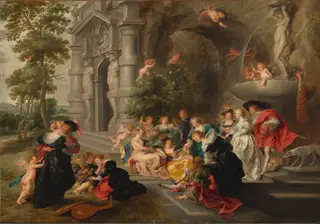
Pieter Lisaert’s oil on canvas, dated 1593, presents a garden tableau where a group of women engage in varied activities beneath a classical temple. The composition balances seated figures reading or holding objects with others who play a lute and a violin, while angels hover overhead. Scattered items such as skulls, coins and a rattle lie on the ground, adding symbolic detail to the scene.
Context
The composition reflects the Counter‑Reformation’s emphasis on moral instruction through visual art, aligning with contemporary Flemish traditions that blended religious narrative with everyday life. The inclusion of a classical temple and garden setting situates the scene within a cultivated, idealized landscape common to late Renaissance allegories.
Own this work as a print
Artist & collection