Artwork
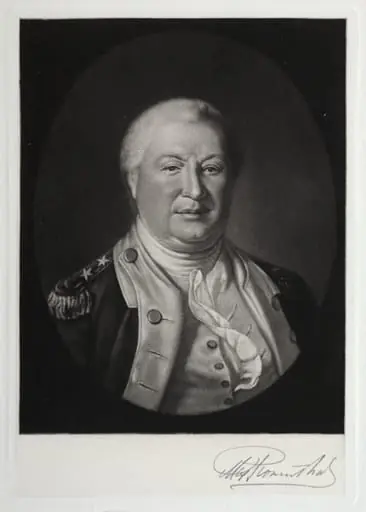
General William Smallwood
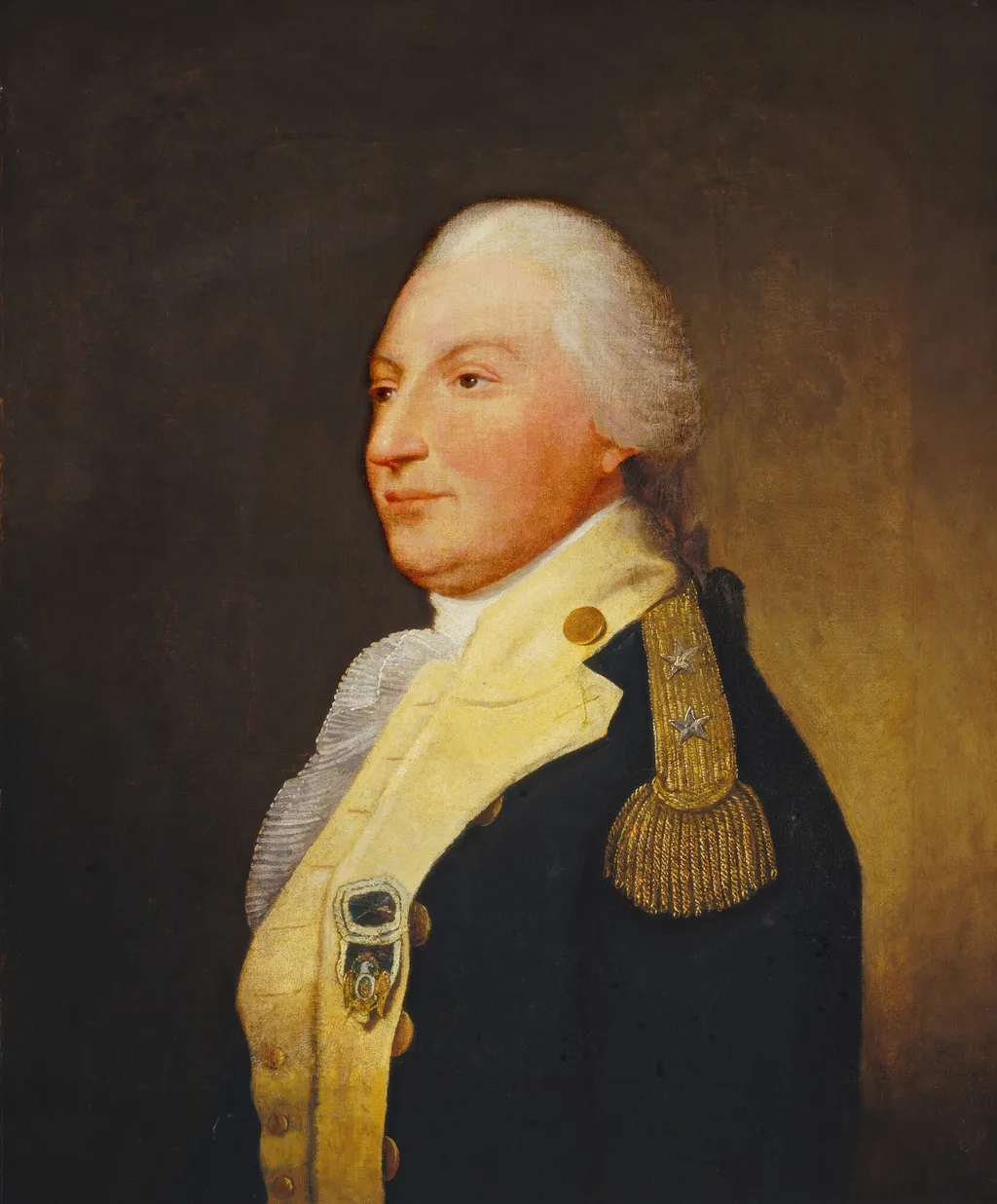
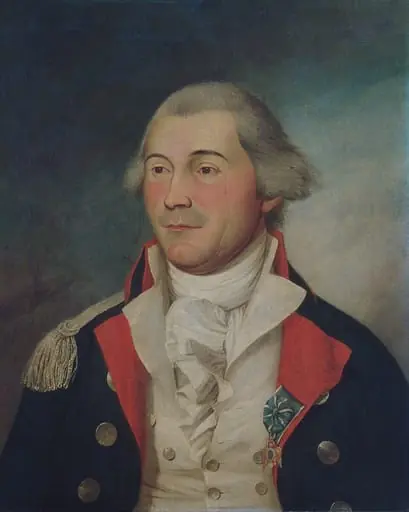
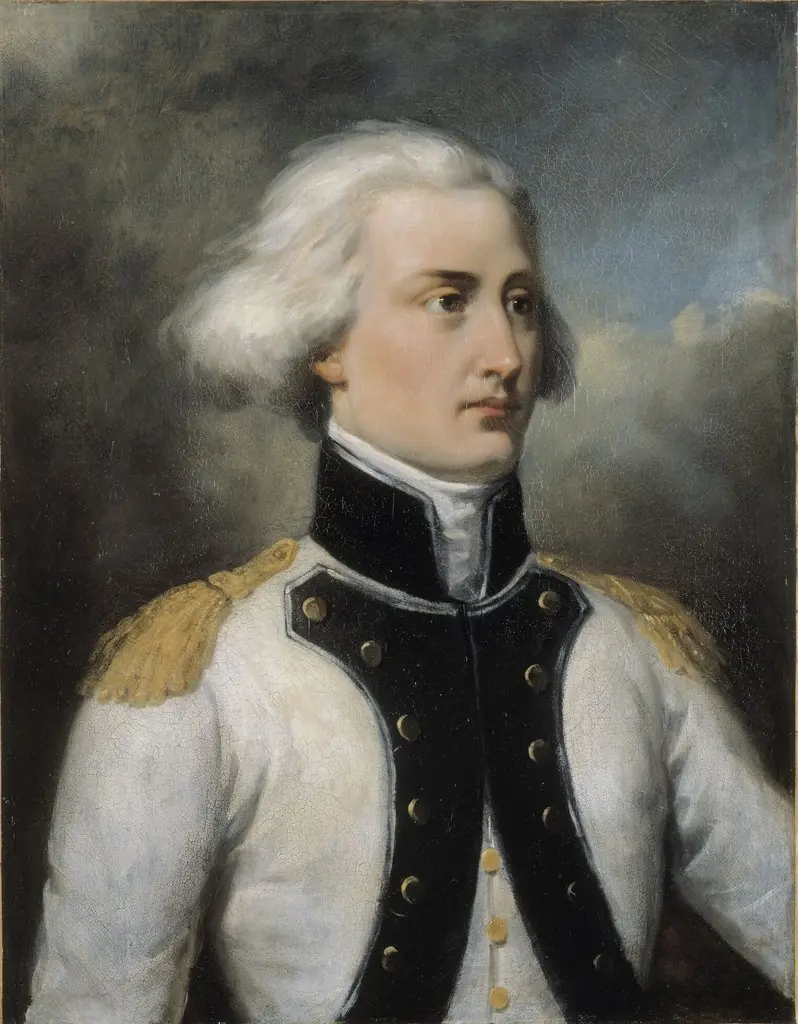
General William Smallwood is an oil painting by the Rococo painting artist Robert Edge Pine. It dates from 1786 and is held in the collection of the National Gallery of Art.
About this work
Technique & Style
The medium of oil paint allowed Pine to build up layered modeling of the sitter's features and uniform, lending depth to the likeness.
General William Smallwood is an oil on canvas portrait executed by Robert Edge Pine in 1786. The work is painted on a canvas support measuring 73.8 by 61.1 centimeters, a relatively modest scale consistent with an intimate commemorative portrait rather than a grand state commission. The medium of oil paint allowed Pine to build up layered modeling of the sitter's features and uniform, lending depth to the likeness.
Classified as a portrait, the painting follows the conventions of late-eighteenth-century Anglo-American portraiture in its direct, bust-length presentation of the Revolutionary War officer. The canvas passed through multiple private collections since the late eighteenth century before entering the National Gallery of Art.
History & Provenance
The portrait of General William Smallwood was executed in 1786 by Robert Edge Pine as an oil‑on‑canvas work commissioned, according to family testimony, for the sitter's mother (a claim later deemed improbable because his mother died in 1784). Its early ownership passed from the sitter's nephew William Truman Stoddert and his descendants in Maryland to James A. Conner in 1892, then to George D. Hall, and subsequently to J. Bannister Hall, Thomas B. Clarke, and the Clarke estate before being sold through M. Knoedler & Co. in 1936 to the A. W. Mellon Educational and Charitable Trust, which gifted the painting to the National Gallery of Art in 1947. The work remains in the Gallery's collection.
The painting entered the National Gallery of Art in Washington, D.C., in 1947 as a gift from the A.W. Mellon Educational and Charitable Trust, forming part of the Andrew W. Mellon collection. Prior to this acquisition, the trust purchased the work on January 29, 1936, from the estate of Thomas B. Clarke via M. Knoedler & Co. in New York. Clarke had originally acquired the portrait in 1922 from J. Bannister Hall, who inherited it from George D. Hall of Seattle.
The artwork's earlier ownership history includes a sale in 1892 to James A. Conner of Baltimore, following generations of descent through the Stoddert and Bowie families in Maryland. The National Gallery of Art currently holds the piece within its permanent holdings.
Context
The 1786 portrait of General William Smallwood by Robert Edge Pine exemplifies early American portraiture and marks a moment in Pine's career as he transitioned from British influences toward a distinct American style. Art historians regard the work as a significant contribution to post‑Revolutionary portraiture, noting its refined composition and the sitter's dignified representation. Pine's broader oeuvre, which includes numerous civic and military portraits, reflects the emerging national identity and the demand for visual documentation of Revolutionary figures.
The painting's provenance, documented from the Stoddert family through successive owners to its acquisition by the National Gallery of Art, underscores its enduring scholarly and curatorial interest. Consequently, the work occupies a key position in art‑historical narratives of early American art and the development of portraiture in the young republic.
Overview
Robert Edge Pine's oil on canvas portrait, General William Smallwood, dates to 1786. This painting depicts the American Revolutionary War general, capturing his likeness and military bearing. Pine, an English artist known for his portraits, created this work during his later years in America, contributing to the visual record of the newly formed nation's leaders. The artwork serves as a historical document and an example of portraiture from the period.
Subject & Meaning
The portrait features General William Smallwood, a prominent figure in the American Revolutionary War. Smallwood is presented in his military uniform, conveying a sense of authority and resolve. The artist emphasized details in his attire and facial expression, aiming to capture the general's serious and strong character. This depiction underscores Smallwood's role as a military leader during a pivotal moment in American history.
Own this work as a print
Artist & collection

Artist
Robert Edge Pine (1730 – 18 November 1788) was an English painter who specialised in portrait painting and history painting.