Artwork
Hagar and Ishmael in the Desert
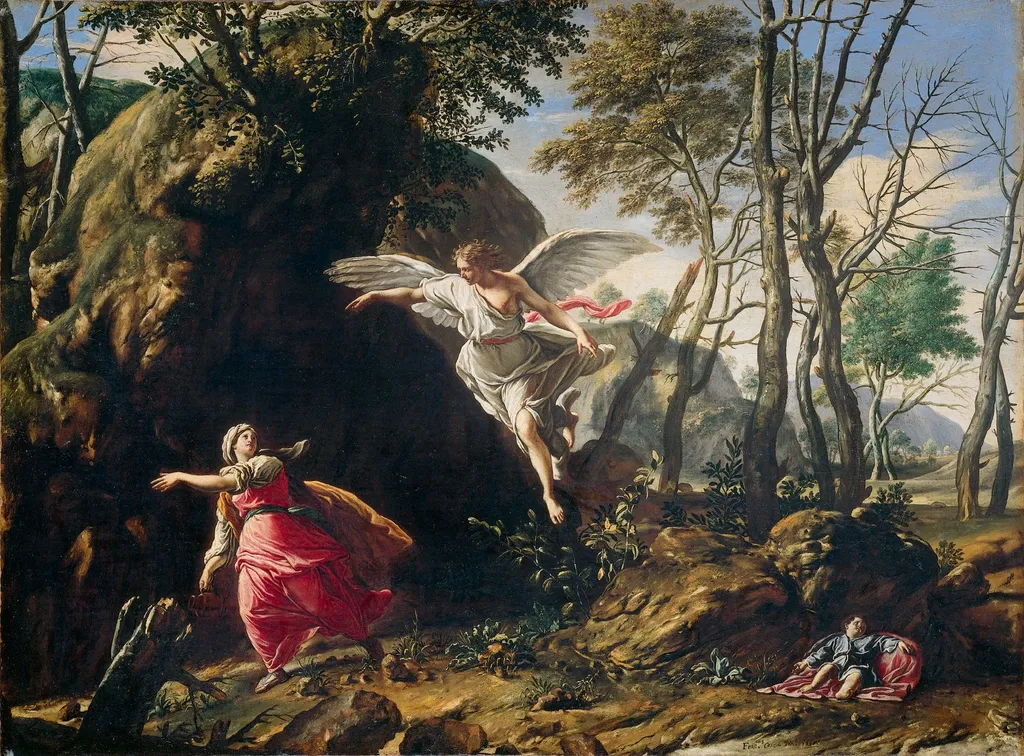
Hagar and Ishmael in the Desert is an oil painting by the Early Baroque Italian artist Francesco Cozza. It dates from 1665 and is held in the collection of the Rijksmuseum.
About this work
Subject & Meaning
The work functions as a visual retelling of the scriptural account found in Genesis, focusing on the emotional and physical hardship of the banishment.
Francesco Cozza's 1665 painting depicts the biblical narrative of the Banishment of Hagar and Ishmael. As a work of religious art, the composition centers on the expulsion of Hagar and her son Ishmael from Abraham's household, a pivotal moment in Judeo-Christian tradition. The scene is set in a desert landscape, explicitly incorporating a tree as a key visual element within the arid environment.
This imagery serves to illustrate the themes of abandonment, divine providence in the wilderness, and the survival of the exiled figures. The work functions as a visual retelling of the scriptural account found in Genesis, focusing on the emotional and physical hardship of the banishment.
Technique & Style
Francesco Cozza painted Hagar and Ishmael in the Desert in 1665 using oil paint on canvas. The work measures 72 × 97 cm.
The painting belongs to the religious genre, depicting the biblical scene of the Banishment of Hagar and Ishmael. A tree figures within the composition, suggesting a landscape setting for the narrative.
History & Provenance
Francesco Cozza executed the oil painting Hagar and Ishmael in the Desert in 1665. The work, which depicts the biblical banishment of Hagar and Ishmael, was created on a canvas support measuring 72 cm in height and 97 cm in width. Historical records indicate the painting has been held in the collections of major Dutch institutions, specifically the Rijksmuseum and the Museum Boijmans Van Beuningen.
Context
The Banishment of Hagar and Ishmael, painted by Francesco Cozza in 1665, is classified as a religious work depicting a biblical moment of exile and divine providence. Executed in oil on canvas, the composition emphasizes the harsh desert environment through stark lighting and isolated figures, reflecting Baroque tendencies toward dramatic narrative and emotional intensity. Cozza’s treatment of the subject aligns with 17th-century interpretations that highlighted themes of faith and survival amid adversity, situating the work within broader religious painting traditions of the period.
The painting’s provenance at the Rijksmuseum and Museum Boijmans Van Beuningen underscores its significance in collections of Dutch and Flemish Baroque art, though its critical reception remains closely tied to scholarly discussions of Cozza’s role as a religious specialist in the Dutch Golden Age.
Overview
Francesco Cozza’s oil painting, dated 1665, portrays the biblical episode of Hagar and her son Ishmael in a desert setting. The work is part of the Rijksmuseum’s collection and measures the dramatic encounter between the mother, child, and a divine messenger.
Own this work as a print
Artist & collection

- Hagar and the Angel
 Hagar and the Angel
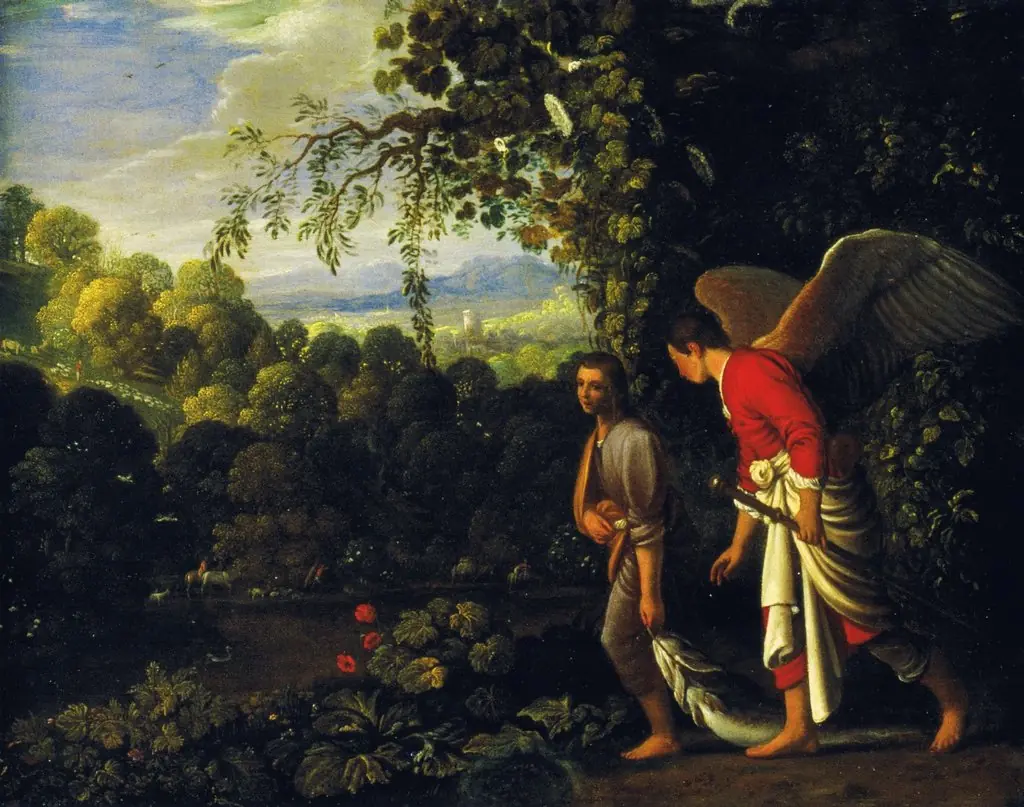 Tobias and the Angel
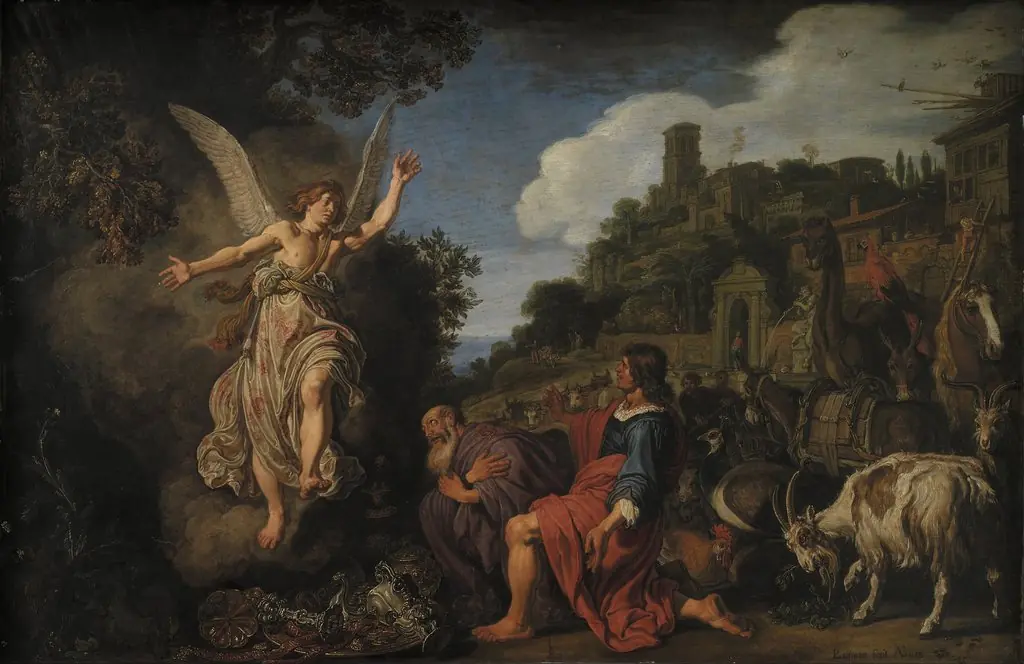 The Angel Raphael Takes Leave of Old Tobit and his Son Tobias
 The Angel Raphael Takes Leave of Old Tobit and his Son Tobias
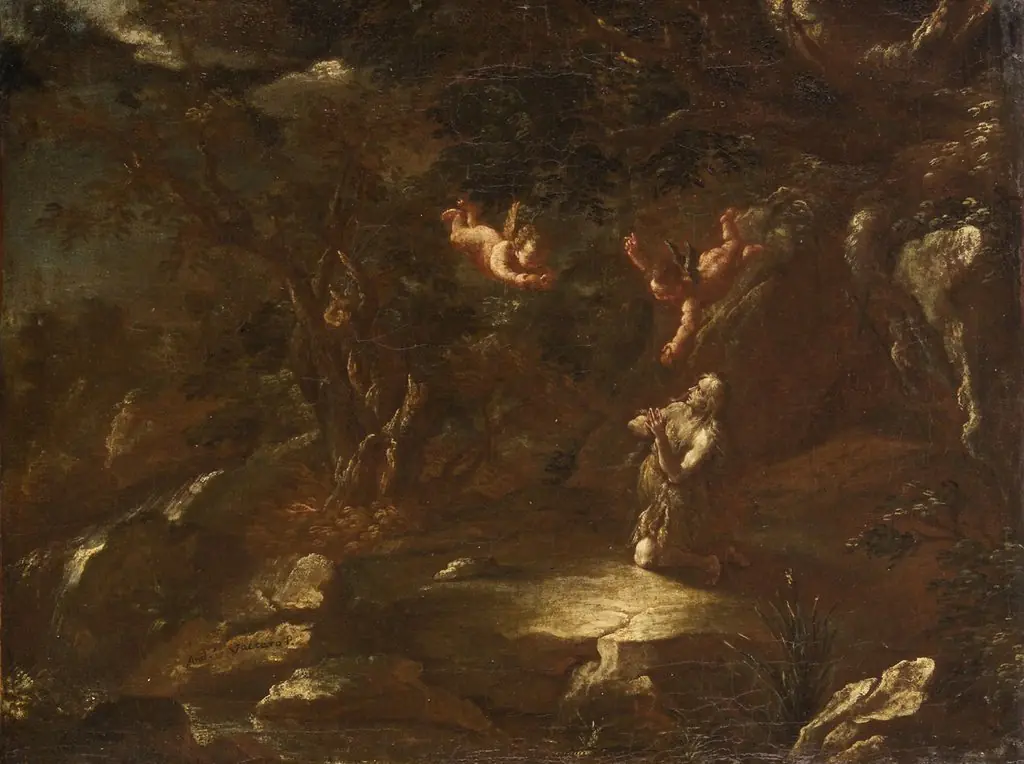 Hl. Maria Aegyptiaca
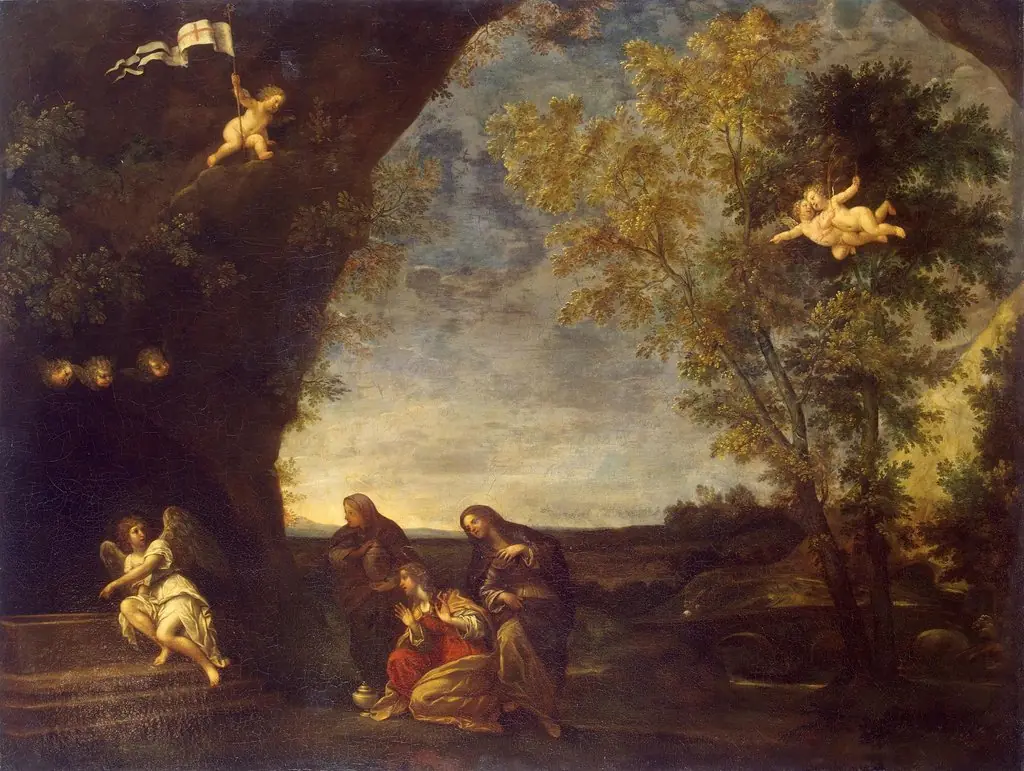 Holy Women at Christ's Tomb
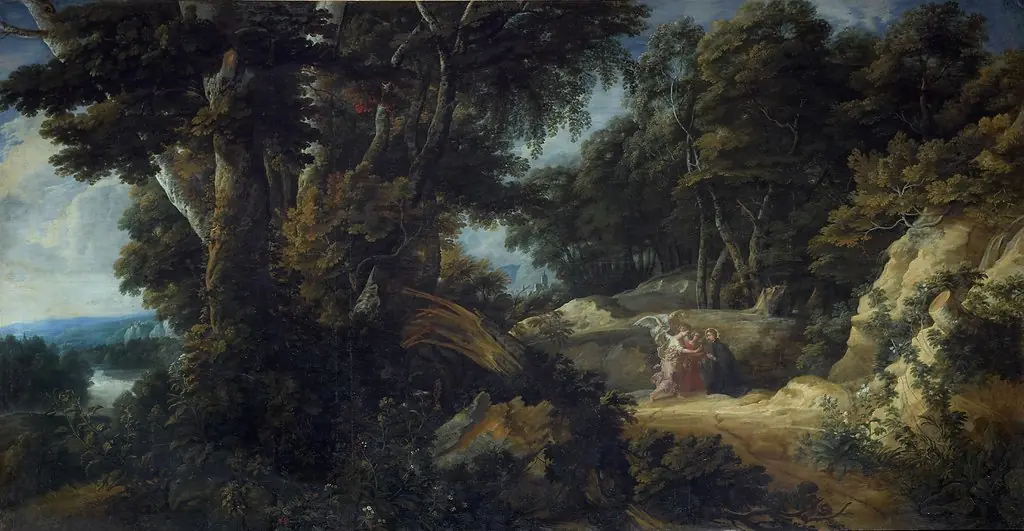 Extensive forest landscape with St. Stanisław Kostka
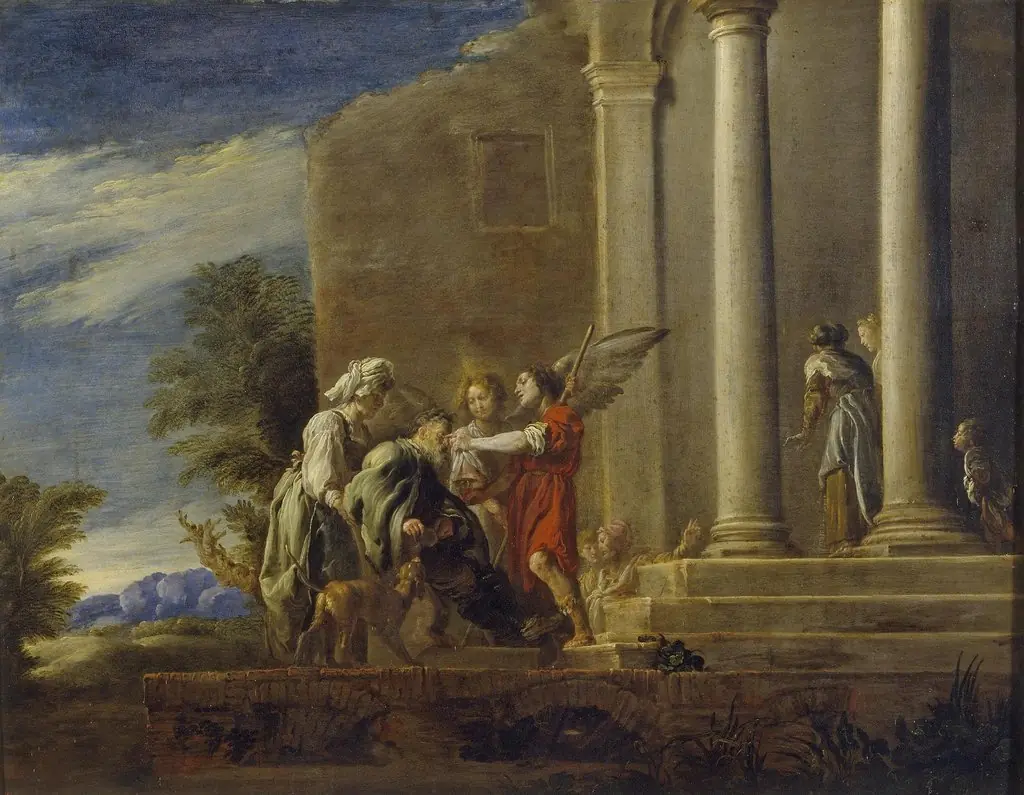 Healing of Tobit
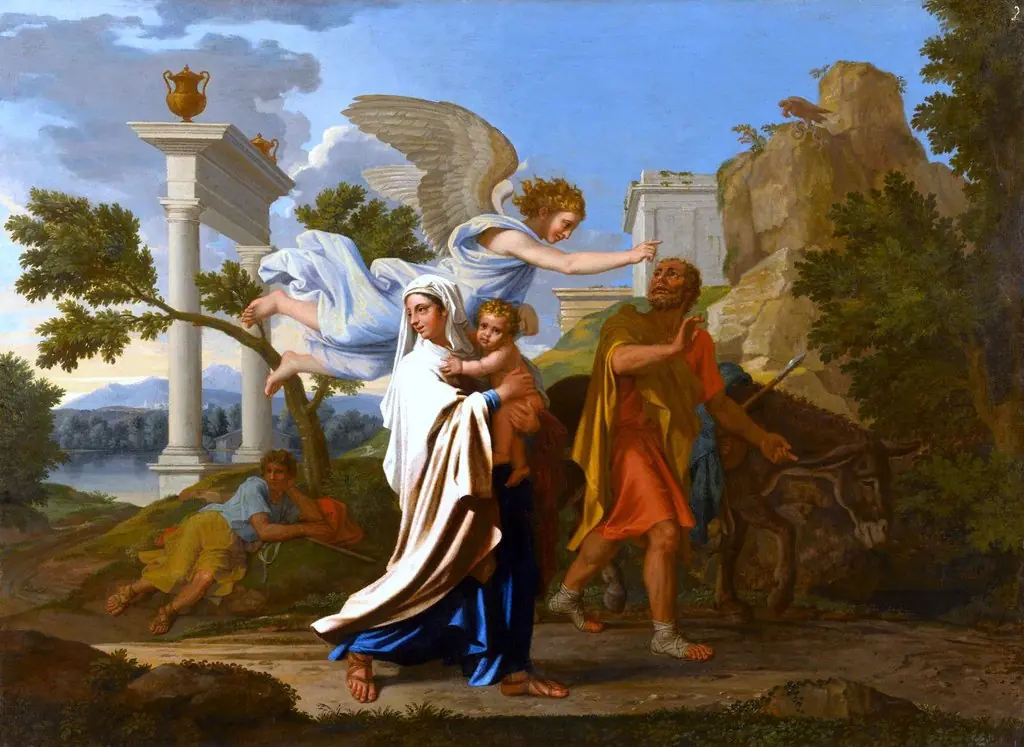 The Flight into Egypt