Artwork
Squirrel on a Peach Branch
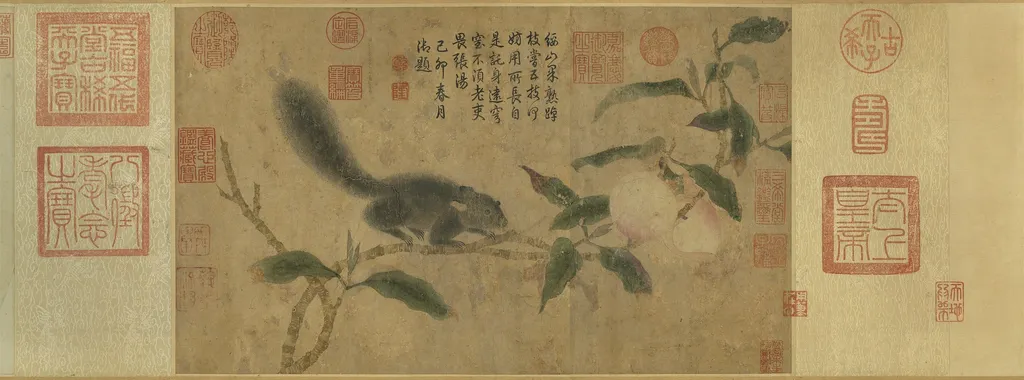
Squirrel on a Peach Branch is an unspecified painting by the Song dynasty landscape artist Qian Xuan. It dates from 1280 and is held in the collection of the National Palace Museum.
About this work
Overview
Its modest scale and restrained palette reflect the aesthetic priorities of literati artists seeking harmony between form and stillness.
Created around 1280 by Qian Xuan of Huzhou, this ink-and-color painting captures a squirrel resting on a peach branch. Executed during the political shift from the Southern Song to the Yuan dynasty, the work exemplifies the scholarly painting tradition that valued quiet observation of nature. Its modest scale and restrained palette reflect the aesthetic priorities of literati artists seeking harmony between form and stillness.
Subject & Meaning
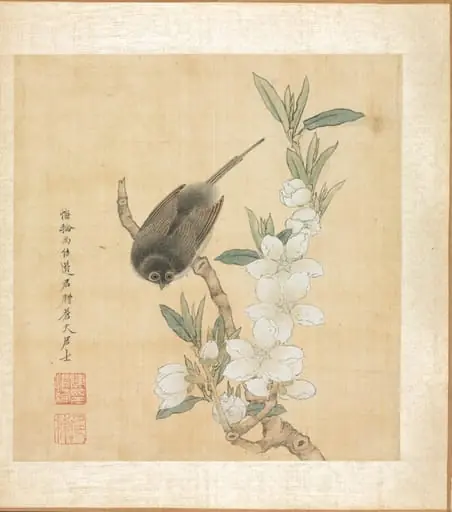
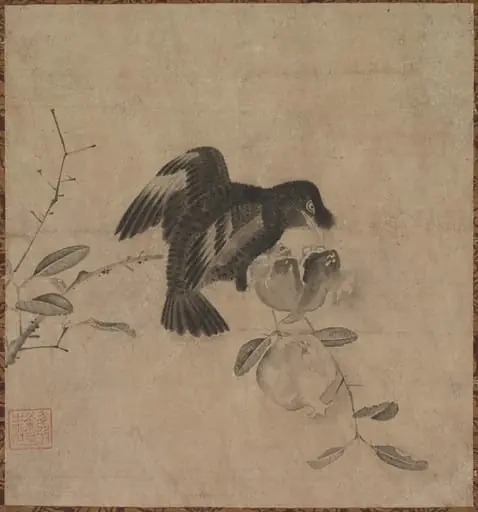
The squirrel, rendered in dark tones, perches delicately on a branch bearing peaches and foliage painted in lighter washes. Peaches symbolize longevity in Chinese culture, while the squirrel’s alert posture suggests vitality within tranquility. The composition avoids narrative drama, instead inviting contemplation of natural life, aligning with Daoist and Confucian ideals of balance and quiet virtue in a time of upheaval.
Technique & Style
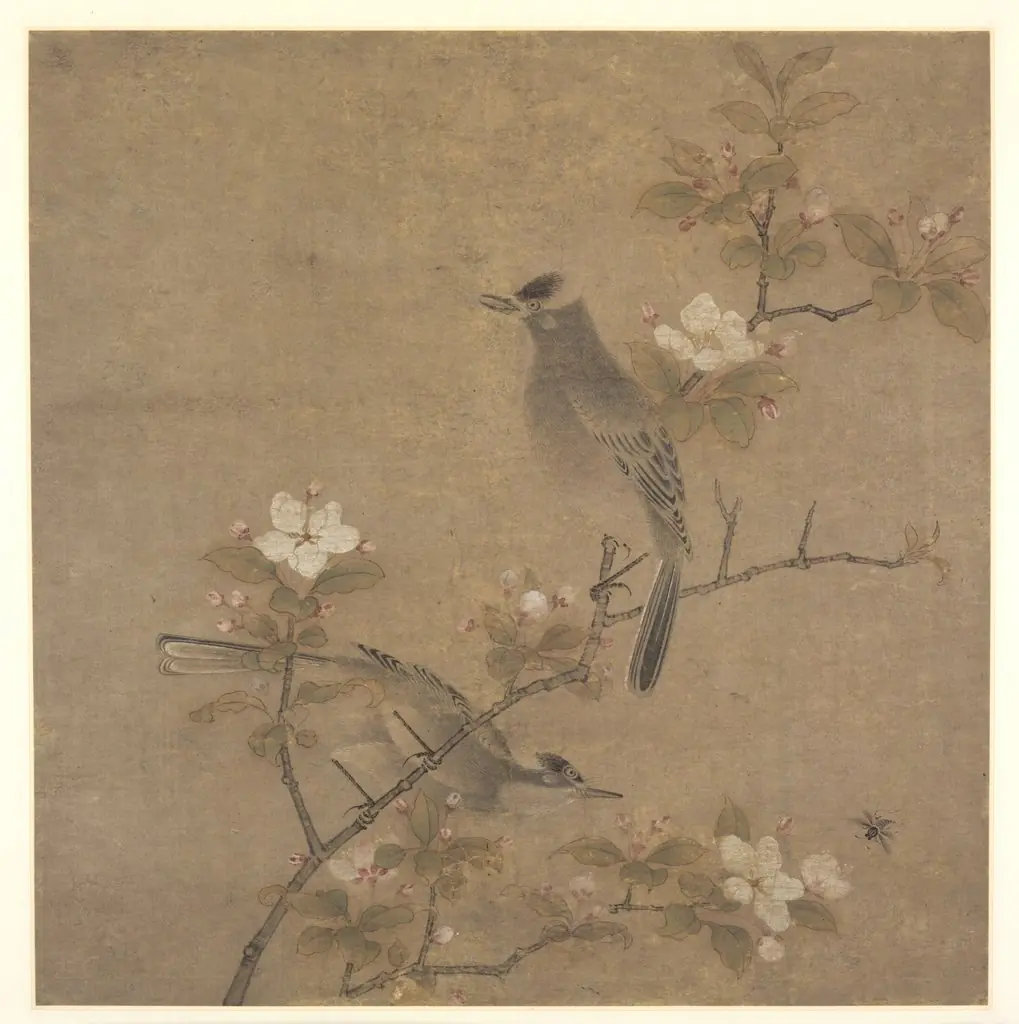
Qian Xuan employed fine brushwork and layered ink washes to achieve subtle gradations of tone. The squirrel’s fur is suggested with precise, controlled strokes, while leaves and fruit are rendered with soft outlines and delicate color modulation. The muted beige background, lightly textured, enhances the sense of spatial depth without distraction.
Calligraphic inscriptions in the upper right anchor the image within the literati tradition of integrating poetry and painting.
History & Provenance
Qian Xuan, also known as Shun Ju and Yu Tan, was a scholar-artist who withdrew from official service after the Mongol conquest. His works, including this one, were preserved by collectors who valued his adherence to Song-era aesthetics amid Yuan political change. The painting entered the imperial collection and remains today in the National Palace Museum, its lineage reflecting its enduring status among connoisseurs of refined brushwork.
Context
During the late 13th century, many Han Chinese literati resisted collaboration with the new Yuan regime. Artists like Qian Xuan turned to nature subjects as a form of cultural preservation. Paintings of animals and plants, rendered with quiet precision, became vehicles for expressing loyalty to earlier dynastic values. This work belongs to a broader movement that elevated personal expression over courtly grandeur.
Legacy
Qian Xuan’s approach influenced later generations of scholar-painters who favored intimate natural scenes over monumental landscapes. His synthesis of technical discipline and philosophical restraint helped define the literati ideal in Yuan and Ming painting. Though small in scale, this work endures as a quiet testament to an artist’s commitment to aesthetic integrity during a period of profound cultural transition.
Artist & collection

Artist
Qian Xuan (simplified Chinese: 钱选; traditional Chinese: 錢選; pinyin: Qián Xuǎn; Wade–Giles: Ch'ien Hsüan; 1235–1305), courtesy name Shun Ju (舜举), pseudonyms Yu Tan (玉潭, "Jade Pool"), Xi Lanweng (习嬾翁), and Zha Chuanweng…