Artwork
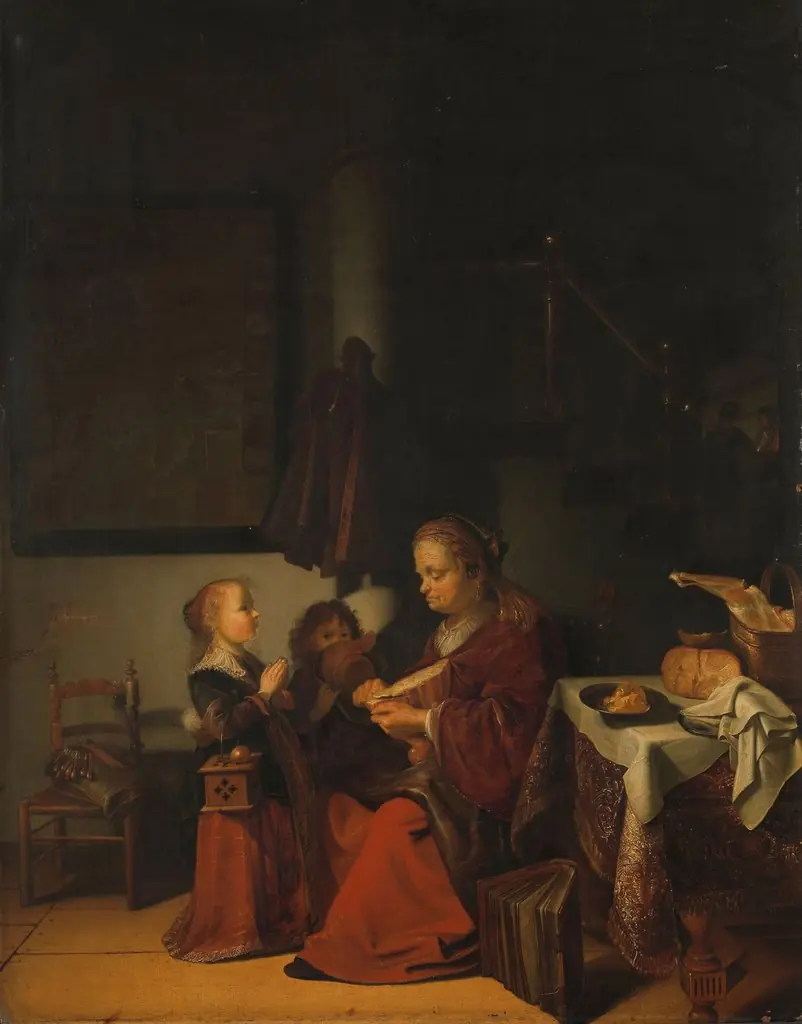
A mother feeding porridge to her child
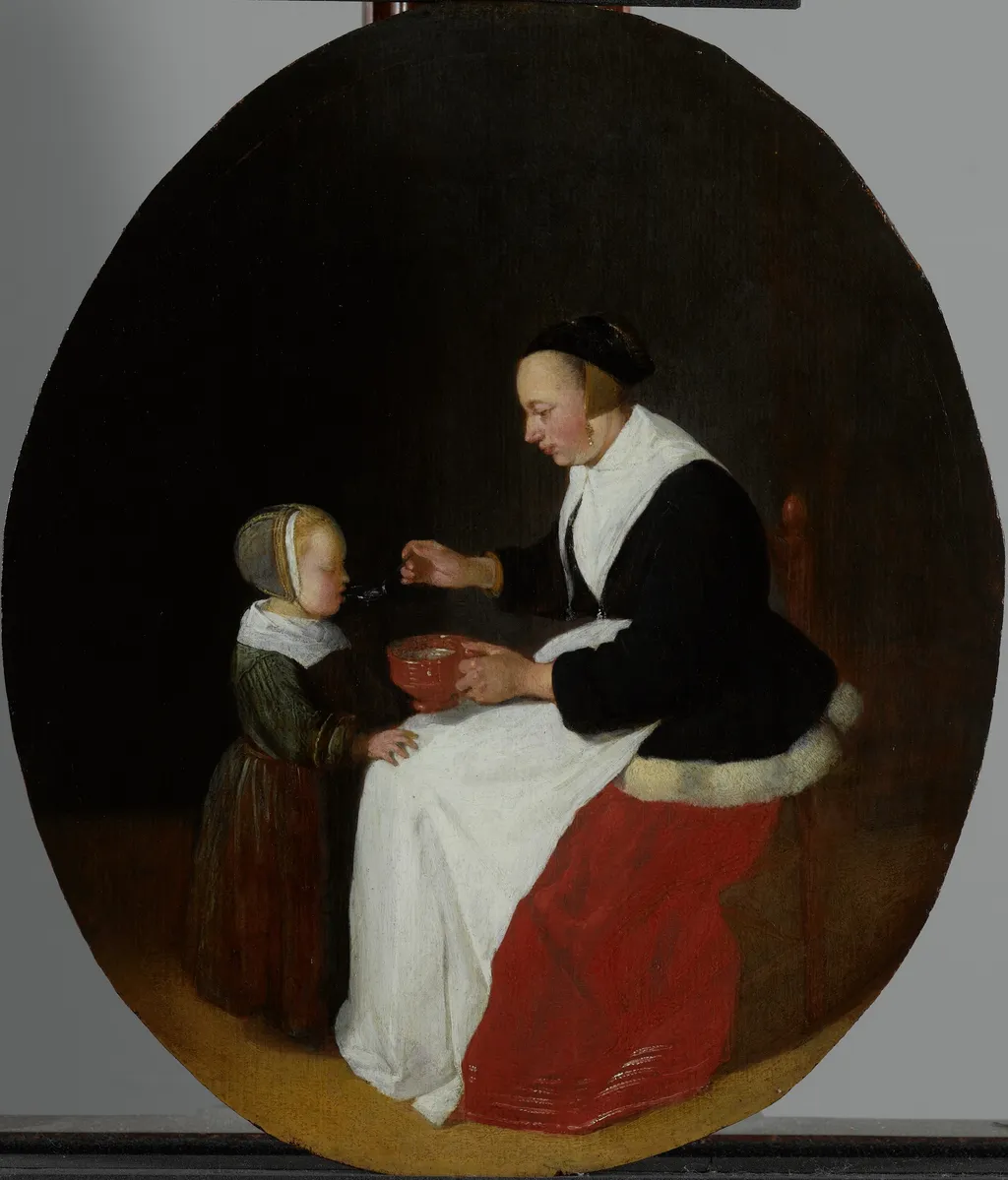
A mother feeding porridge to her child is an oil painting by the Dutch Golden Age artist Quirijn van Brekelenkam. It dates from 1650 and is held in the collection of the Amsterdam Museum.
About this work
Technique & Style
The work is an oil painting executed on wooden panel, reflecting the genre scene tradition of mid‑17th‑century Dutch art.
The work is an oil painting executed on wooden panel, reflecting the genre scene tradition of mid‑17th‑century Dutch art. Quirijn van Brekelenkam’s handling of light and composition emphasizes the domestic intimacy of a mother feeding porridge to her child, with meticulous brushwork that renders texture and spatial depth. The painting measures approximately 30.5 cm in height and 25.5 cm in width, and it remains in the collection of the Rijksmuseum, originally owned by Adriaan van der Hoop.
History & Provenance
The painting was created by Quirijn van Brekelenkam in 1650 as an oil on panel genre scene. It entered the collection of Adriaan van der Hoop, who bequeathed it to the Rijksmuseum in Amsterdam, where it remains on display.
The work measures 30.5 cm in height and 66 cm in width.
The painting A mother feeding porridge to her child by Quirijn van Brekelenkam is held in the Rijksmuseum collection at Amsterdam, originally owned by Adriaan van der Hoop. It was created in 1650 using oil paint on panel, measuring 30.5 cm in height and 25.5 cm in width.
Context
The painting A mother feeding porridge to her child by Quirijn van Brekelenkam (1650) is a genre scene executed in oil on panel, reflecting domestic life in 17th-century Dutch art. It was owned by Adriaan van der Hoop and is held in the Rijksmuseum and Amsterdam Museum collections. Scholarship situates the work within van Brekelenkam's broader oeuvre of genre paintings, emphasizing his focus on intimate household moments and material realism characteristic of the Dutch Golden Age.
Legacy
The painting has been frequently cited in scholarship on 17th-century Dutch domestic genre scenes for its intimate portrayal of maternal care, influencing later interpretations of household intimacy in art history. Its presence in the Adriaan van der Hoop collection contributed to the dissemination of genre painting among private collectors in the Netherlands, shaping collecting practices in the 19th century.
Overview
A mother feeding porridge to her child is a Dutch Golden Age painting executed in oil paint around 1650.
Subject & Meaning
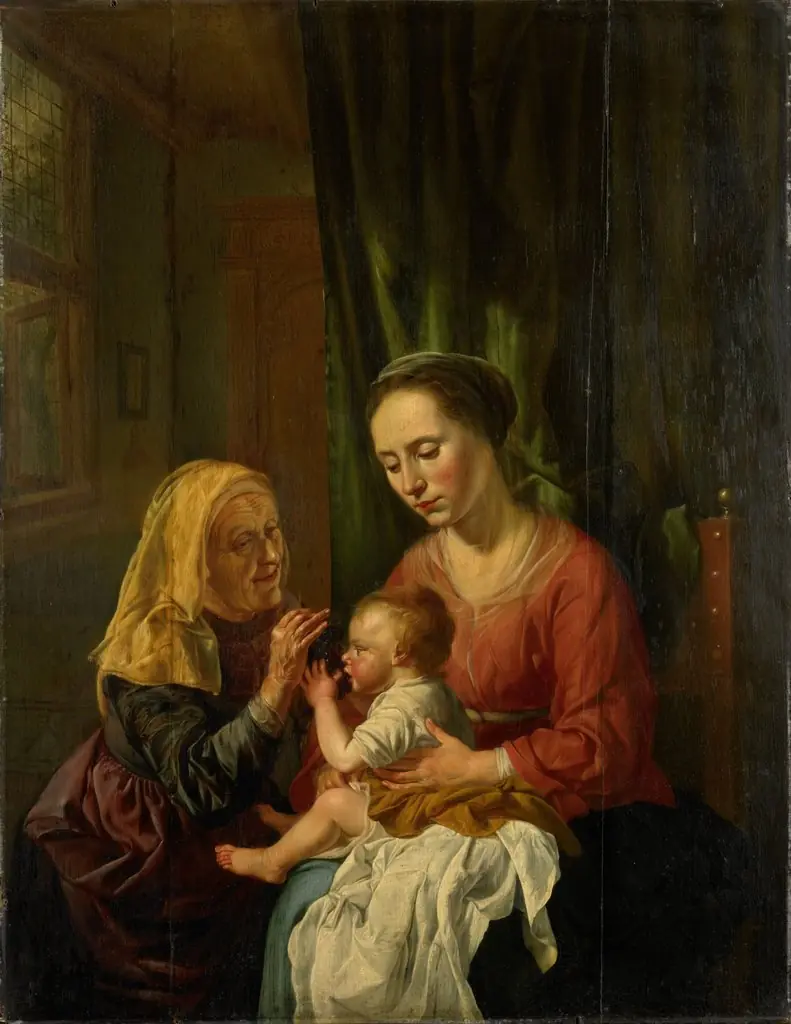
The painting depicts a quiet domestic scene: a woman feeds porridge to a young child, their figures illuminated against a dark background. The woman's rolled-up sleeve and gentle action convey a sense of tender care.
Own this work as a print
Artist & collection
Artist
Quirijn or Quiringh Gerritsz van Brekelenkam (1622/29, Zwammerdam – 1669/79, Leiden) was a Dutch Baroque genre painter.