Artwork
Portrait of a Gentleman
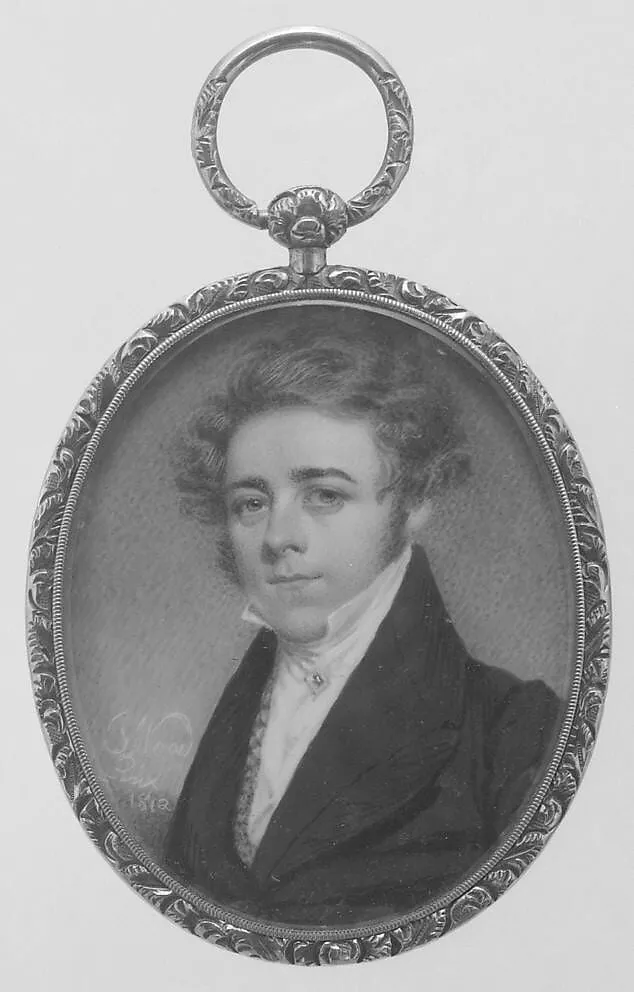
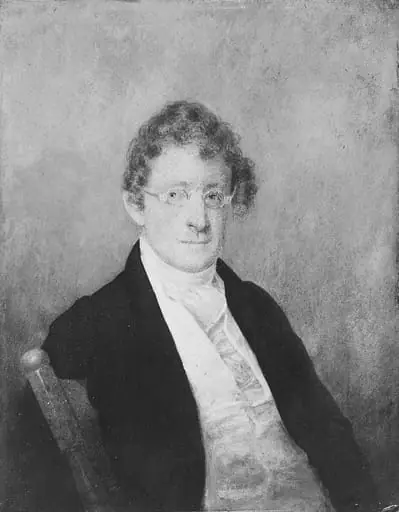
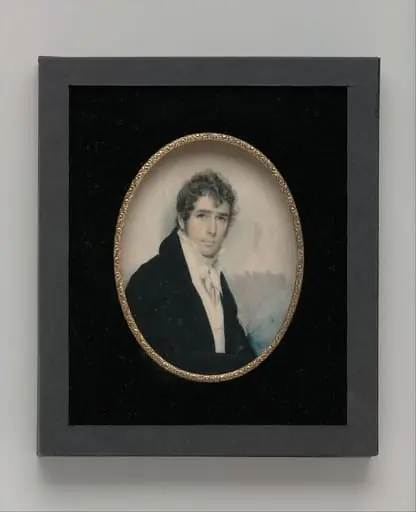
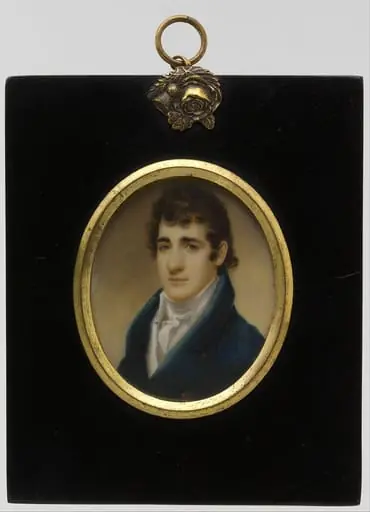
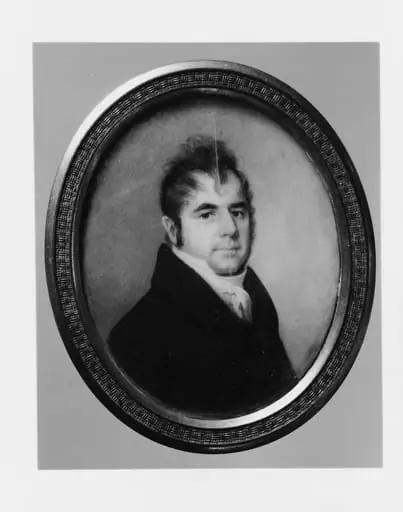
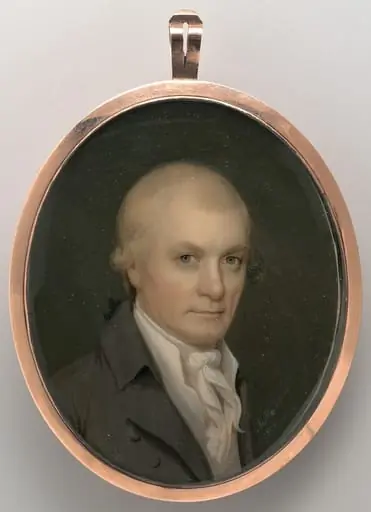
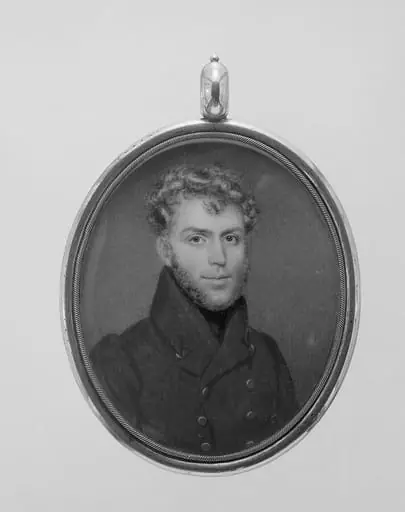
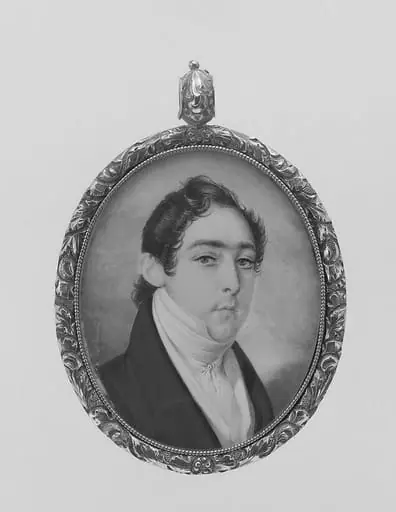
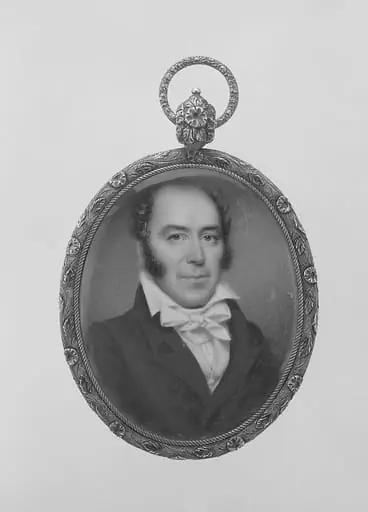
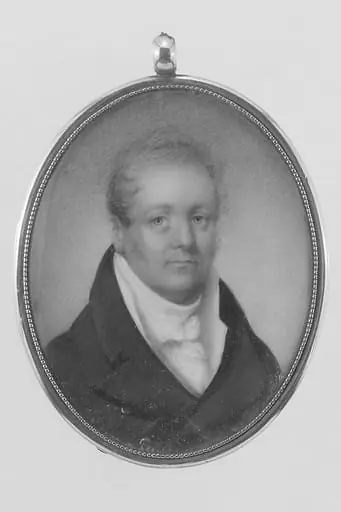
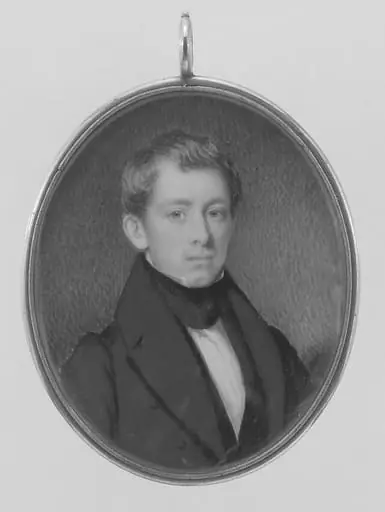
Portrait of a Gentleman is a watercolor painting by the Biedermeier artist Joseph Wood. It dates from 1812 and is held in the collection of the Metropolitan Museum of Art.
About this work
Technique & Style
The miniature is executed in watercolor on ivory, a support and medium combination characteristic of early nineteenth-century American portrait practice.
The miniature is executed in watercolor on ivory, a support and medium combination characteristic of early nineteenth-century American portrait practice. The composition is tightly scaled, with the work measuring roughly 7.2 cm in height by 5.9 cm in width, an intimate format suited to the delicacy of watercolor washes applied over a smooth ivory ground. The handling reflects the refined miniaturist technique associated with Joseph Wood, whose brushwork in this period favored precise linear definition and subtle tonal modulation rather than broad painterly effects.
Stylistically, the portrait adheres to the conventions of genteel male portraiture, presenting the sitter with restrained formality and careful attention to facial features. The classification of the work within the Metropolitan Museum of Art's American Wing situates it within the institutional context of American decorative and portrait arts.
History & Provenance
Created in 1812, this watercolor on ivory portrait depicts an unidentified gentleman and is attributed to the American artist Joseph Wood. The work measures approximately 7.2 by 5.9 units. While specific details regarding the original commission or the identity of the sitter remain unrecorded in the available documentation, the piece entered the collection of the Metropolitan Museum of Art, where it is classified within the American Wing.
The museum accessioned the object under the number 2006.235.278, marking its formal inclusion in the institution's holdings. No intermediate ownership history or prior exhibition records are provided in the current sources.
Portrait of a Gentleman (1812) by Joseph Wood is held in the Metropolitan Museum of Art, New York, where it is catalogued under accession number 2006.235.278 and listed in the American Wing’s collection. The work, executed in watercolor on ivory, measures 7.2 × 5.9 in and depicts a man. Its classification is a portrait within the museum’s American decorative arts holdings.
Exhibition records are not mentioned in the consulted documentation, indicating that the painting has not been featured in publicly listed exhibitions according to the available sources.
Overview
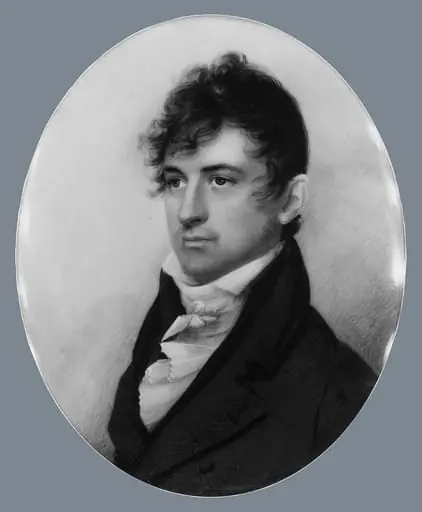
Joseph Wood's "Portrait of a Gentleman," created in 1812, is a small watercolor on ivory. It depicts a man in formal attire, whose composed gaze directly engages the viewer. This intimate format was popular for personal keepsakes during the early 19th century, offering a detailed yet portable likeness that could be carried or displayed privately.
Subject & Meaning
The sitter, a man dressed in a dark coat and a crisp white cravat, presents a calm and composed demeanor. His hair is neatly styled, contributing to an overall impression of refinement. Such miniature portraits often served as personal mementos, cherished for their ability to capture and preserve the likeness of loved ones, much like photographs in later eras.
Context
Miniature portraits on ivory held significant cultural importance in the early 19th century, serving as intimate personal objects. Often housed within lockets, cases, or small frames, they were designed to be carried or displayed privately. These small-scale works functioned as cherished reminders of family members or close acquaintances, preceding the widespread availability of photographic images.
Artist & collection