Artwork
The Emblem of Human Life
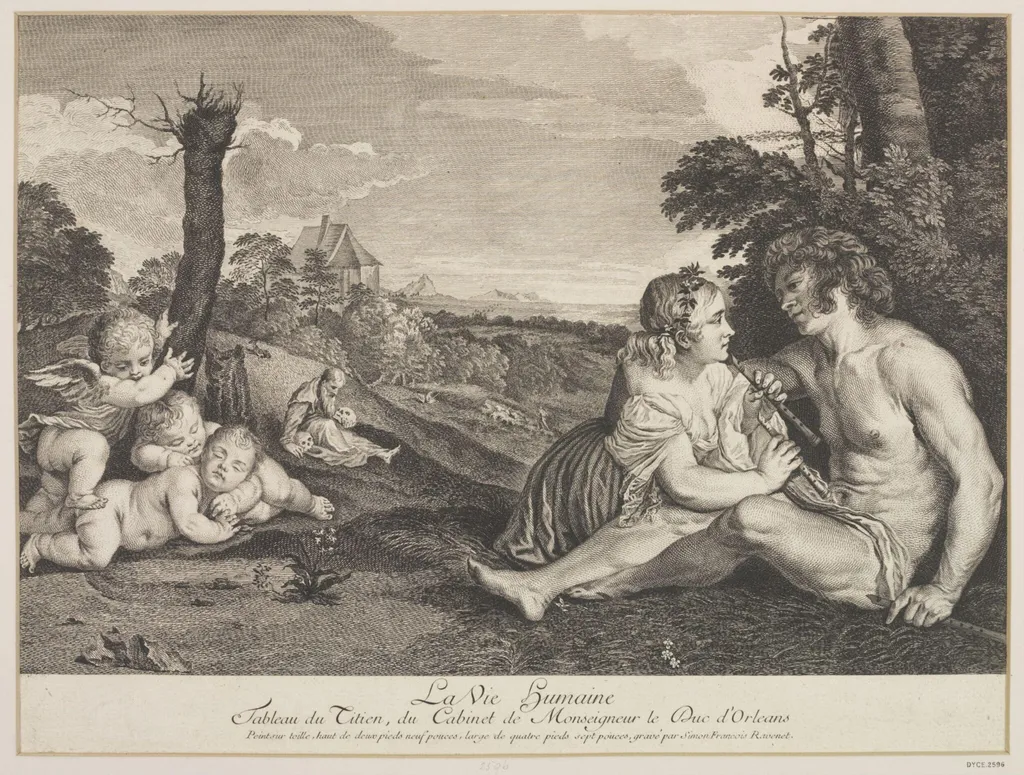
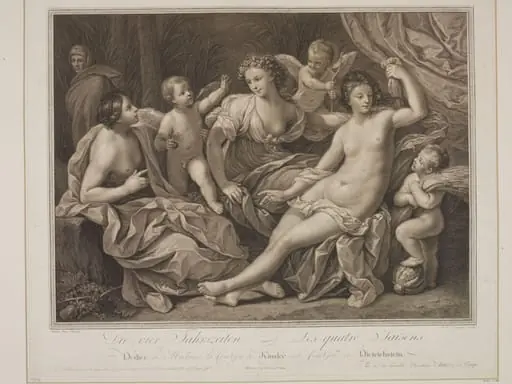
The Emblem of Human Life is a print by Simon Francis Ravenet. It dates from 1750 and is held in the collection of the Victoria and Albert Museum.
About this work
Overview
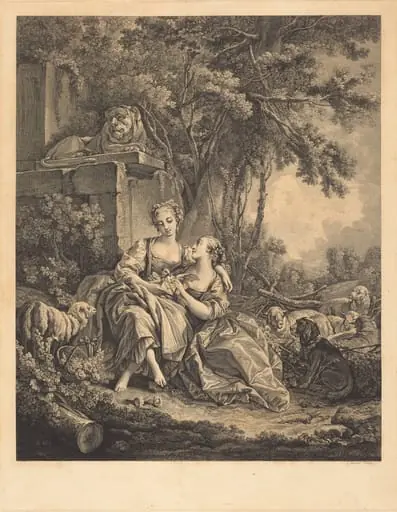
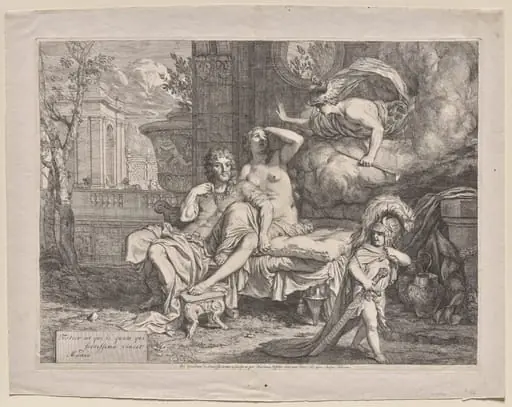
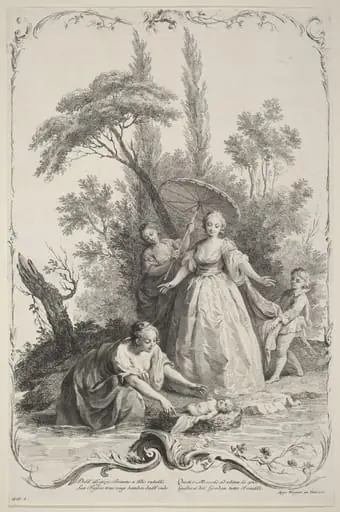
Simon Francis Ravenet the elder’s 1750 print titled The Emblem of Human Life is an engraving on paper that adapts a composition originally painted by Titian, once known as La Vie Humaine. The image presents a pastoral scene populated by a clothed woman, a nude figure, and a quartet of cherubic children, set against a gently rolling landscape with a distant farmhouse and sky.
Subject & Meaning
The central tableau contrasts a richly dressed woman with a reclining nude, a pairing that, together with the playful cherubs, evokes the allegorical representation of life’s varied stages or moral oppositions. The title reinforces this interpretive frame, suggesting a contemplation of human existence through the juxtaposition of modesty, vulnerability, and youthful innocence.
Technique & Style
Ravenet employed the fine lines and tonal gradations characteristic of mid‑eighteenth‑century engraving to translate Titian’s painterly composition into a monochrome print. The delicate hatching renders the textures of fabric, flesh, and foliage, while the careful handling of light creates a soft atmospheric background that mirrors the original’s tonal harmony.
History & Provenance
The engraving derives from a Titian painting that passed through the notable Crozat and Orleans collections before being rendered in print. Ravenet’s 1750 version circulated as a reproductive work, allowing broader access to the composition at a time when the original canvas was held in private aristocratic hands.
Context
Produced during a period when reproductions of celebrated masterworks were in demand, the print reflects the Enlightenment‑era interest in moralizing imagery and the didactic potential of art. Its allegorical content aligns with contemporary tastes for emblematic subjects that could convey ethical lessons through visual symbolism.
Own this work as a print
Artist & collection
Artist
Simon Francis Ravenet made book illustrations and single-sheet prints in the early-to-mid 1700s, turning biblical scenes and emblem books into crisp engravings.