Artwork
Lincoln Cathedral
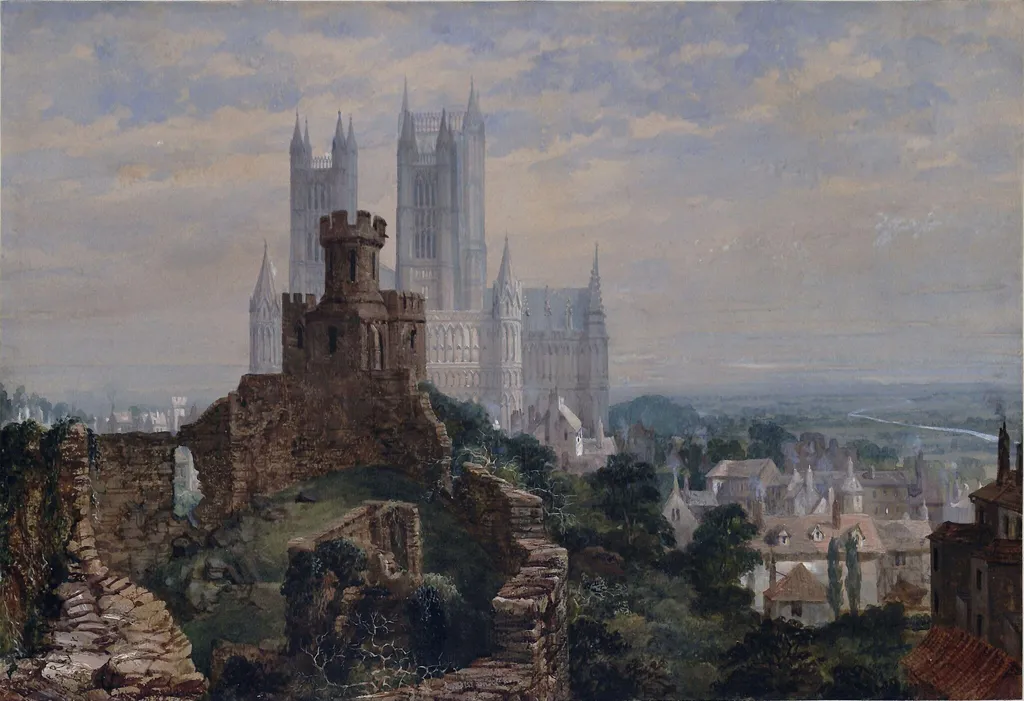
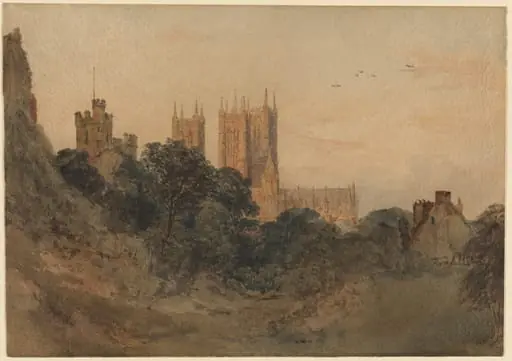
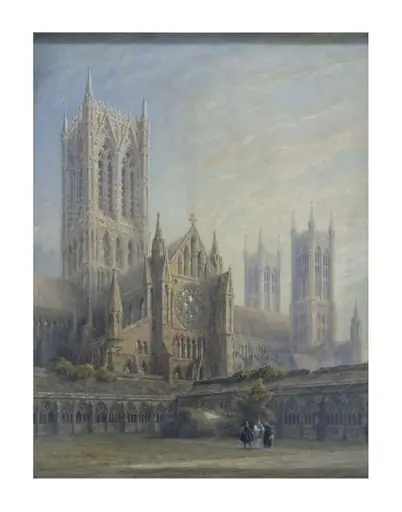
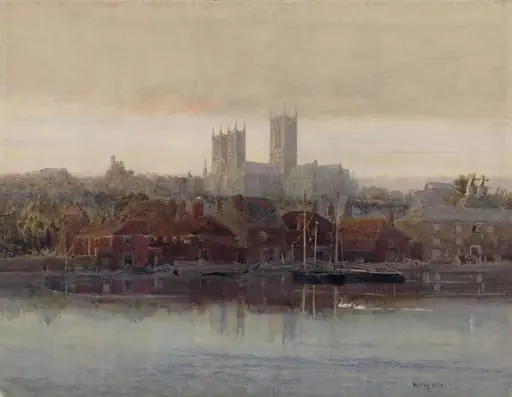
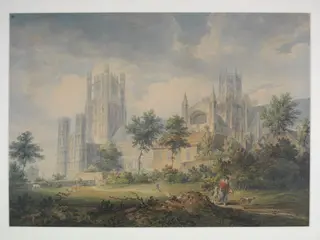
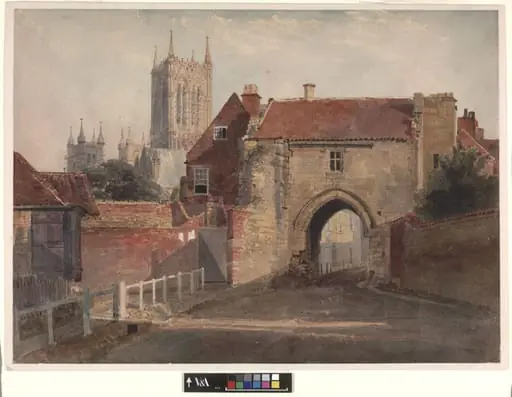
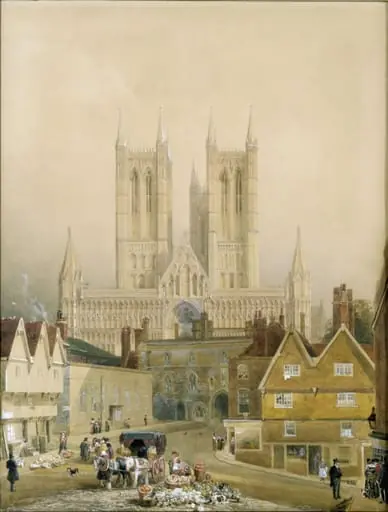
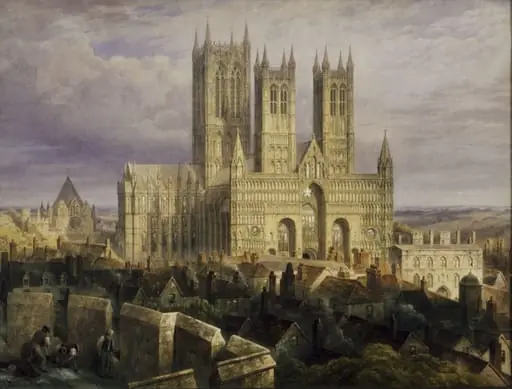
Lincoln Cathedral is a watercolor work on paper by the British Romanticist artist Louise Rayner. It dates from 1862 and is held in the collection of the Victoria and Albert Museum.
About this work
Overview
Louise Rayner created this watercolour of Lincoln Cathedral in 1862, capturing the structure with delicate brushwork and a restrained palette.
Louise Rayner created this watercolour of Lincoln Cathedral in 1862, capturing the structure with delicate brushwork and a restrained palette. The work is signed and dated by the artist, reflecting her practice of documenting architectural subjects with precision. Rendered in transparent watercolour, the piece exemplifies the 19th-century tradition of topographical art, where accuracy and atmospheric effect were equally valued.
Subject & Meaning
The painting presents Lincoln Cathedral as a dominant yet harmonious presence within its landscape. Surrounded by modest dwellings and rolling terrain, the cathedral is framed not as an isolated monument but as an integral part of daily life. The soft light and quiet activity of the town suggest a contemplative relationship between sacred architecture and the community that surrounds it.
Technique & Style
Rayner employed light, layered washes to convey the texture of stone and the diffusion of daylight. Her brushwork is precise yet fluid, allowing the paper’s white surface to suggest highlights and atmospheric glow. The sky, rendered in pale washes of ochre and grey, enhances the sense of depth without overpowering the architecture. This method aligns with the Victorian preference for luminous, naturalistic watercolour landscapes.
History & Provenance
Created during a period when topographical watercolours were widely collected, the painting remained in private hands until entering the Victoria and Albert Museum’s collection. Its survival in good condition reflects its careful preservation by successive owners. Rayner’s consistent documentation of English ecclesiastical buildings makes this work part of a broader archival effort to record architectural heritage in the mid-19th century.
Context
In the 1860s, watercolour was a respected medium for both amateur and professional artists documenting Britain’s historic buildings. Rayner, one of the few women to gain recognition in this field, contributed to a growing interest in regional architecture. Her works were often exhibited and reproduced, helping to shape public perception of England’s medieval heritage during a time of rapid industrial change.
Legacy
Rayner’s watercolours, including this depiction of Lincoln Cathedral, remain valuable records of architectural detail and rural life in Victorian England. Though not widely known today, her body of work influenced later topographical artists and continues to inform historical studies of ecclesiastical structures. The painting endures as a quiet testament to the skill of a woman who carved a space for herself in a male-dominated artistic tradition.
Own this work as a print
Artist & collection
Artist
Louise Ingram Rayner (21 June 1832 – 8 October 1924) was a British watercolour painter, mostly of crowded and detailed street scenes in London, Edinburgh and elsewhere, but also interior views of historic buildings, with Haddon Hall a…