Artwork
The Queen of Sheba (La Reine de Saba)
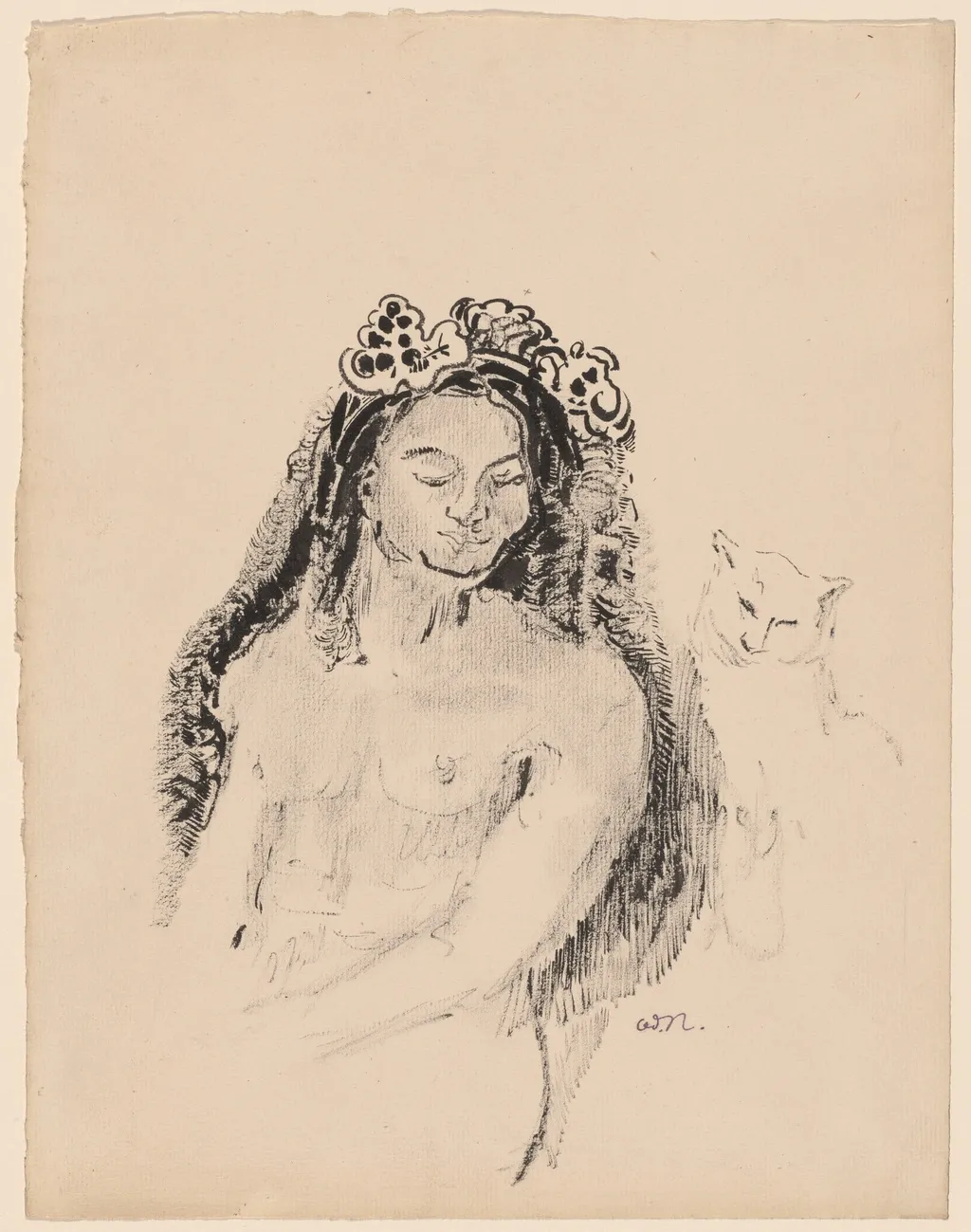
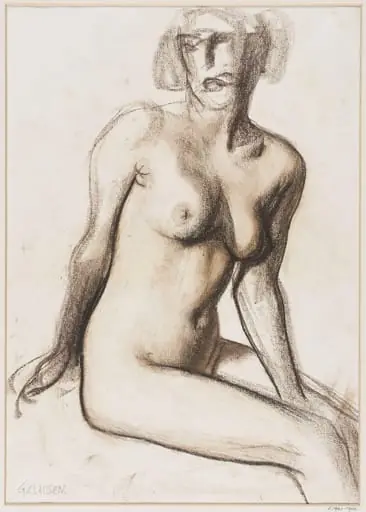
The Queen of Sheba (La Reine de Saba) is an ink drawing by the Impressionist artist Odilon Redon. It dates from 1898 and is held in the collection of the National Gallery of Art.
- Inscription
- Inscribed:lower right in ink: Od. R.
About this work
Overview
Odilon Redon's drawing depicts the Queen of Sheba in a contemplative seated posture, rendered entirely in brush and black ink on laid paper.
Odilon Redon's drawing depicts the Queen of Sheba in a contemplative seated posture, rendered entirely in brush and black ink on laid paper. The composition is spare, with no background details beyond the off-white surface, focusing attention on the figure’s stillness and the expressive power of line. The work belongs to Redon’s series of symbolic portraits that prioritize mood over narrative clarity.
Subject & Meaning
The figure, identified as the Queen of Sheba, is portrayed not as a historical ruler but as an enigmatic presence. Her calm demeanor and closed expression suggest introspection rather than grandeur. The inclusion of a feline form beside her introduces an element of mystery, possibly symbolizing intuition or the unseen, aligning with Redon’s interest in the subconscious and mythic archetypes.
Technique & Style
Redon employs fluid, economical ink strokes to define form, avoiding detail in favor of suggestive contours. The contrast between the dense black lines and the untouched paper creates a sense of luminosity and weightlessness. The sketch-like quality reflects his belief in drawing as a direct conduit for inner vision, prioritizing emotional resonance over anatomical precision.
History & Provenance
This drawing is part of Redon’s late 19th-century output, created during a period when he increasingly turned to symbolic and literary subjects. It entered the collection of the National Gallery of Art in Washington, D.C., through a gift or acquisition that reflects institutional recognition of his contributions to modern graphic art. Its provenance remains tied to private collections before its public acquisition.
Context
Redon created this work amid broader artistic shifts toward Symbolism, where artists sought to express ideas beyond the visible world. While contemporaries like Moreau explored myth with elaborate detail, Redon favored ambiguity and minimalism. His drawings, often unframed and intimate, were intended as private meditations rather than public statements.
Legacy
The drawing exemplifies Redon’s influence on 20th-century expressive drawing, particularly among Surrealists drawn to his evocative ambiguity. Its restraint and psychological depth helped redefine the potential of ink on paper as a medium for inner experience. Though not widely exhibited, it remains a key example of his unique visual language.
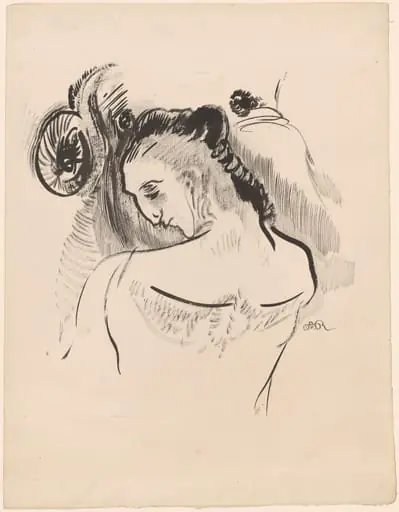
Own this work as a print
Artist & collection

Artist
Odilon Redon (born Bertrand Redon; French: ; 20 April 1840 – 6 July 1916) was a French Symbolist draftsman, printmaker, and painter.

 Etude
Etude Stehende Weibliche akte (Standing Female Nude)
 Study for "Stars and Dews and Dreams of Night"
 Seated Female Nude Leaning to the Left
 Seated Nude
 Seated Nude and a Foot
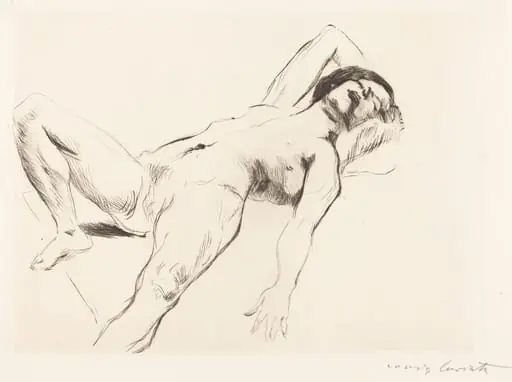 Liegender Weiblicher Akt I (Reclining Female Nude I)
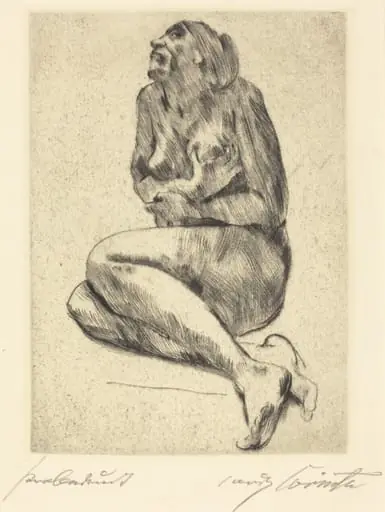 Kauernder weiblicher akt (Crouching Female Nude)
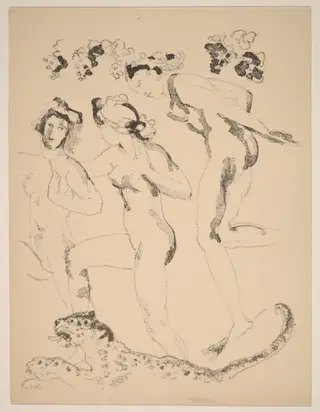 Bacchantes
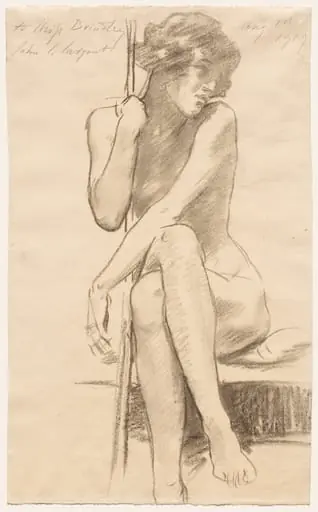 Female Nude Seated on a Low Bench
 Untitled
- Young Man (Jeune Homme)