Artwork
Half-length figure of a man with beard and beret
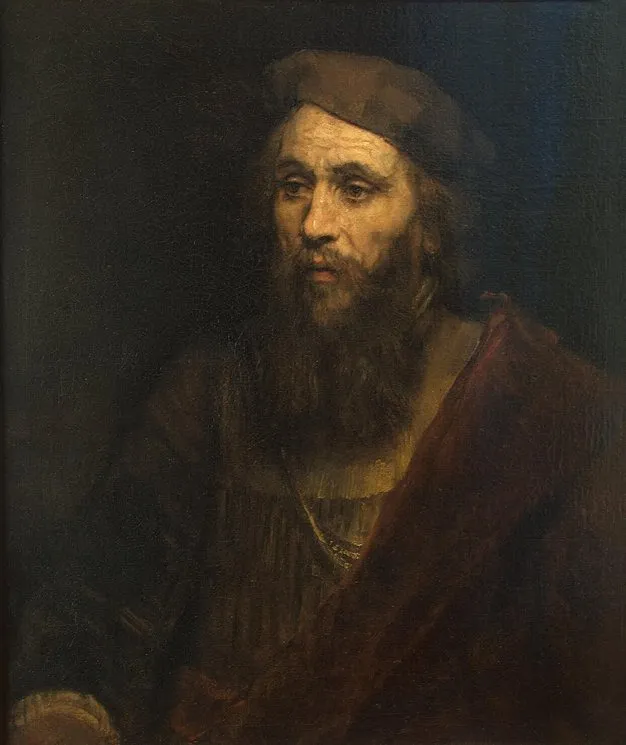
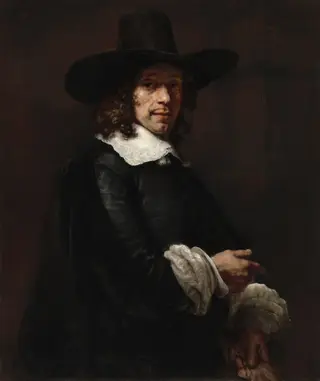
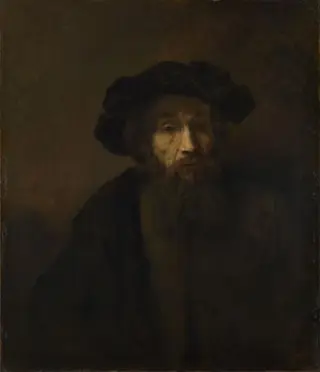
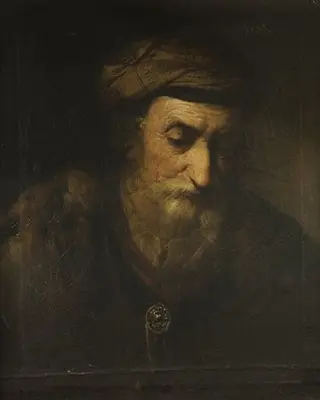
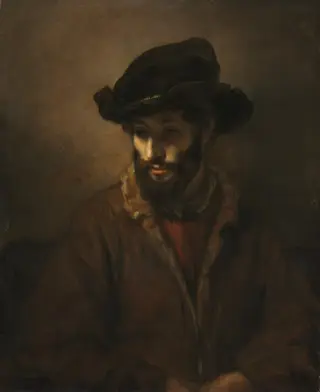
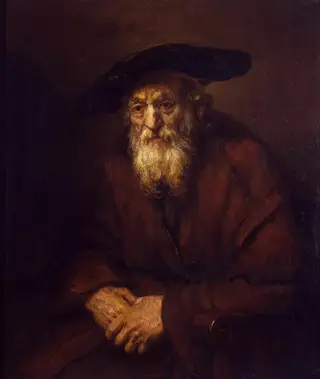
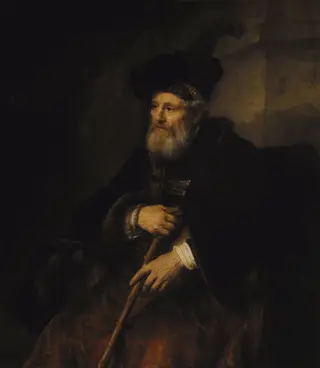
Half-length figure of a man with beard and beret is an oil painting by the Dutch Golden Age artist Rembrandt van Rijn. It dates from 1661 and is held in the collection of the Hermitage Museum.
About this work
Subject & Meaning
The painting is a portrait of a man, identified visually by his beard and beret, rendered in a half-length format that focuses attention on the sitter's head and upper torso. The combination of beard and beret was a conventional marker of mature masculinity and individual character in seventeenth-century Dutch portraiture, allowing Rembrandt to emphasize personality and contemplative presence rather than social rank or costume.
By isolating the figure against a plain ground and concentrating on the face, the work functions as a character study, inviting viewers to read the sitter through his expression, gaze, and the tactile handling of paint rather than through symbolic attributes. The absence of allegorical objects or narrative props reinforces the portrait's focus on the inner life of an individual, a hallmark of Rembrandt's late portrait practice.
Technique & Style
The work is an oil painting executed on canvas, depicting a half-length portrait of a bearded man wearing a beret. Its formal qualities include a restrained palette and careful rendering of facial features characteristic of Rembrandt's late portraiture. The composition emphasizes the sitter's introspective presence through chiaroscuro modeling and precise brushwork on the canvas support.
History & Provenance
The painting entered the collection of the Hermitage Museum in Saint Petersburg by 1851, when it was recorded as part of the Imperial Hermitage holdings.
The painting entered the collection of the Hermitage Museum in Saint Petersburg by 1851, when it was recorded as part of the Imperial Hermitage holdings. It is dated to 1661 based on the work’s internal records, aligning with Rembrandt’s late period. The canvas depicts a half-length figure of a bearded man wearing a beret, a motif consistent with Rembrandt’s portrait practice of the early 1660s. No documented commission or early provenance beyond its Imperial Hermitage accession is recorded in available sources.
The painting is held in the collection of the Hermitage Museum, where it is located alongside other works by Rembrandt. While the specific inventory or accession number is not provided in the available records, the work is identified as part of the museum's holdings of Dutch masters. The piece was featured in an exhibition titled "Dutch masters from the Hermitage," highlighting its presence in significant public displays of the artist's oeuvre.
Context
Scholarship on the half-length portrait of a man with a beard and beret emphasizes its significance within Rembrandt's mature portraiture, reflecting his interest in psychological depth and chiaroscuro. The work is housed in the Hermitage Museum and was featured in the exhibition 'Dutch masters from the Hermitage', underscoring its role in the broader narrative of 17th-century Dutch painting and its influence on portraiture.
The painting's depiction of a contemplative figure aligns with Rembrandt's exploration of individual character, situating it within the artistic milieu of the Dutch Golden Age where portraiture served both private and public functions.
Overview
Created in 1661, this oil on canvas portrait is attributed to Rembrandt van Rijn, a central figure of the Dutch Golden Age. The work presents a half-length view of a bearded gentleman wearing a dark beret and a brown robe with a lighter collar. The figure is set against a deep, muted background that isolates his face and emphasizes the painter’s handling of light.
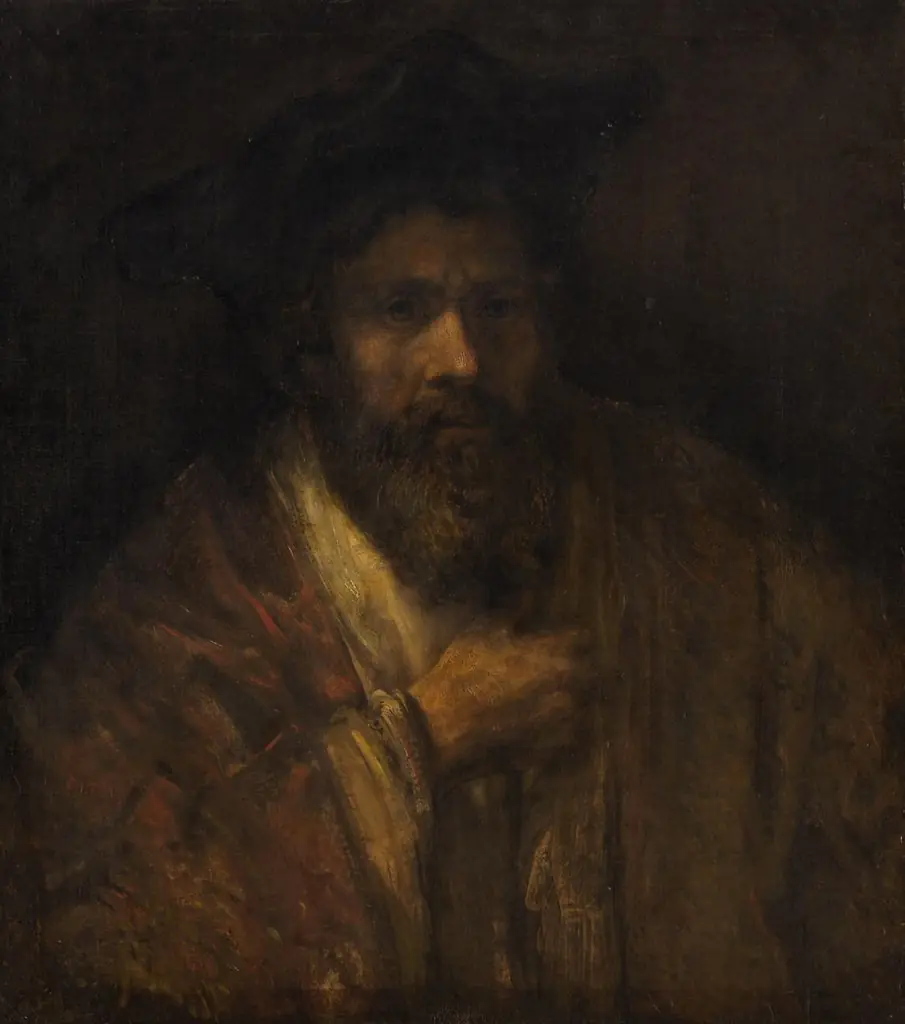
Artist & collection

Artist
Rembrandt Harmenszoon van Rijn, known mononymously as Rembrandt, was a Dutch Golden Age painter, printmaker, and draughtsman.