Artwork
Tobit and Anna with the Kid
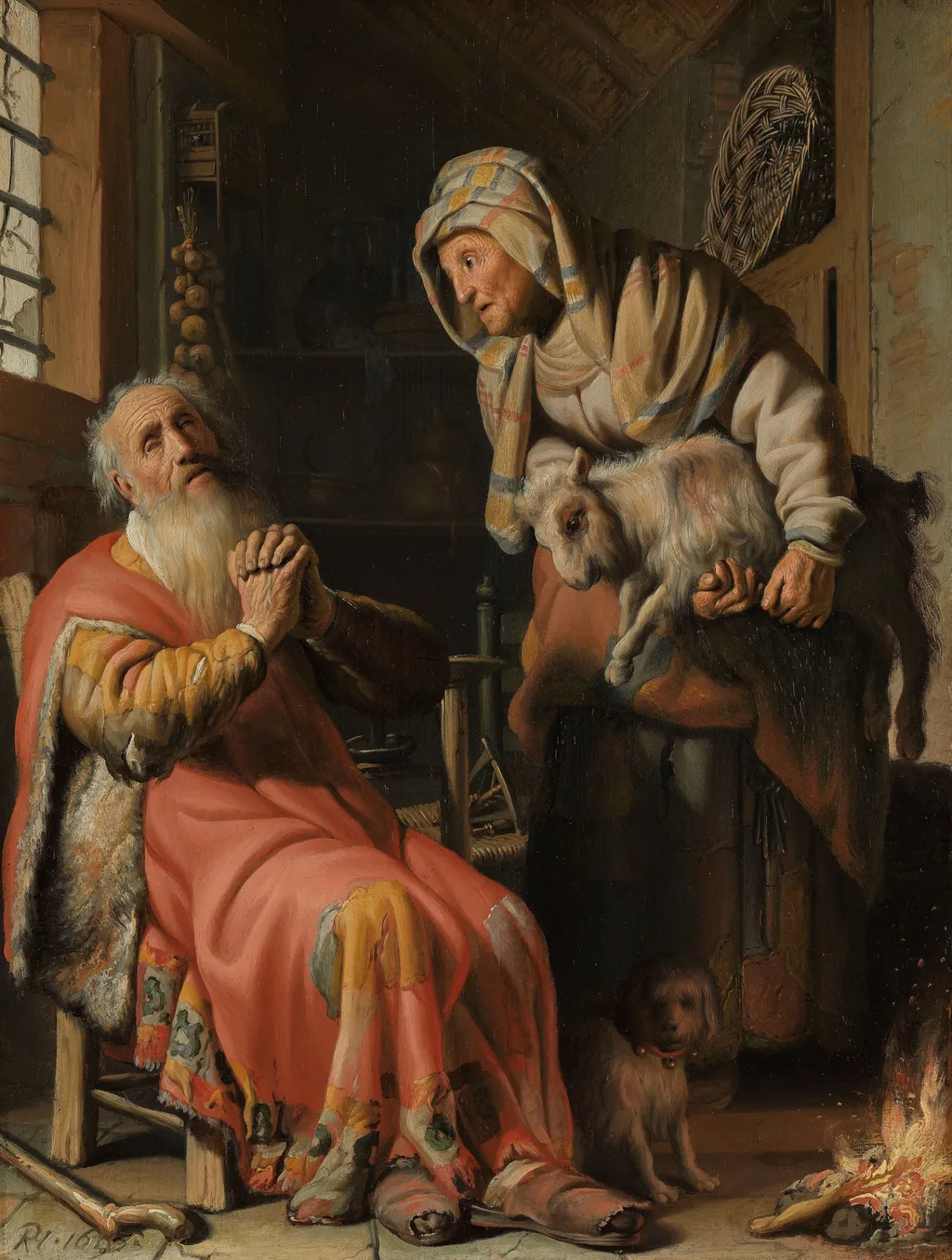
Tobit and Anna with the Kid is an oil painting by the Dutch Golden Age artist Rembrandt van Rijn. It dates from 1626 and is held in the collection of the Rijksmuseum. Rembrandt’s early oil on canvas, dated and signed 1626, portrays an elderly couple in a modest interior.
About this work
This painting shows an old couple in a quiet scene. Tobit and his wife Anna face each other with serious looks. It’s an early oil work by Rembrandt, signed and dated 1626.
The story comes from the Book of Tobit. Tobit is blind and upset with Anna over a missing goat. This small drama gives the painting its quiet tension.
Check out Rembrandt next.
Technique & Style
The handling is skilful, guiding the viewer’s eye to the central exchange between Tobit and Anna while a small dog at his feet reinforces themes of fidelity.
The painting is executed in oil paint on a wooden panel, signed and dated in the lower left ‘RH·1626’. As an early work from when Rembrandt was twenty, it has been called his first truly accomplished painting. The handling is skilful, guiding the viewer’s eye to the central exchange between Tobit and Anna while a small dog at his feet reinforces themes of fidelity.
The colour palette is rich and the handling of flesh and fabric conveys strong human emotion, reflecting an early manifestation of Rembrandt’s lifelong fascination with elderly subjects. These qualities place the work firmly within the Dutch Golden Age tradition of emotive, narrative-driven portraiture.
History & Provenance
Signed and dated 1626, this oil painting on panel was created by Rembrandt at the age of twenty. The work's documented ownership begins with its inclusion in the sale catalogue of Pieter van Buytene's collection in Delft on October 29, 1748. It was subsequently purchased by Yver at an anonymous Amsterdam auction in April 1759.
By the early twentieth century, the painting belonged to Dmitry Shchukin in Moscow, where it remained until 1913. In 1917, the Amsterdam dealer E. J. Goudstikker sold the piece to Baron Thyssen-Bornemisza, whose family retained it across various locations until 1979. The Rijksmuseum in Amsterdam acquired the painting that same year.
The painting is held in the collection of the Rijksmuseum in Amsterdam, having been acquired by the institution in 1979. Prior to this acquisition, the work belonged to the Thyssen-Bornemisza family collection from 1956 until its transfer to the Dutch national museum.
The artwork's exhibition and ownership history traces back to 1748, when it was recorded in the catalogue of Pieter van Buytene's collection in Delft. It was subsequently purchased at an anonymous sale in Amsterdam in April 1759 by a buyer identified as Yver. In the early twentieth century, the painting entered the Moscow collection of Dmitry Shchukin, where it remained until 1913.
Following Shchukin's ownership, the art dealer E. J. Goudstikker sold the piece in 1917, leading to its eventual residence with Baron Thyssen-Bornemisza at locations including Schloss Rohoncz and Villa Favorita before the 1979 Rijksmuseum acquisition.
Context
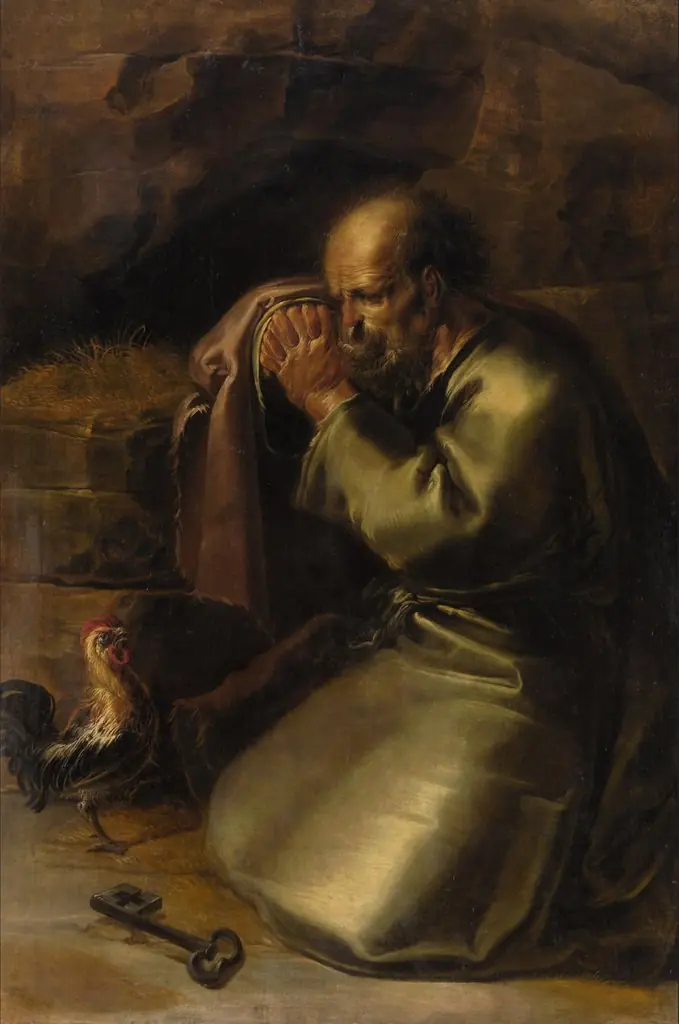
The painting, signed and dated 1626, is regarded by art historian Gary Schwartz as Rembrandt's 'first truly accomplished painting'. Michael Kitson notes it as an early and excellent example of the artist's lifelong fascination with elderly figures. Scholars have traced its visual sources to an engraving by Jan van de Velde after Willem Buytewech and to Willem van Swanenburg's print of a penitent Saint Peter after Abraham Bloemaert, which informed Tobit's figure.
Situated within Rembrandt's Leiden period, the work reflects the influence of his teacher Pieter Lastman, who treated other Tobit episodes, and foreshadows Rembrandt's later depictions of the Angel Raphael's departure. As an early Dutch Golden Age painting of a deuterocanonical subject, it illustrates the period's interest in biblical narratives and Rembrandt's emerging mastery of colour, emotion, and storytelling.
Overview
Rembrandt’s early oil on canvas, dated and signed 1626, portrays an elderly couple in a modest interior. The work, now part of the Rijksmuseum’s collection in Amsterdam, captures a moment of domestic dispute with restrained composition and muted lighting, characteristic of the artist’s formative period.
Subject & Meaning
The scene derives from the biblical Book of Tobit, where the blind Tobit confronts his wife Anna over the disappearance of a goat. The painting isolates this brief exchange, emphasizing the tension between accusation and helplessness, and reflecting themes of trust, loss, and moral testing within a household.
Own this work as a print
Artist & collection

Artist
Rembrandt Harmenszoon van Rijn, known mononymously as Rembrandt, was a Dutch Golden Age painter, printmaker, and draughtsman.