Artwork
Cupid Resting
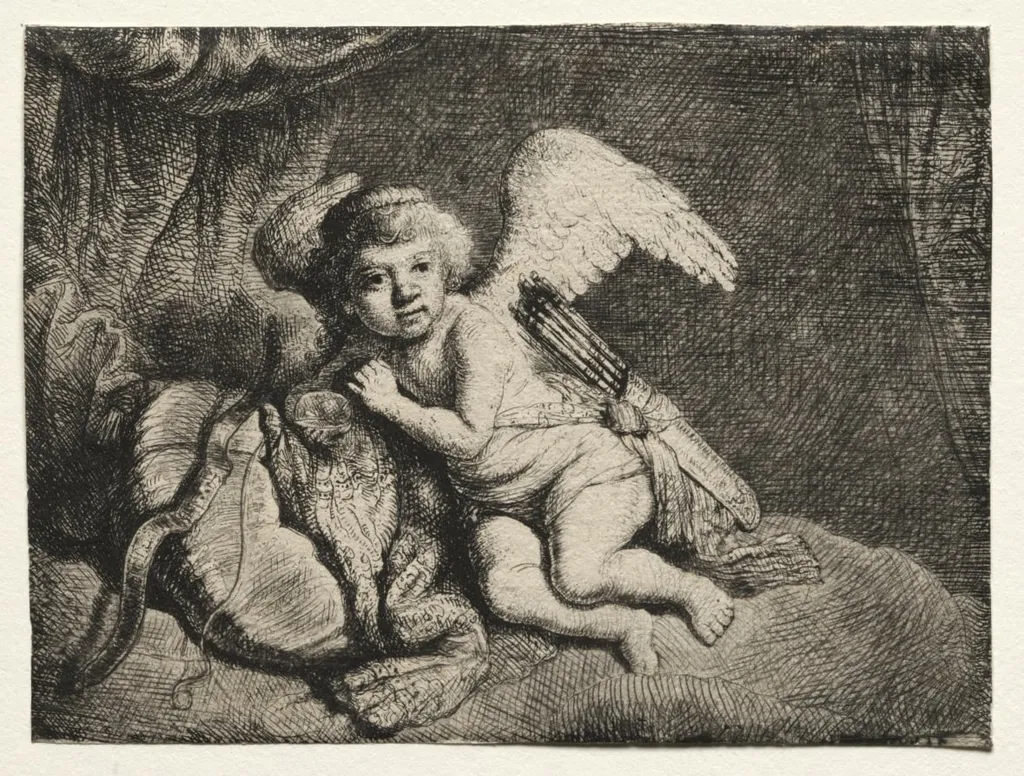
Cupid Resting is a print by the Baroque artist Rembrandt van Rijn. It dates from 1604 and is held in the collection of the Cleveland Museum of Art.
- Accession no.
- 1970.289
- Credit line
- Gift of Harry L Jackson for the Fiftieth Anniversary of The Print Club of Cleveland
About this work
This painting shows a boy with wings curled up asleep. His dark hair falls over his face. He holds a bow but looks peaceful instead of mischievous.
Rembrandt painted this around 1650. He often drew tired, human moments, not grand myths. The soft light makes the boy feel real, not like a storybook hero.
Look up Rembrandt van Rijn (Dutch, 1606–1669).
Overview
Unlike traditional depictions of the god of love as playful or dynamic, this version emphasizes stillness and vulnerability.
Cupid Resting is a small oil painting by Rembrandt van Rijn, dated around 1650. It depicts a winged boy, asleep in a quiet, intimate pose, curled on the ground with his bow loosely held. Unlike traditional depictions of the god of love as playful or dynamic, this version emphasizes stillness and vulnerability.
The work is part of the collection at The Cleveland Museum of Art, where it is noted for its quiet emotional resonance.
Subject & Meaning
The figure is Cupid, but rendered not as a symbol of divine passion, but as a weary child. His closed eyes, relaxed posture, and fallen hair suggest exhaustion rather than mischief. The bow, a tool of desire, lies unused in his hand, undermining mythological grandeur. Rembrandt transforms the myth into a moment of human fragility, inviting contemplation over narrative drama.
Technique & Style
Rembrandt uses soft, diffused lighting to model the boy’s form, creating a sense of tangible flesh beneath the dim glow. Brushwork is subtle, avoiding sharp outlines, allowing the figure to emerge gently from shadow. The palette is restrained, warm browns and muted tones, enhancing the intimacy. This approach reflects his interest in psychological depth over idealized beauty.
History & Provenance
The painting was likely created in Rembrandt’s Amsterdam studio during the 1650s, a period when he increasingly turned to intimate, introspective subjects. It passed through private collections before entering The Cleveland Museum of Art in the 20th century. Its small scale and unassuming subject suggest it was not commissioned, but painted for personal or experimental purposes.
Context
In mid-17th century Dutch art, mythological themes were often treated with classical formality. Rembrandt diverged by focusing on quiet, everyday humanity, even in divine figures. His Cupid aligns with a broader trend among Dutch painters to humanize myth, reflecting a cultural shift toward realism and emotional authenticity over theatricality.
Legacy
Cupid Resting exemplifies Rembrandt’s enduring influence in redefining mythological subjects through psychological realism. Later artists and collectors valued the work for its emotional restraint and technical subtlety. It remains a touchstone for understanding how Baroque art could convey depth without spectacle, prioritizing the quiet moment over the heroic gesture.
Artist & collection

Artist
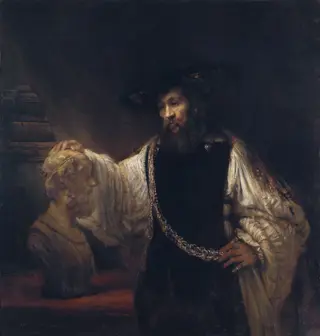
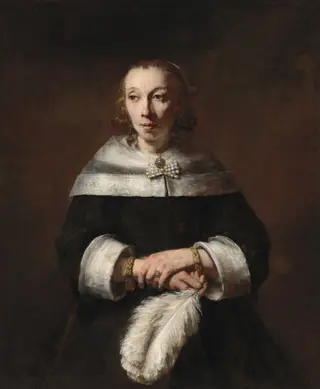
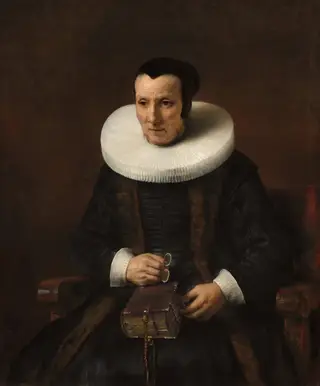
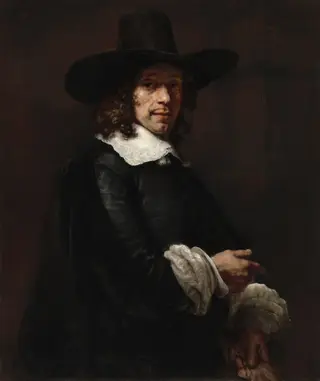
Rembrandt Harmenszoon van Rijn, known mononymously as Rembrandt, was a Dutch Golden Age painter, printmaker, and draughtsman.



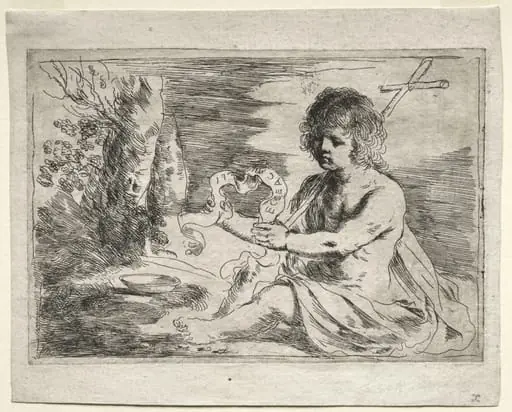 St. John the Baptist
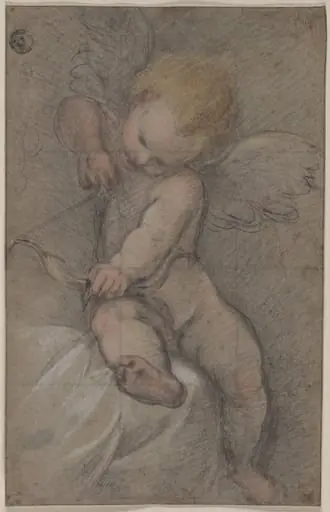 Cupid Drawing His Bow
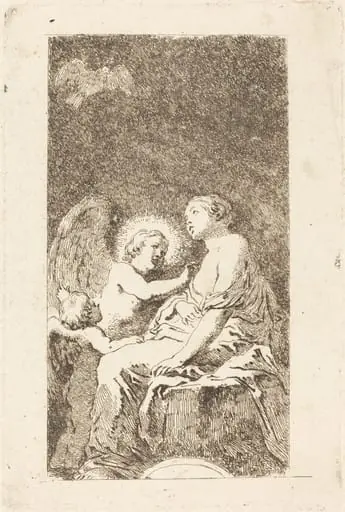 Saint Catherine of Alexandria (Saint Catherine d'Alexandrie)
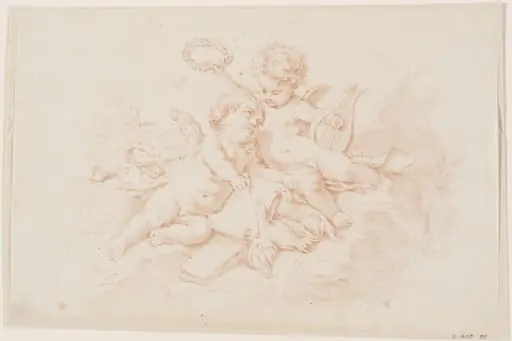 Poetry; two putti in a cloud
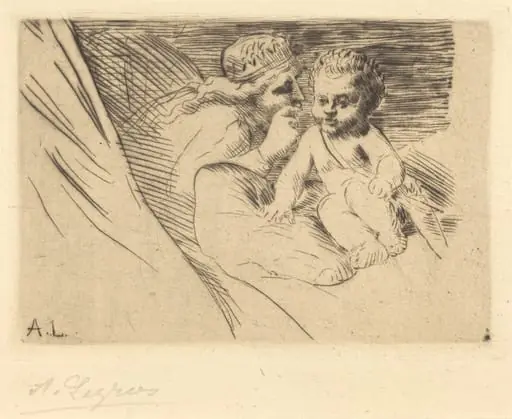 Mab and Cupid (Mab et Cupidon)
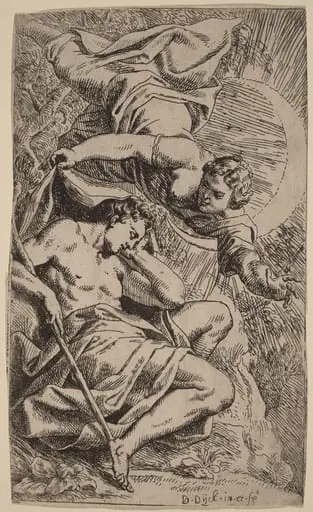 Diana and Endymion
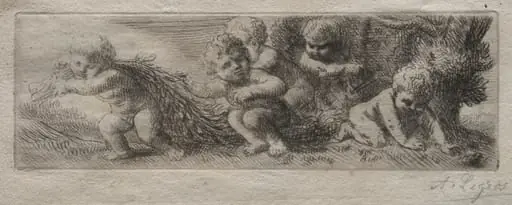 Plate for Top of Pin Box
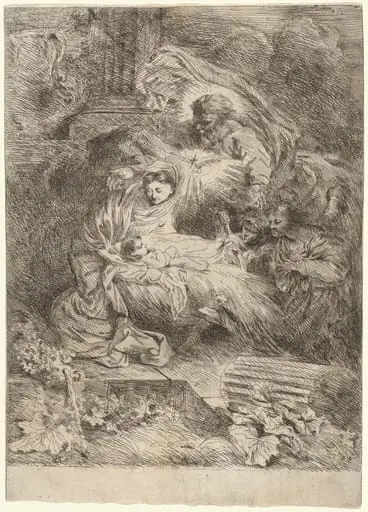 The Nativity with God the Father and the Holy Spirit
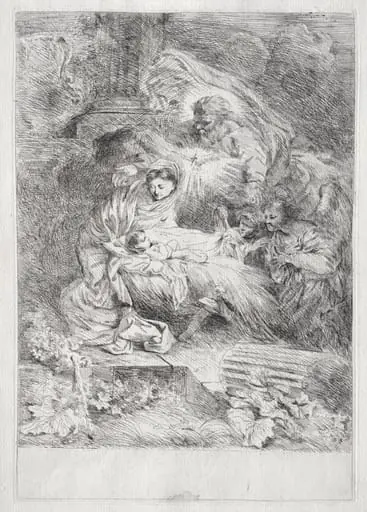 The Nativity with God the Father and the Holy Spirit
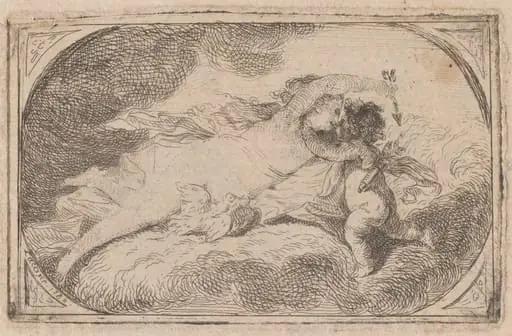 Venus and Cupid
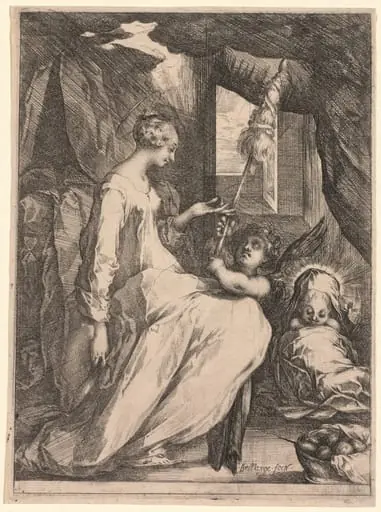 The Virgin and Child with Distaff and an Angel
- Sleeping Cupid