Artwork
Joseph Telling His Dreams
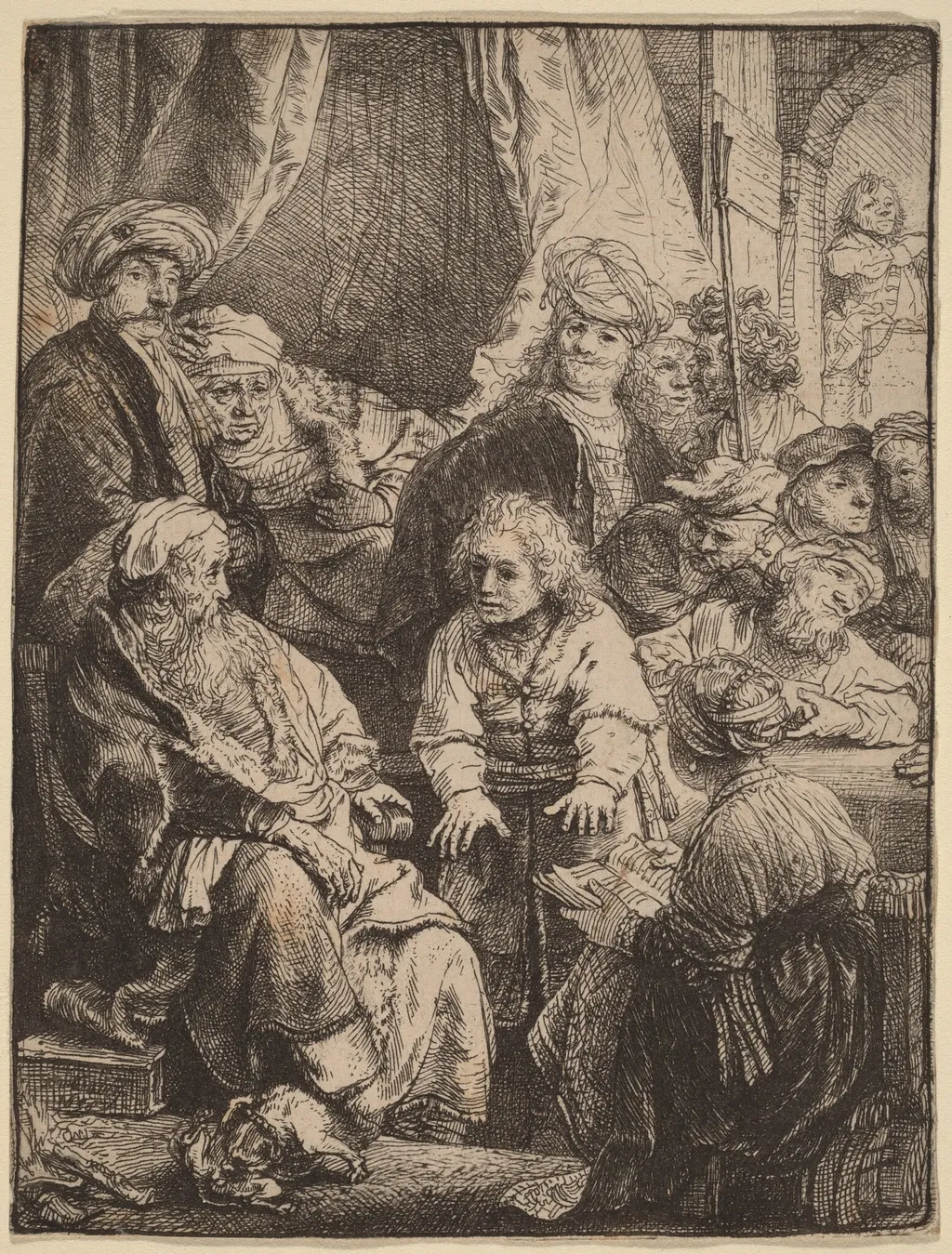
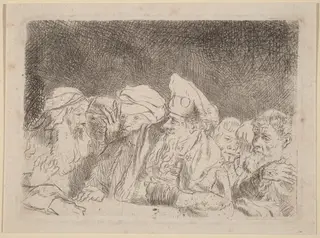
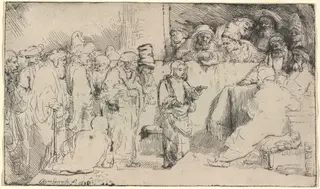
Joseph Telling His Dreams is an ink print by the Baroque artist Rembrandt van Rijn. It dates from 1638 and is held in the collection of the National Gallery of Art.
About this work
Overview
This work exemplifies Rembrandt's early mastery of narrative etching, where he prioritizes psychological drama and human interaction over decorative detail.
Created in 1638, Joseph Telling His Dreams is an etching by Rembrandt van Rijn that illustrates the biblical narrative from Genesis 37, where the young Joseph recounts his prophetic dreams to his brothers. The composition is densely packed, focusing on a central group of figures huddled in a dimly lit interior. Joseph sits on the ground, gazing upward as he speaks, while his brothers surround him in various states of agitation and disbelief.
Rembrandt employs his characteristic use of light and shadow, utilizing the etching medium to create deep contrasts that highlight the expressive faces and gestures of the figures. The background dissolves into dark, tangled lines, emphasizing the emotional intensity of the moment rather than the architectural setting. This work exemplifies Rembrandt's early mastery of narrative etching, where he prioritizes psychological drama and human interaction over decorative detail.
It stands as a significant example of his ability to adapt Old Testament stories into intimate, emotionally resonant scenes that explore themes of familial conflict and divine foresight.
Subject & Meaning
The print illustrates the biblical episode in which Joseph recounts his prophetic visions to his family. The varied expressions and attentive postures of the onlookers convey the tension and curiosity surrounding the revelation, emphasizing the narrative’s themes of revelation, doubt, and familial response.
Technique & Style
Executed in copperplate etching, the work relies on incisive, crisp lines to render facial features and textured garments, giving the figures a tactile realism. The background is filled with dense, tangled strokes that suggest foliage or a shadowy environment, creating depth and a contrast between the illuminated foreground and the darker periphery.
History & Provenance
Created in 1638, this print belongs to Rembrandt’s early period of narrative etchings, a time when he explored biblical subjects through the medium of printmaking. It has been documented in several collections of his works and remains a representative example of his skill in translating complex stories into the graphic language of etching.
Own this work as a print
Artist & collection

Artist
Rembrandt Harmenszoon van Rijn, known mononymously as Rembrandt, was a Dutch Golden Age painter, printmaker, and draughtsman.